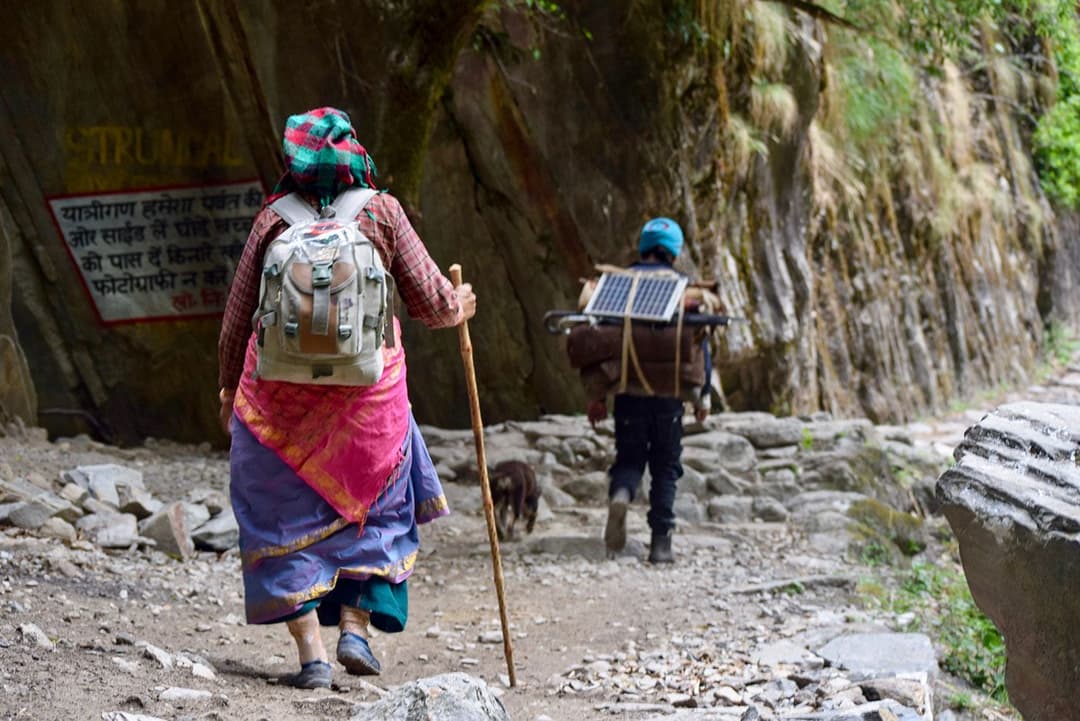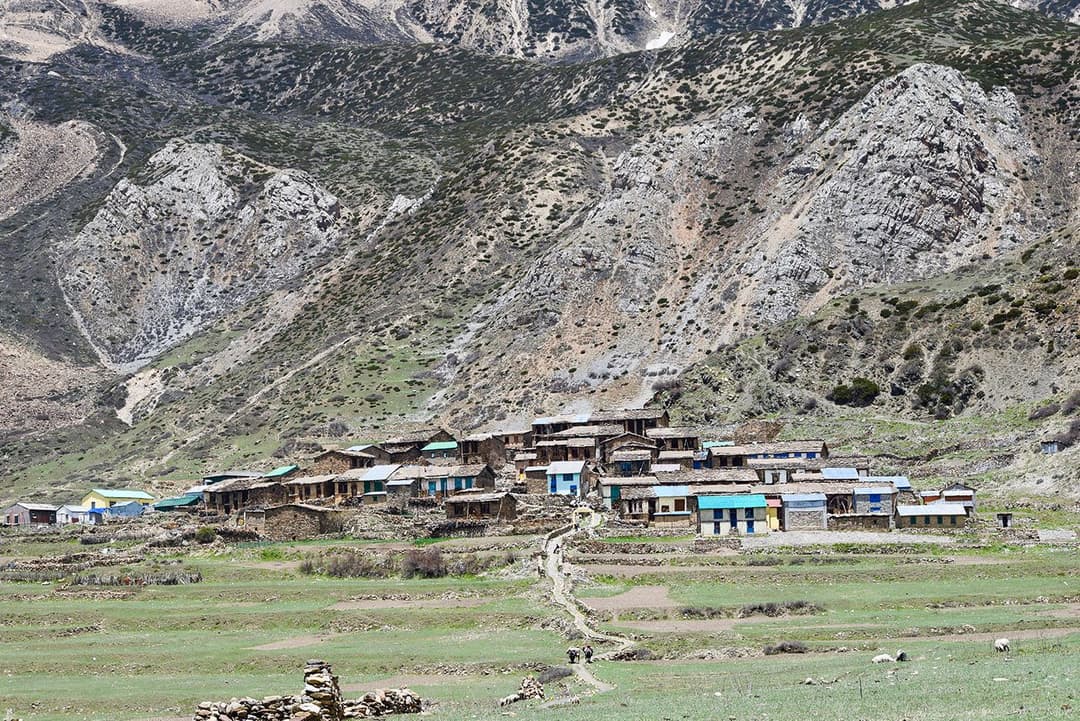

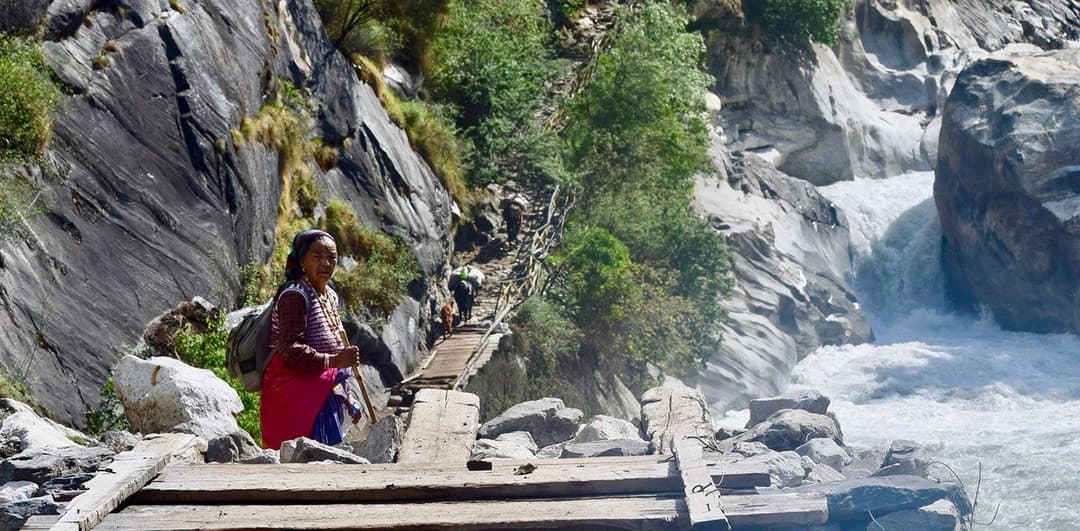
Sukhmati Devi’s legs sometimes tremble nowadays. Climbing up and down mountainous terrain has taken a toll. For decades, Sukhmati, a 65-year-old farmer, has trudged more than 70 kilometres up to Kuti, her high-altitude village at around 3,600 metres. She lives in Kuti from May to November. When snow covers the village, she climbs down 70 kilometres to Dharchula town, at 900 metres.
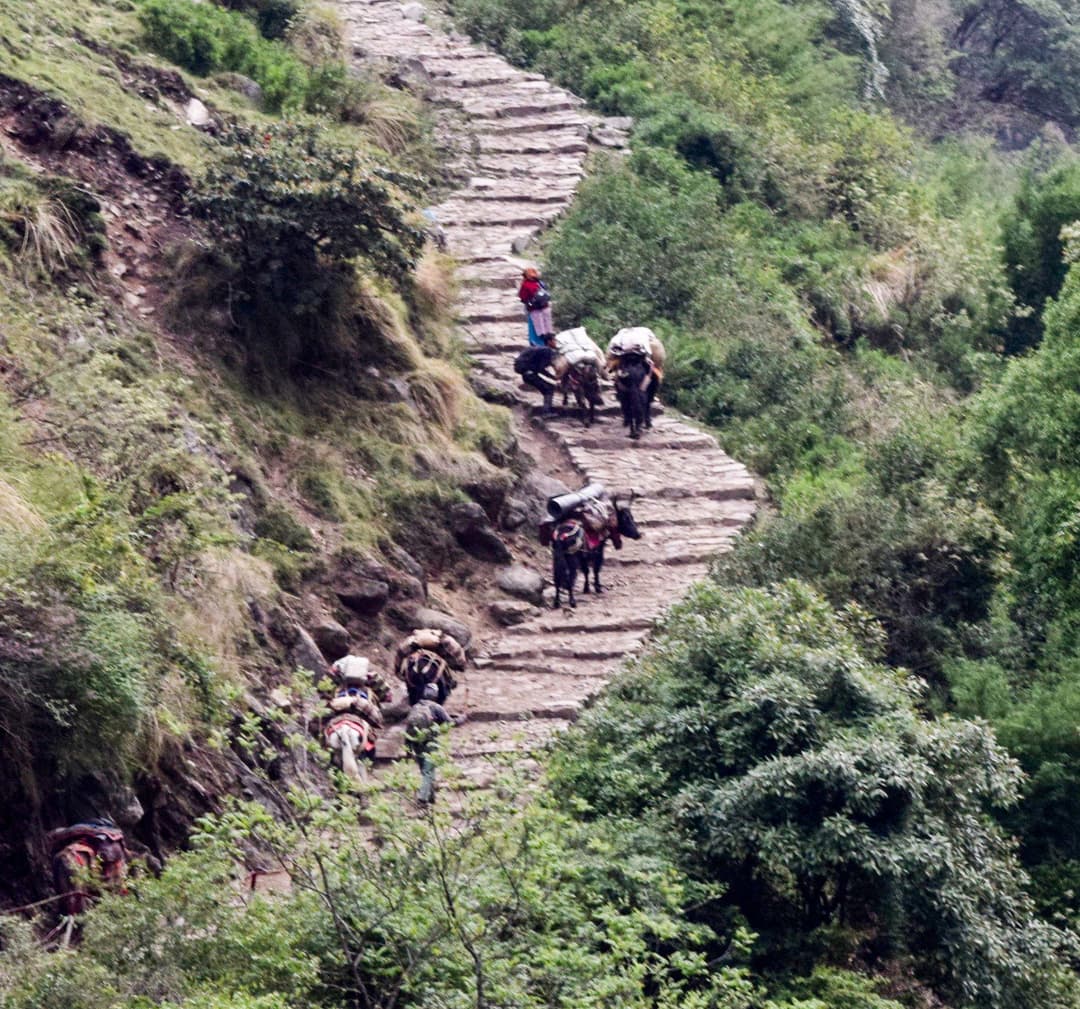
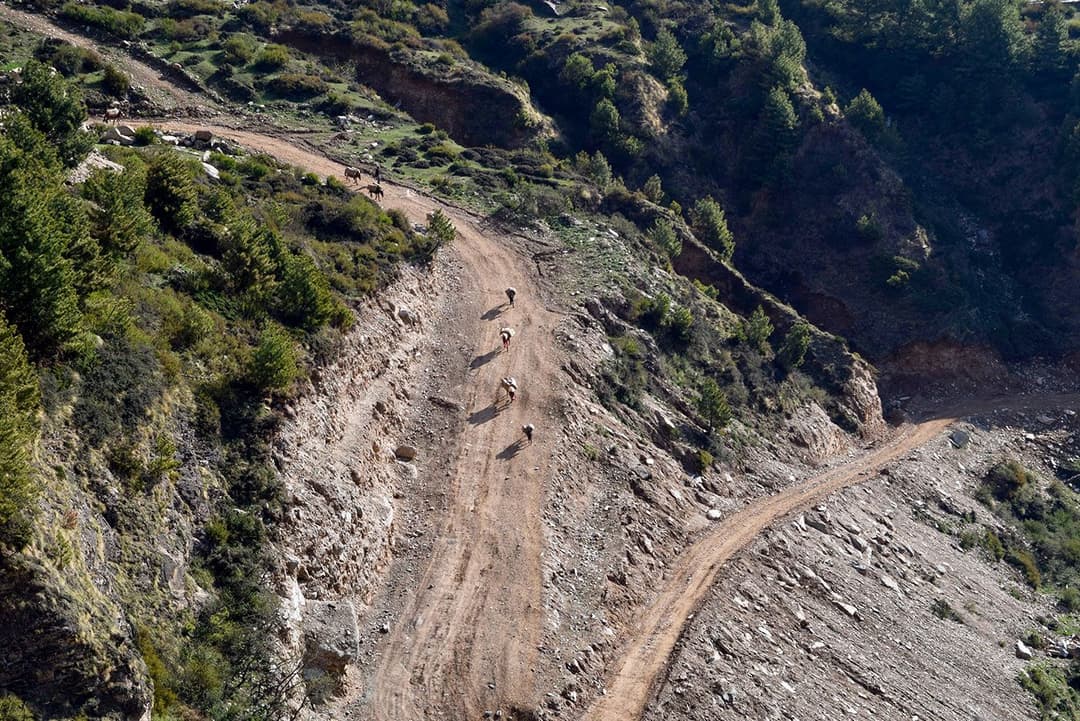
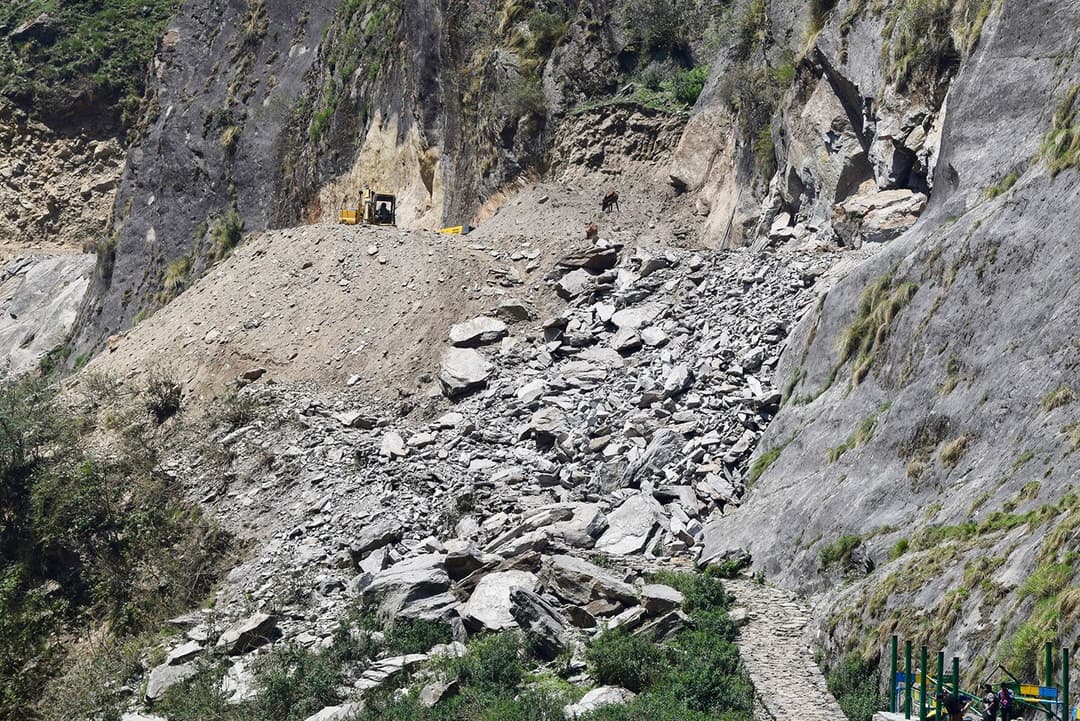
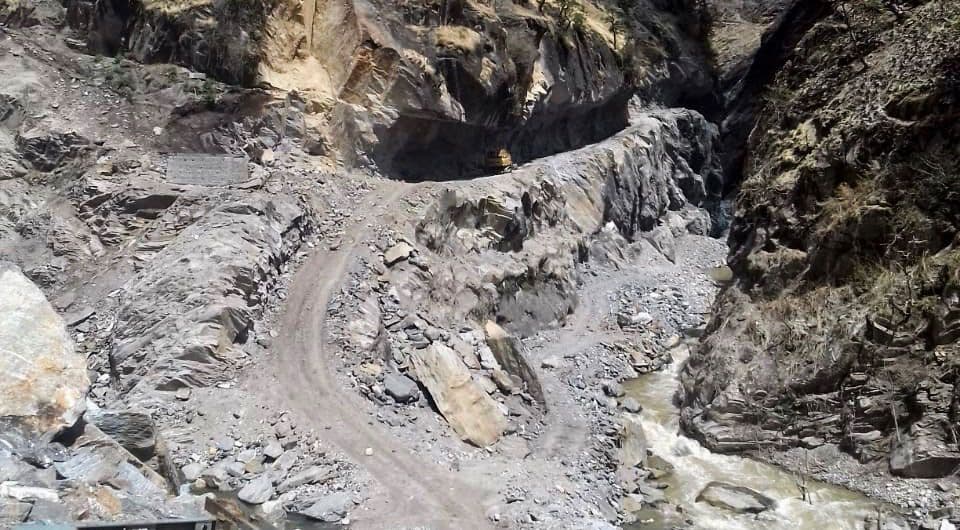
At times, she uses a horse when the ascent is so steep that it can take hours to climb three-and-a-half kilometres. But that option is difficult now, because parts of the walking route have disappeared under the rocks and debris that come down with the rains. The residents of the villages here say this happens when the Border Roads Organisation (BRO), which is constructing a road to Lipulekh Pass, blasts the mountains with dynamite.
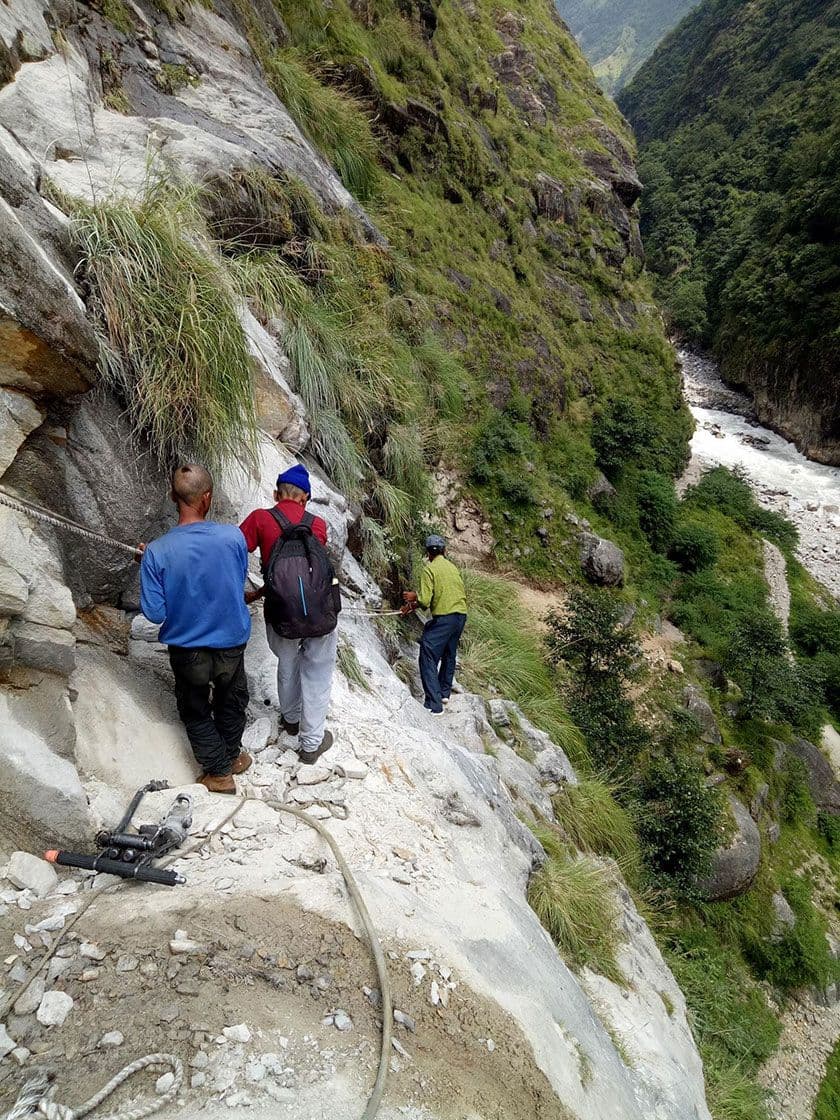
So Sukhmati’s annual trek to Kuti has become even harder, scrambling over the debris and rubble. The route includes treacherous narrow climbs criss-crossed by the rivers Kali and Kuti-Yangti. “I hope one day I can travel to my village by car,” she had told me when we walked 70 kilometres to Kuti in May 2017. It took us five days to reach her village of 363 people in the Himalayan Vyas valley.
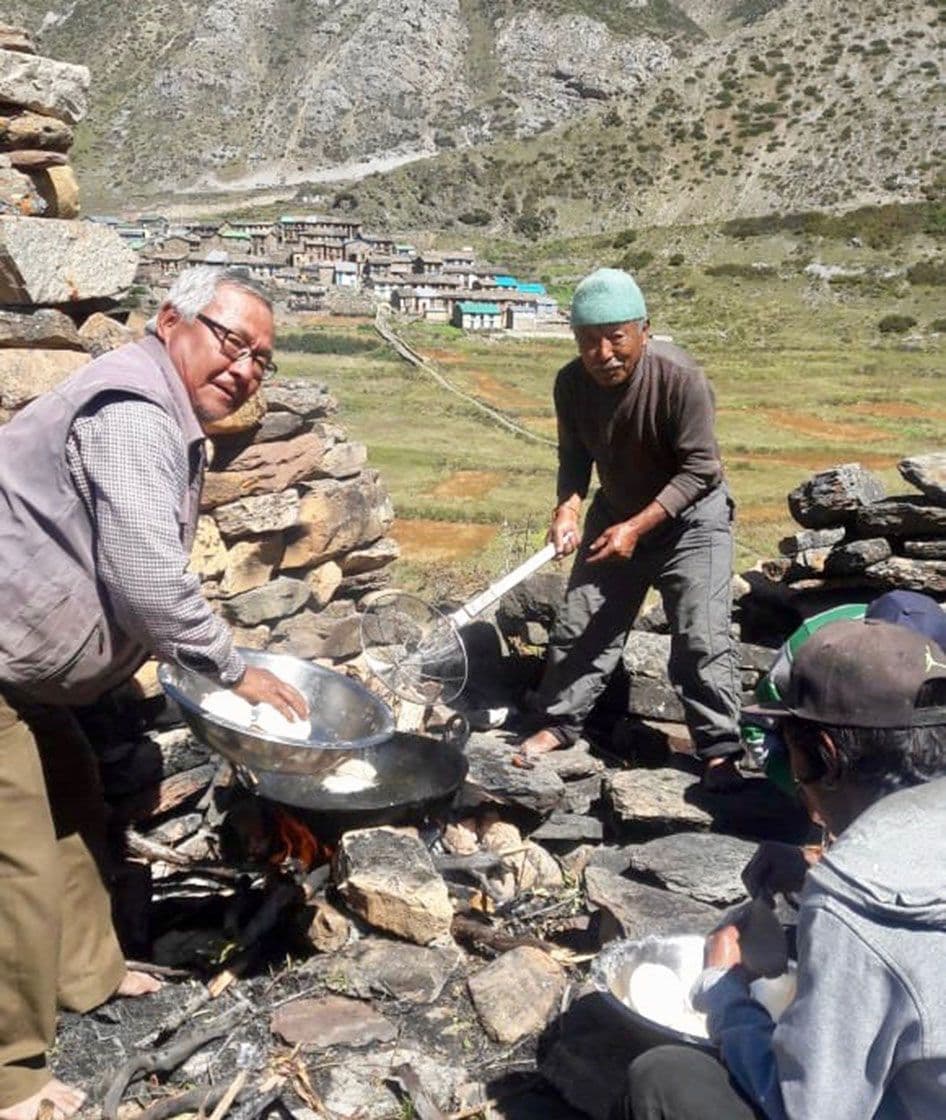
Sukhmati Devi (cover photo on top) is one of the 2,059 residents – all from the Bhotia community, a Scheduled Tribe – in seven villages close to the India-China border for whom the road is a big election issue for the 2019 Lok Sabha elections. It has been one of their main concerns during every election, state or general, for many years. These villages will vote on April 11.