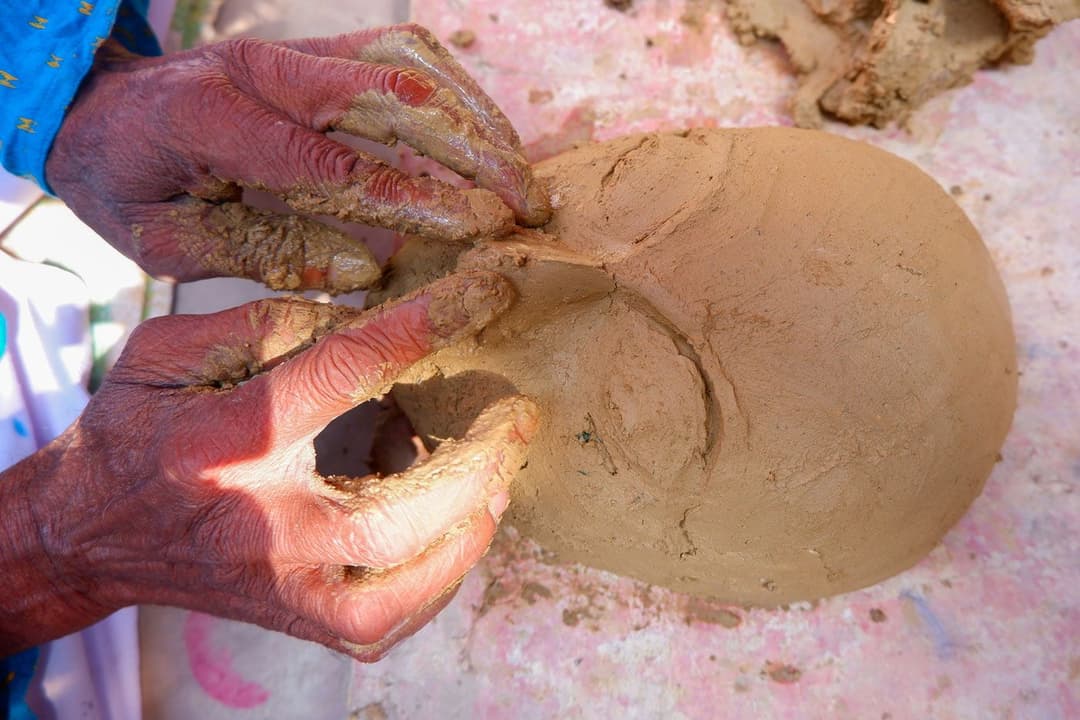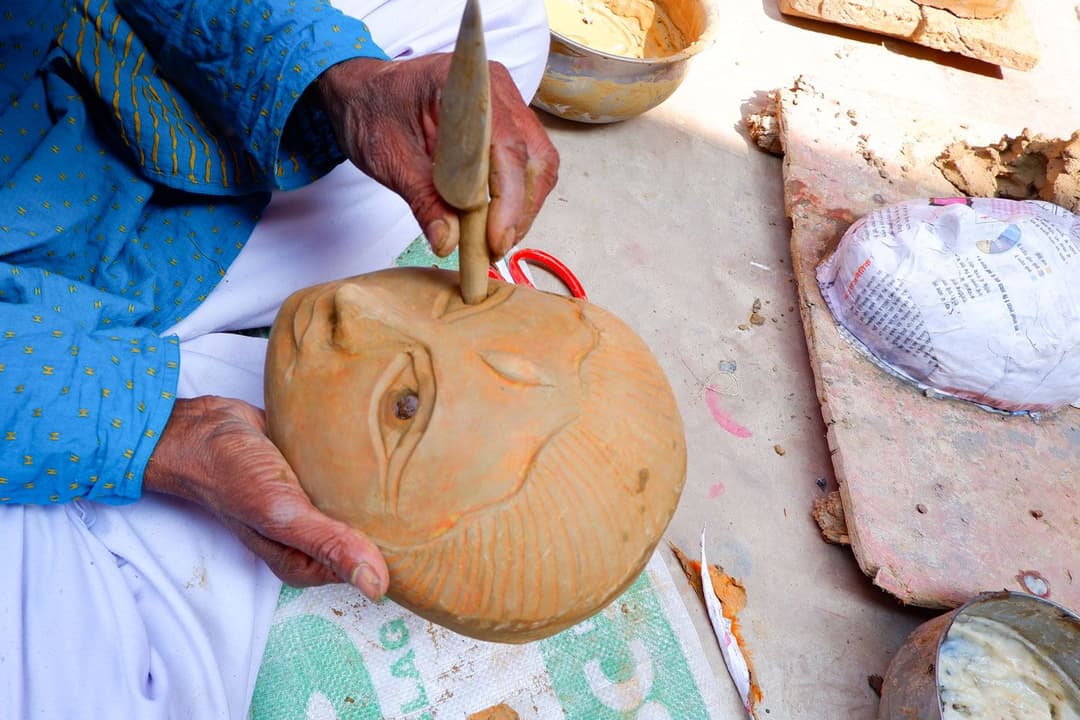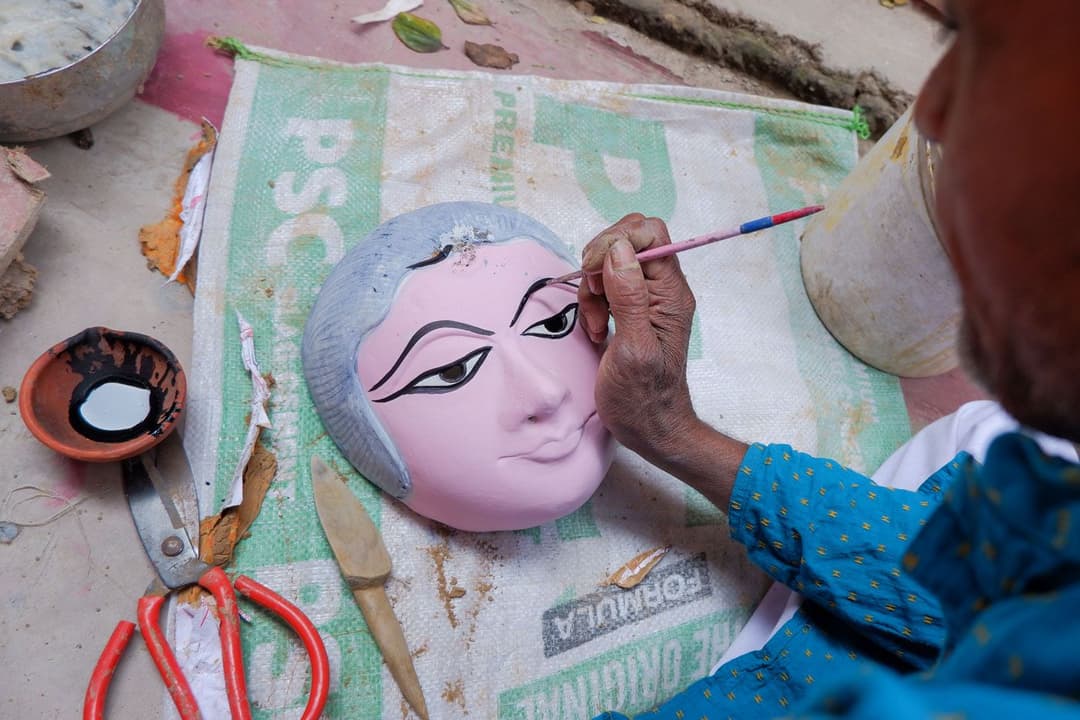

“To show mild anger, the eyes need to be slightly raised…intense anger, the eyes are large, with raised eyebrows. For joy, the cheeks rise in a smile.”
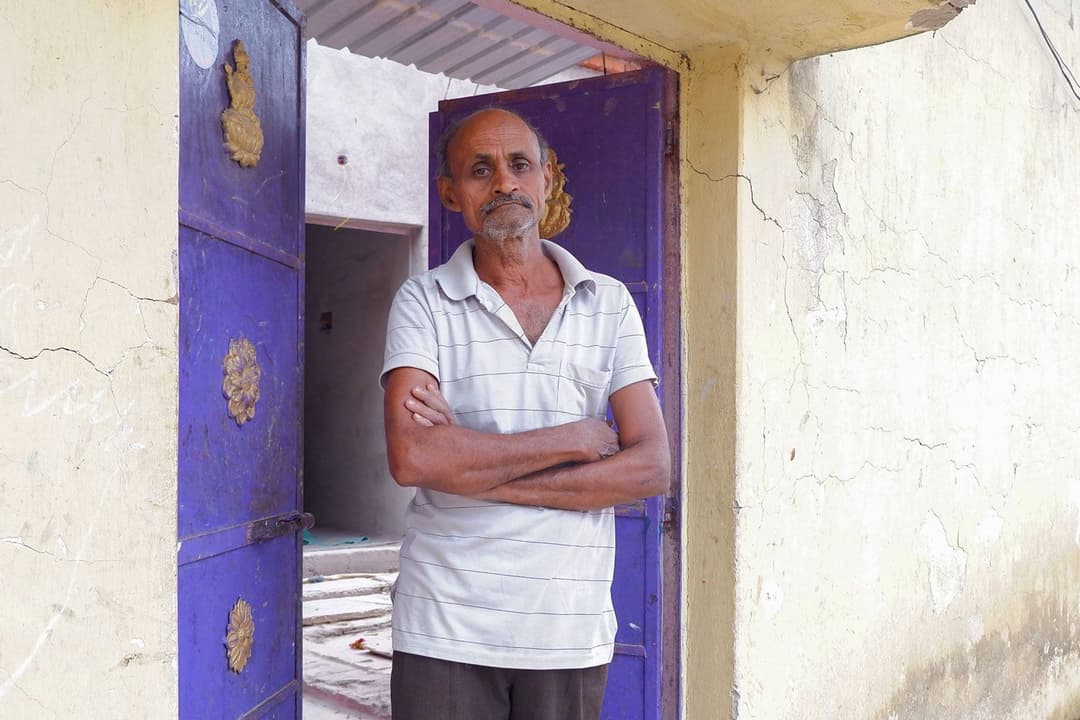
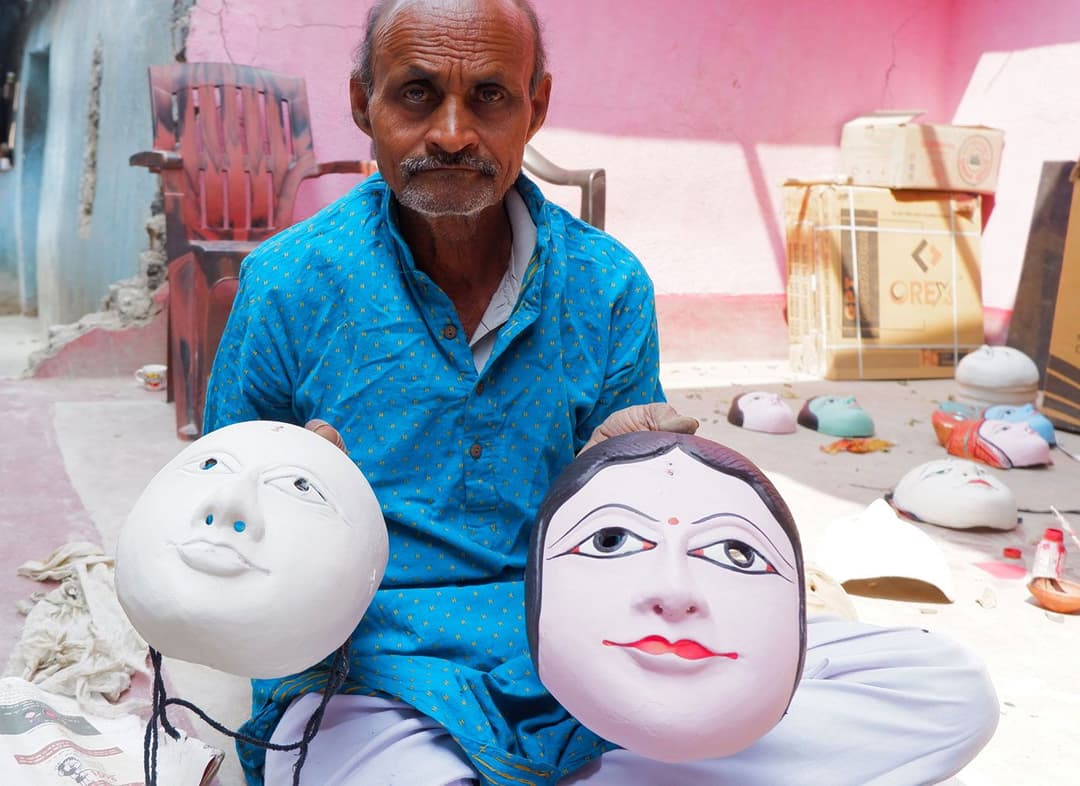
It is attention to these details that make Dilip Patnayak a master craftsman of masks used in Jharkhand’s Saraikela Chhau dances. “The mask must reflect the character,” he says. “Saraikela masks are unique because they embody the navaras, the nine emotions, which no other Chhau style does.”
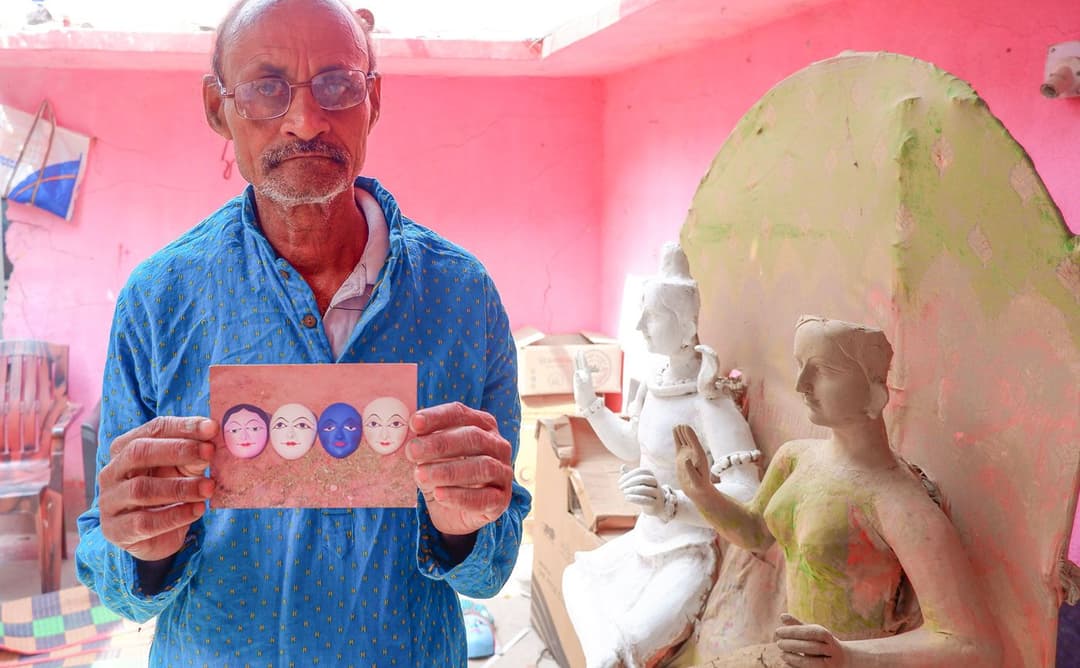
Masks in various stages of readiness lie all around his workstation, unique in their features: wide eyes, pencil-thin eyebrows, brightly coloured skin tones, all capturing diverse expressions.
The artform mixes dance and martial arts, and the dancers wear these masks as they enact stories from the Ramayana, Mahabharata and local folklore. Dilip makes all masks but his favourite is Krishna’s mask because, “[while] it is easy to depict anger with big eyes and raised eyebrows, showing mischief is not that easy.”
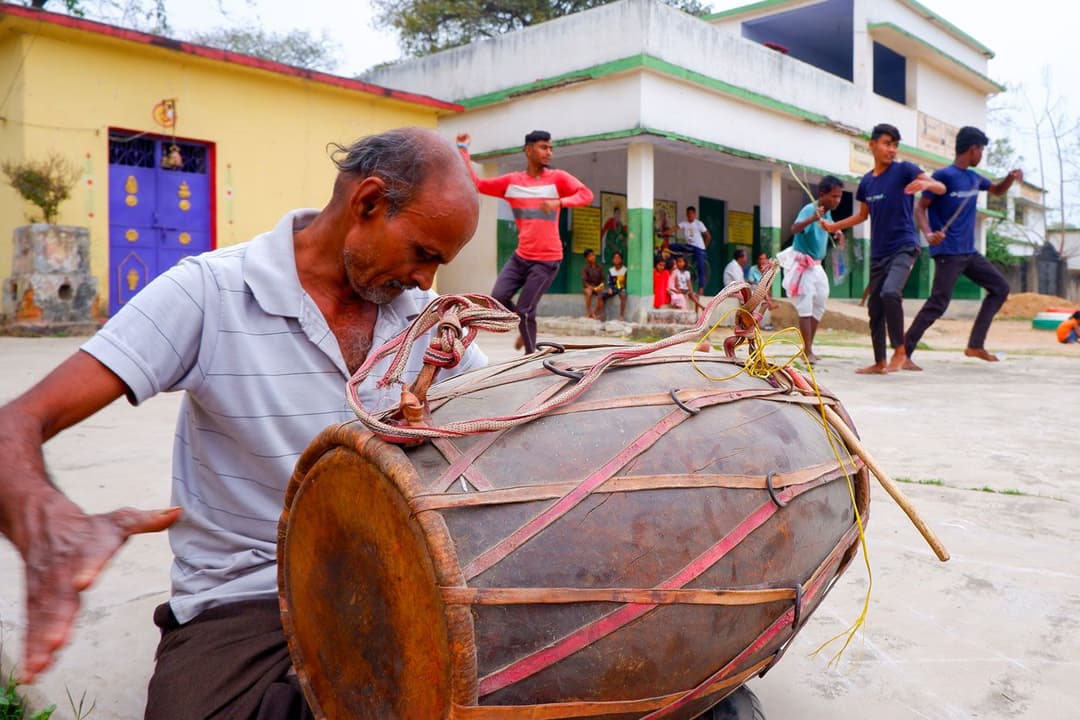
The fact that Dilip is also a performer helps. As a child he was part of a Chhau dance troupe and learnt mostly by watching performances at the local Shiva temple during the Chhau festival. His favourite part remains the dance of Krishna. Today he plays the dhol (drum) and is part of a Saraikela Chhau troupe.