
“Chutney, chutney fry!”
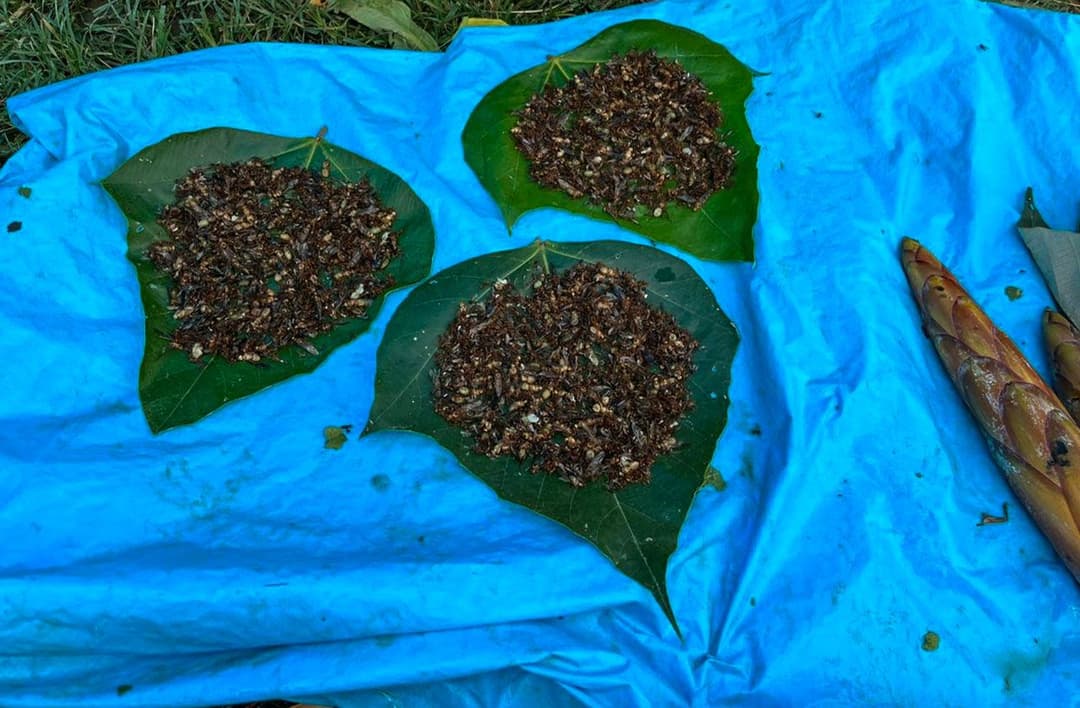
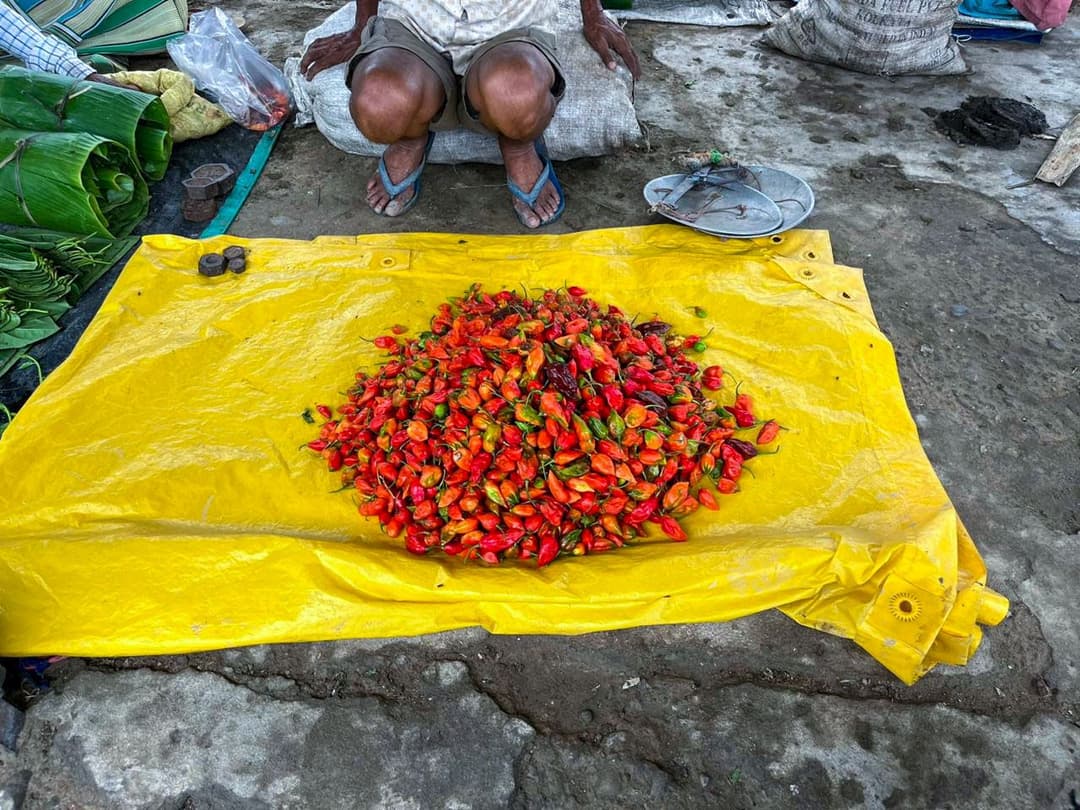
It’s red ants that make good chutney here in Kanubari, located at the foothills of the Patkai mountains in Arunachal Pradesh. A handful of bright gleaming red ants, placed on a bed of leaves, is selling for Rs. 20 in the weekly market on this wet and rainy July morning.
“There are varieties of ants,” says Pobin Kurmi, a resident of Kanubari. “The amloi [red ants] are widely preferred as they are easier to catch than black ants. Their bite doesn’t harm much and they’re found on mango and jackfruit trees.” Arunachal Pradesh is home to Oecophylla smaragdina also called the Asian weaver ant.
Ten-year-old Nayanshila and nine-year-old Sam, students from Mahabodhi School where I’m teaching for a few weeks, describe to me the process of catching ants. “After identifying the nest of ants on a branch of a tree, you cut it and then put it in boiling water. Those dead ants are then separated from the leaves and soil, and dried.” They can then be fried to make chutney which, my students inform me, tastes a little sour.
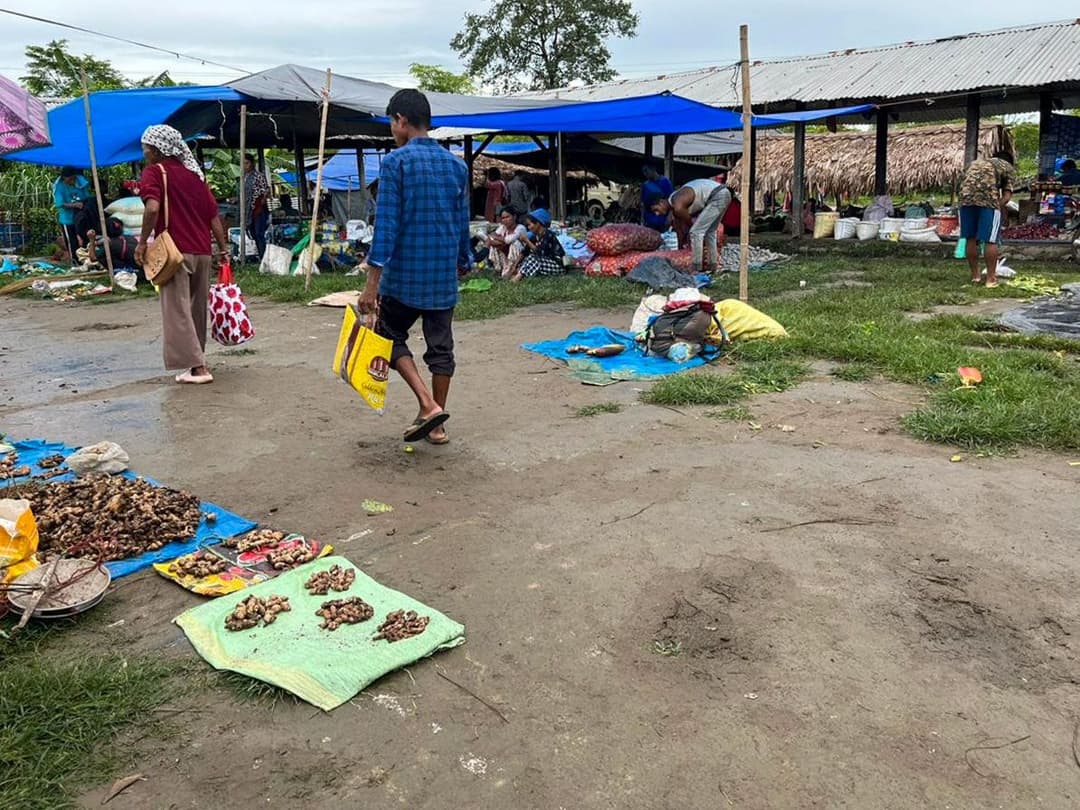
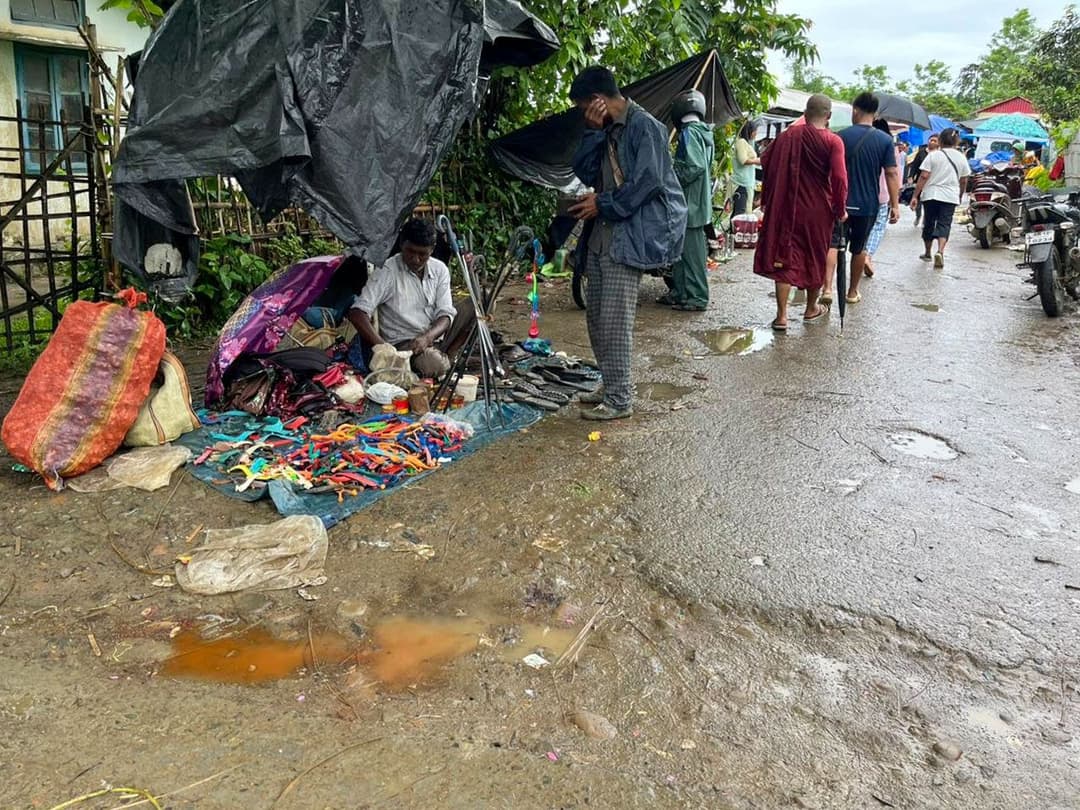
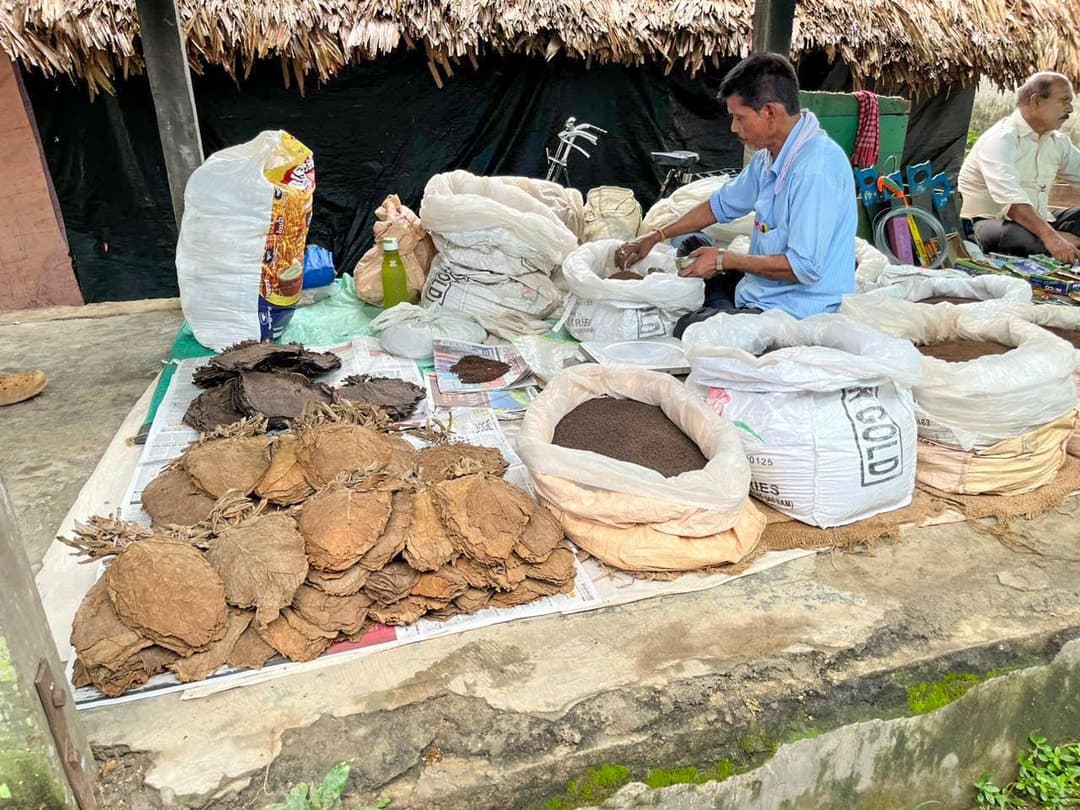
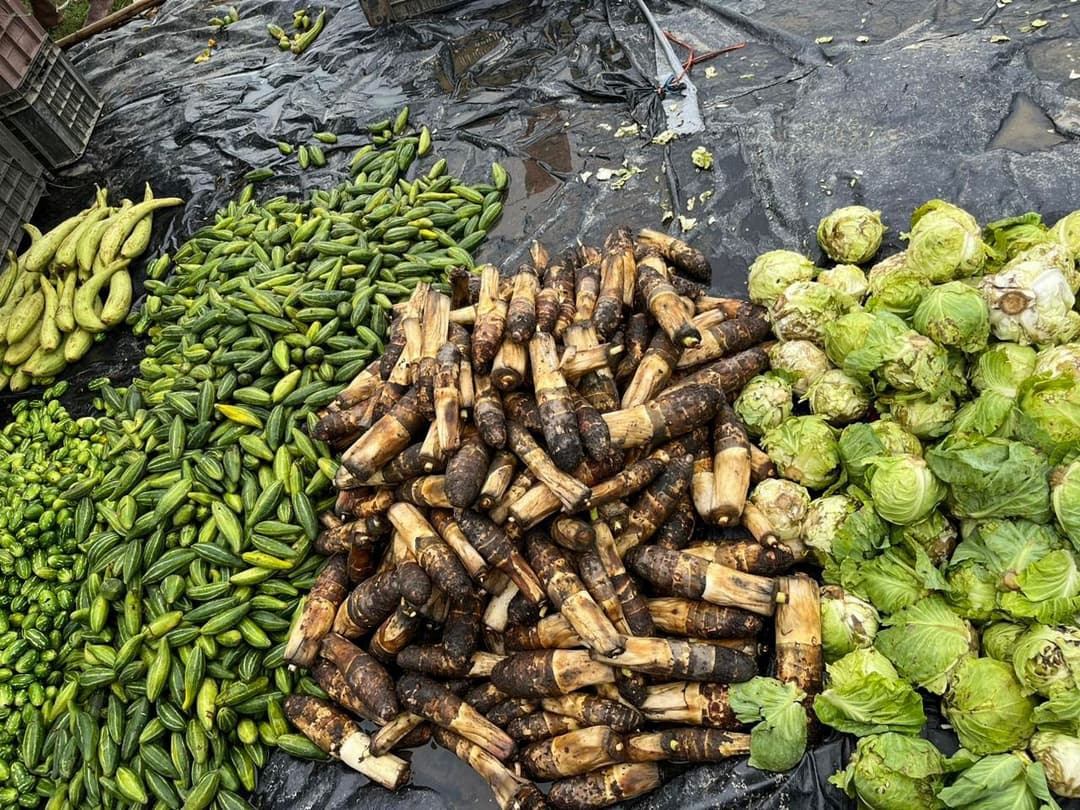
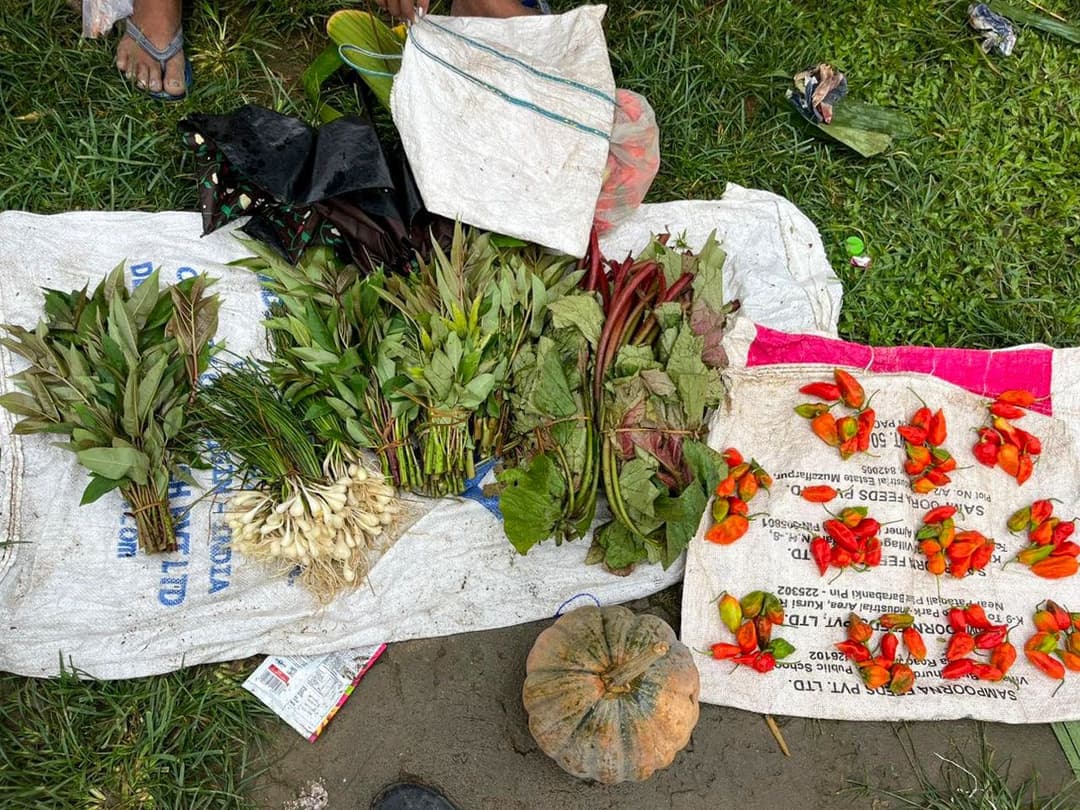
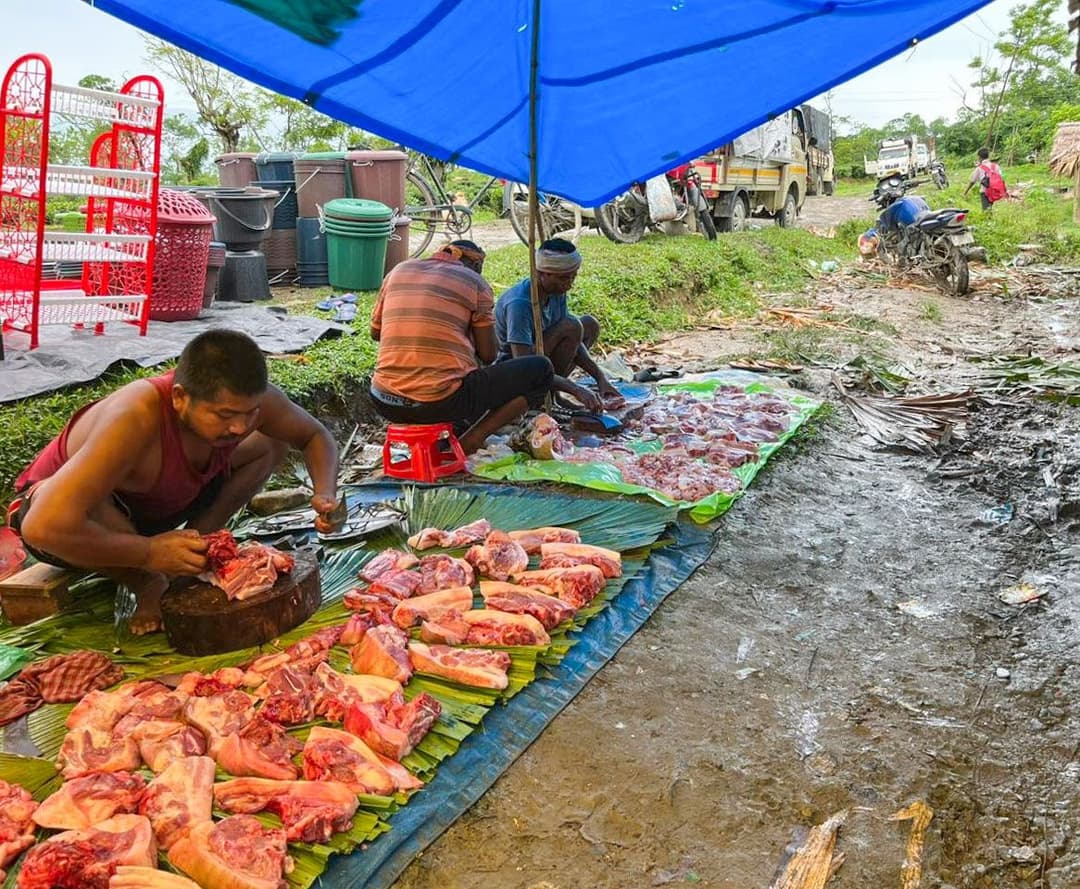
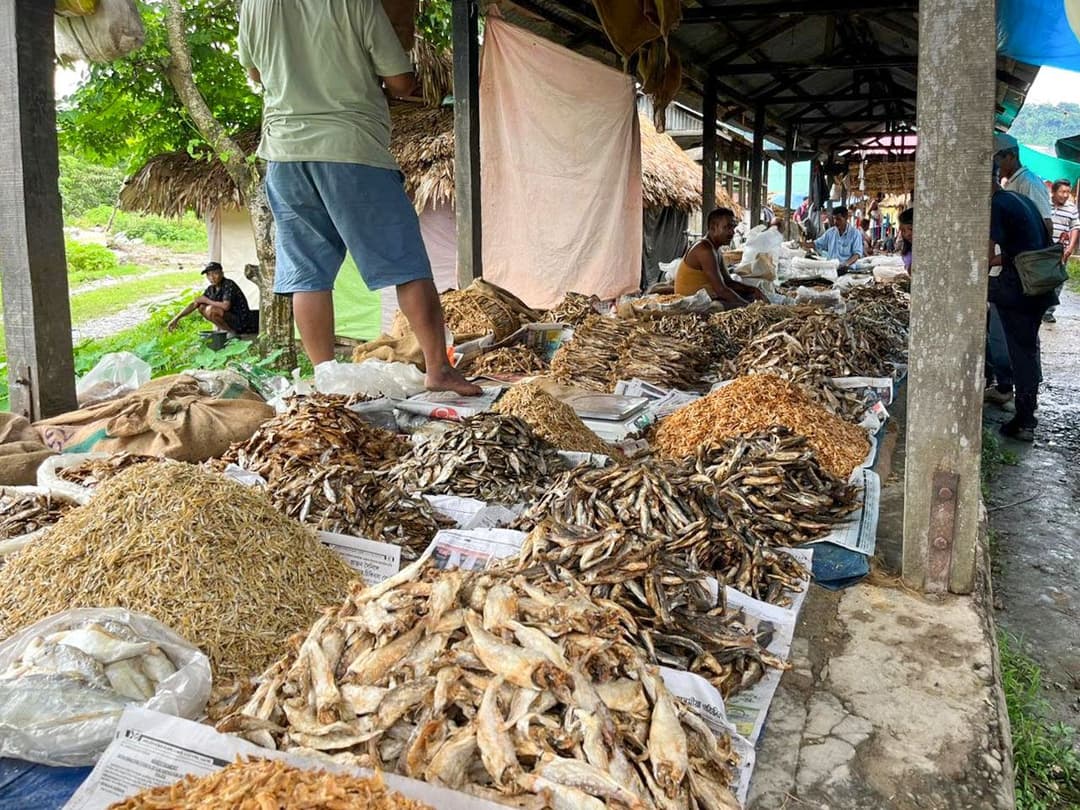
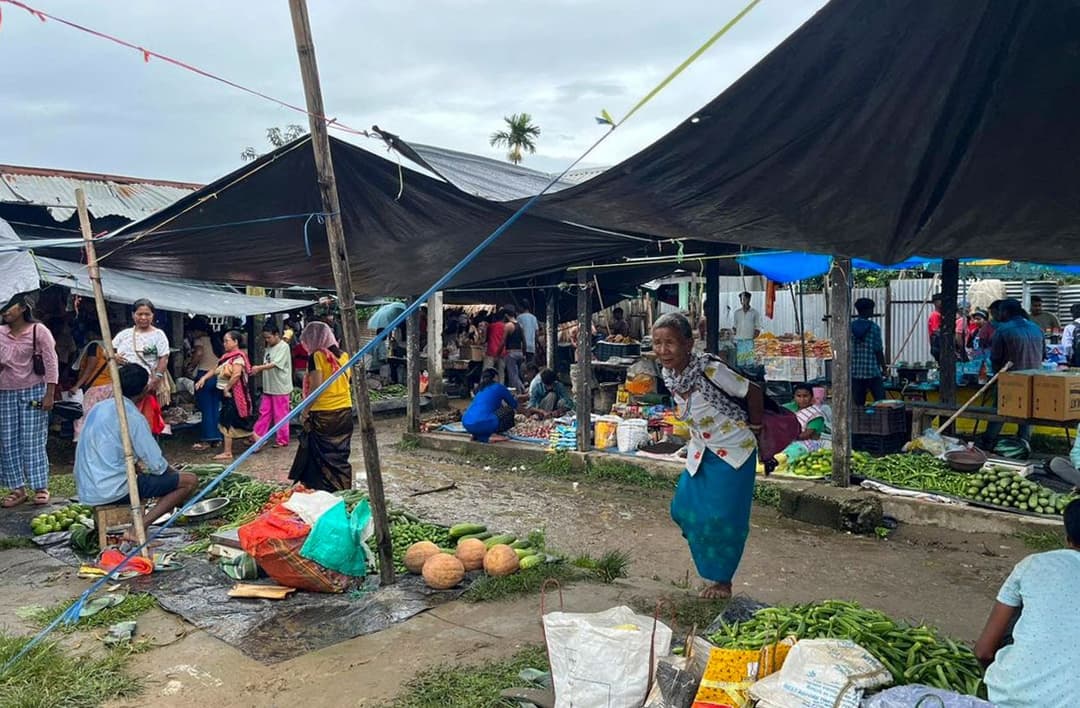
It’s the Thursday weekly market held here in Kanubari block of Arunachal Pradesh’s Longding district. The other big market available to Kanubari residents lies 70 kilometres away, so the locals prefer to shop for their daily necessities here. The Assam border is also less than a kilometre away and residents from the neighbouring state also visit to buy and sell their produce.