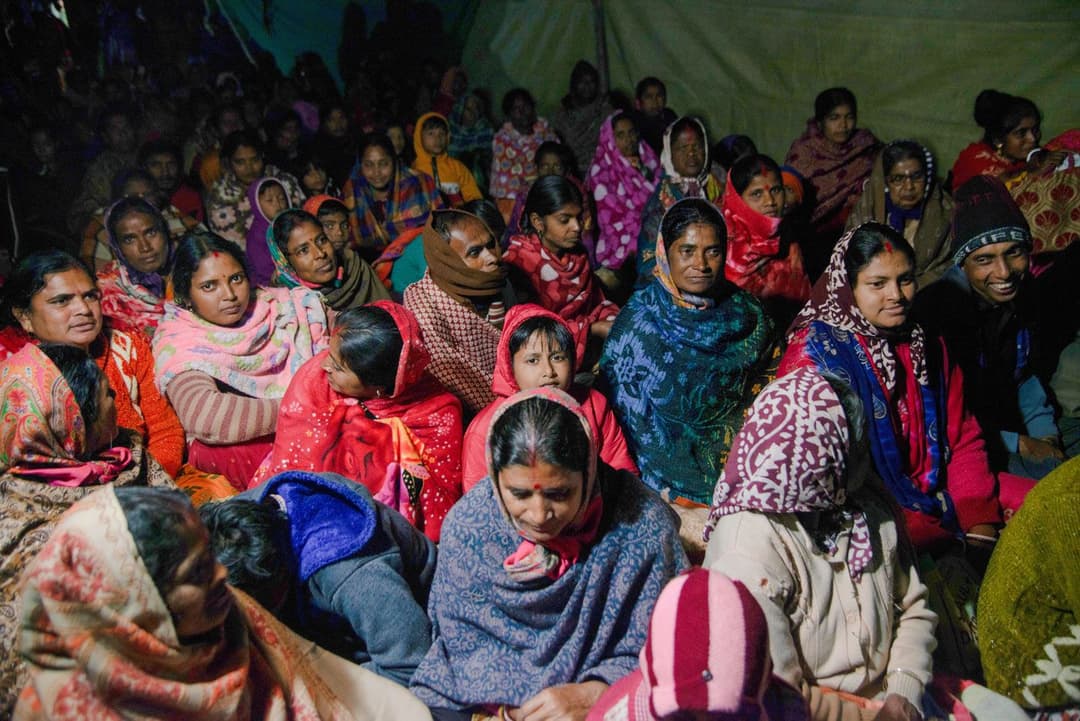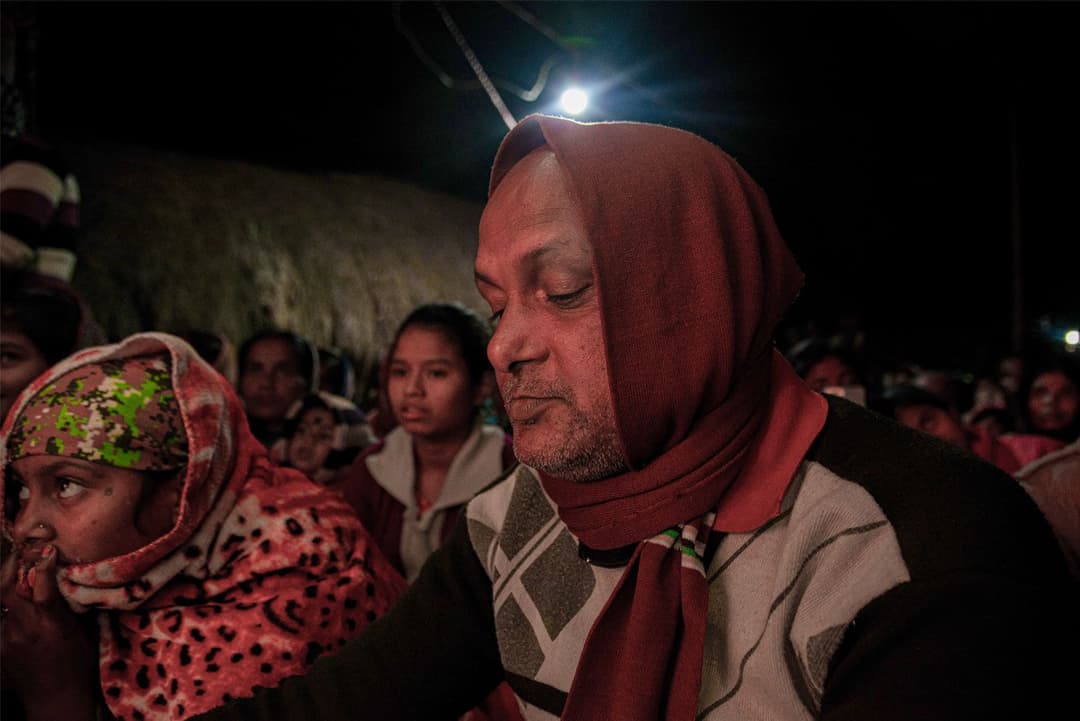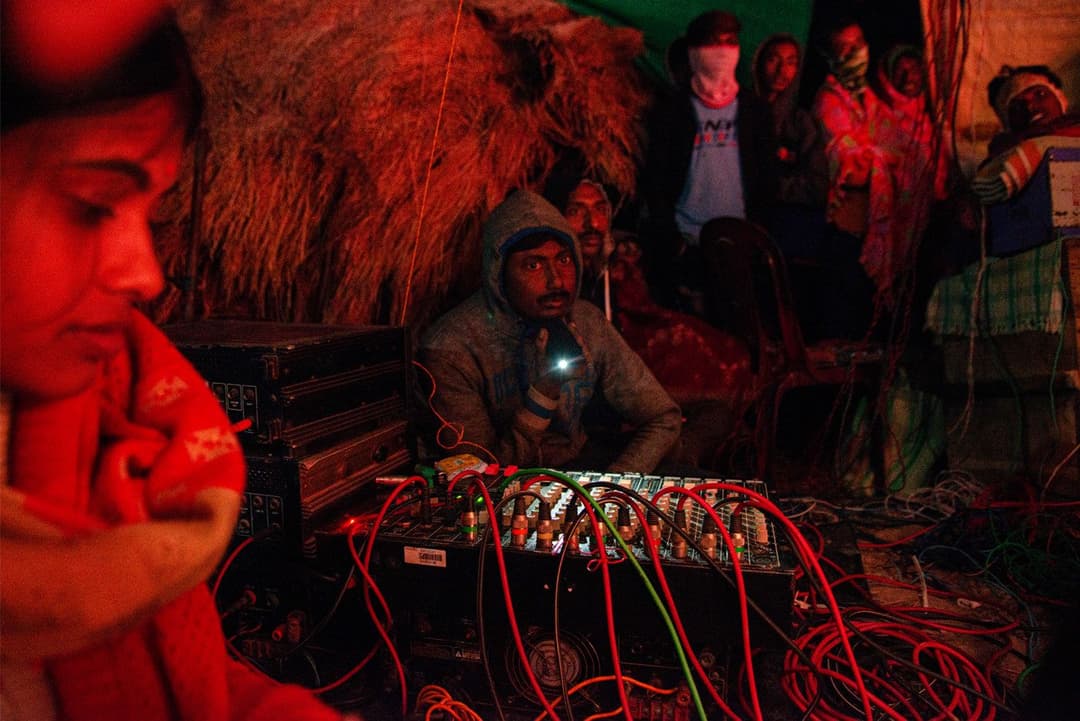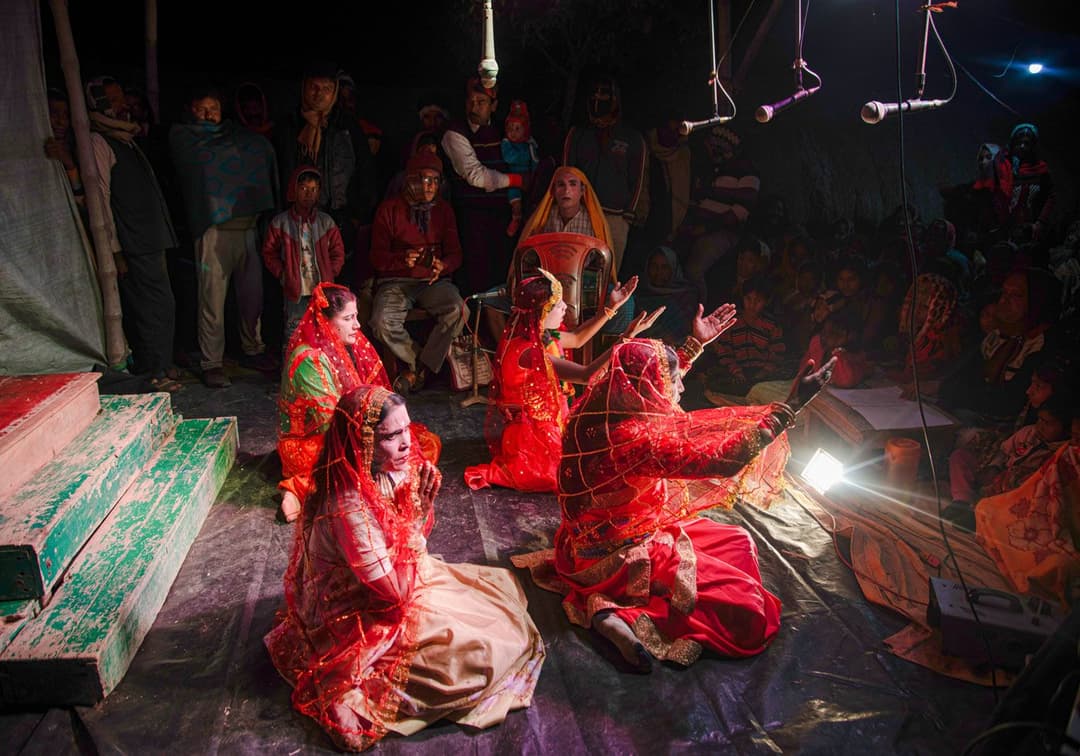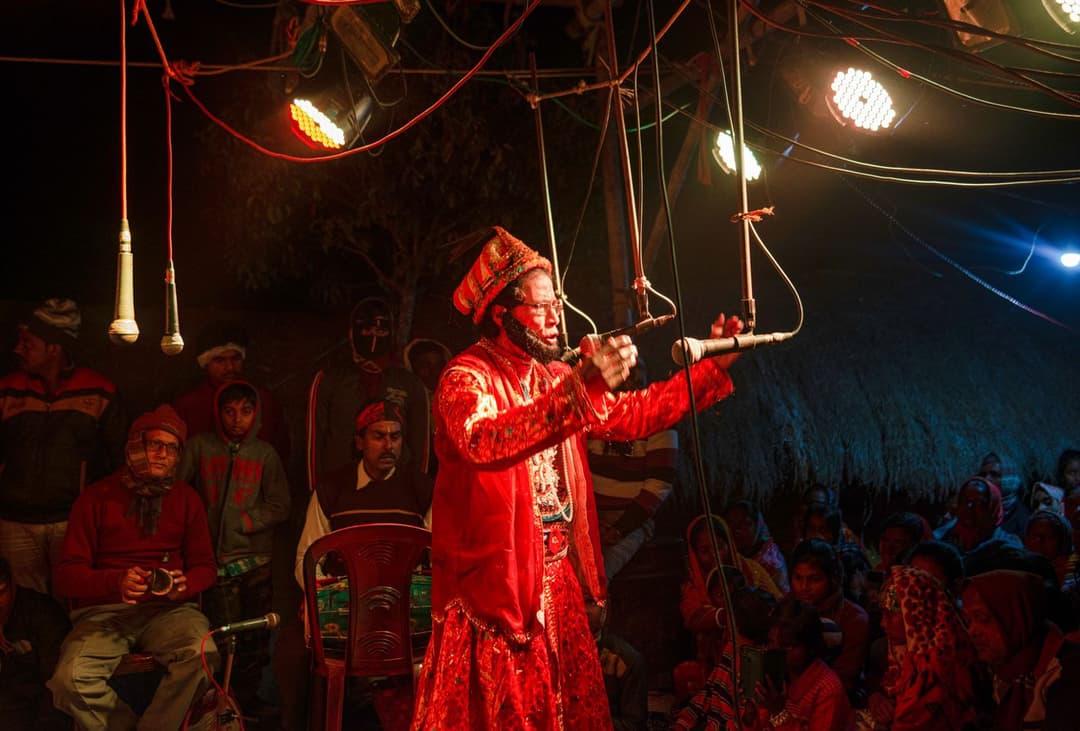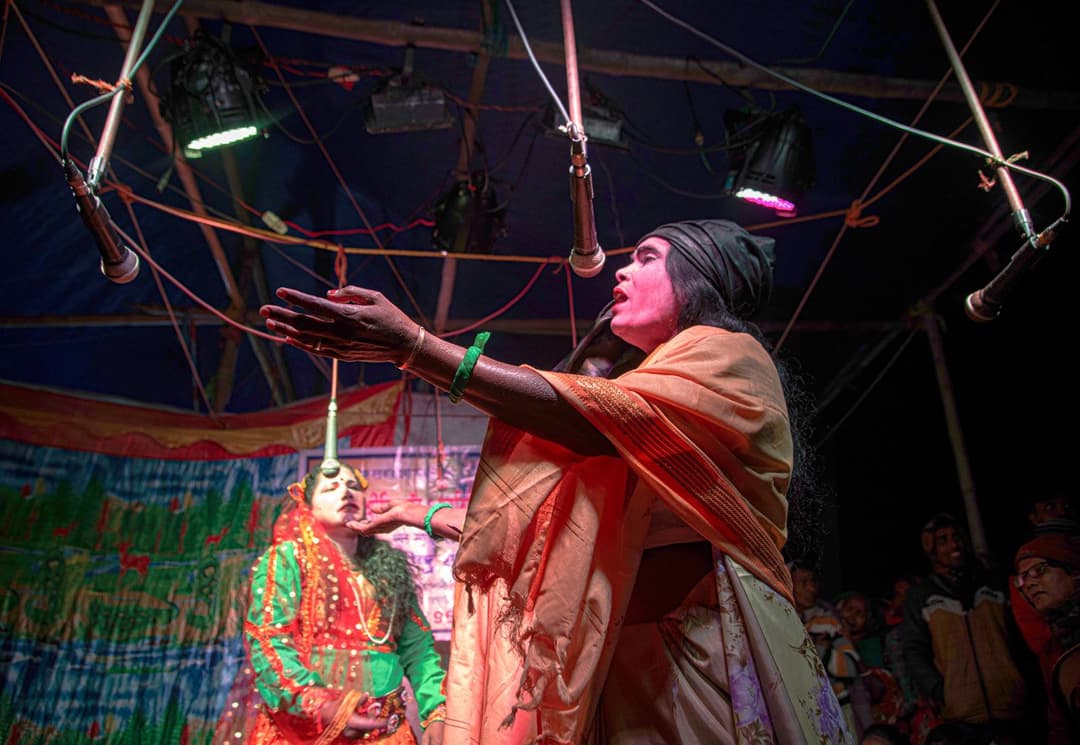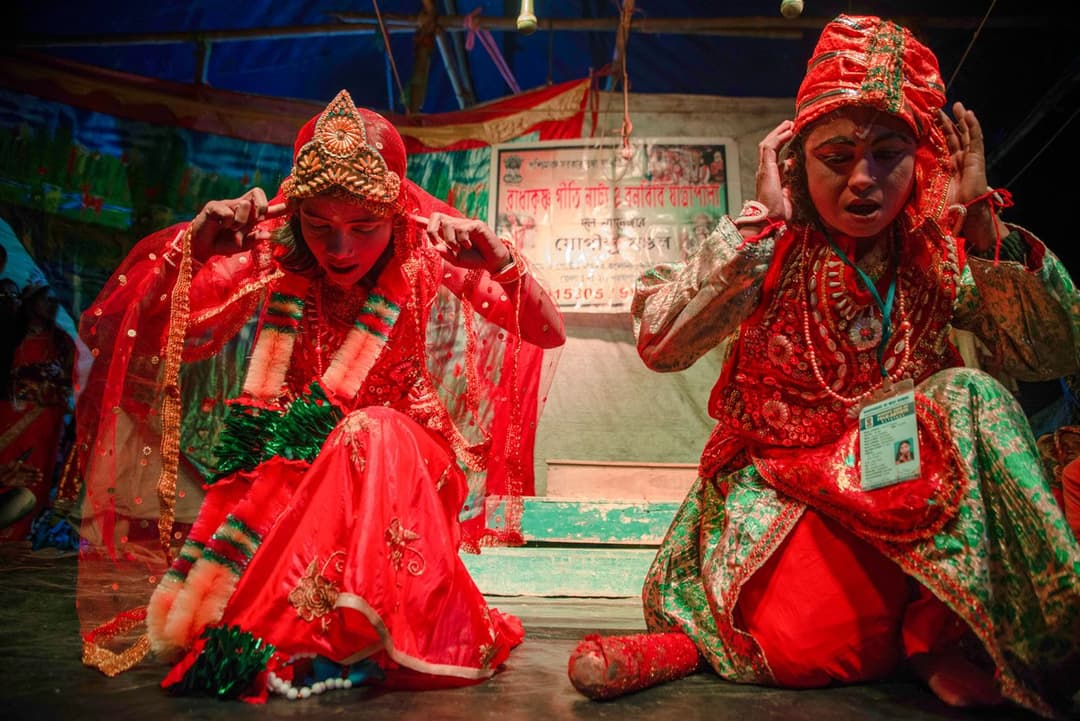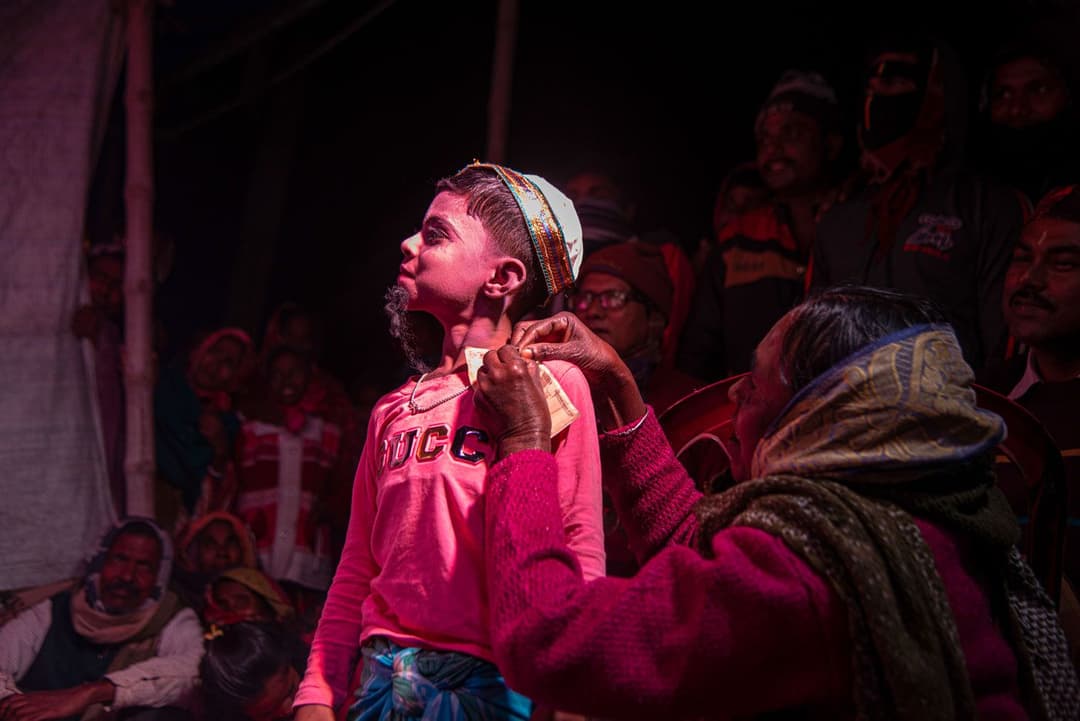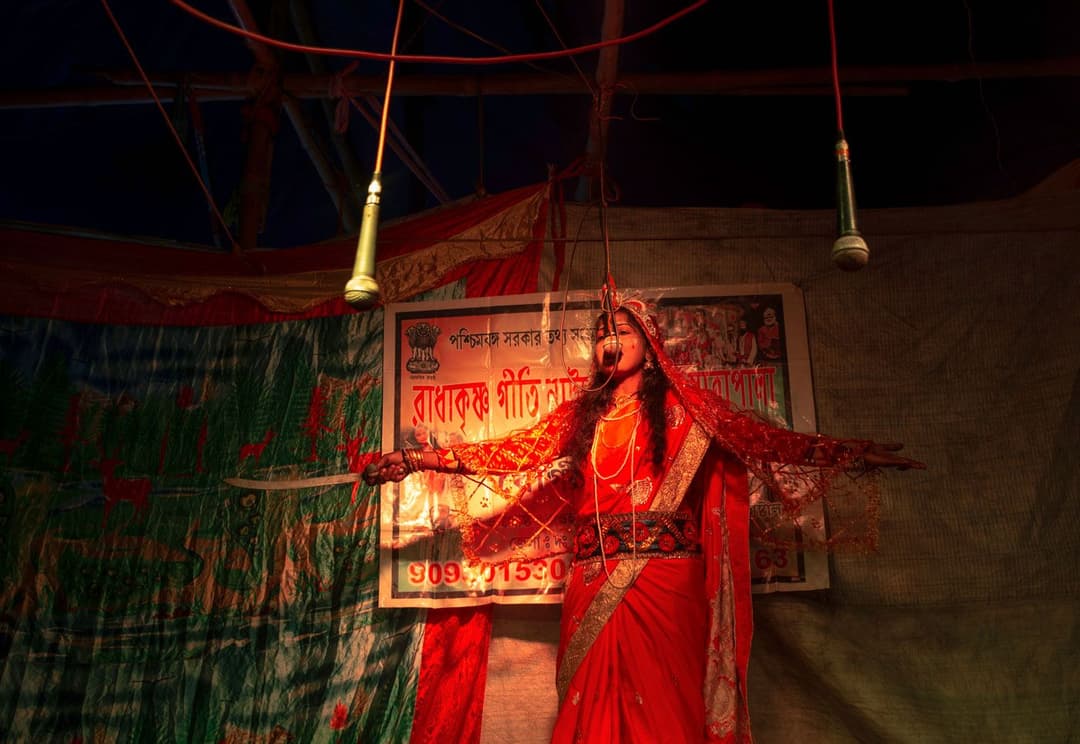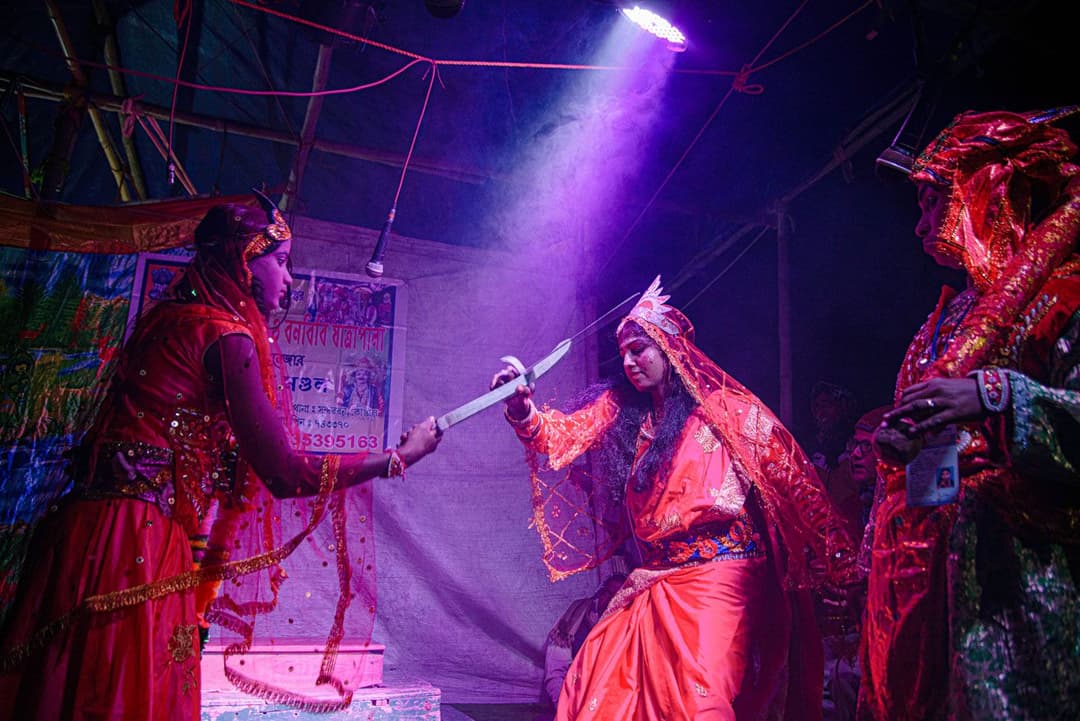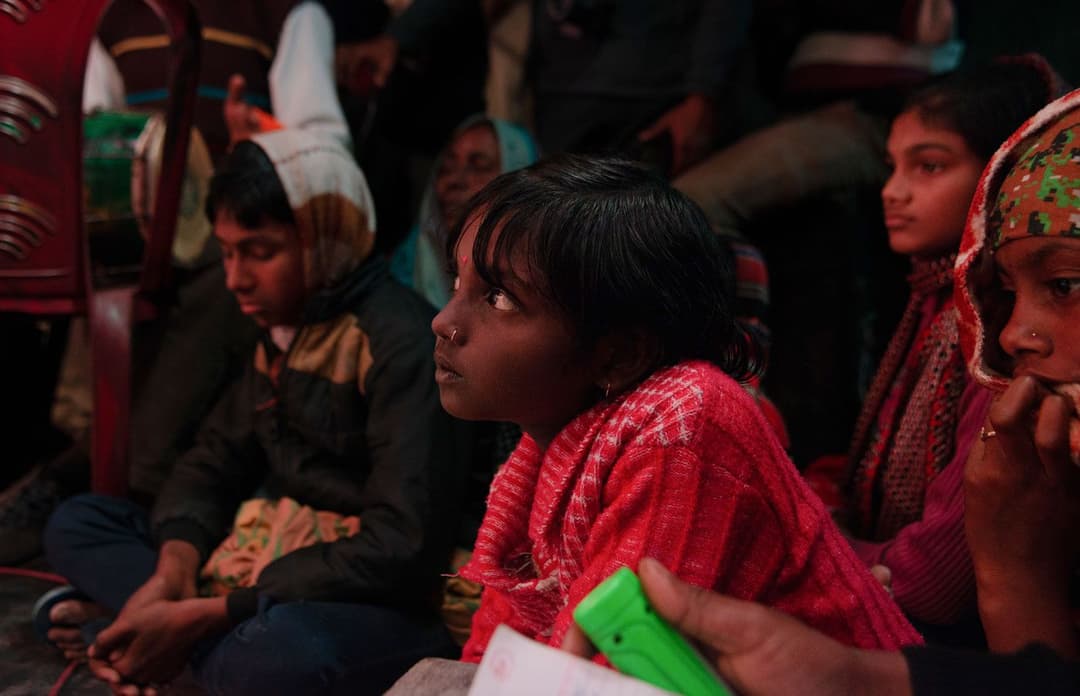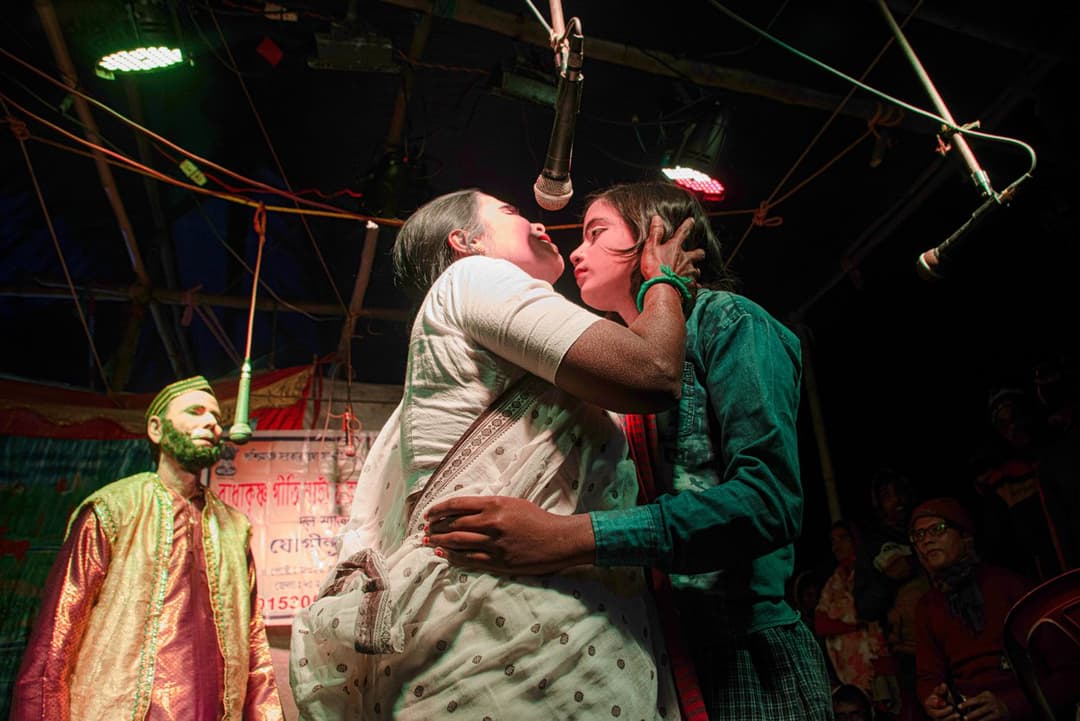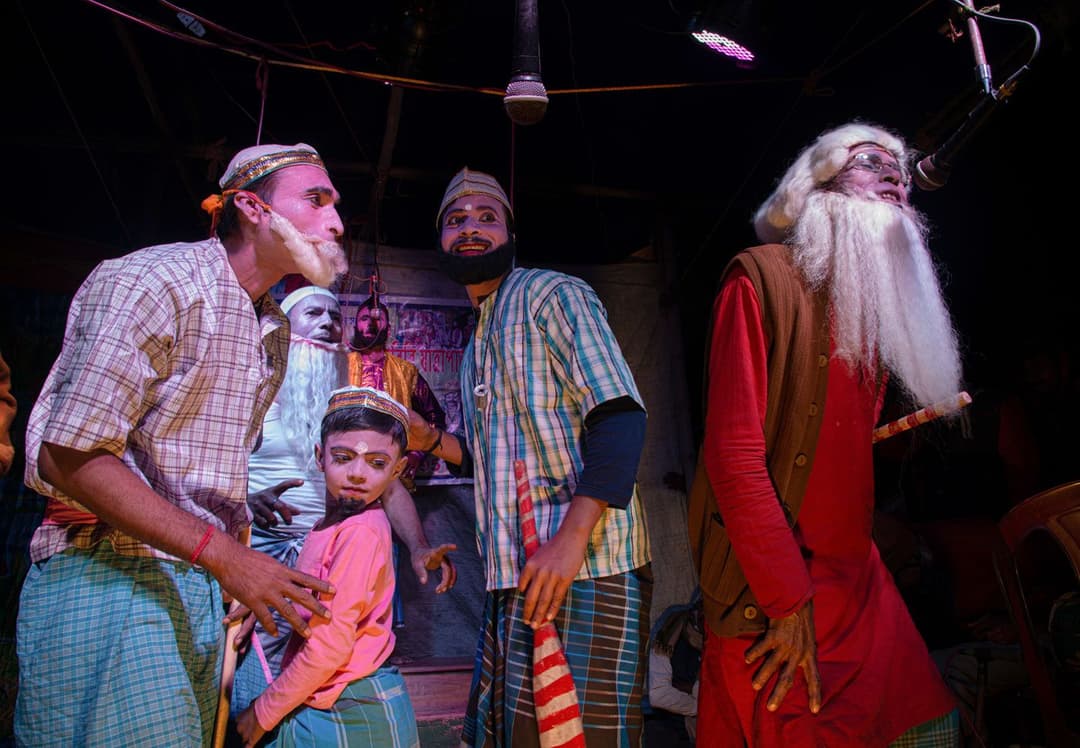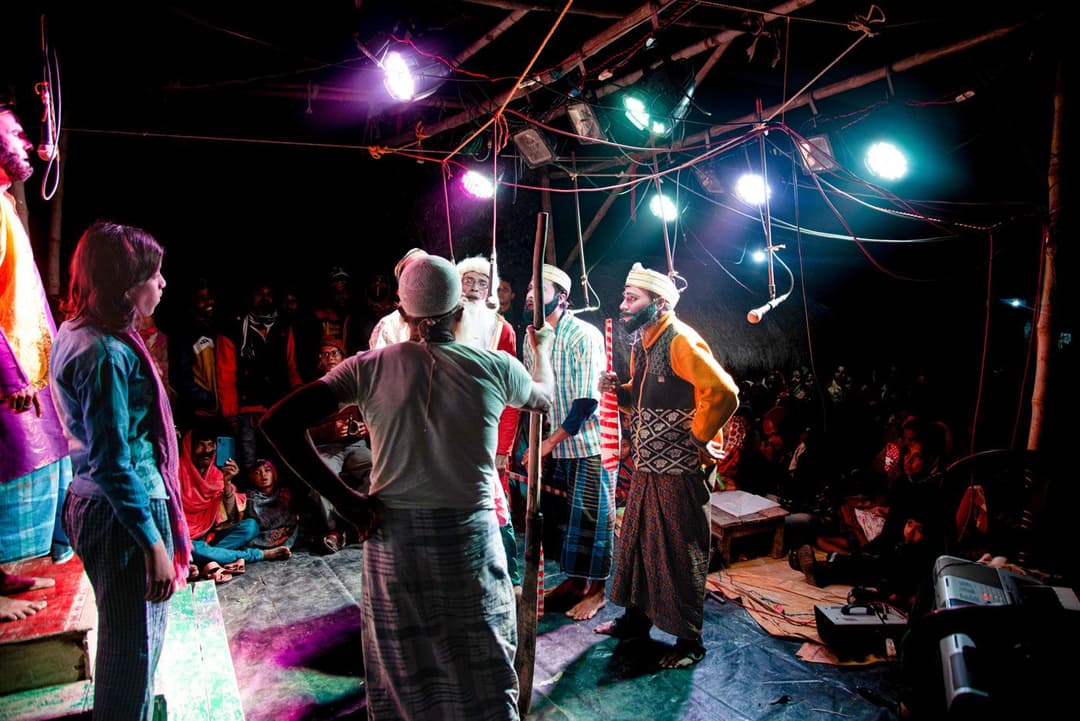

It’s past 9 p.m. on a chilly January night and an audience of roughly 400 people are waiting for the show to begin. It was supposed to start an hour ago.
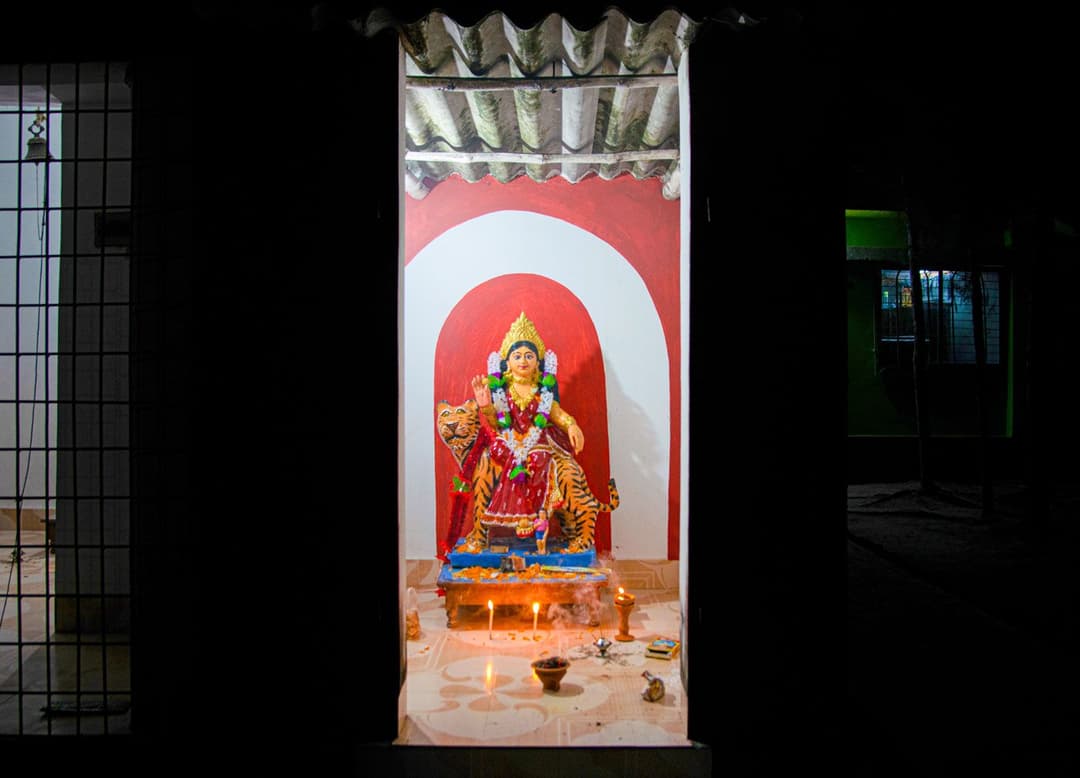
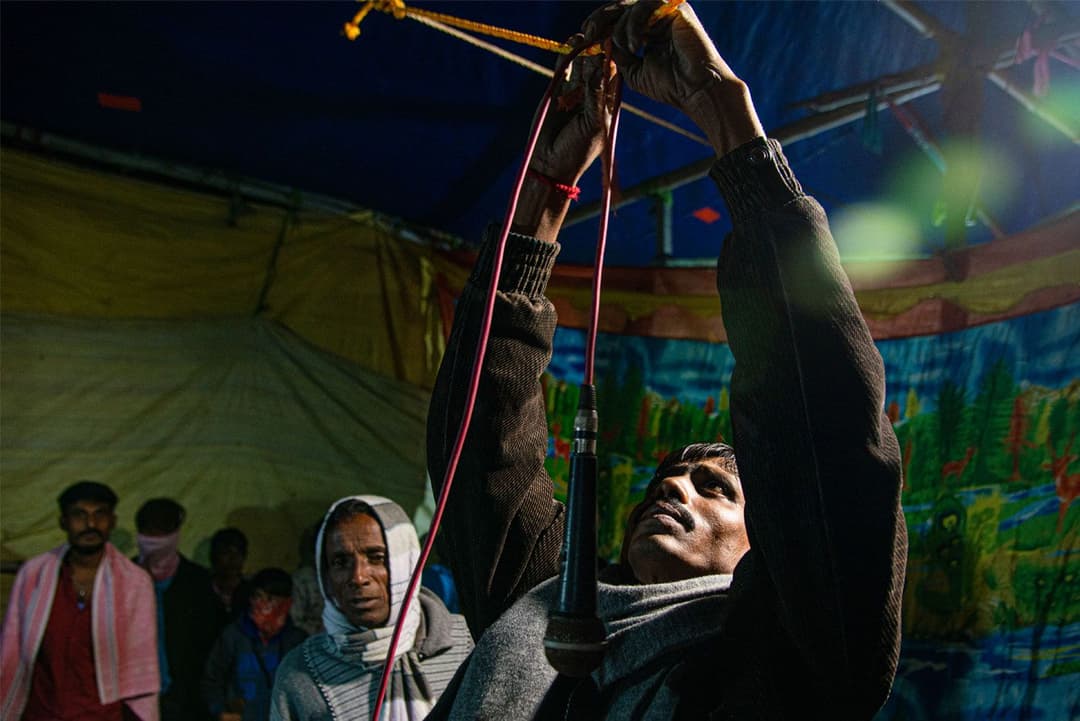
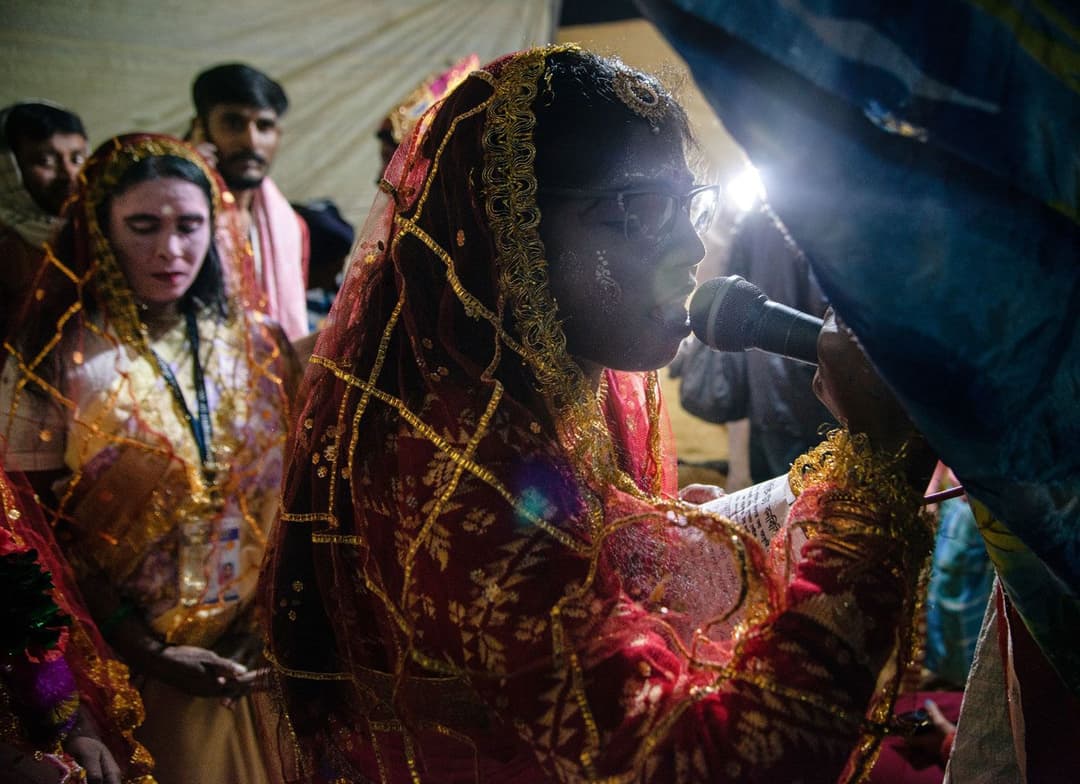
Suddenly, there is a bustle around the makeshift stage at the front. A loudspeaker fastened to a bamboo scaffold vibrates and a voice booms out: “We shall soon begin the verse drama dedicated to Ma Bonbibi… she who protects against all evil!”
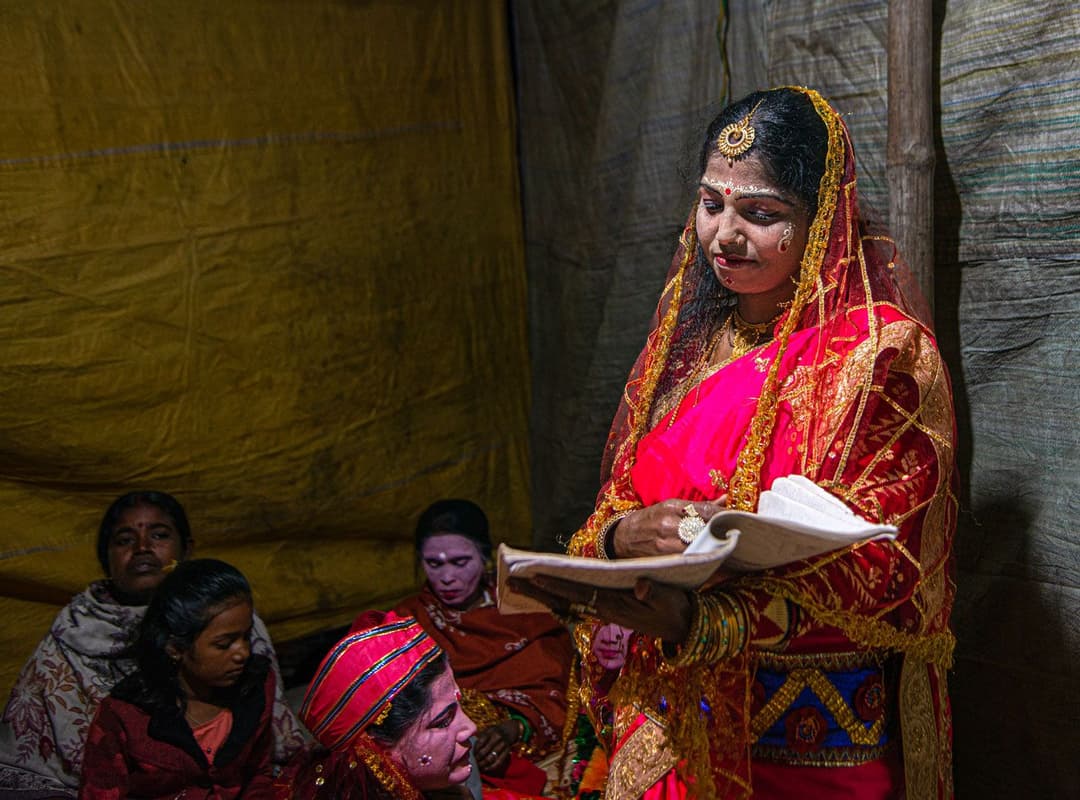
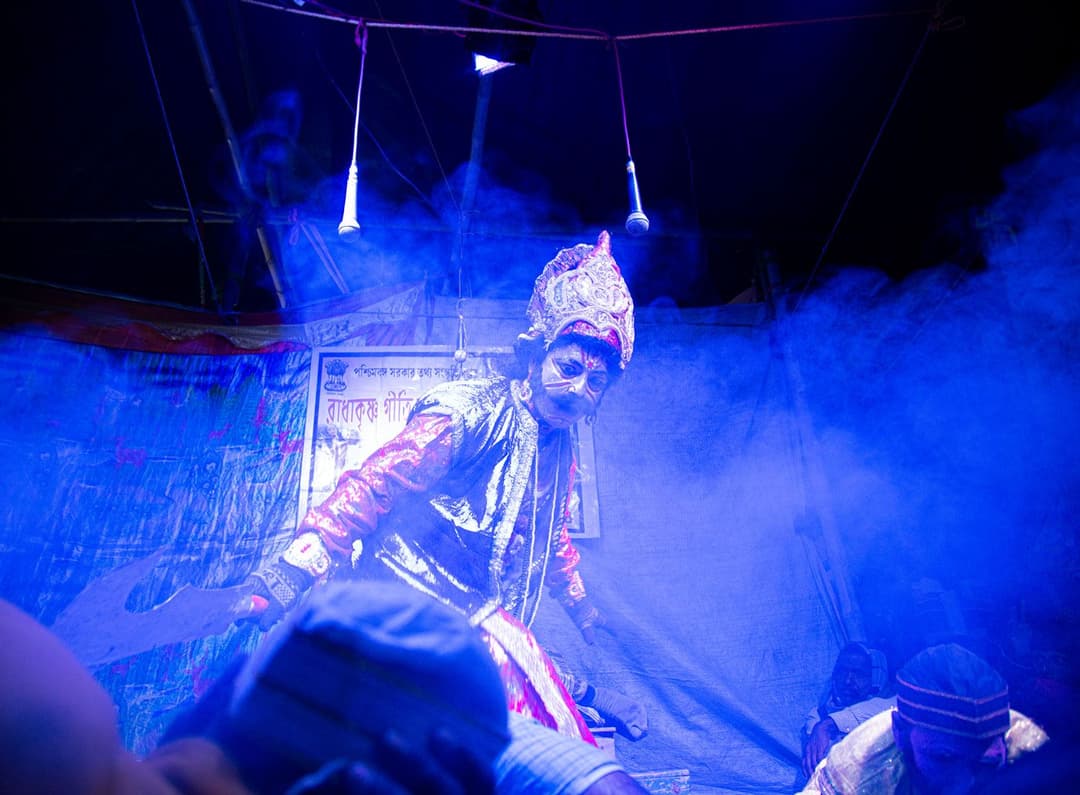
Those wandering around Jawahar Colony village in Gosaba block, begin to settle down, keen on seeing ‘evil’ – unfriendly ghosts, snakes, crocodiles, tigers, bees – vanquished by goddess Ma Bonbibi in atharo bhati-r desh (land of 18 tides). This is the Sundarbans, the world’s largest mangrove forest of saline and fresh water bodies teeming with animals, plants, avian, reptile and mammal life. Here, tales of Bonbibi are passed on from generation to generation and embedded in the oral tradition of the region.
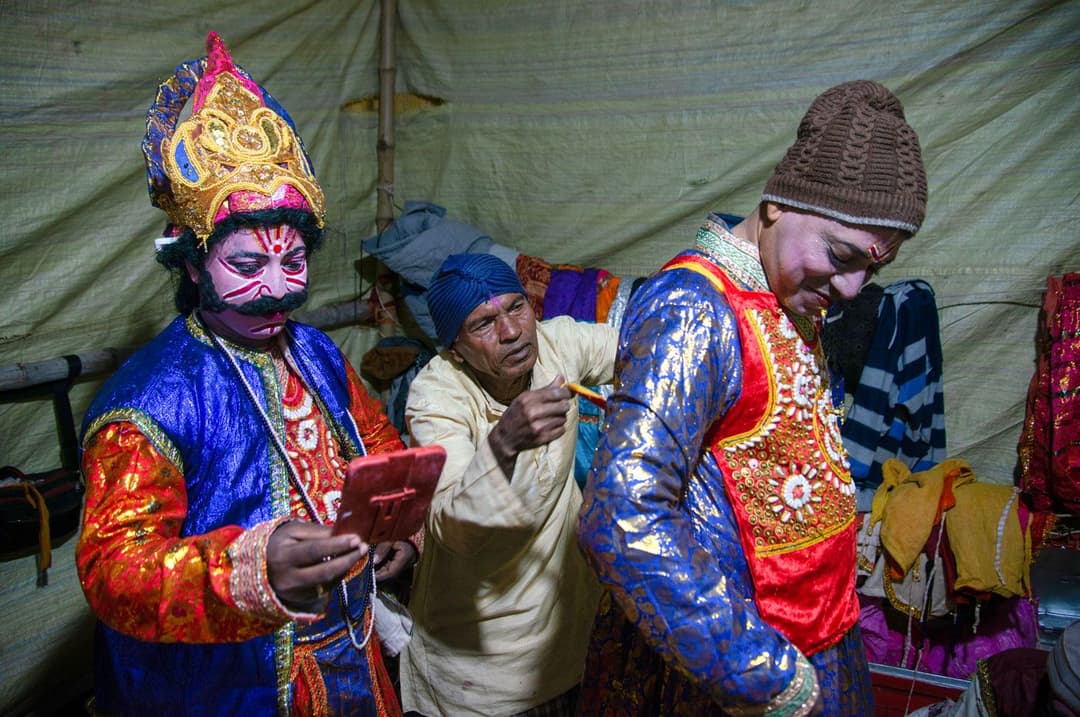
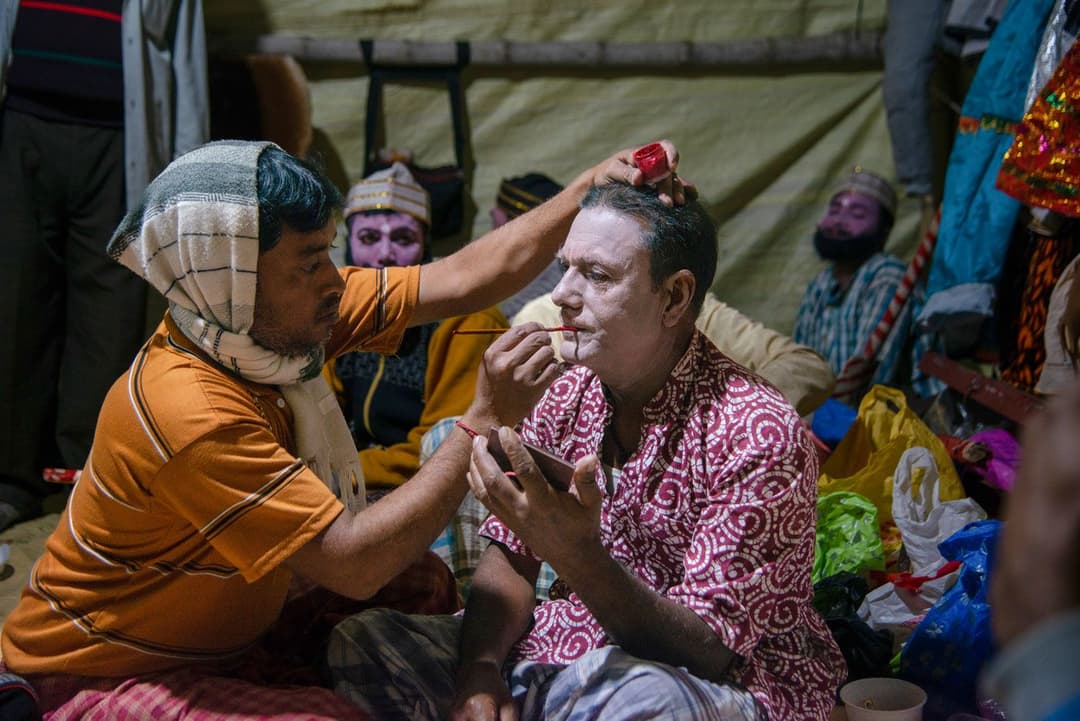
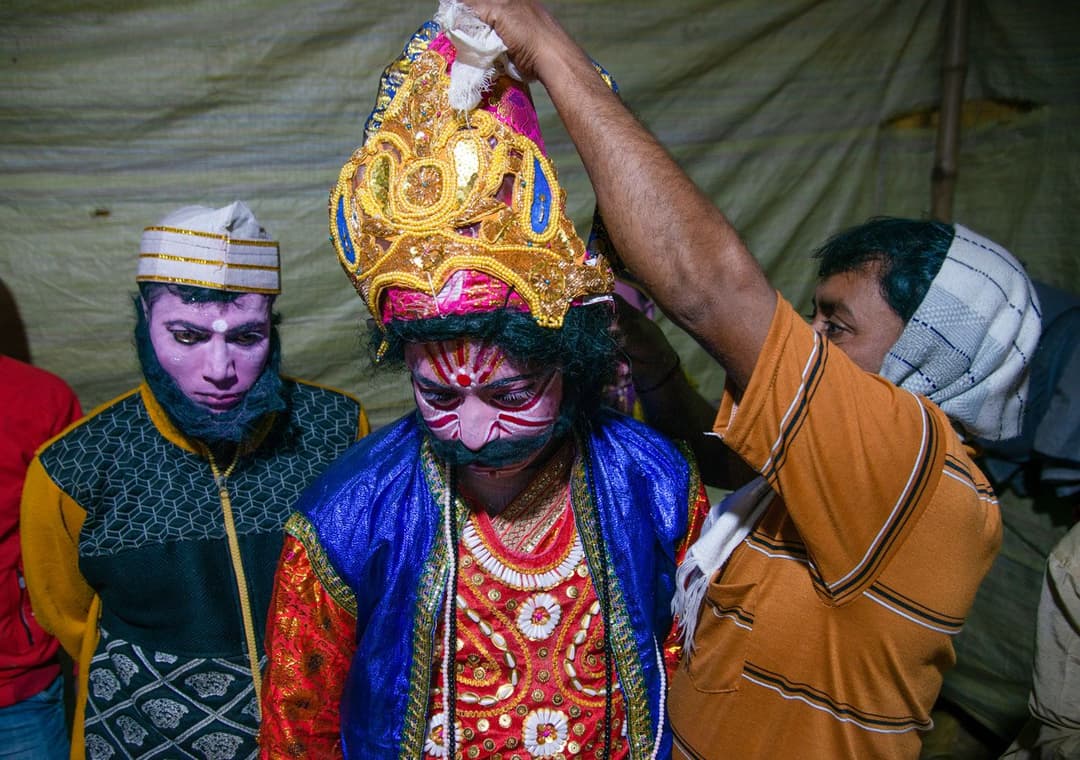
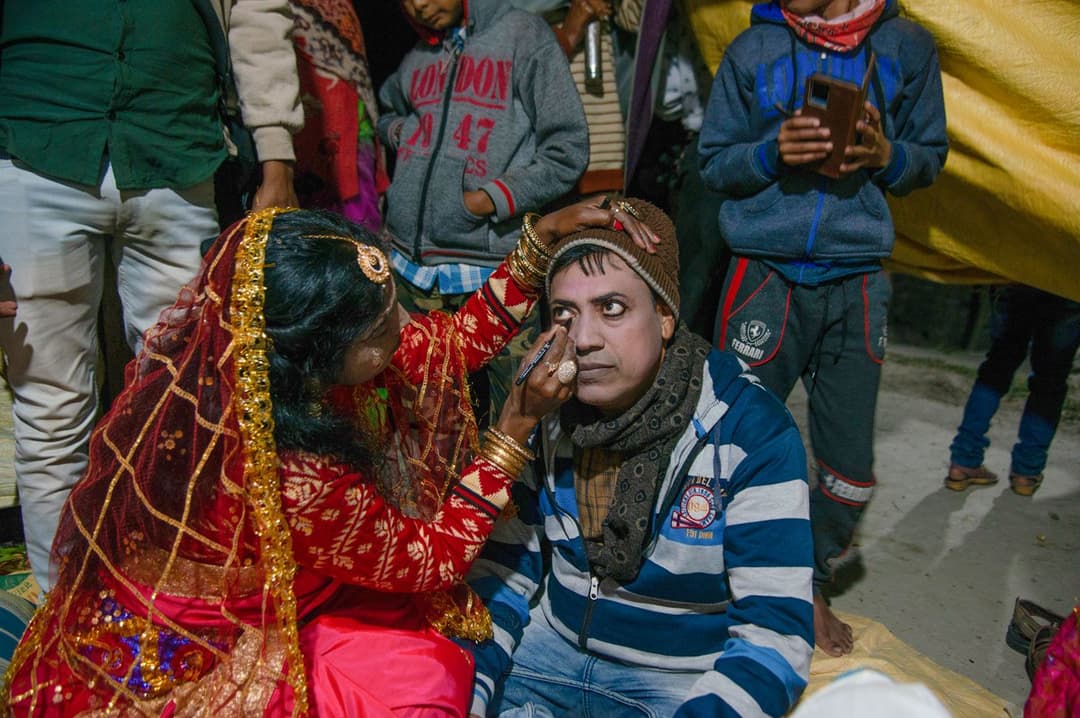
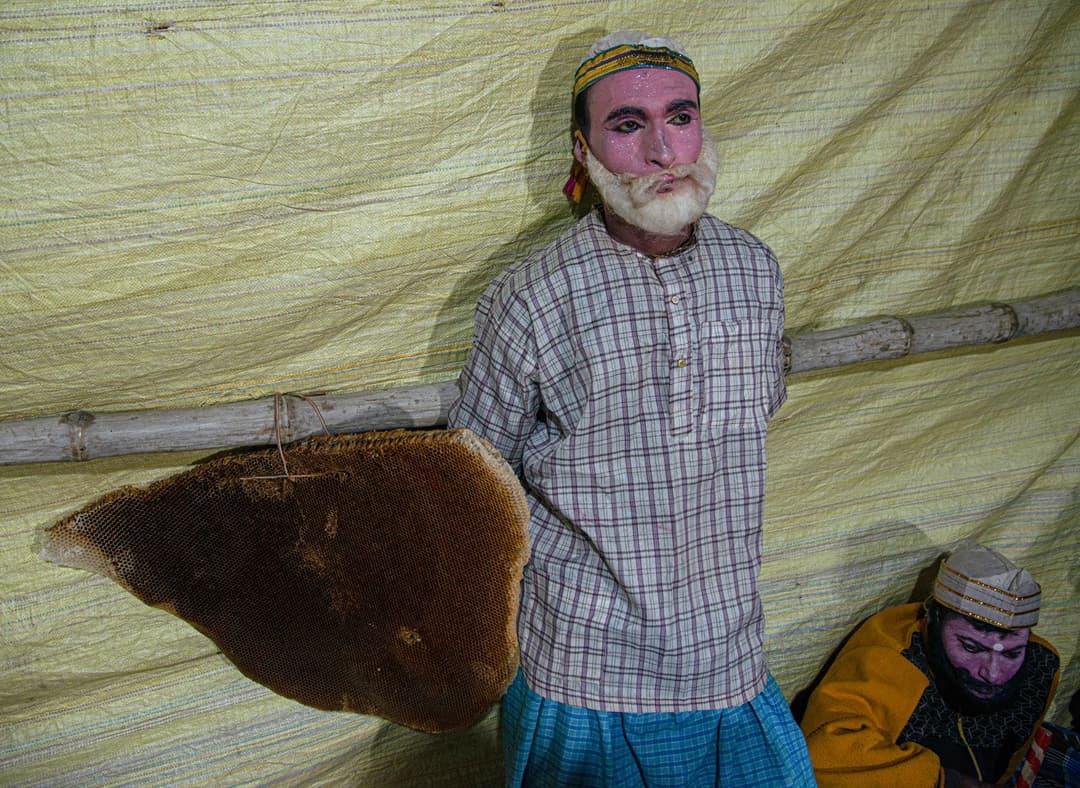
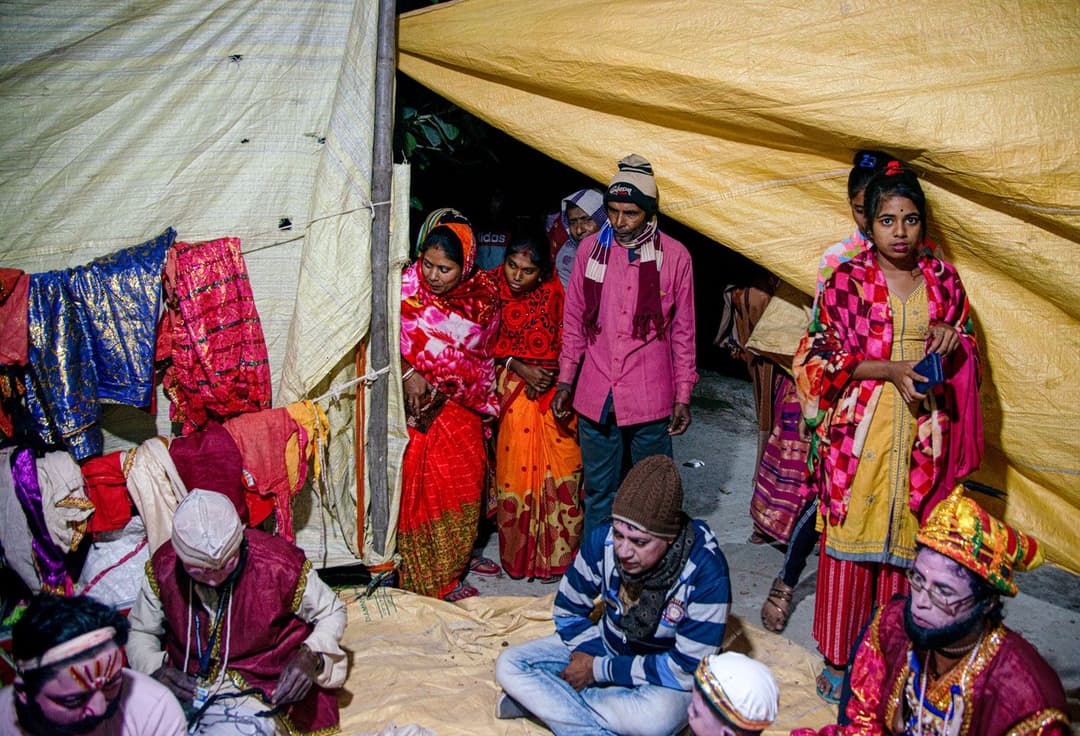
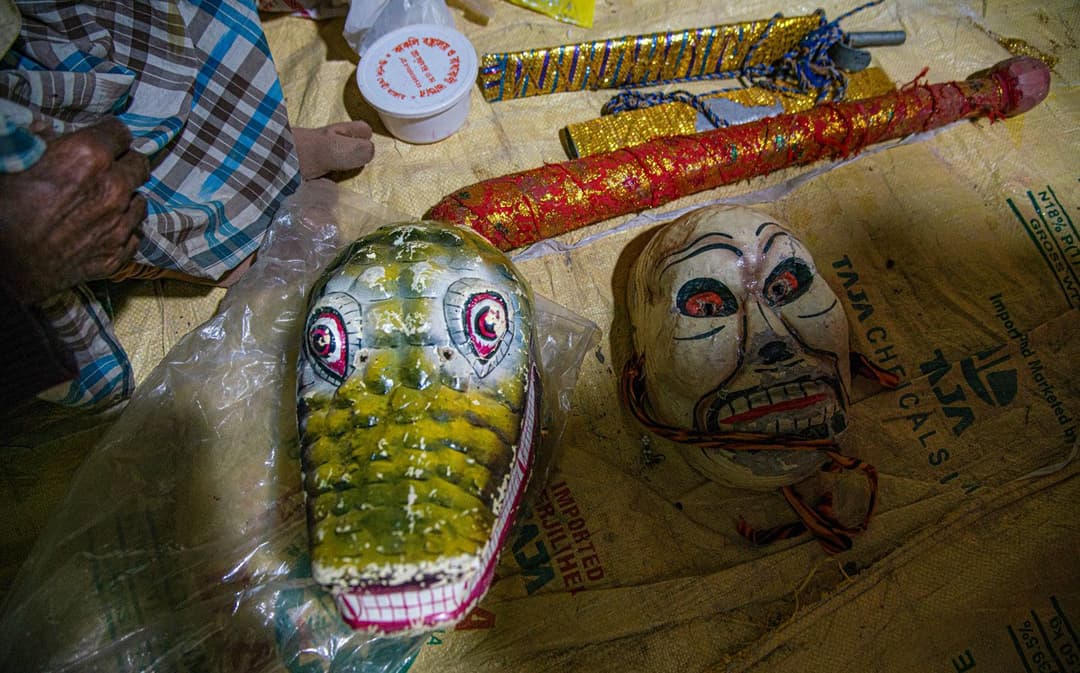
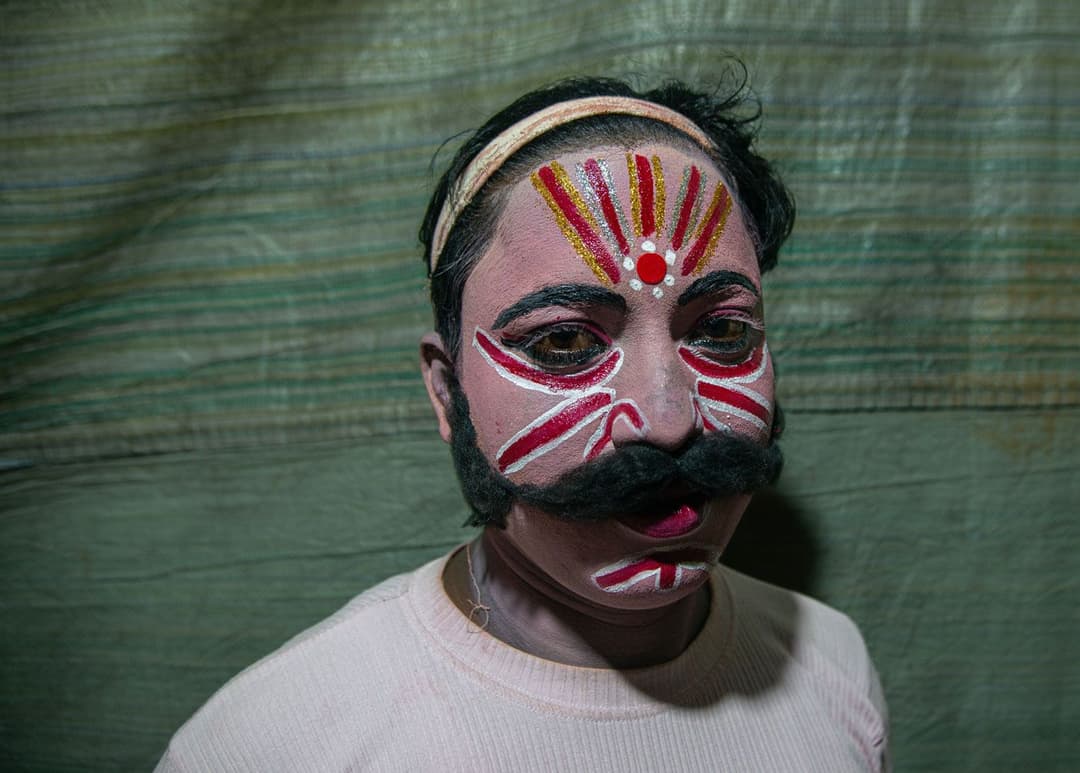
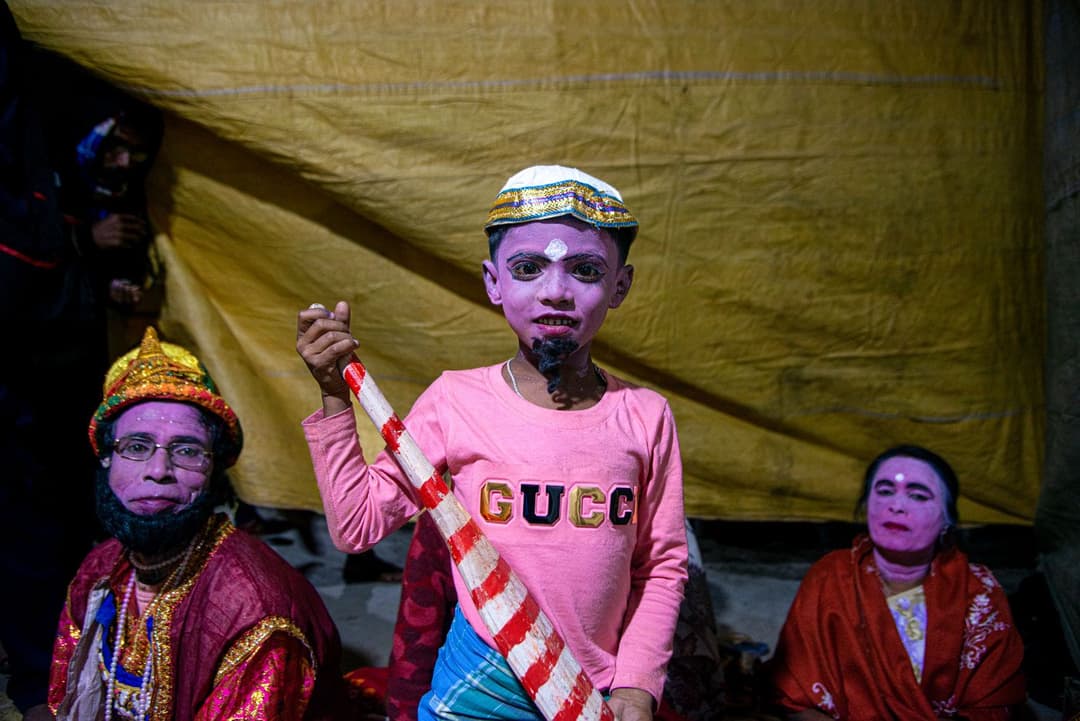
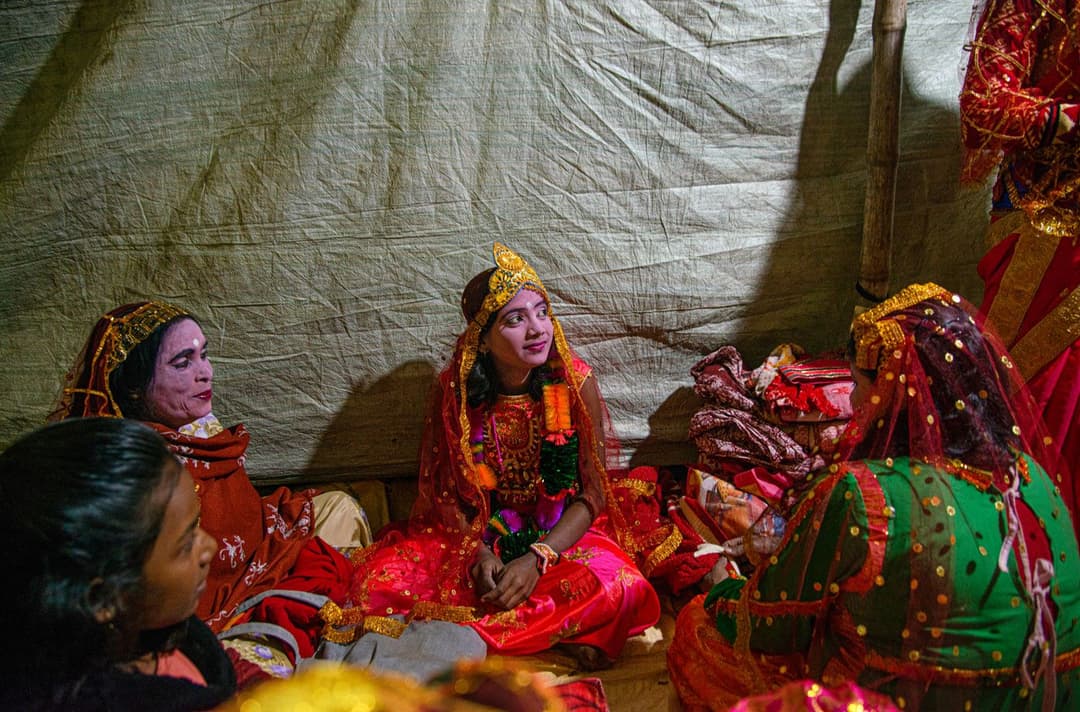
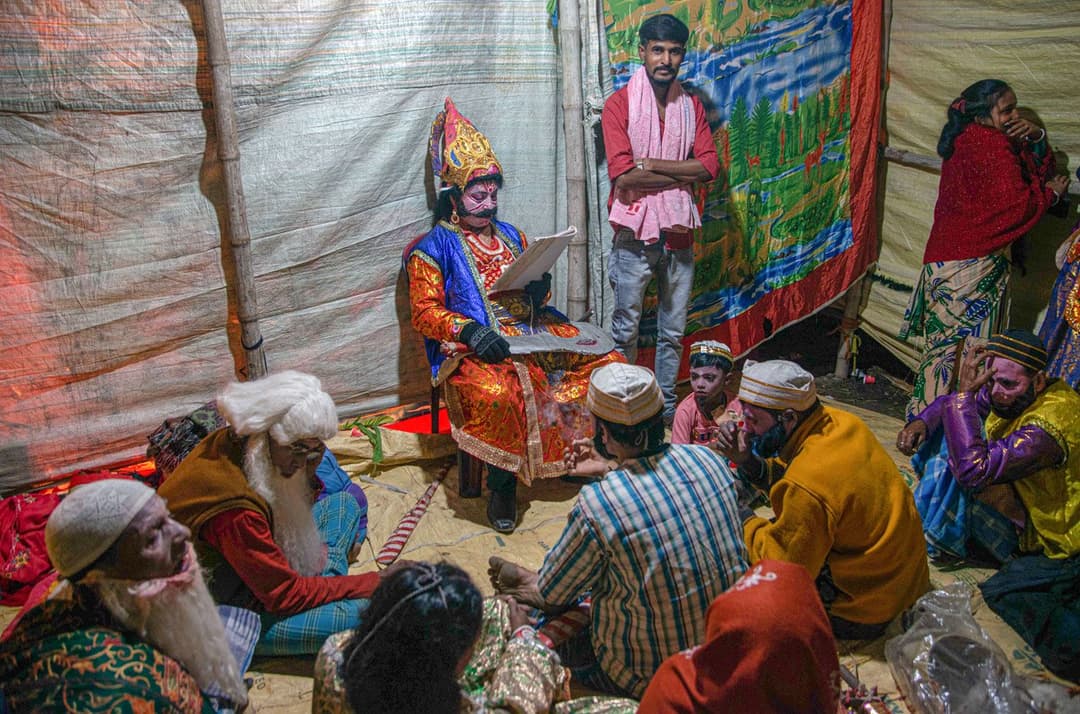
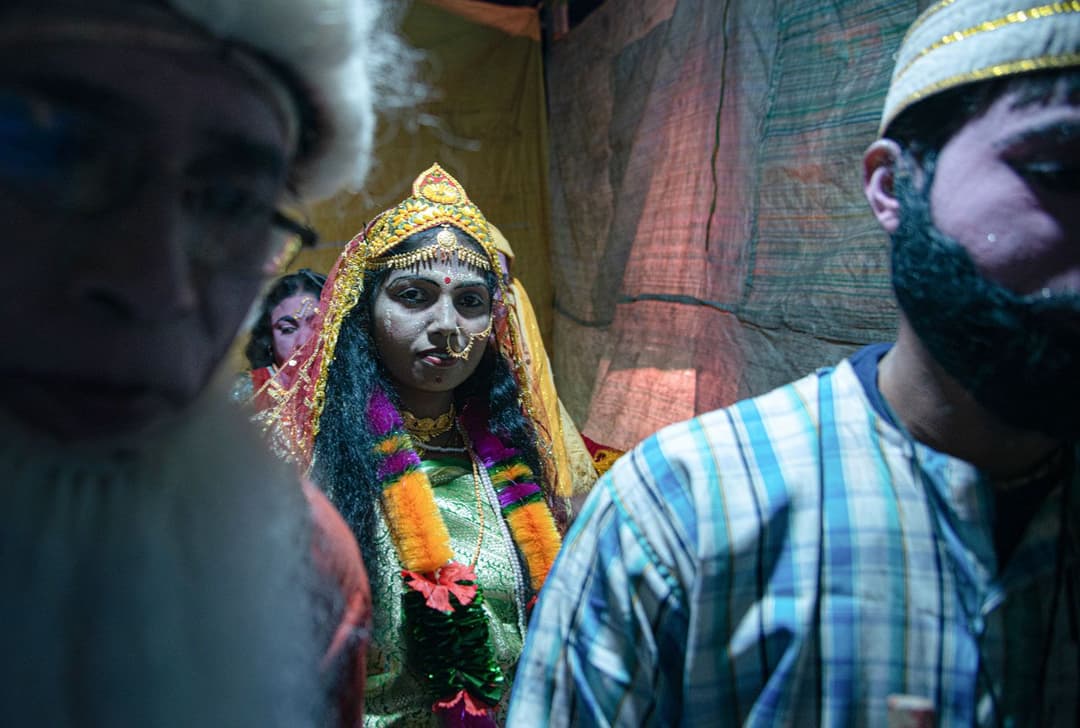
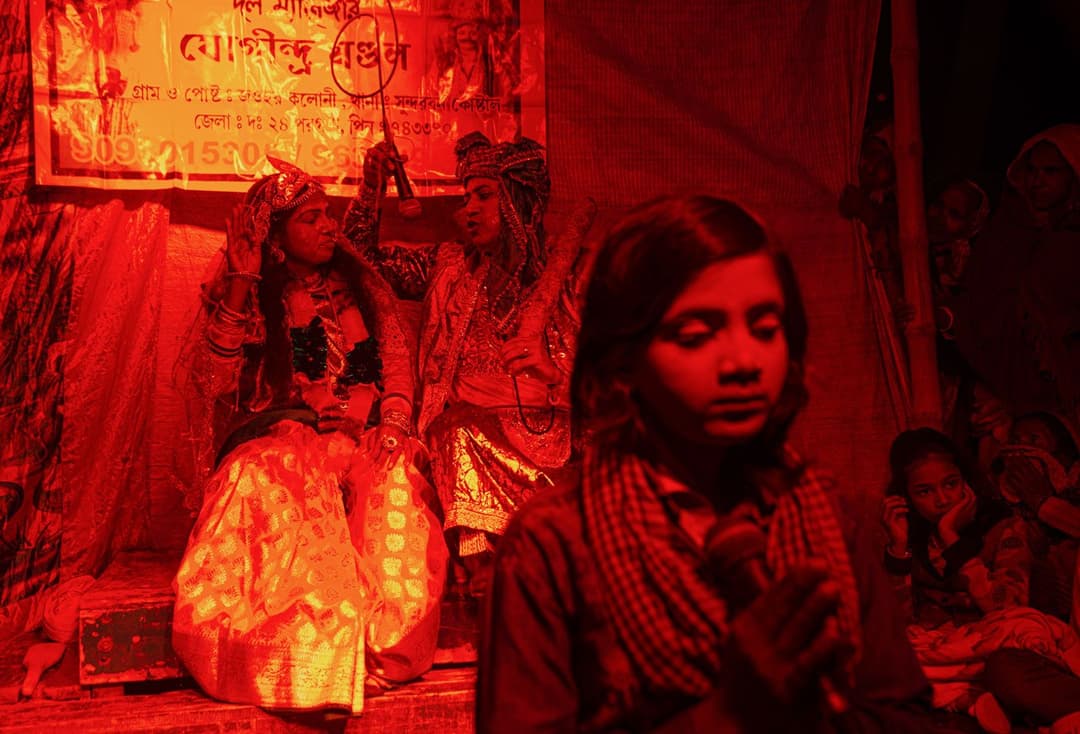
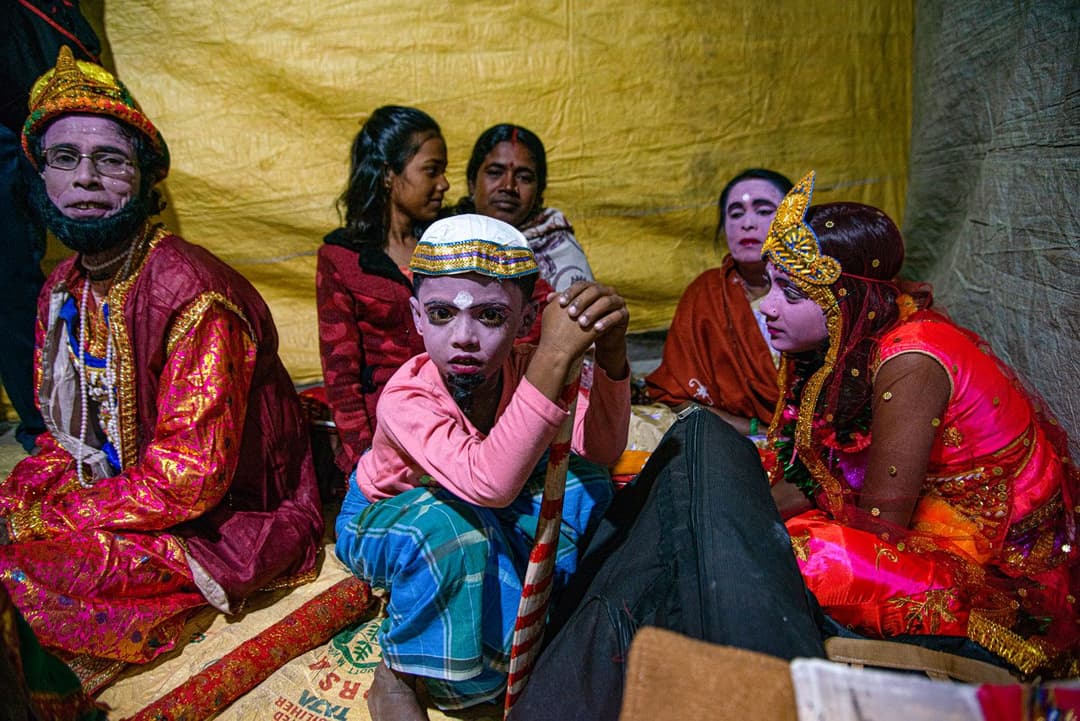
The green room, which is cordoned off from the street with curtains, is buzzing with audience and actors gearing up for the Bonbibi pala gaan, a musical drama. Large honeycombs and terracotta masks of tigers which are to be used as props in the show tonight, are stacked against the tarpaulin walls, awaiting their turn. The themes enacted are often closely related to people’s lives in the Sundarbans – home to 96 tigers in 2020.