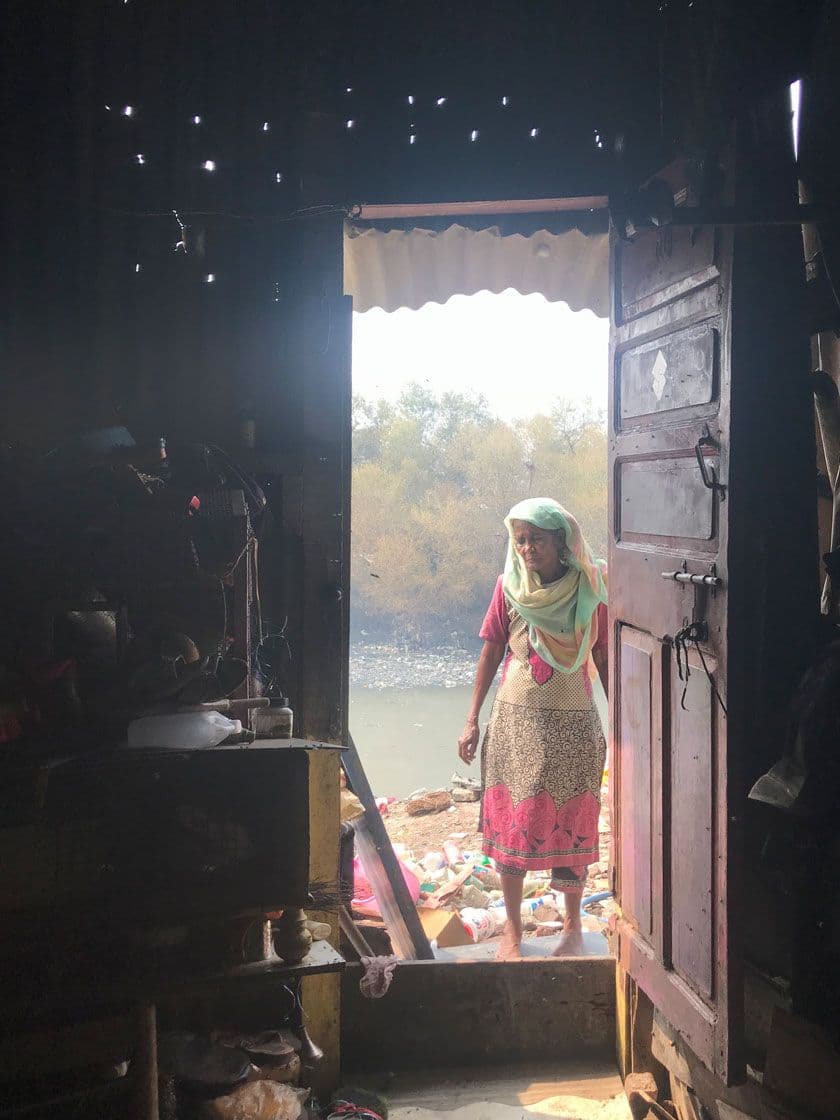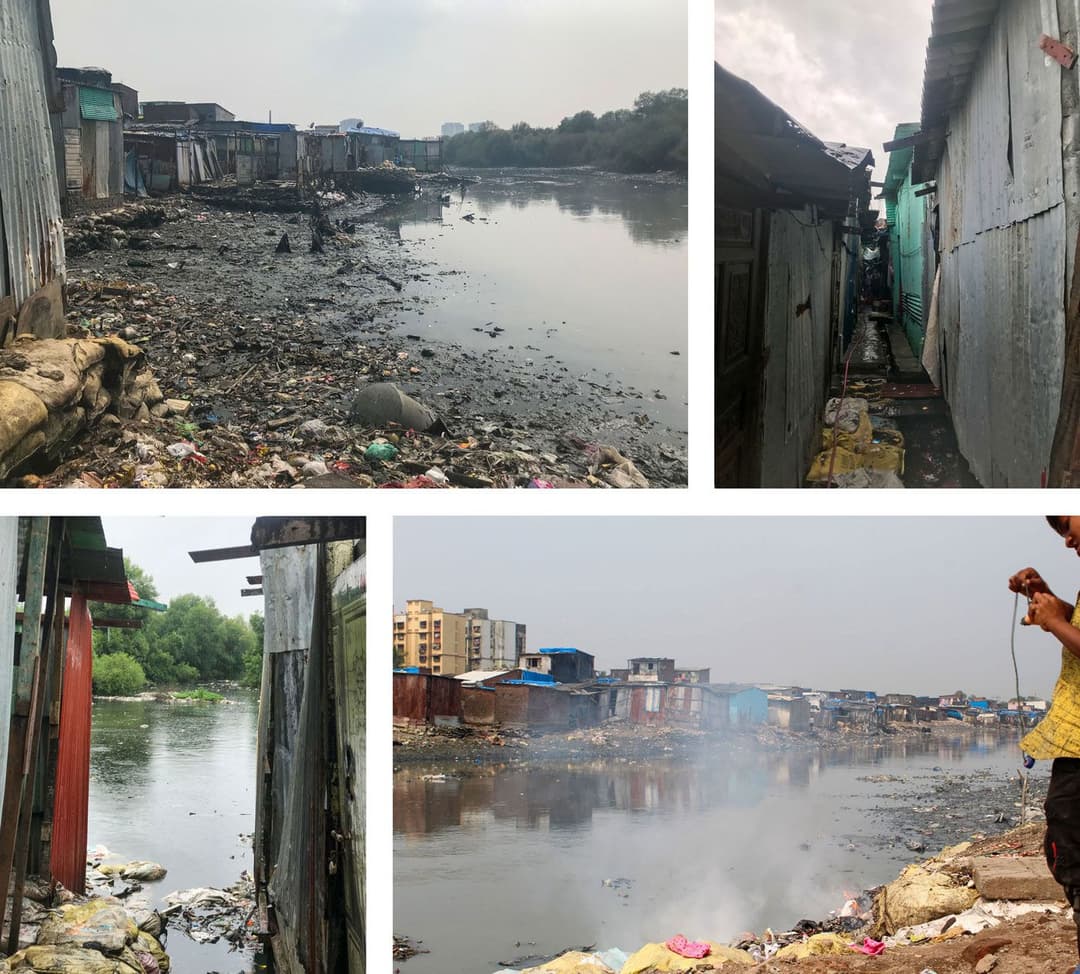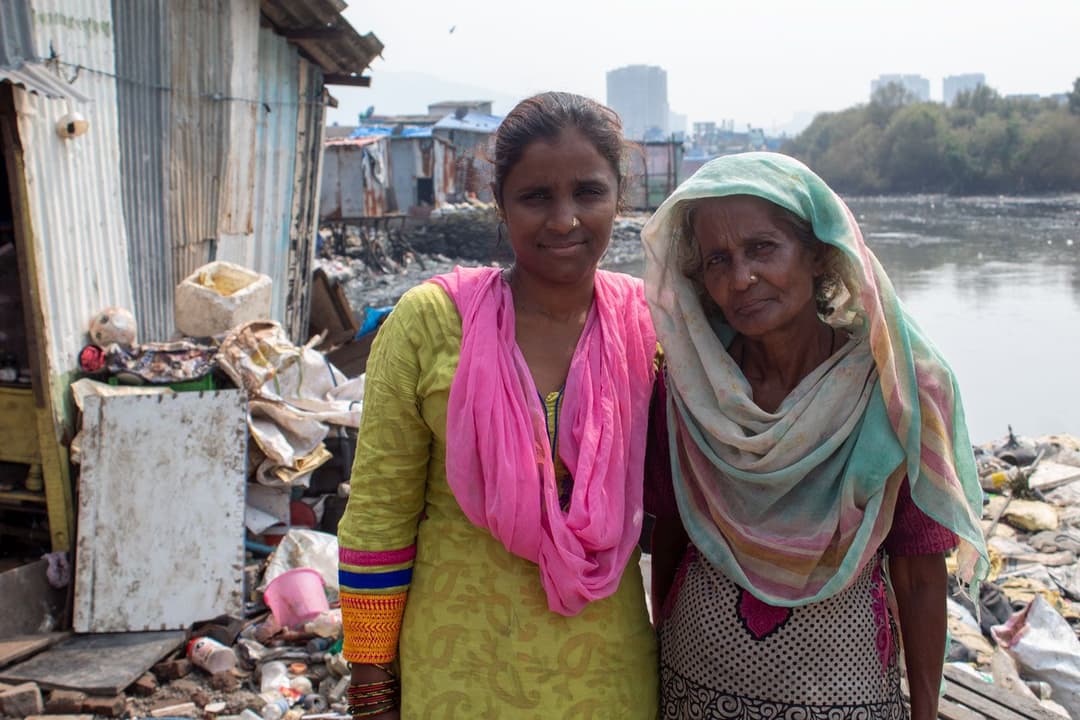

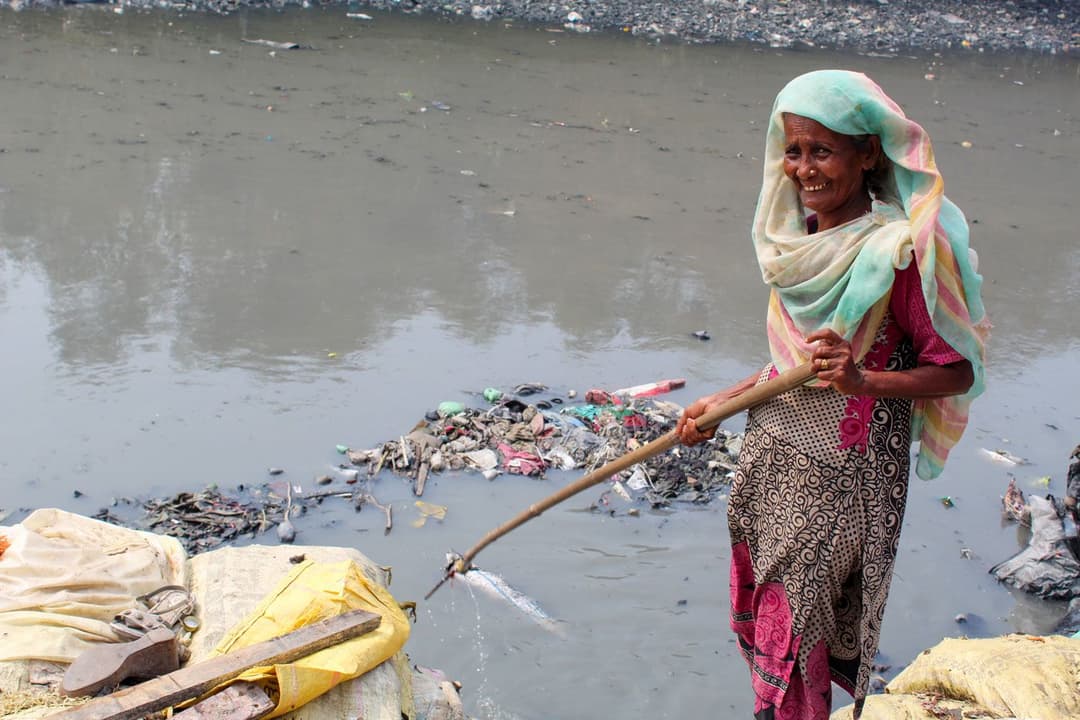
Kitabun Nisa Shaikh is standing on the edge of a hillock of rubble and garbage, picking out plastic from a nallah slowly flowing by her house in Rafiq Nagar. Some of the waste has slithered there from the adjoining Deonar landfill, some of it is garbage thrown right into the open drain. Using a long wooden stick with a hook, she manages to draw in a pink plastic bottle entangled in a slimy black rag. Then she reaches across with the stick for the next item of value to her.
She does this for around six hours a day, her orange hair glowing in the sun, her back bending with the effort at the age of 75. Glass beer bottles and plastic water bottles are prized items, which re-sell for more than other waste material. Every alternate day, when 12 to 15 kilos of plastic have been collected, Kitabun’s daughter-in-law Zahida puts it all in a polythene sack and carries it on her head to a scrap dealer in the Baba Nagar locality, a 15-minute walk away. In return, the family earns Rs. 200-300 – or around Rs. 1,000 a week. “We have to do this [work] to fill out stomachs,” says Kitabun. “I don’t like it at all, but what else can we do?"
Near Kitabun’s hut are the outskirts of the 324-acre Deonar dumping ground. This is the largest of three such grounds in Mumbai (the other two are in Mulund and Kanjurmarg). It receives around 35 per cent of the roughly 9,500 metric tons of garbage that the city produces every day. The Deonar site was exhausted in 2016, but continues to be used – with a ‘last extension’ granted by the Bombay High Court to the Brihanmumbai Municipal Corporation to use the ground till December 31, 2019, for dumping solid waste.
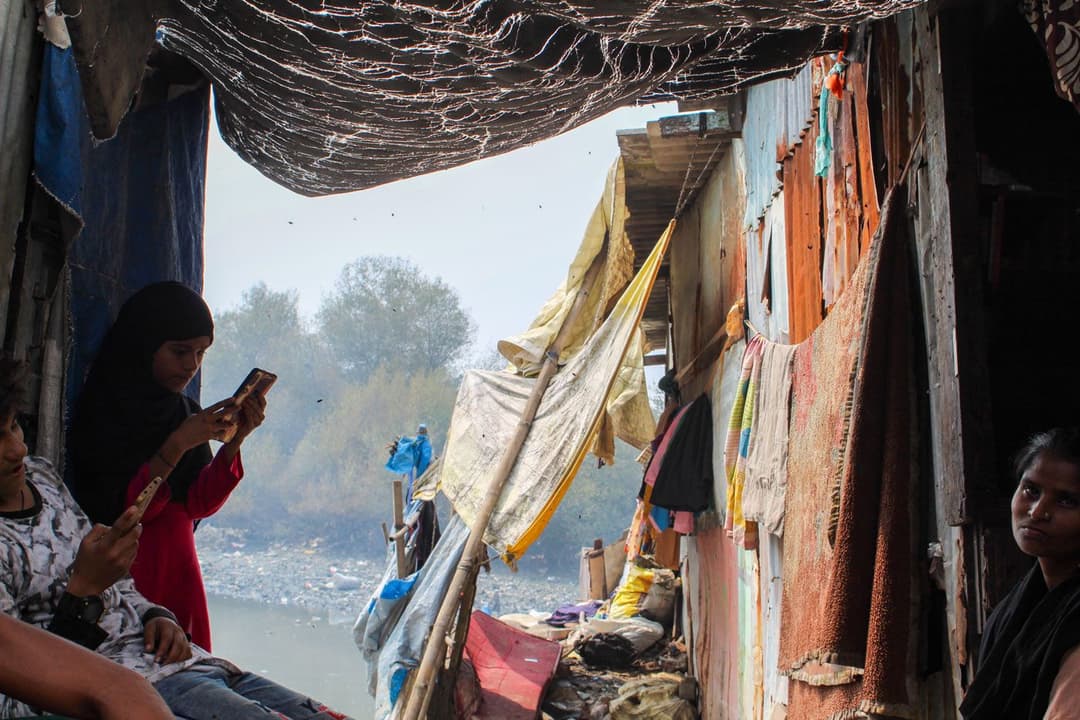
Around the ground are several slum settlements like Rafiq Nagar. These are part of the city’s M-East ward, which has a population of 807,720 (Census 2011). The narrow lanes of Rafiq Nagar are flanked by clogged drains and heaps of garbage. The smell from the dumping ground hangs heavy in the air. Swarms of flies and mosquitoes hover everywhere.
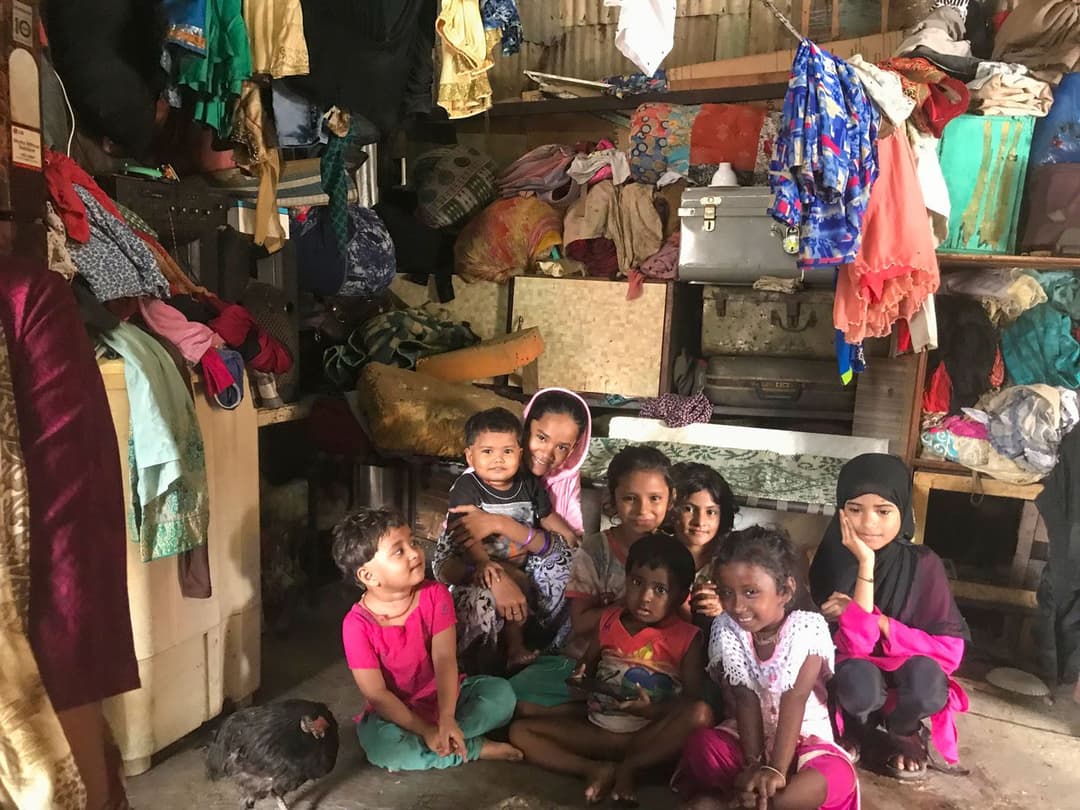
Kitabun’s hut is at the end of a lane, at the very edge of that nallah. It’s a 100-square feet room that shelters 16 people – Kitabun’s three sons, Zahida and 11 grandchildren. “During heavy rains, the water from the gutter enters our house,” she says. “We move our important things like dal, rice and some clothes on to the top shelves. Most items get wet. We take shelter at neighbours’ houses [higher up the lane] till the water recedes.”