

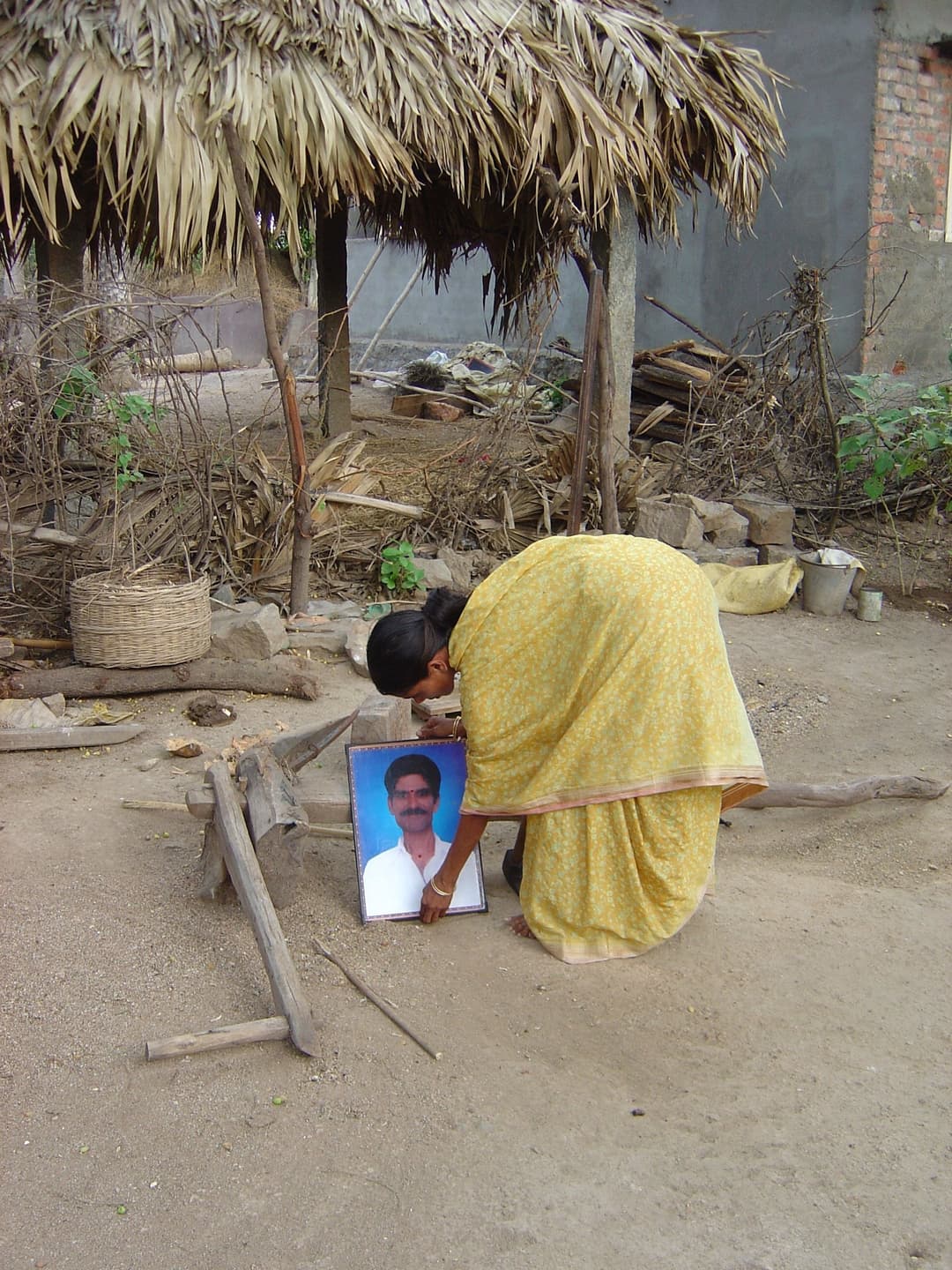
No one had ordered a plough in three years. Nor axe and spade handles either. Which meant that Bangaru Ramachari, who made tools and implements for farmers, was in trouble. He had been Mukundapuram's sole carpenter for years. He owned no land or cattle and was not a farmer. But his well-being depended on how agriculture in this village in Andhra Pradesh's Nalgonda district fared.
"When farming does badly," says S. Srinivas, a political activist here, "everyone does badly. Not just farmers." Ramachari did worse. He died of hunger. In a village that falls in the command area of the Left Canal of the Nagarjuna Sagar dam project. Where farming had earlier done well for years
The fault lines of the farm crisis are sending tremors far beyond the immediate community itself. Potters, leather workers, carpenters and numerous other non-farm groups have been hit by the crisis of agriculture that is driving the farmers' suicides in the state. The delicate and age-old linkages of the sector are under severe strain.
"I was away in Vijayawada working in a chappal company," says Aruna, Ramachari's widow. Women from the Voddrangi (carpenter) caste do not normally migrate in search of work. "There was no choice," she says. "I had never been a migrant worker before. But the chances of finding work here were nil." So she migrated a month at a time, leaving their three children with her husband.
"Ramachari used to have around 40 clients," says Srinivas. "They paid for his services with paddy. Each gave him 70 kilograms a year." Of the 2,800 kilos he got this way, he kept what his family needed and sold the rest on the market. "He could get around Rs. 250 for 70 kilos. Remember this was paddy, not rice." Yet, after retaining what his family required, he could make Rs. 4,000 in a year this way. "With that, he took care of the family."
He had even more clients earlier, but problems began in the boom time. The coming of 12 tractors in the village reduced work. "That hurt those who work with their hands," says K. Lingaiah. Landless workers like him also did badly from then on. For Ramachari, it was a blow. But he kept at his trade, trying to make things work. "He had no other skills," says Aruna. He had studied till the 5th class. She till the 4th.

