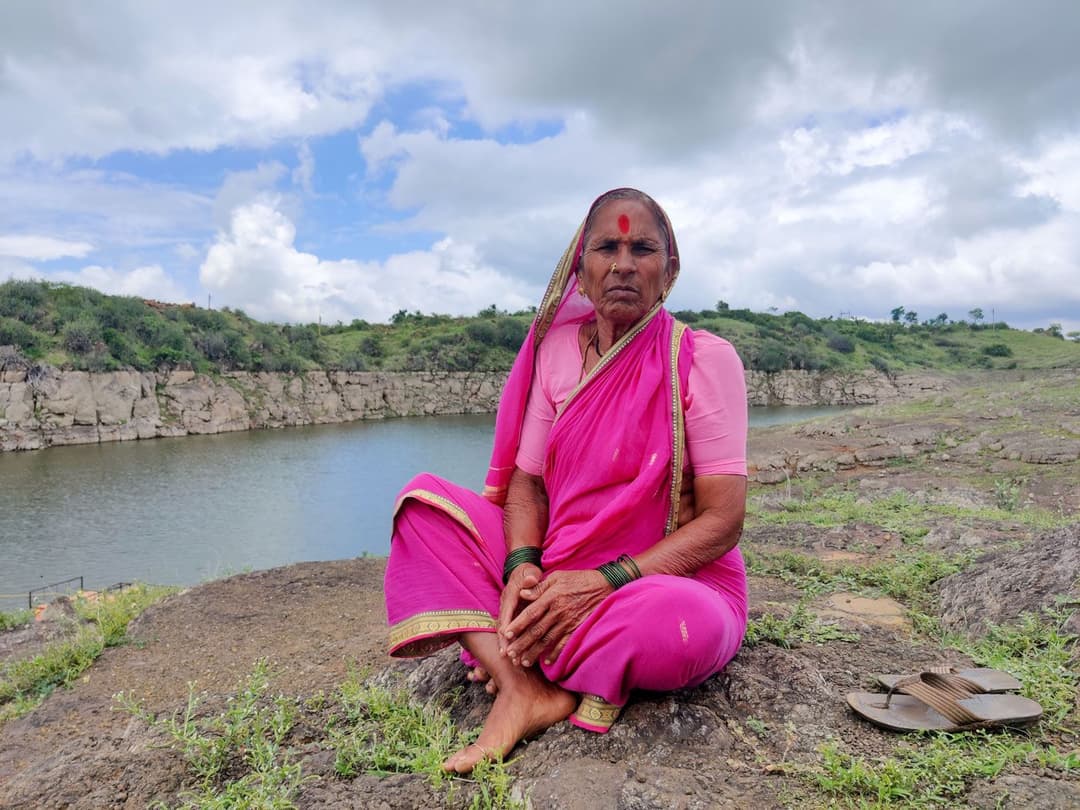

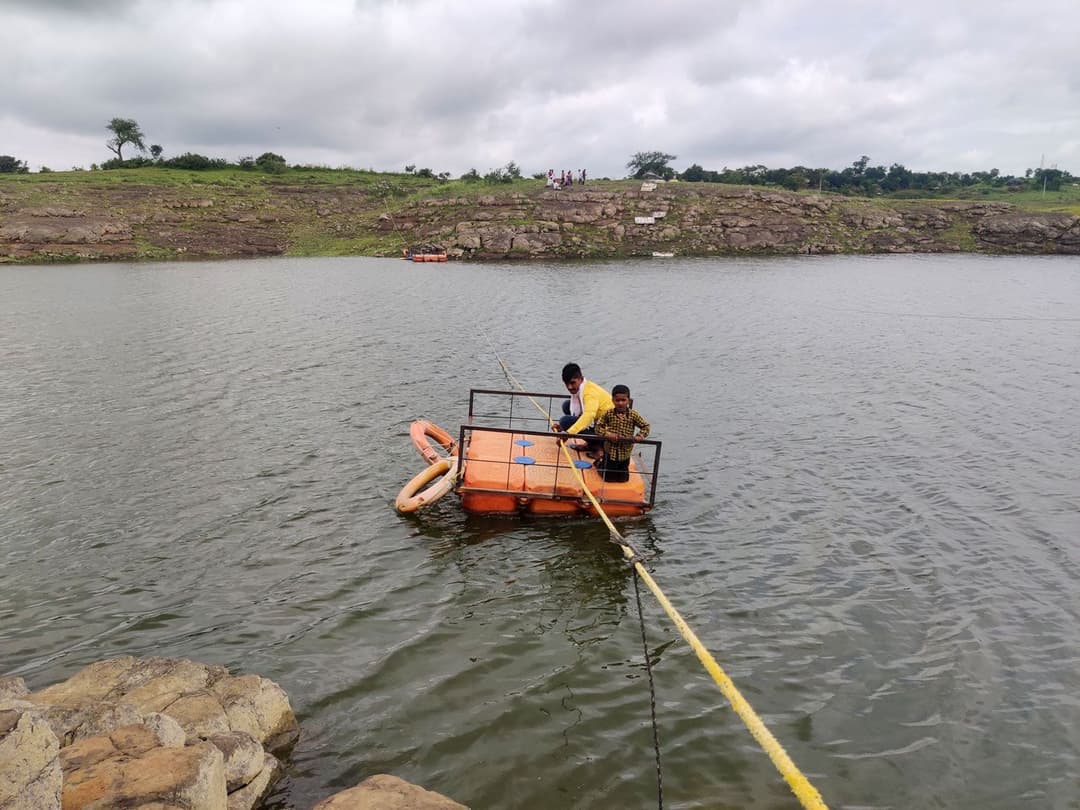
On a breezy afternoon, with her grandson on her waist, Usha Shinde stepped on to a raft to cross the river. The unsteady boat tilted more than she expected it to and Usha lost her footing. As she fell into the river with the child, she feared for their lives.
It happened in March this year, when the second wave of Covid-19 was spreading through the country. Usha’s grandson, four-year-old Shambhu, had been running a fever. “I was afraid that he might have been infected by corona[virus],” says Usha, 65. “His parents were away in western Maharashtra, working in a sugar factory as seasonal labourers. So I decided to rush him to the doctor.”
But the journey entailed crossing the river by her village in a makeshift raft. “I couldn’t balance myself and fell in with Shambhu,” says Usha. “I can’t swim. Luckily, my nephew was close by. He jumped into the water and helped us get out. I was scared, I didn’t want anything to happen to my grandson because of me.”
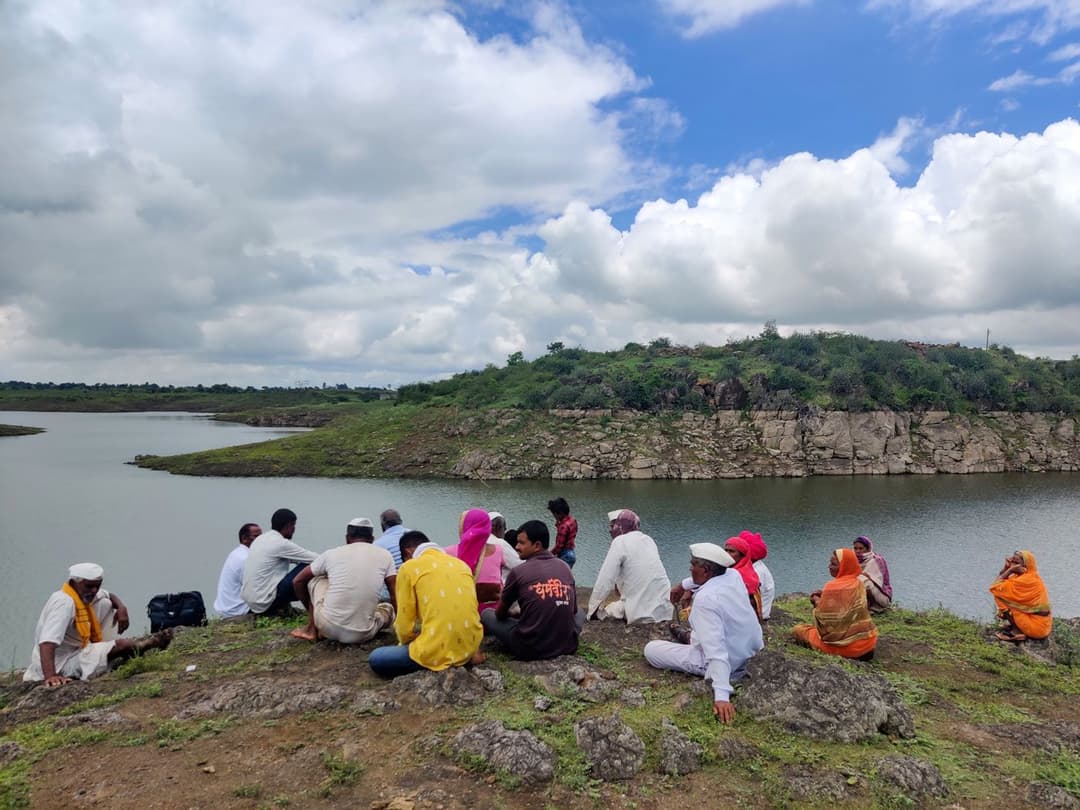
Usha’s village, Sautada, is on the banks of Vincharna river in Maharashtra’s Beed district. The spectacular Rameshwar waterfall, which plunges into the river from a height of 225 feet, is about 1.5 kilometres from the village in Patoda taluka. The river splits Sautada into two, cutting off a portion of the village from the main part. In the absence of a bridge, people from Shinde Wasti – the isolated part of Sautada – cross the river to access everything from shops to hospitals.