
The panel is part of Visible Work, Invisible Women, a photo exhibition depicting the great range of work done by rural women. All the photographs were shot by P. Sainath across 10 Indian states between 1993 and 2002. Here, PARI has creatively digitised the original physical exhibition that toured most of the country for several years.
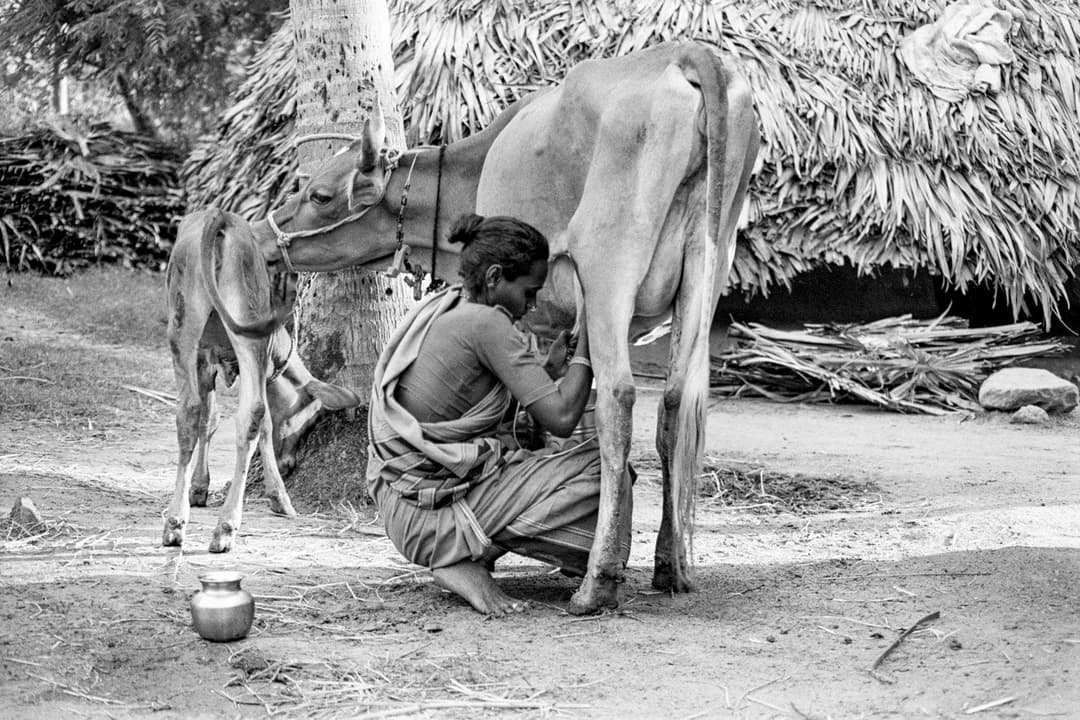
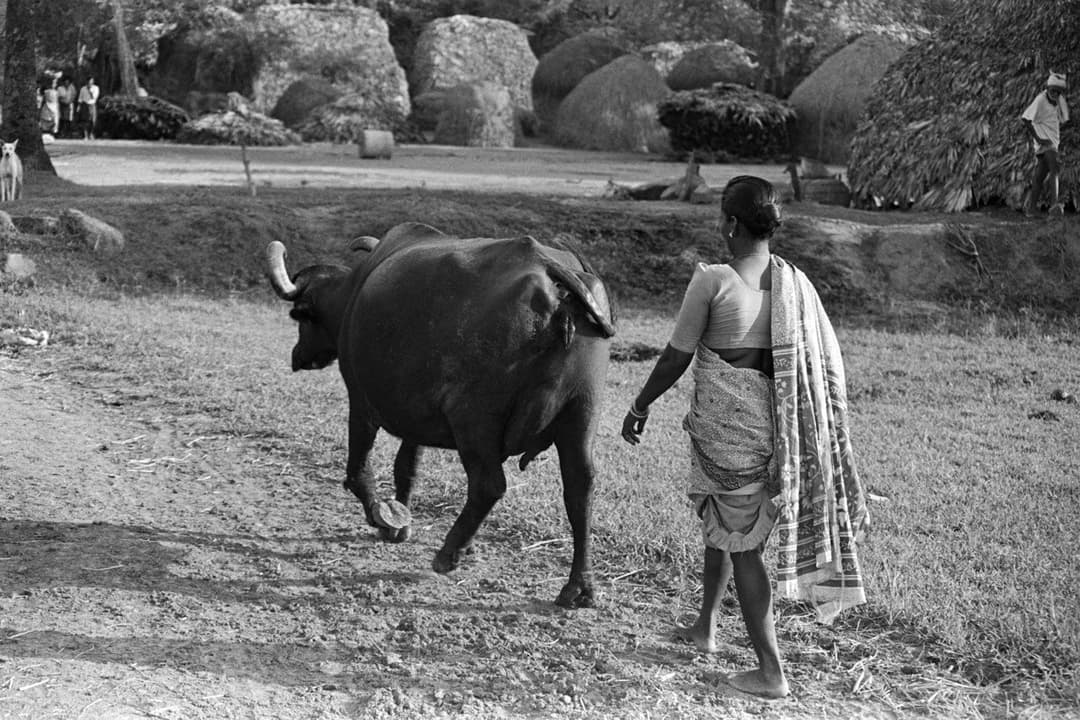
Till the cows come home
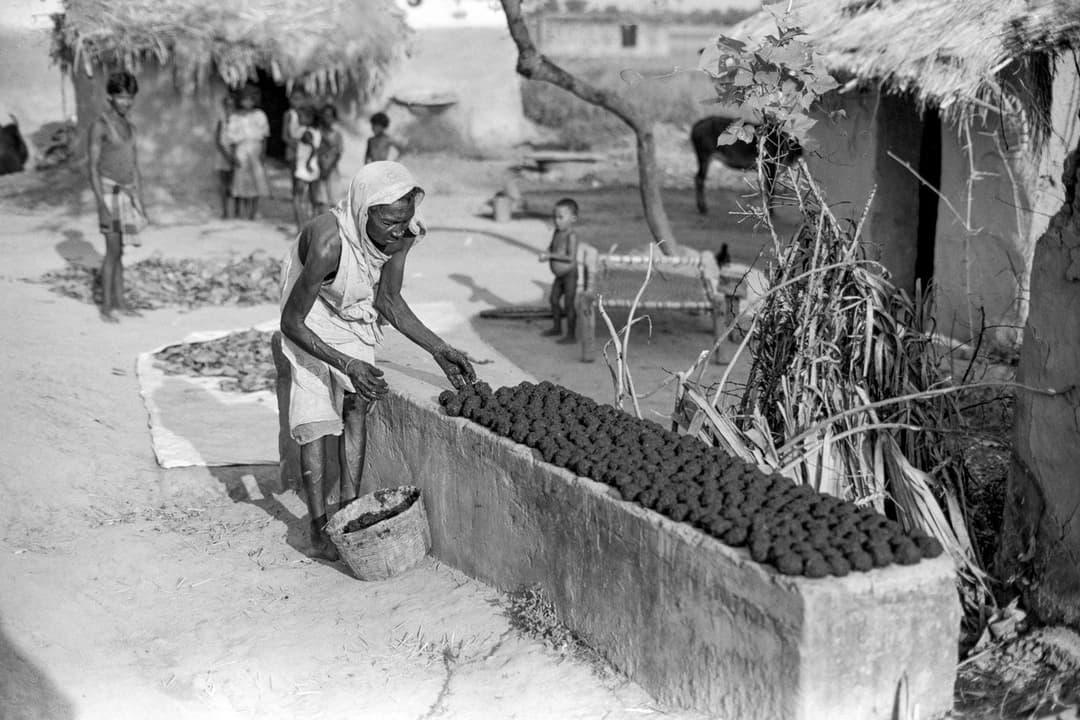
The woman rolling the lumps of fuel in Bihar is making an astonishing contribution to the national economy. One though, that will not figure in our GDP. If the millions of households using cow dung as a fuel switched over to fossil fuels, it would be a catastrophe. India spends more foreign exchange on the import of petroleum and its products than on any other item. In 1999-2000 that sum was Rs. 47,421 crores.
That’s more than three times the total amount of foreign exchange we spend on importing food, edible oils, drugs and pharmaceutical products, chemicals, iron and steel. What we spend on petroleum and its products makes up about one fourth of our total import bill.
It’s also nearly eight times the foreign exchange – $ 1.4 billion – we spend on fertiliser imports. Dung is a vital organic fertiliser input used by millions in raising crops. So it saves us untold sums of money on that front, too. It also works as an insect repellent and has many other uses. Cut it any way you like. The women who collect dung in the country – and it is ‘women’s work’ – save India millions, maybe billions of dollars each year. But since dung is not registered on the stock exchange, and maybe because they know or care little about the lives of the women who gather it – mainstream economists never factor it into their understanding. They simply do not see or respect such labour.