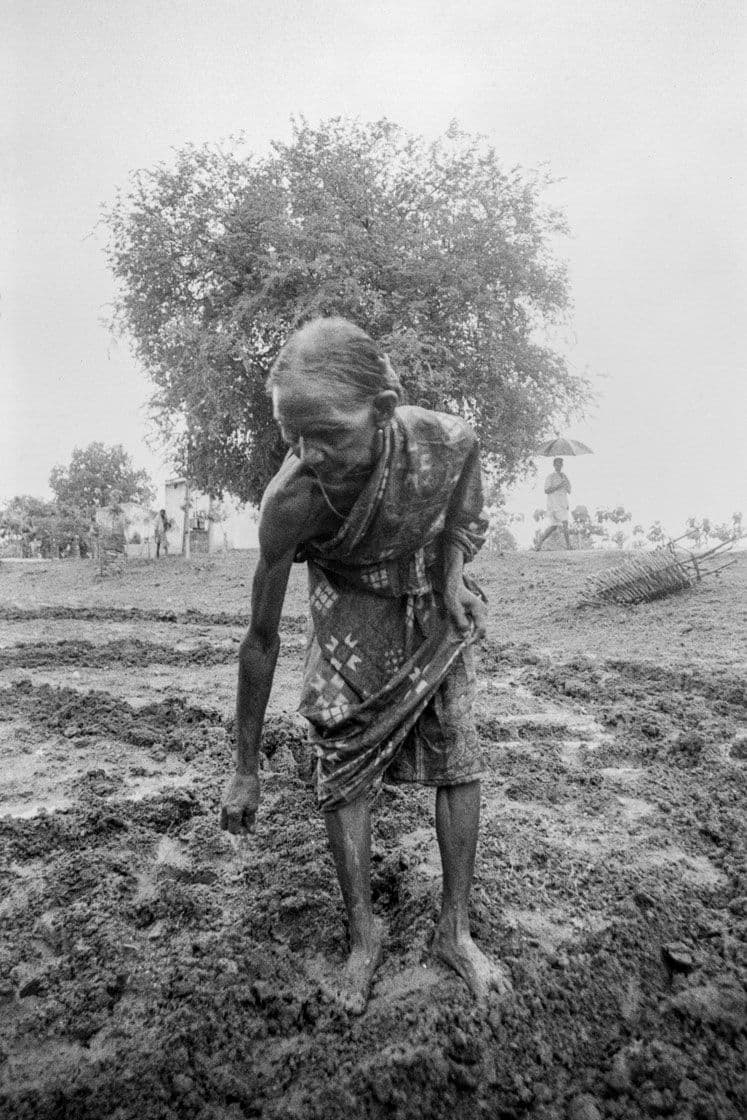

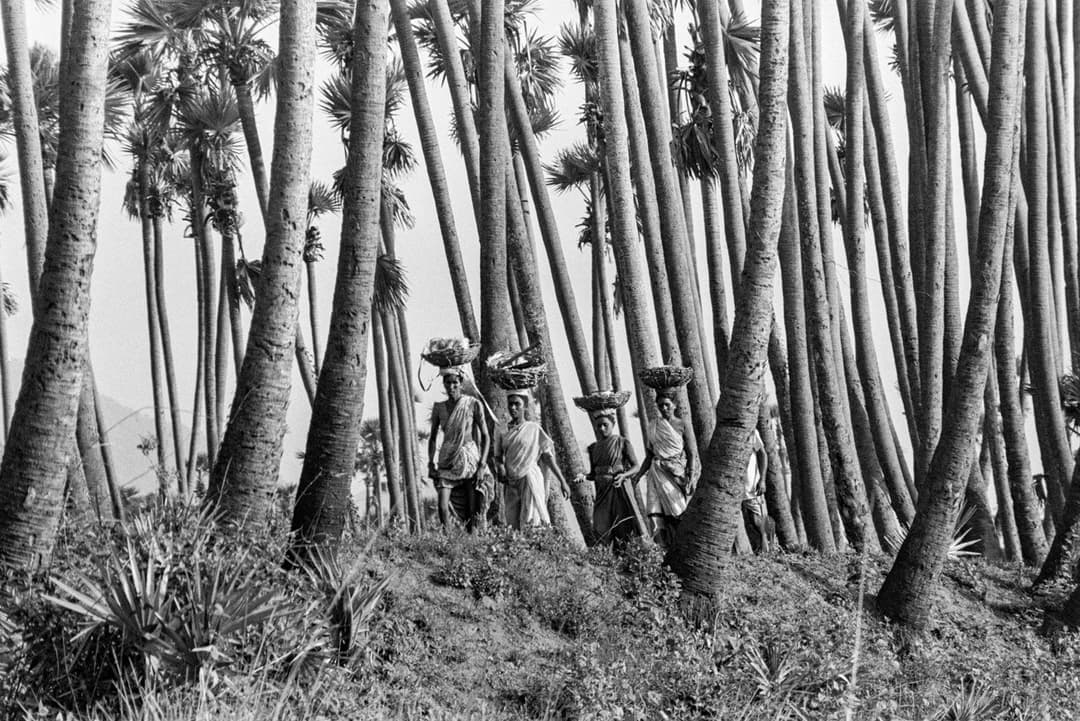
The panel is part of Visible Work, Invisible Women, a photo exhibition depicting the great range of work done by rural women. All the photographs were shot by P. Sainath across 10 Indian states between 1993 and 2002. Here, PARI has creatively digitised the original physical exhibition that toured most of the country for several years.
Mud, mothers, 'man hours'
The meeting with landless labourers in Vizianagaram in Andhra Pradesh had been fixed for just before 7 a.m. The idea was to track their work through the day. We were late, though. By that time, the women had put in about three hours. Like those coming to the fields through the palm trees. Or their friends already at the site, removing the mud from a silted tank.
Most had finished cooking, washing utensils and clothes, and some other chores. They had also got the children ready for school. All members of the family had been fed. Of course, with the women eating last. At the government’s employment assurance site, it’s clear the women are paid less than men.
It is also clear that the Minimum Wages Act here is being violated for both men and women. Like it is across most of the country, barring states like Kerala and West Bengal. Yet, women workers get half or two-thirds the wages men do, everywhere.