

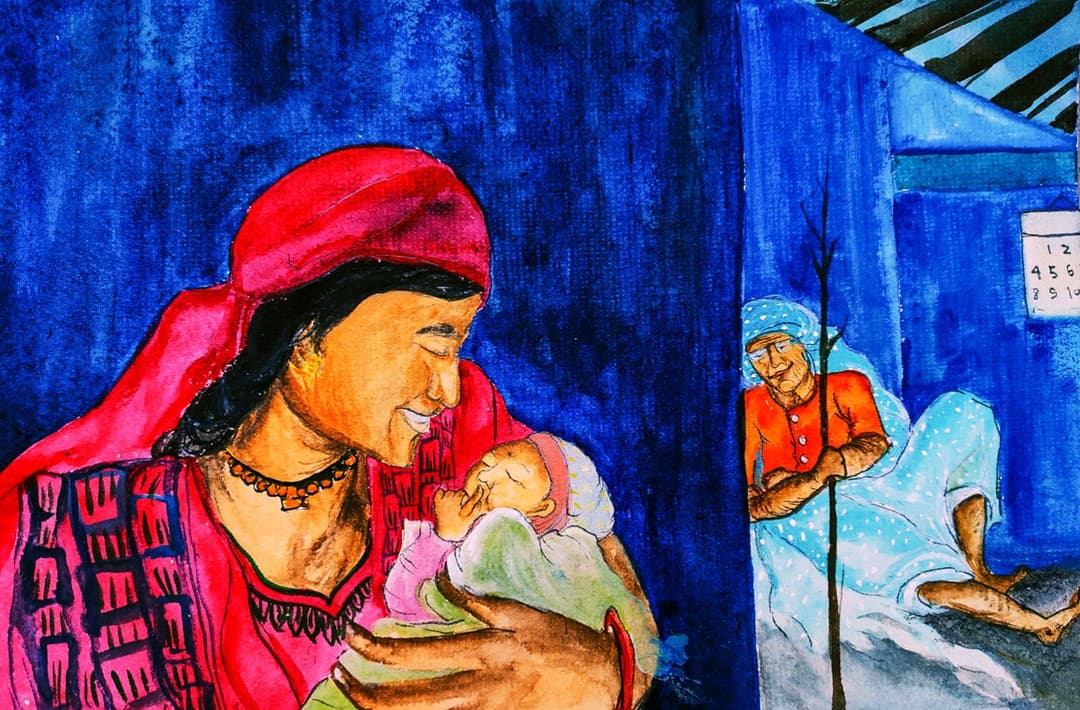
When her labour pains began, 23-year-old Rano Singh, her husband and mother-in-law hurried out of their small hillside house. It was dawn, around 5 in the morning. Before them was 1.5 kilometres of uphill terrain, which would take them to the main road, where a hired vehicle was waiting to take her to a private hospital in Ranikhet, roughly 12 kilometres from their village, Siwali.
They had tried arranging for a doli –pregnant women in their Thakur community here are carried uphill in a palanquin by four men, each holding one corner. This doli takes her to the road and, usually, to a waiting vehicle which will take her to the hospital. But there was no doli that morning, and they started walking.
Rano made it only halfway up. “We had barely covered half the distance when I realised I could not move [due to the pain]. The moment I gave up walking and sat on the road, my husband understood and rushed to a family nearby. They are known to us, and chachi came with some water and a bedsheet in 10 minutes. And I delivered with the help of my mother-in-law and chachi.” (Rano’s husband is 34 and works as a helper in a ration shop, earning Rs. 8,000 a month, the only income in the family of three adults and one baby; she did not want to name him.)
“My boy [Jagat] was delivered in this jungle while we were still walking to reach the main road,” she continues, recalling the harrowing first childbirth along a narrow hilly pathway surrounded by trees. “I had never imagined a delivery like this. It still gives me goosebumps thinking about it. But thank god, my baby came out safe. That’s the most precious thing.”
That February 2020 morning, soon after Jagat was born, Rano walked back to her house, with her mother-in-law, 58-year-old Pratima Singh, carrying the baby.


