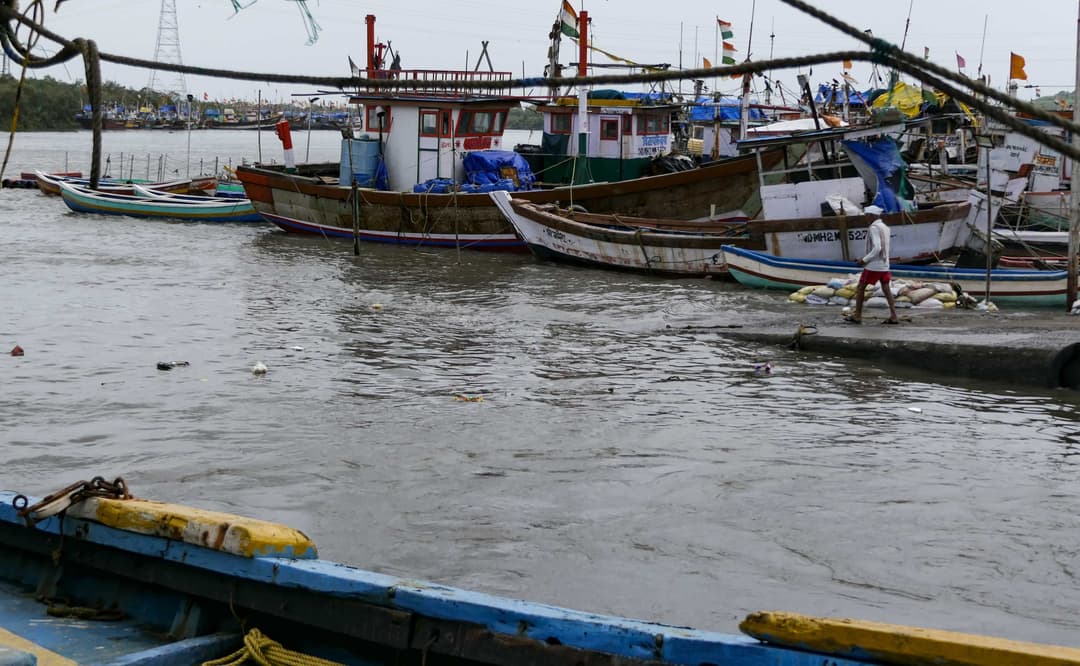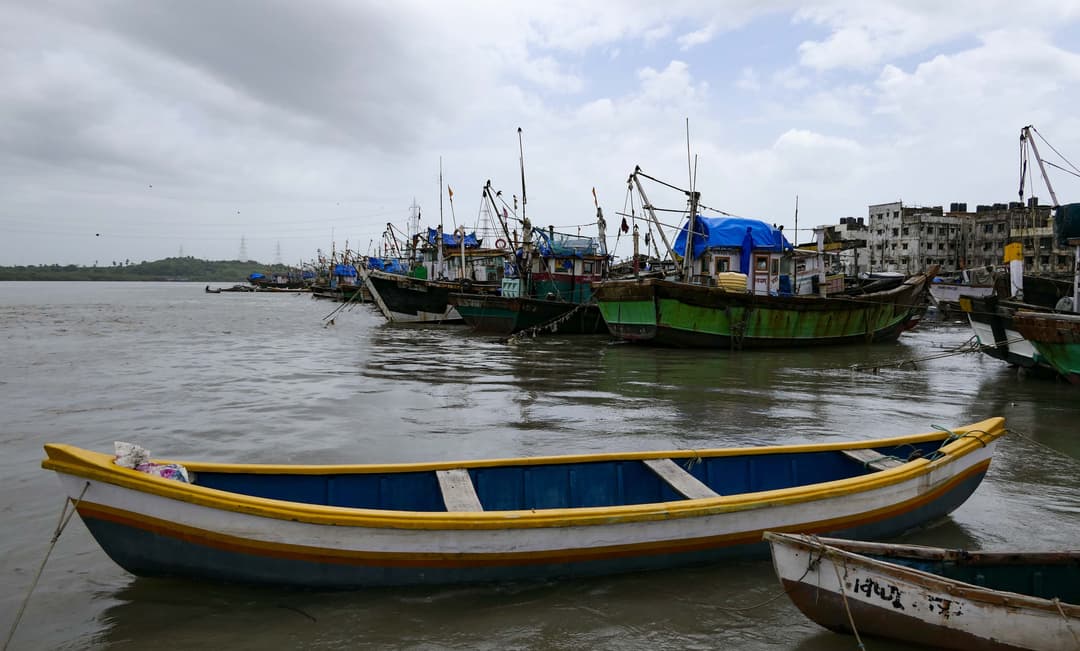

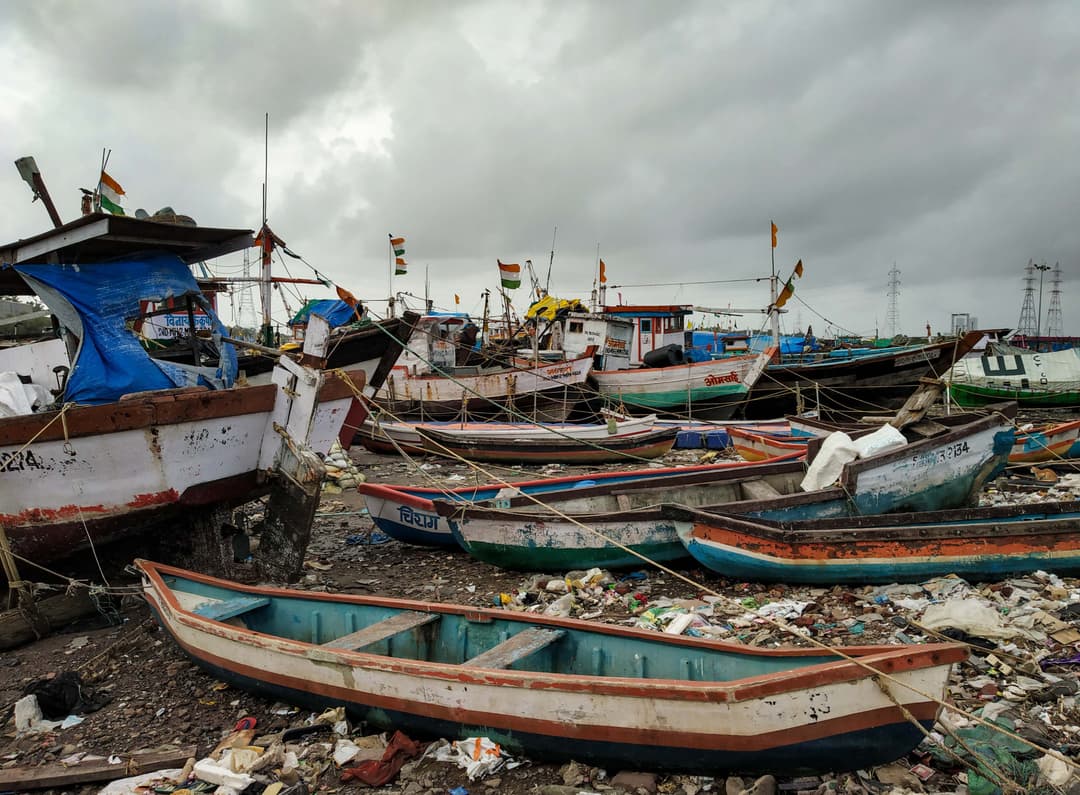
At Versova jetty one morning some months ago, I asked Ramjibhai, who was sitting on a rock at the edge of the creek, what he was doing. “Timepass,” he replied. “I’ll take this home and eat it.” He pointed to a small tengda (a type of catfish) he’d just caught. I saw other fishermen cleaning nets they had floated in the creek the night before – they had caught loads of plastic but no fish.
“Fishing in the khadi [creek] today is barely possible,” says Bhagwan Namdev Bhanji, who has lived all his 70-plus years in Versova Koliwada, a fishing village in north Mumbai’s K-West ward. “When we were young, the coast here was like the one in Mauritius. If you threw a coin into the water, you could still see it… The water was that clean.”
The fish that do find their way into the nets of Bhagwan’s neighbours – nets now cast deeper into the sea – are often smaller too. “Earlier, we used to get bigger pomfret, but now we’re getting small ones. It’s had a huge impact on our business,” says 48-year-old Priya Bhanji, Bhagwan's daughter-in-law, who has been selling fish for 25 years.
Almost everyone here – the koliwada is home to 1,072 families or 4,943 people involved in fishing (2010 Marine Fisheries Census) – has a story to tell of the vanishing or shrunken fish. And the reasons they point to range from local-level pollution to global-scale warming – both have combined at Versova to bring the impact of climate change to the city’s shores.