

Looking at the spread of various puppets in front of him, Ramachandra Pulavar says, “For us, these are not mere leather objects. They are gods and goddesses, and embodiments of divine spirits.” The intricately crafted figures laid in front of him are used in tholpavakoothu puppetry, a popular form of theatre in this southern coastal area – the Malabar region of Kerala.
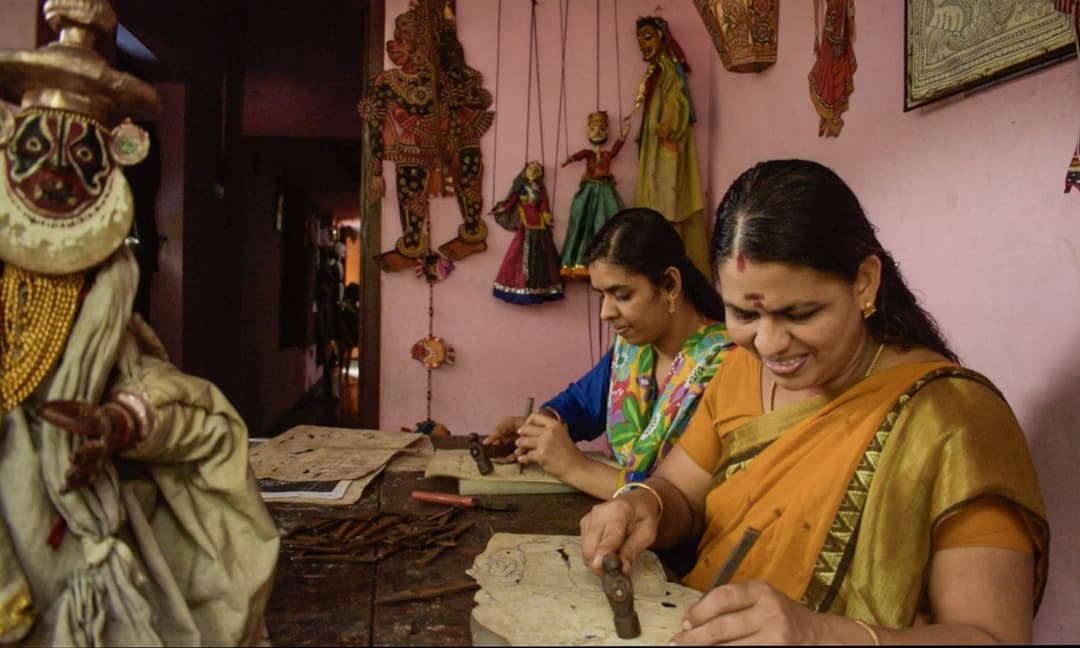
These figurines have traditionally been crafted by members of some communities like Chakkiliyan. With the decline in the popularity of the art, they have moved away. Craftsmen like Krishnankutty Pulavar have taken on the task of teaching the art of puppet making to keep the craft alive. His son, Ramachandra has gone even further and is training women in his family and neighbourhood in the art of puppet making. Rajalakshmi, Rajitha and Aswathi are women puppeteers in a space traditionally restricted to men working in temple premises.
These puppets are considered divine figures not just by the workers, but also by the devotees that attend the show. They are crafted using buffalo and goat skin. The puppeteers start the process by carefully sketching the designs on the skins and use specialised tools like chisels and punches for carving. “Acquiring these tools has become challenging due to the scarcity of skilled blacksmiths,” says Rajeev Pulavar, Ramachandra’s son.