

Singh still gets nightmares about the travel agent who belongs to his pind (village) in Punjab.
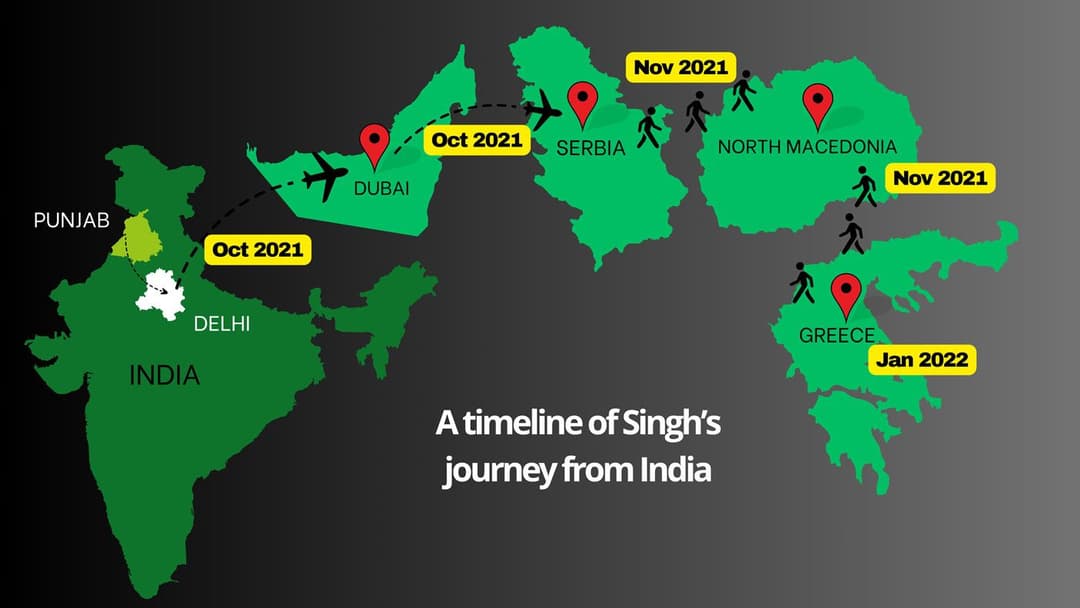
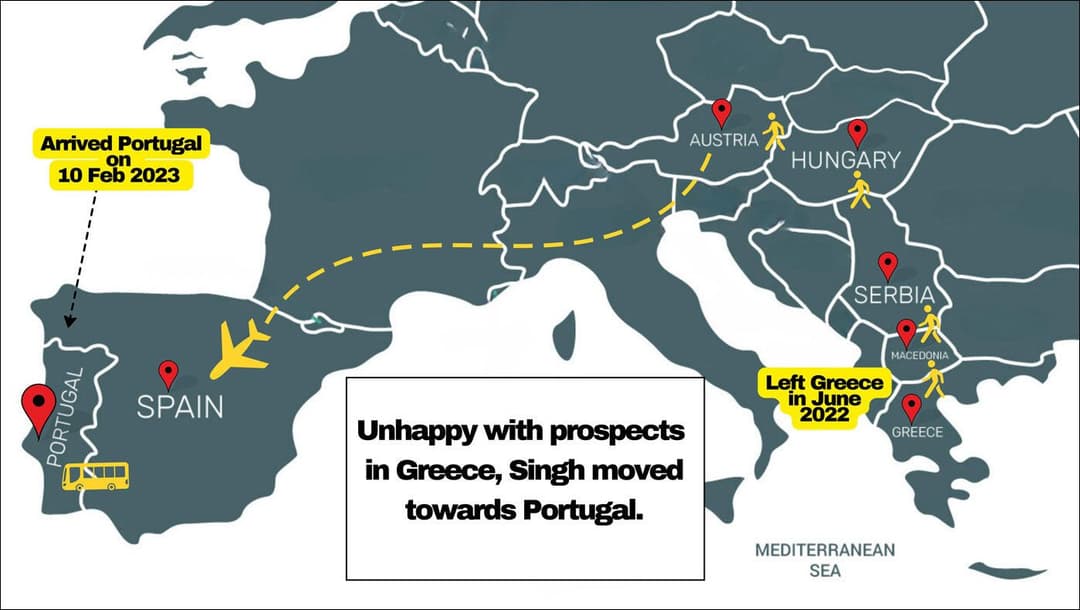
To pay the agent Singh (not his real name) sold his family’s one-acre of farm land. In return, the agent Jatinder promised “ek number [legal papers]” that would ensure his safe passage to Portugal via Serbia.
Very soon Singh realised he had been tricked by Jatinder and trafficked across international borders. Shocked and dismayed, he could not bring himself to inform his family back in the village about his plight.
On his journey out, while crossing dense forests, wading through sewers and climbing mountains across Europe, he and other migrants survived on water from rainy puddles, and eating only bread, a food which he has come to hate.
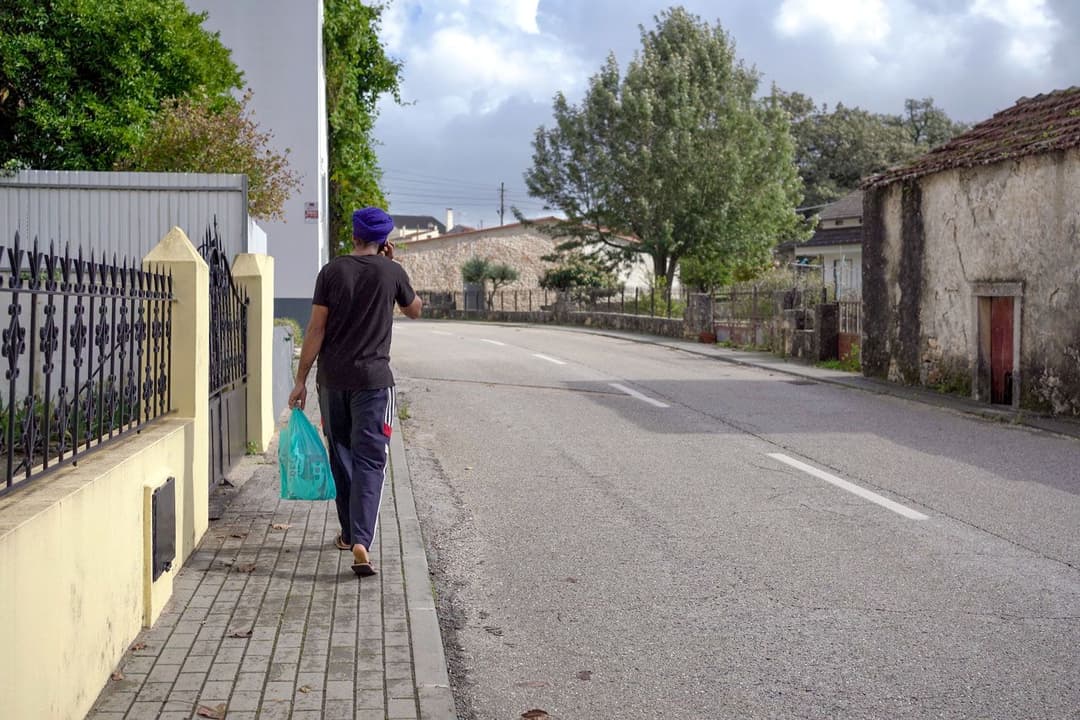
“Mere father saab heart patient aa. Inna tension oh leh ni sakte. Nale, ghar mein ja nahi sakda kyun ke mein sara kuch dau te lake aya si. [My father is a heart patient; he can't handle so much tension. I couldn’t return home because I had put everything at stake to come to here],” says 25-year-old Singh, speaking in Punjabi at the two-room rented accommodation in Portugal he shares with five other people.
Over the years, Portugal has emerged as a favoured destination for workers from South Asian countries like India, Nepal, Bangladesh, Pakistan and Sri Lanka.