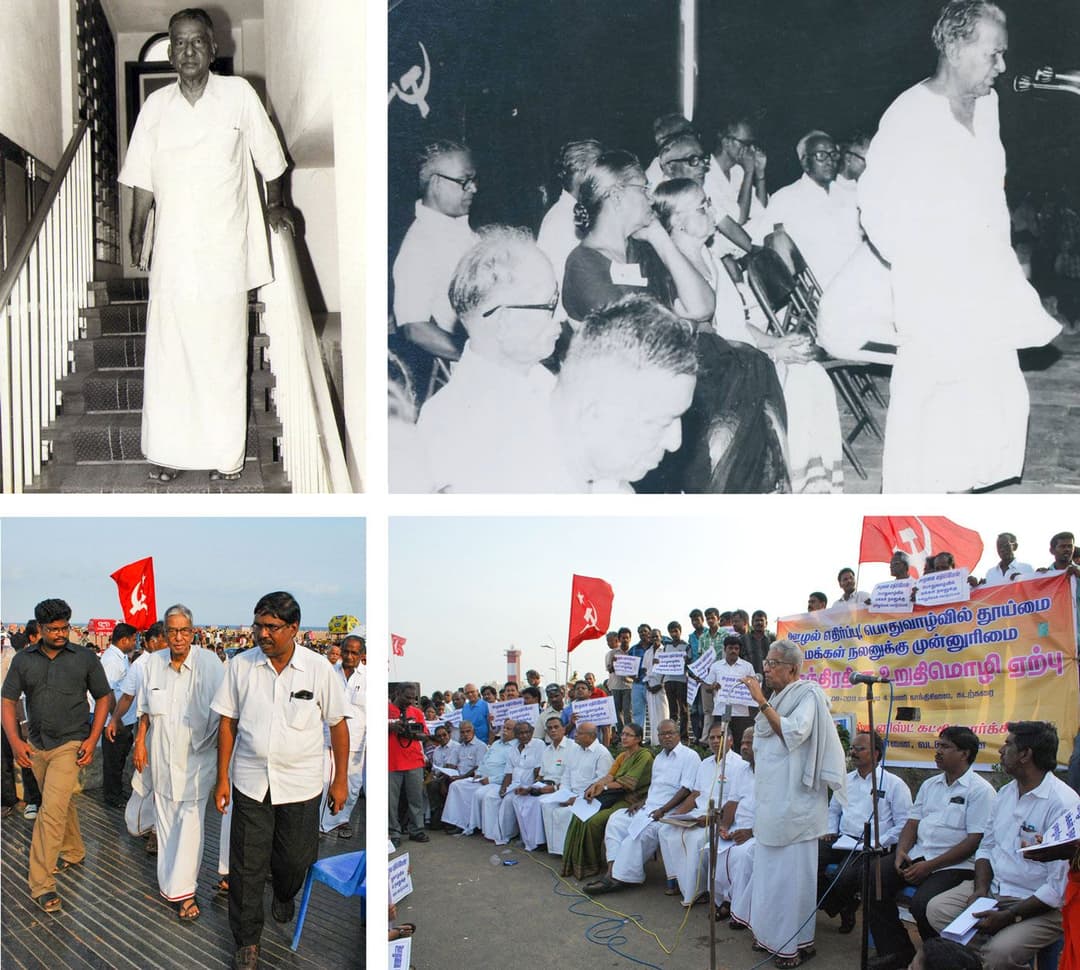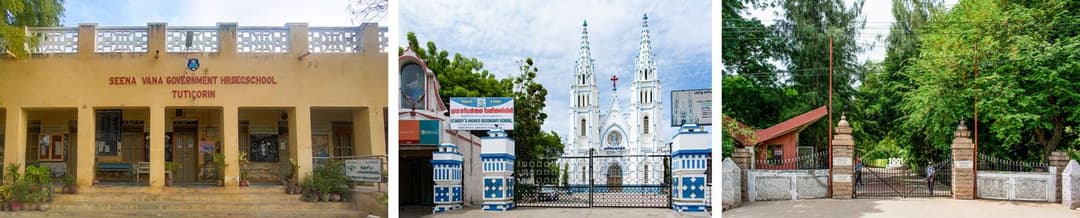

When the crowds rushed out on to the streets of Thoothukudi town – as they did across many parts of Tamil Nadu – a very young boy ran out to join them. In moments he was part of the protest, shouting radical slogans. “You may not know or realise that today,” he tells us, “but the execution of Bhagat Singh was an emotional turning point for the freedom struggle in Tamil Nadu. People were appalled and so many were in tears.
“I was just 9 years old,” he chuckles.
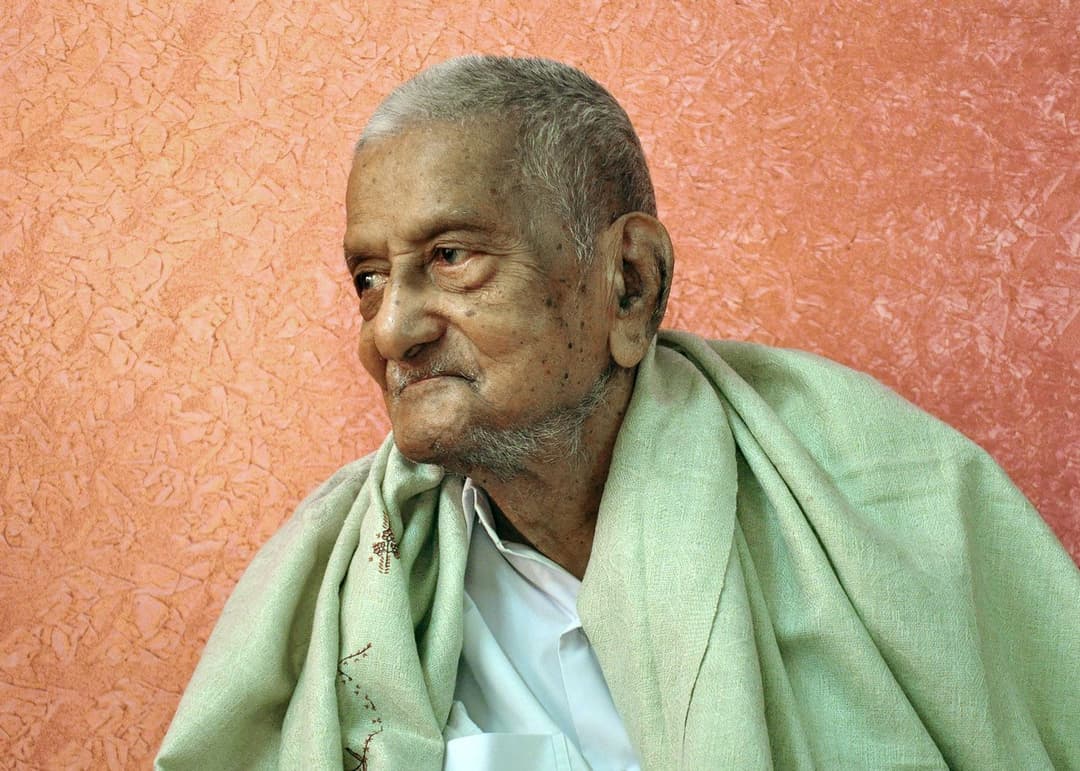
Today, he is 99 years old (July 15, 2020), but retains the fire and spirit that made him a freedom fighter, an underground revolutionary, writer, orator and radical intellectual. A man who stepped out of a British jail on August 14, 1947. “On that day, the judge came to the central prison and released us. We had been acquitted in the Madurai conspiracy case. I just came out of Madurai central prison and joined the freedom procession rally.”
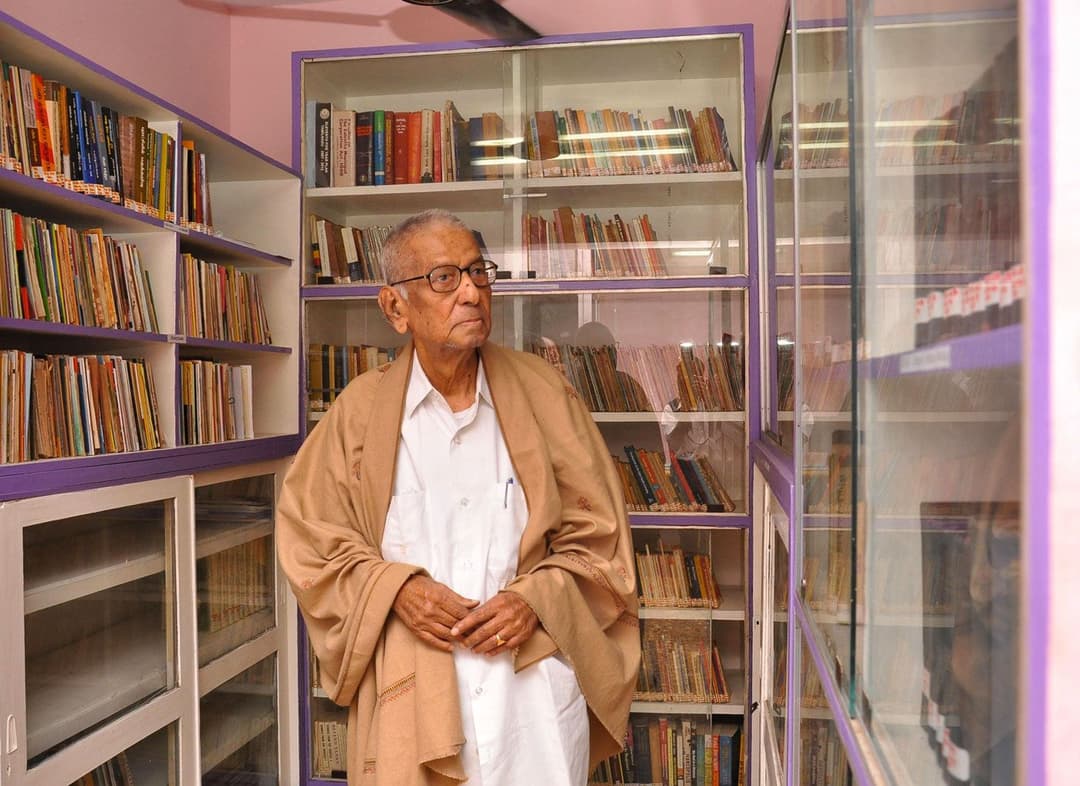
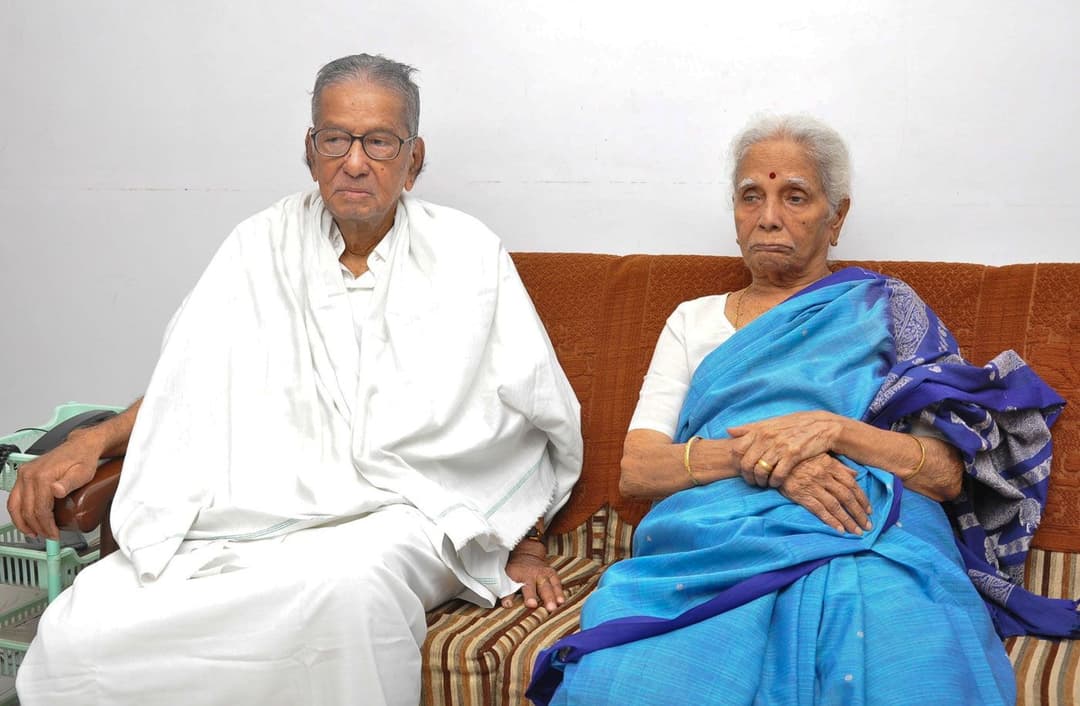
Batting on 100, N. Sankariah remains intellectually active, still delivers lectures and talks and, as late as 2018, travelled from his home in Chrompet, a Chennai suburb – where we’re interviewing him – to address the Tamil Nadu Progressive Writers and Artists meet in Madurai. The man who never completed his graduation because of his involvement in India’s struggle for freedom went on to author several political tracts, booklets, pamphlets and journalistic articles.
Narasimhalu Sankariah came close to getting that BA in History though, at The American College, Madurai, missing out on his final exams in 1941 by just two weeks. “I was joint secretary of the college students’ union.” And a bright pupil who founded a poetry society on campus while also representing the college in football. He was very active in the anti-British Raj movements of the time. “During my college days, I befriended many people with left-inclined ideologies. I understood that social reform would not be complete without Indian Independence.” By age 17, he was a member of the Communist Party of India (then banned and underground).
He remembers the attitude of the American College as being positive. “The director and a few of the faculty were Americans, the rest Tamilians. They were supposed to be neutral, but they were not pro-British. Student activities were allowed there….” In 1941, a meeting was held in Madurai to condemn the arrest of an Annamalai University student, Meenakshi, for taking part in anti-British protests. “And we issued a pamphlet. Our hostel rooms were raided, and Narayanaswami (my friend) was arrested for having a pamphlet. Later we held a protest meeting to condemn his arrest…