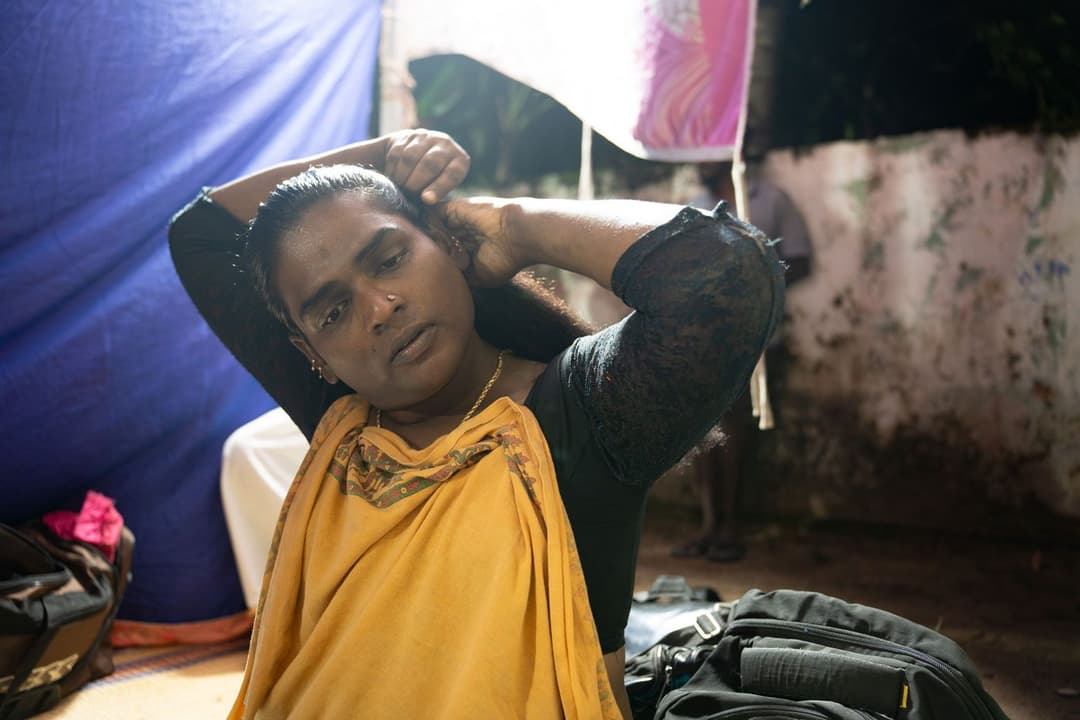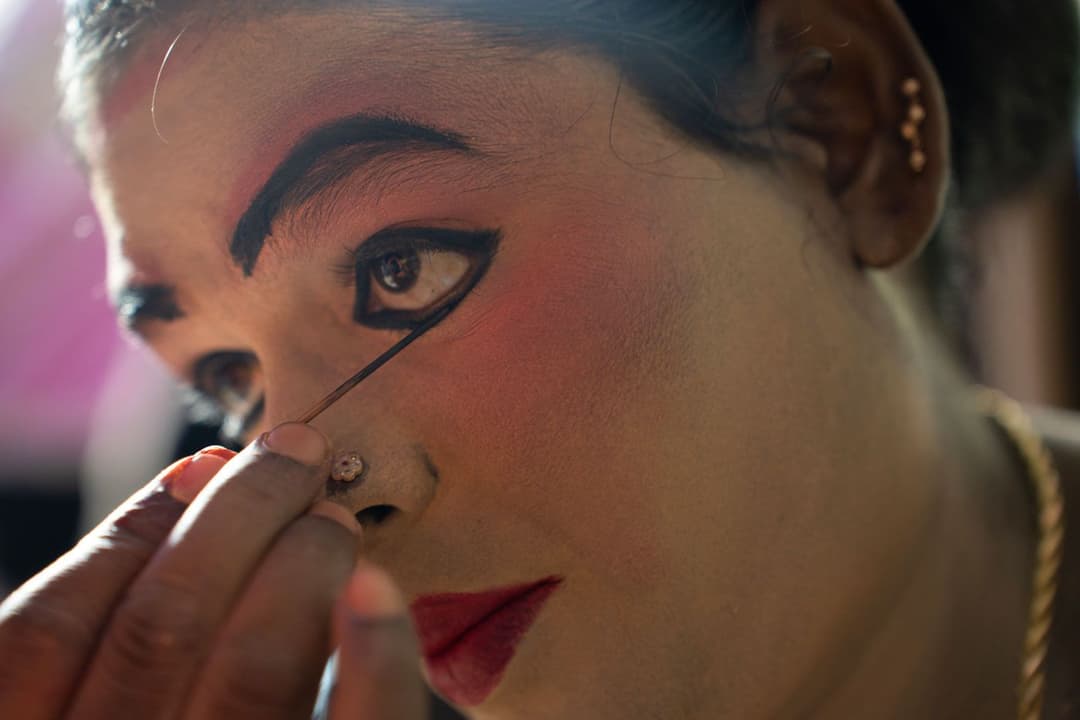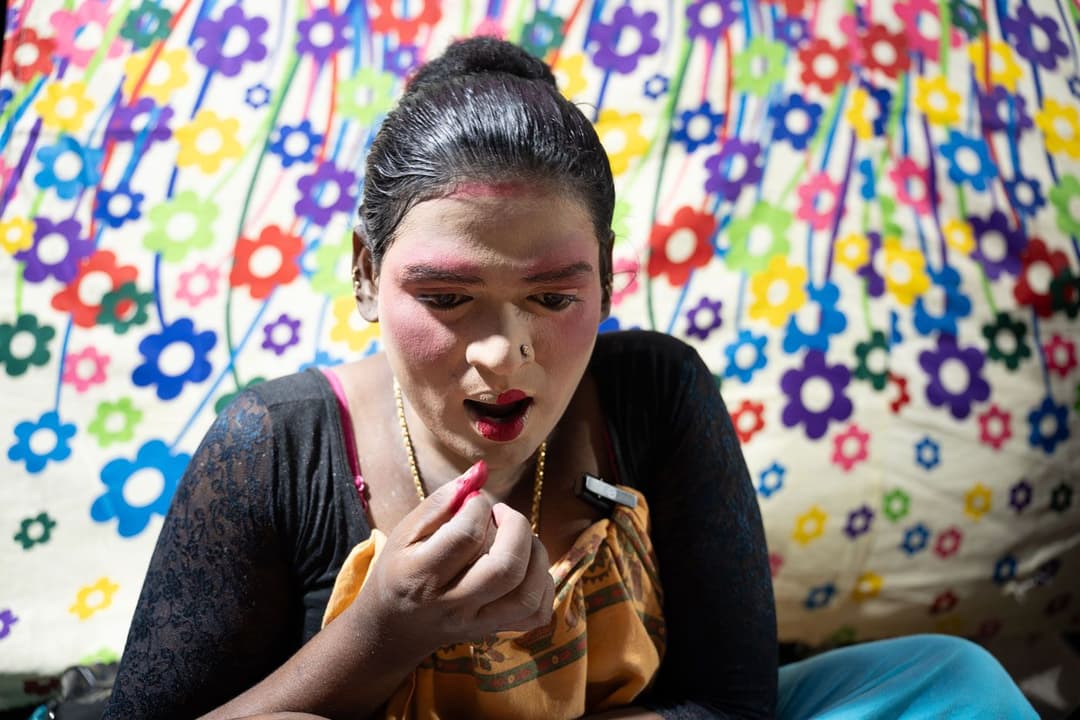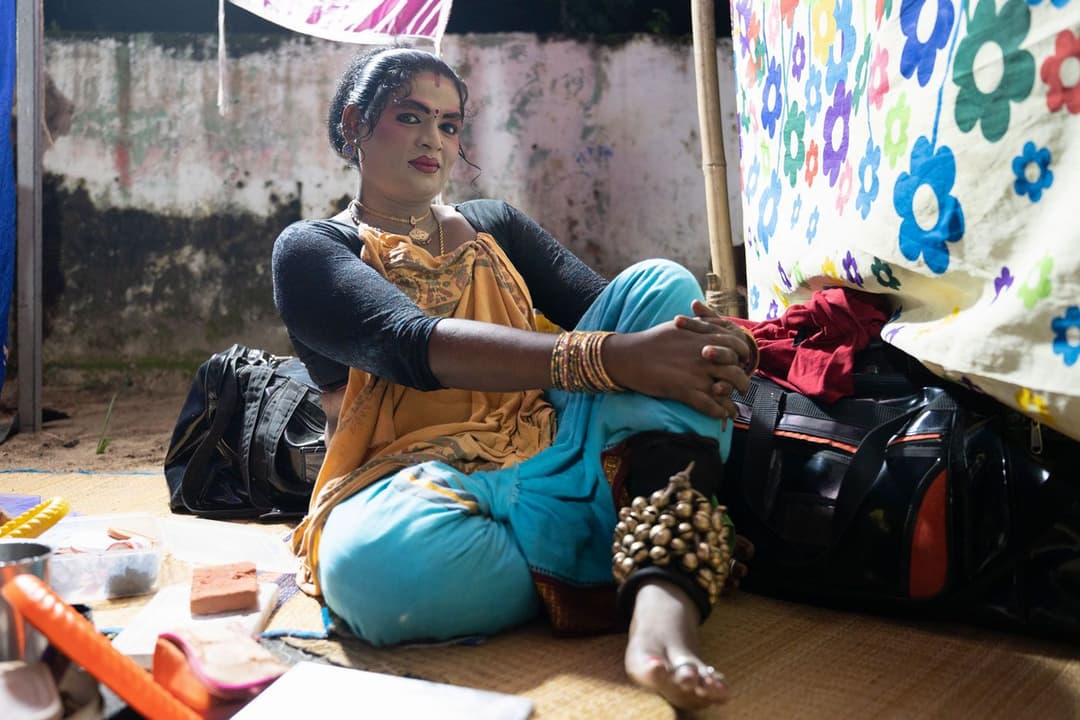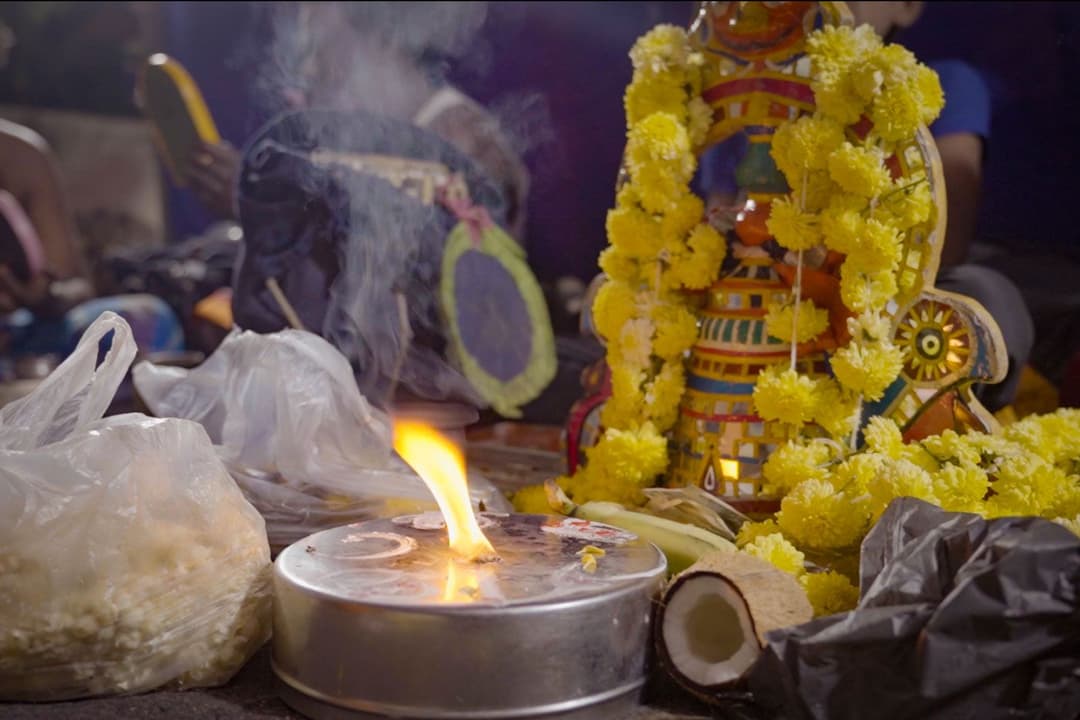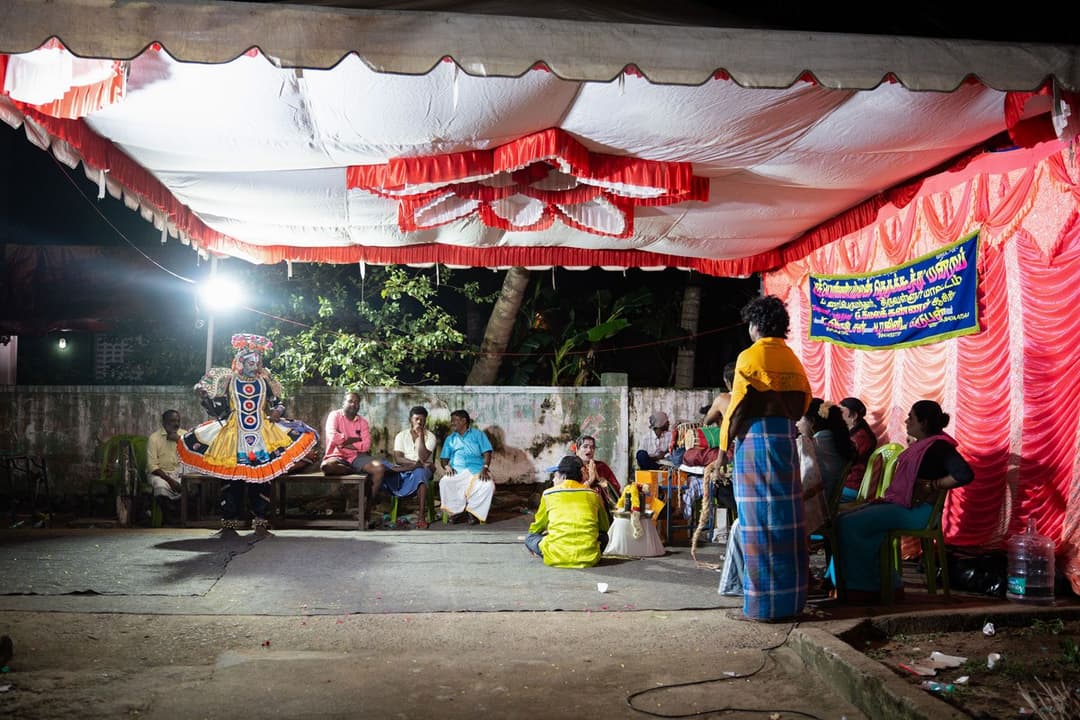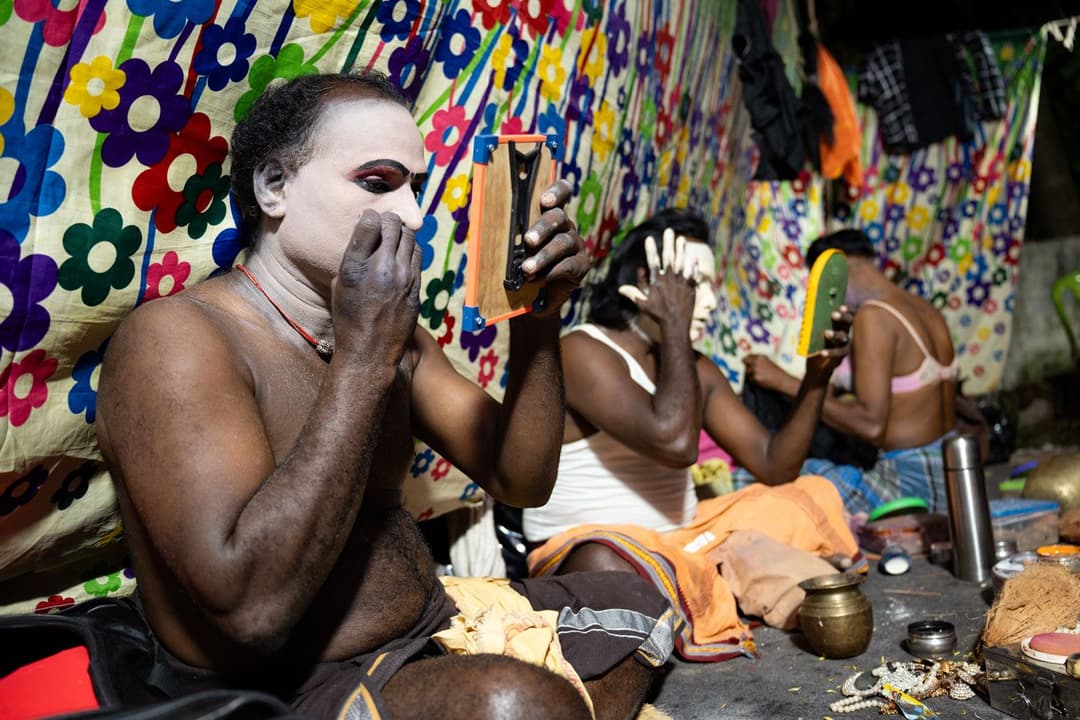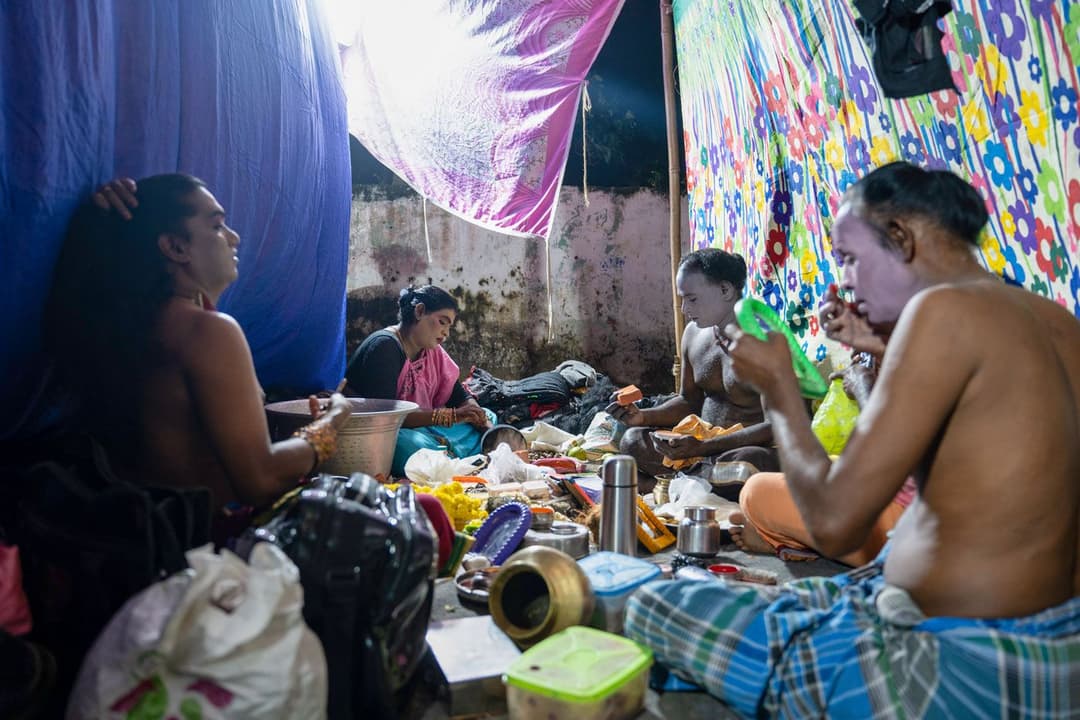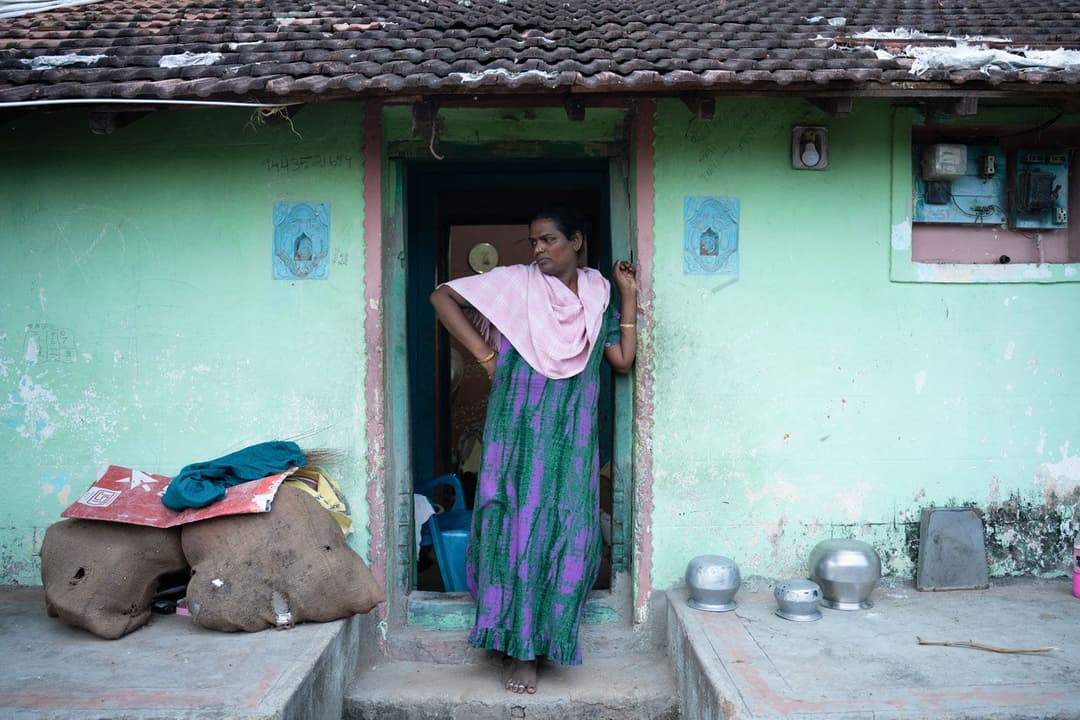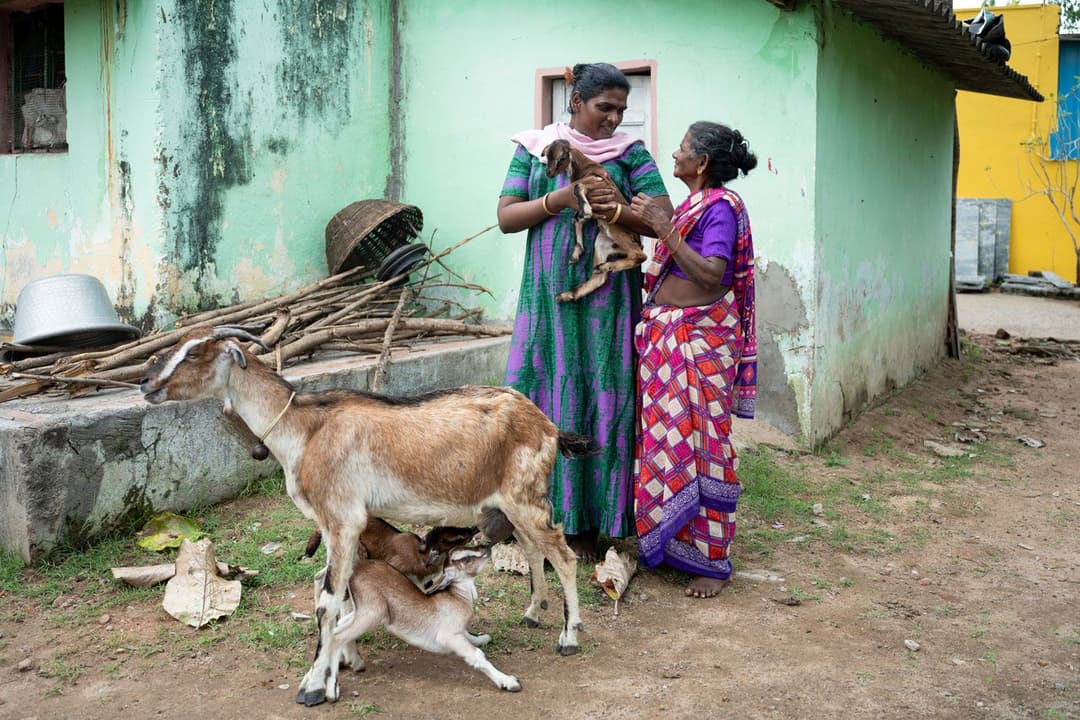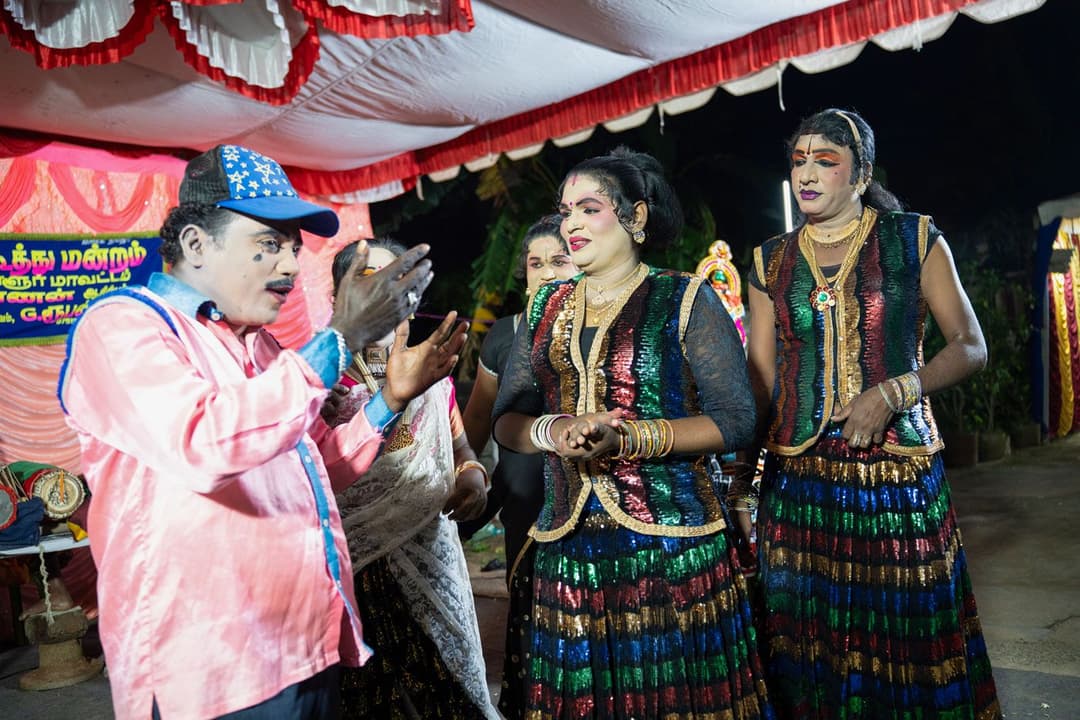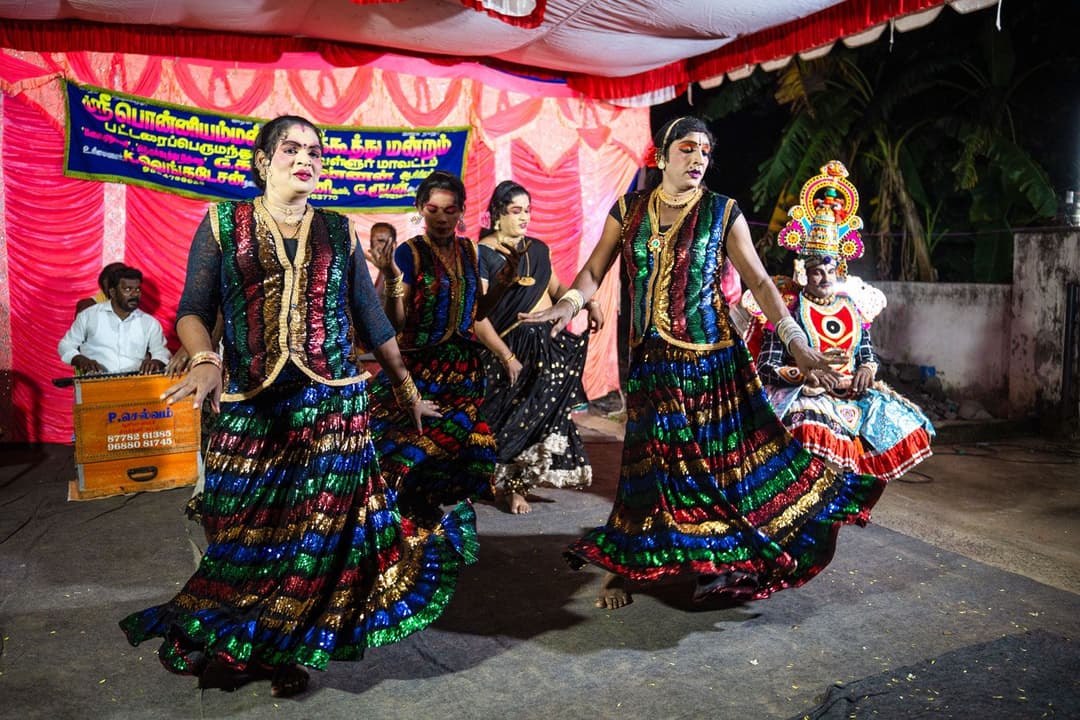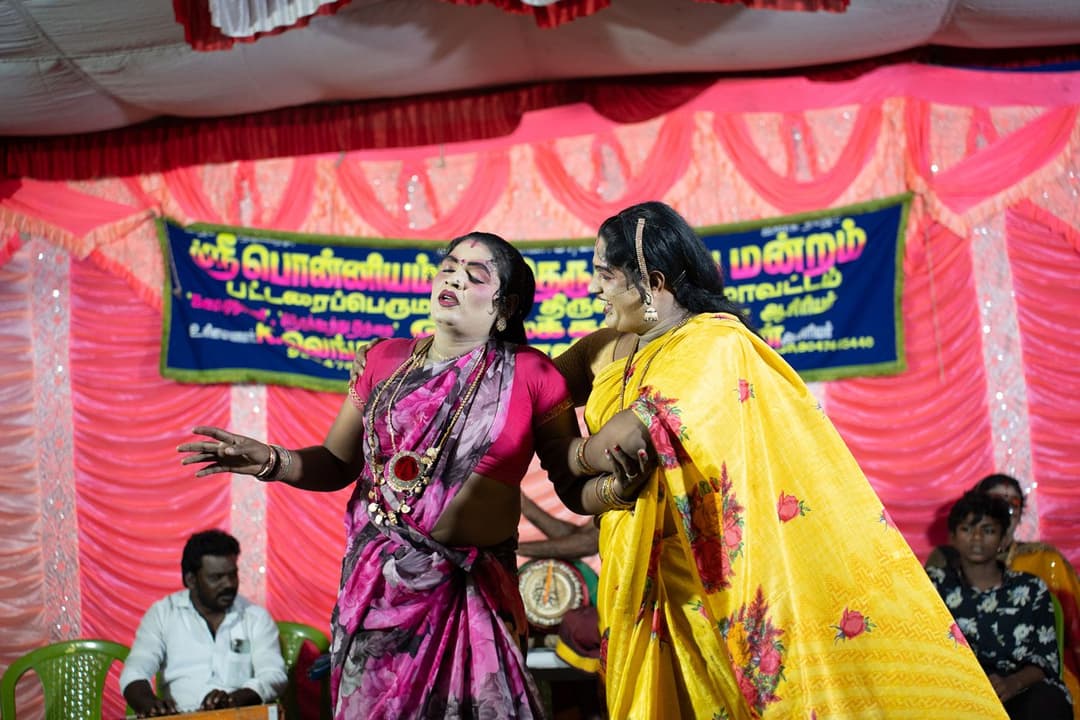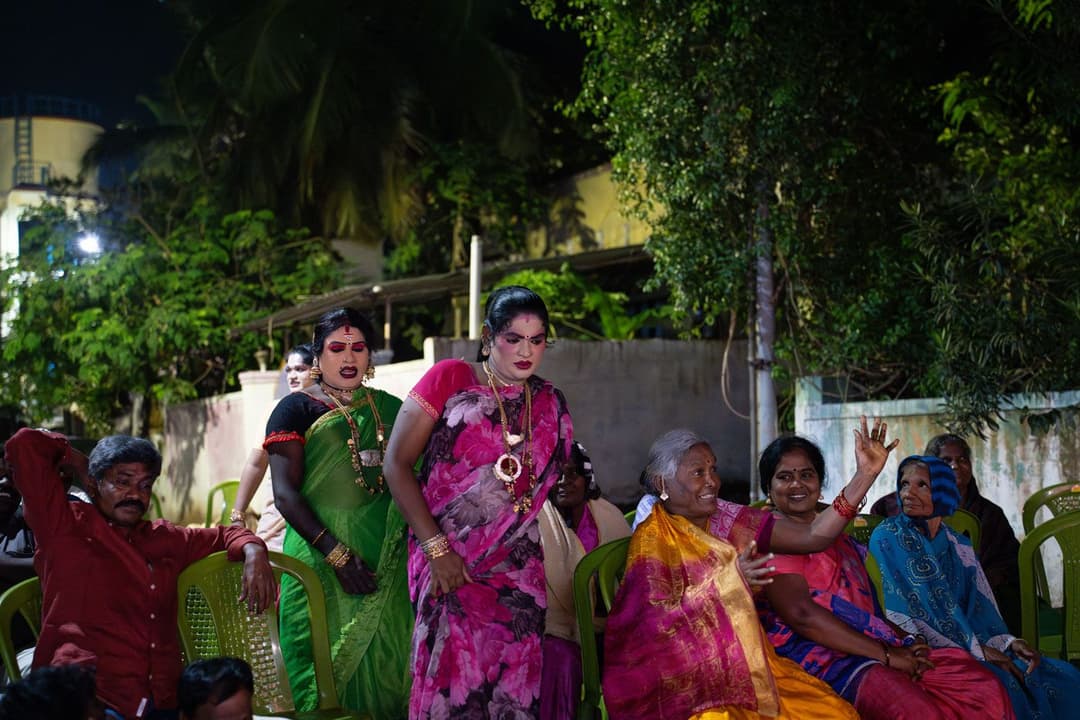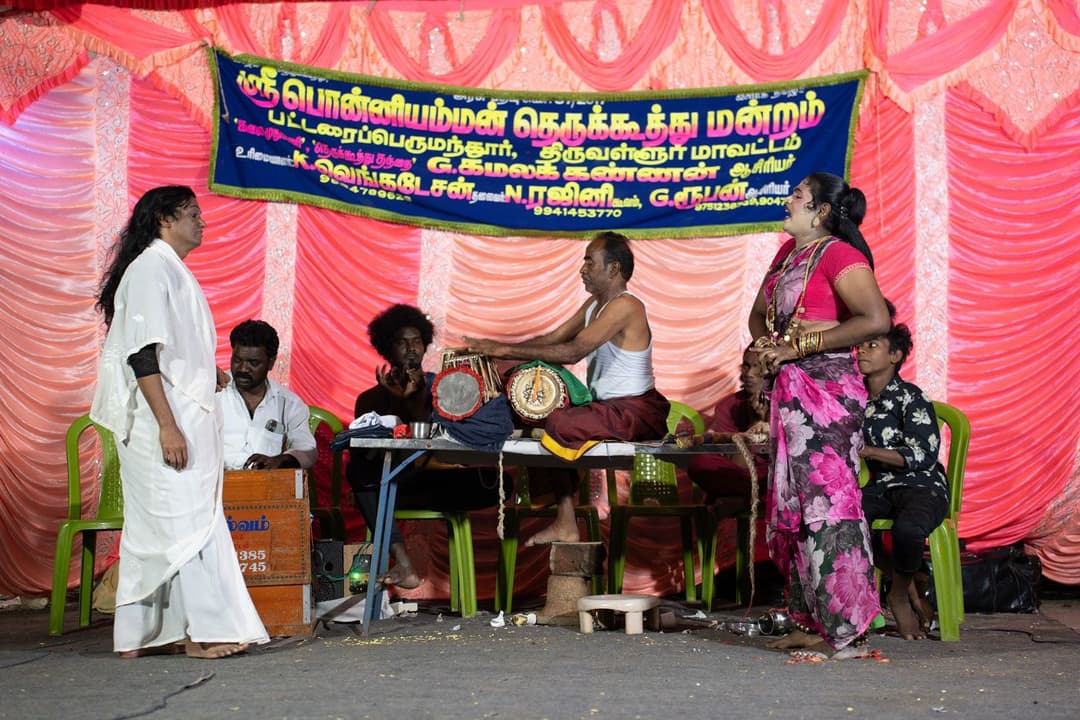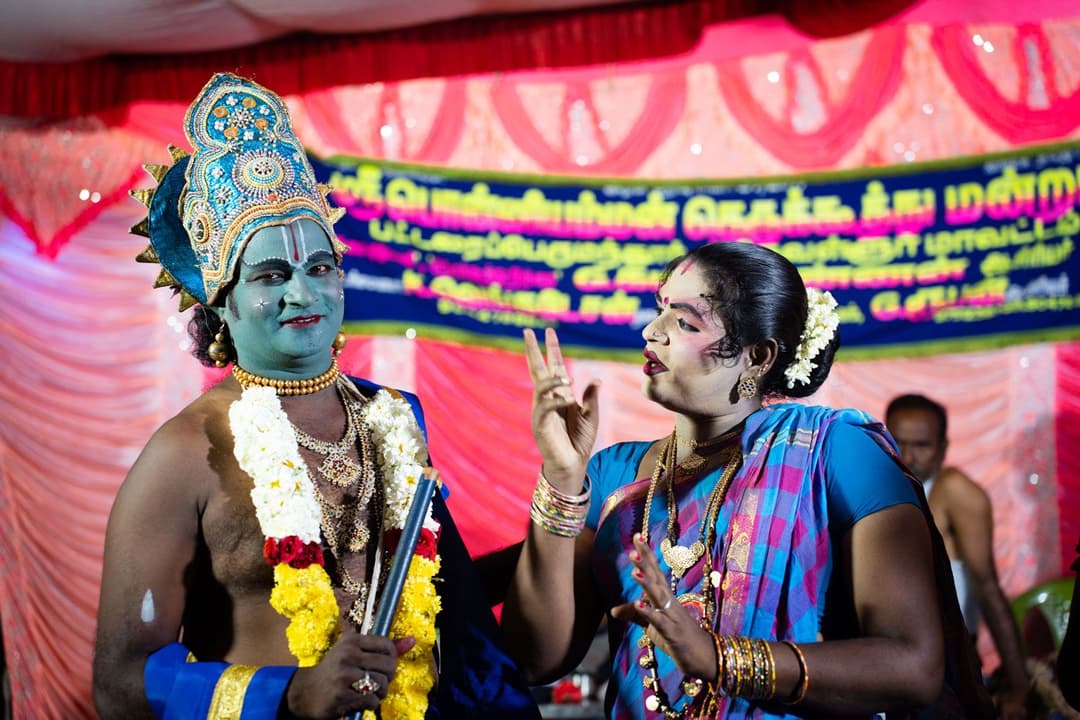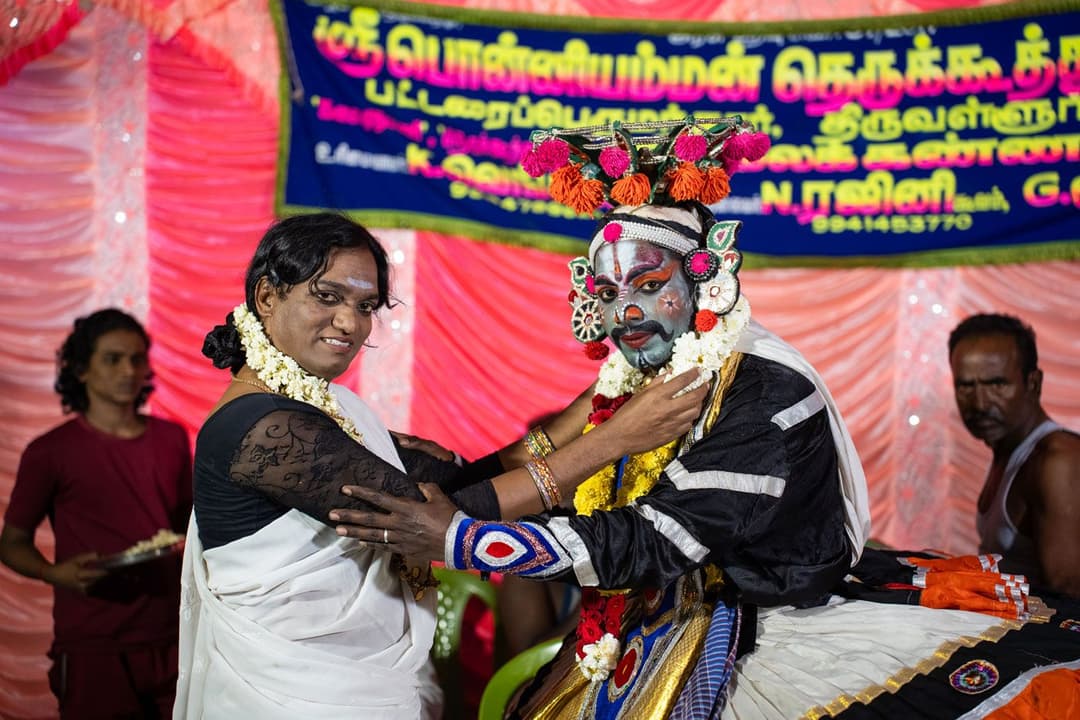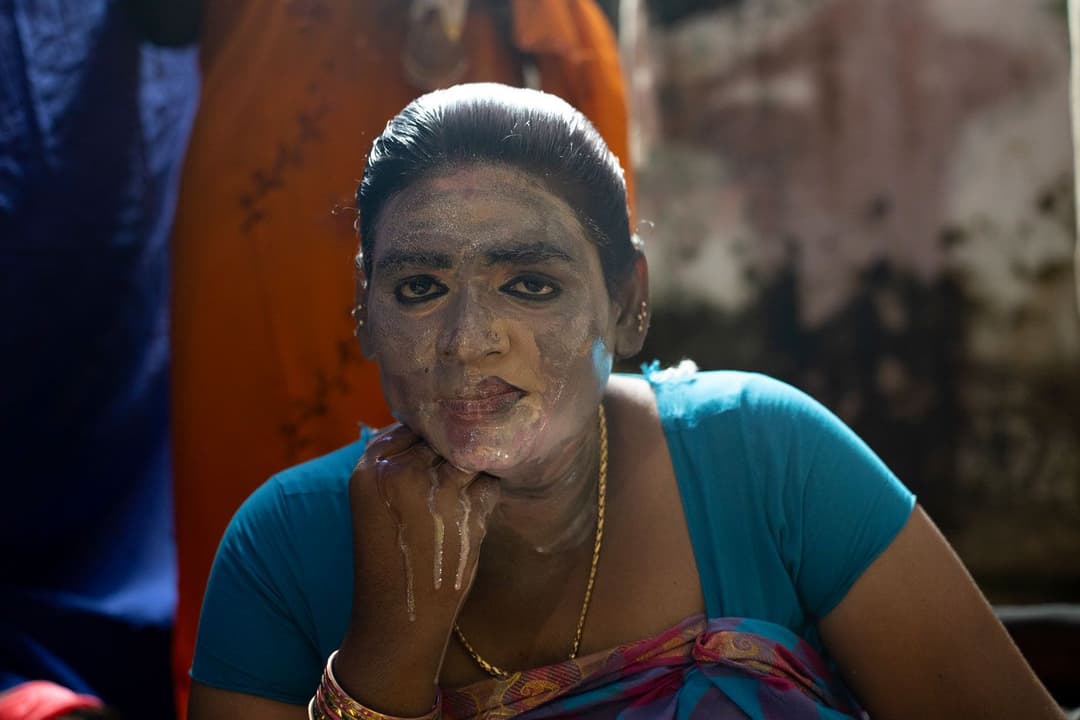

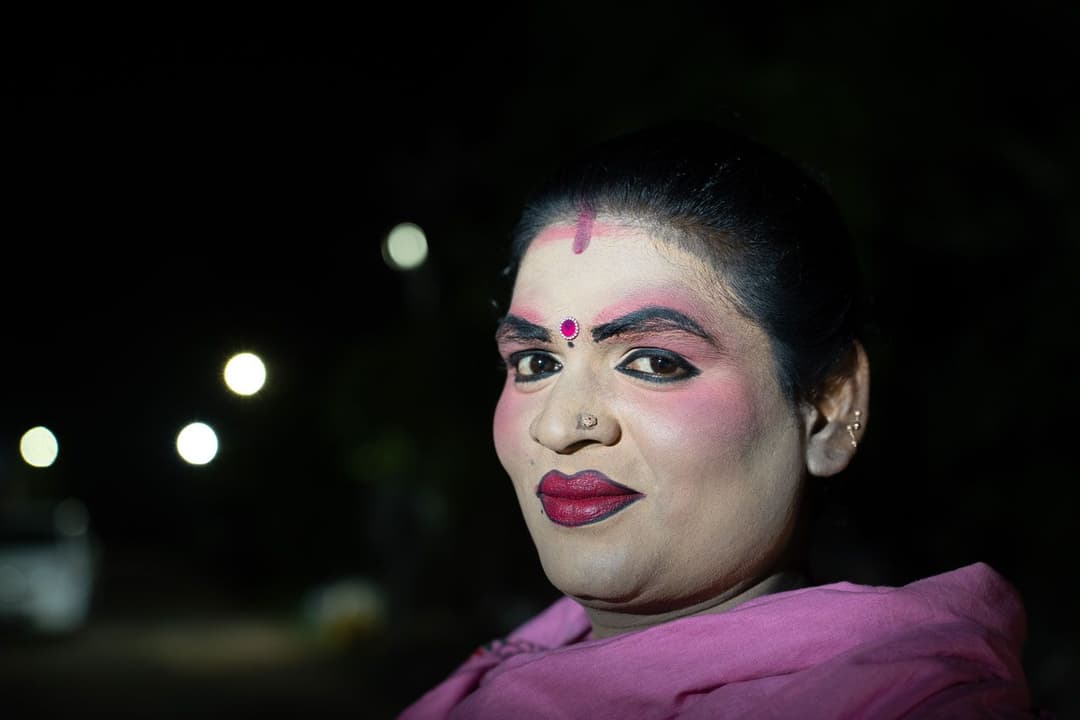
It is late evening in Tamil Nadu’s Vadanamelli village. Members of the Sree Ponniamman Therukkoothu Mandram are getting ready for a Kariakkoothu performance. As always, this is going to be a dusk-to-dawn show, with many characters and multiple costume changes.
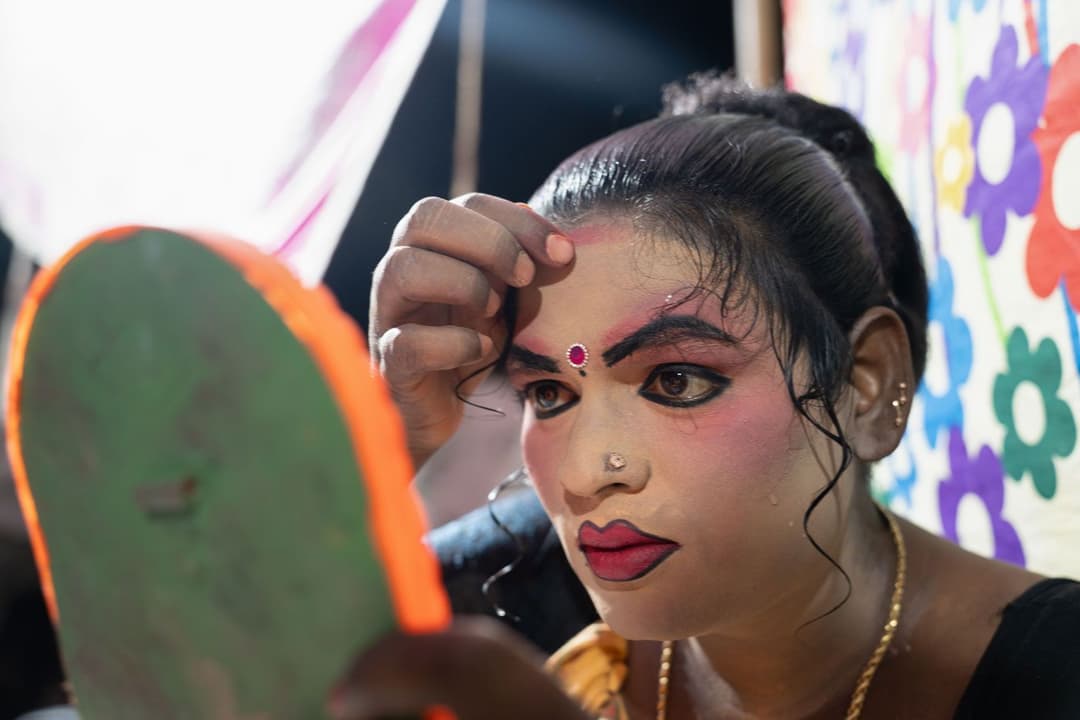
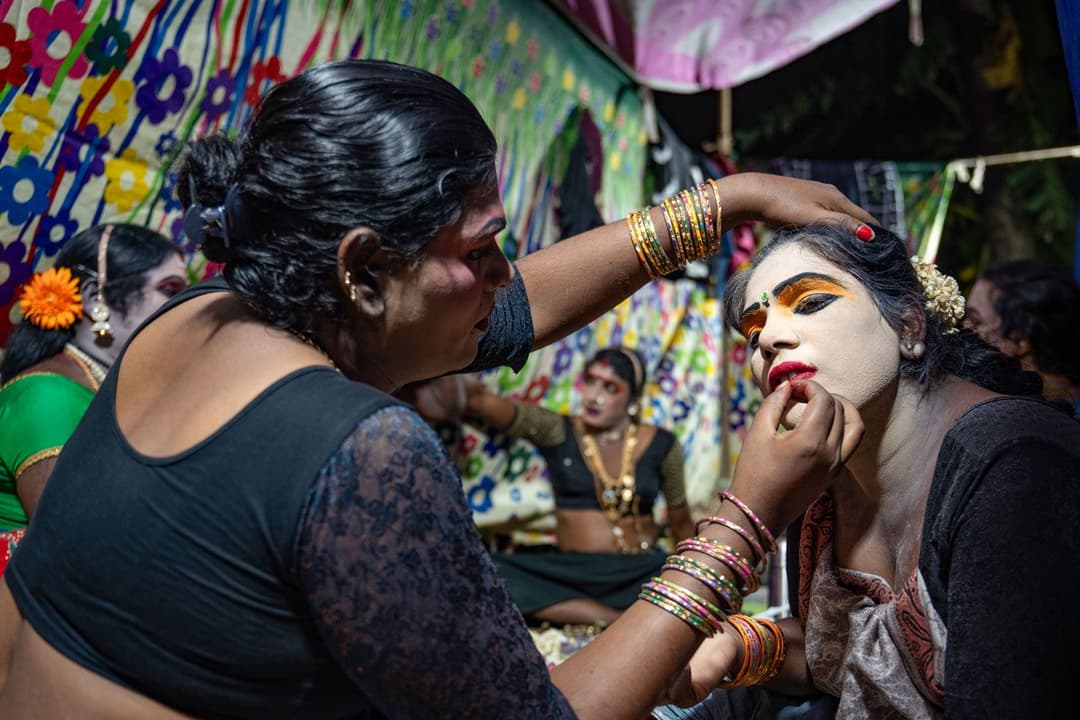
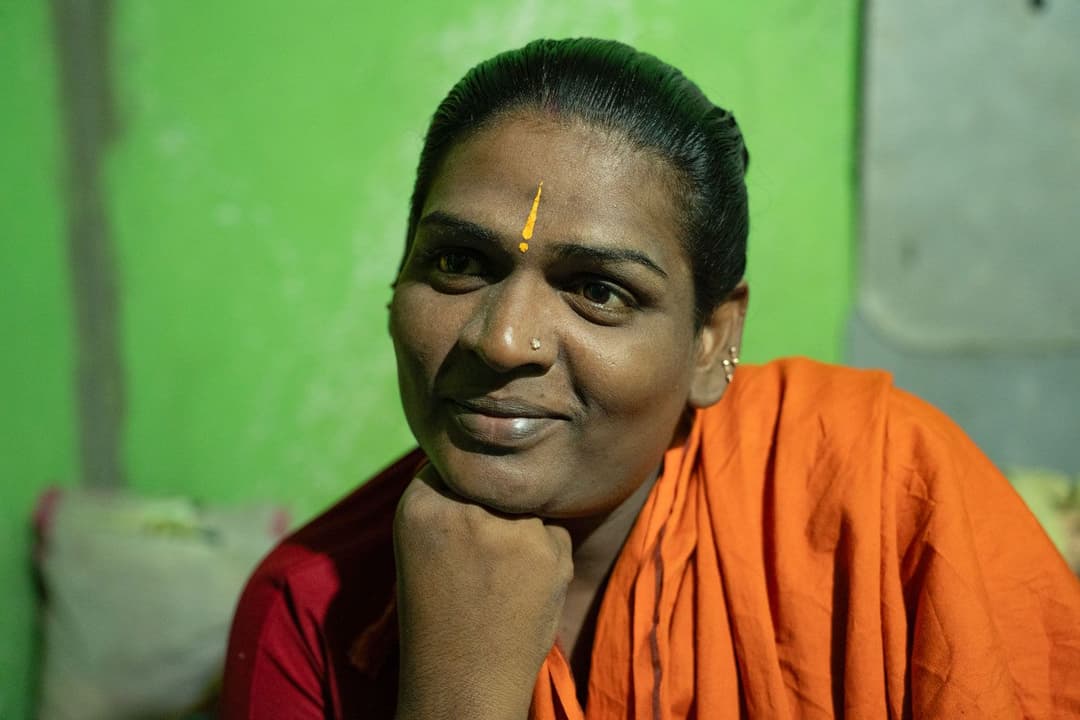
Backstage, 33- year-old Sharmi has started applying make-up. As she mixes red powder with oil to make her own lipstick, she explains some basic rules of arithaaram (make-up): “Arithaaram differs for men and women. It also differs according to the character and the length of the role.”
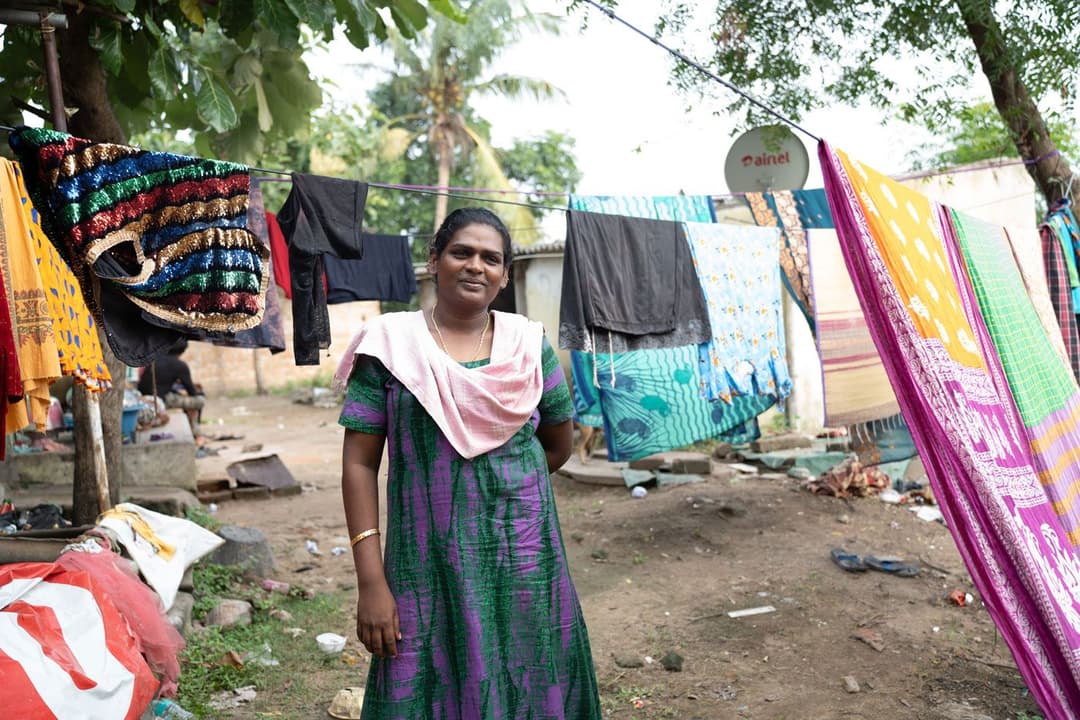
Sharmi is one of four transgender artistes that make up the 17-member team at the Sree Ponniamman Therukkoothu Mandram, a drama company dedicated to what is believed to be one of the oldest performing art forms of Tamil Nadu. “People before my generation also performed therukkoothu,’’ says Sharmi. “I can't say exactly how old it is.”
Therukkoothu, or street theatre, is based on tales from the epics, usually the Mahabharata and the Ramayana, with performances that run through the night. Therukkoothu season typically falls between the months of Panguni (April) and Purattassi (September). During this period Sharmi and her troupe perform almost every weekday, adding up to roughly 15-20 performances in a month. At Rs. 700-800 per performance, that means an income of around Rs. 10,000-15,000 per artiste.
However, once the season ends, the artistes are forced to look for alternative sources of income, including Kariakkoothu, a ritual-based version of therukkoothu, performed only at funerals. “Someone’s death gives us one or two performances a week,” says Sharmi, as she prepares for the Kariakkoothu performance in Vadanamelli, nearly 60 kilometres from her drama company’s home in Pattaraiperumbudur, in Thiruvallur district.