
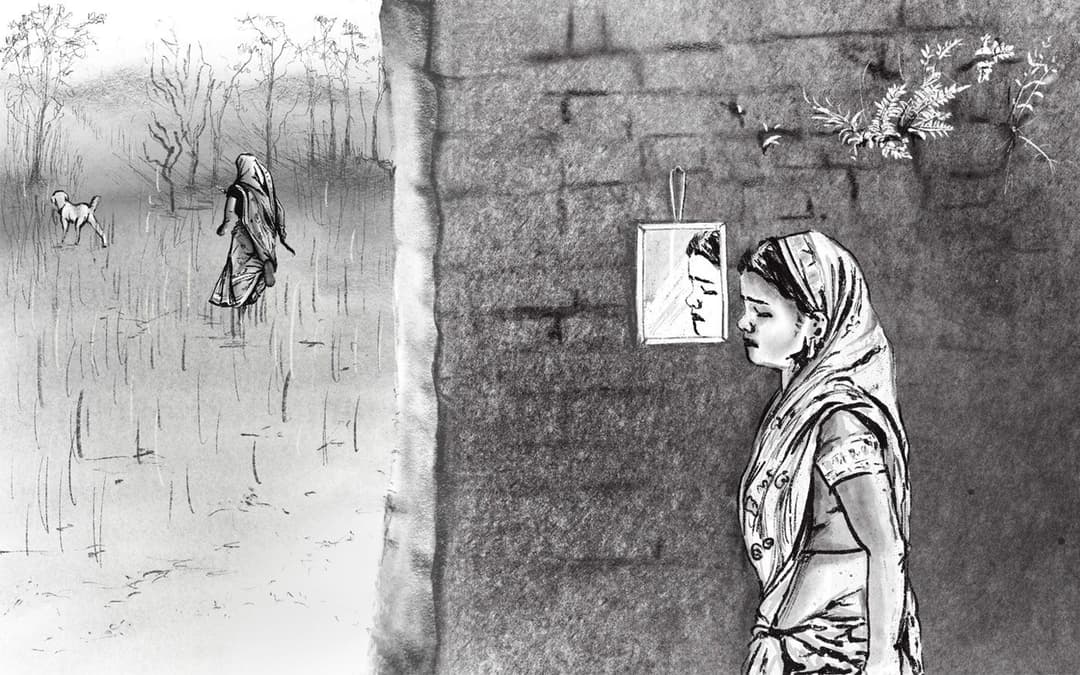
On a hot afternoon in Akrani taluka in the Dhadgaon region, Shevanta Tadvi runs after her small herd of goats, head covered with her saree pallu. When a baby goat ventures into the bushes or tries to enter someone’s farm, she bangs her stick on the ground, bringing it back to the fold. “I have to keep a close eye on them. The little ones are more mischievous. They run off anywhere,” she smiles. “Now they are like my children.”
She has walked towards the forest, about four kilometres from her home in Maharajapada, a hamlet of Harankhuri village in Nandurbar district. Here she is alone and free amongst her goats, the chirping birds, and rustling trees. Free also of the taunts of vanzoti (barren woman), dalbhadri (accursed woman) and dusht (wicked) that have been flung at her through the 12 years of her marriage.
“Why is there no such derogatory term for men who cannot have a child?” asks Shevanta.
Now 25, Shevanta (not her real name) was married at the age of 14. Her husband Ravi, 32, is an agricultural labourer, earning around Rs. 150 on days when he finds work. He is also an alcoholic. They belong to the Adivasi community of Bhils, in this predominantly Adivasi district of Maharashtra. The previous night, Shevanta says, Ravi (not his real name) had beaten her again. “Nothing new," she shrugs. "I cannot give him a child. The doctor said my uterus is flawed so I cannot conceive again.”
A damaged uterus is how Shevanta describes the polycystic ovarian syndrome (PCOS) she was diagnosed with in 2010 at the Dhadgaon Rural Hospital, when she had a miscarriage. She was only 15 years old at the time, and three months pregnant.


