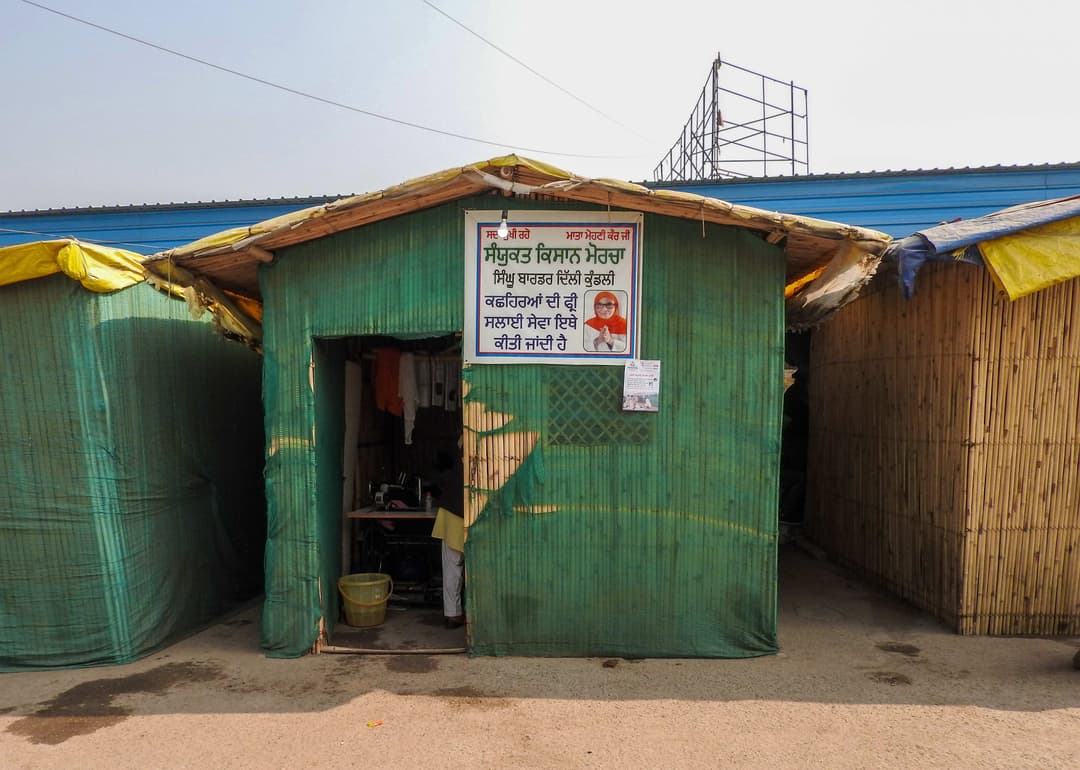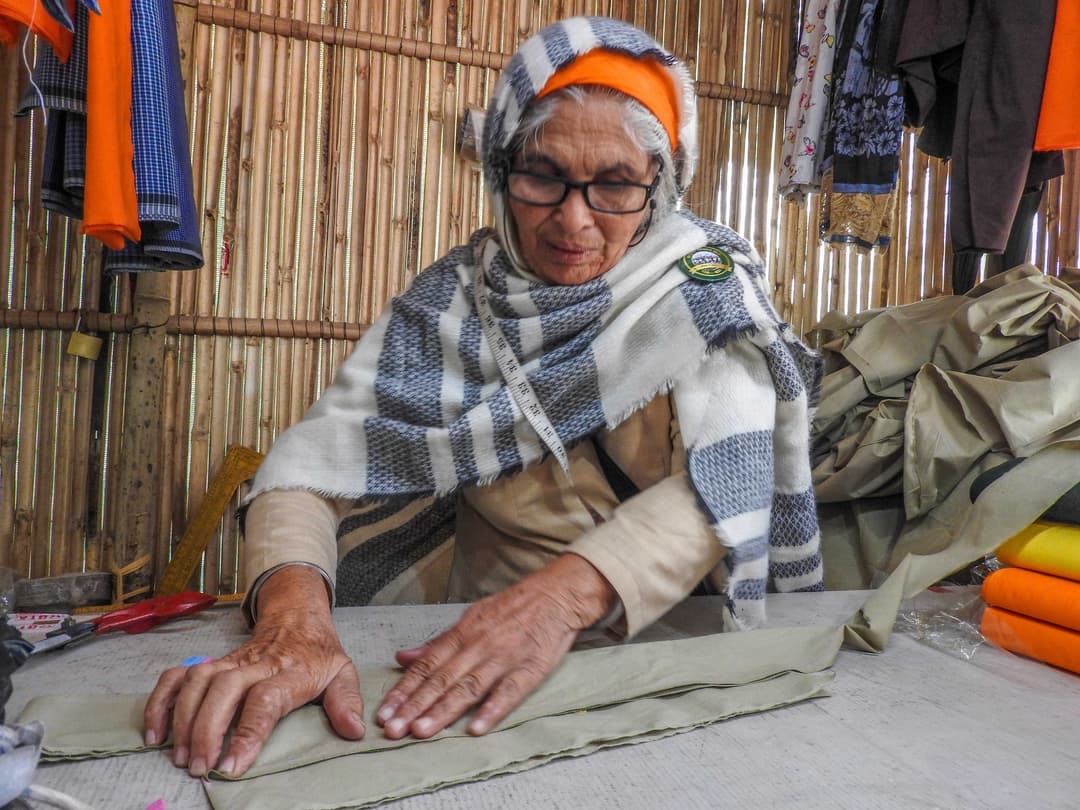

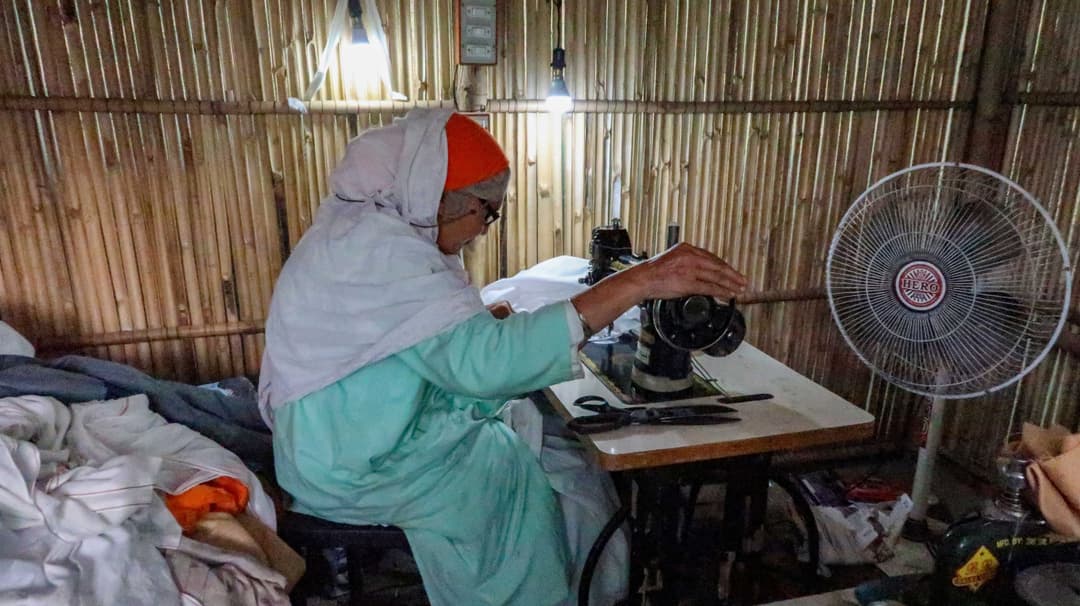
A narrow cot in the small bamboo shed held a pile of clothes that Mohini Kaur would need to alter or stitch. “I am not very good at tailoring, but I do what I can,” said the 61-year-old from Swaroop Nagar in New Delhi, who came to the Singhu protest site in November 2020. “I came here to do sewa for the protesting farmers. They grow food for us, this was something I could do for them,” she said. Mohini didn’t go back home, not even once – not until after the farmers unions withdrew their protests on December 9, 2021.
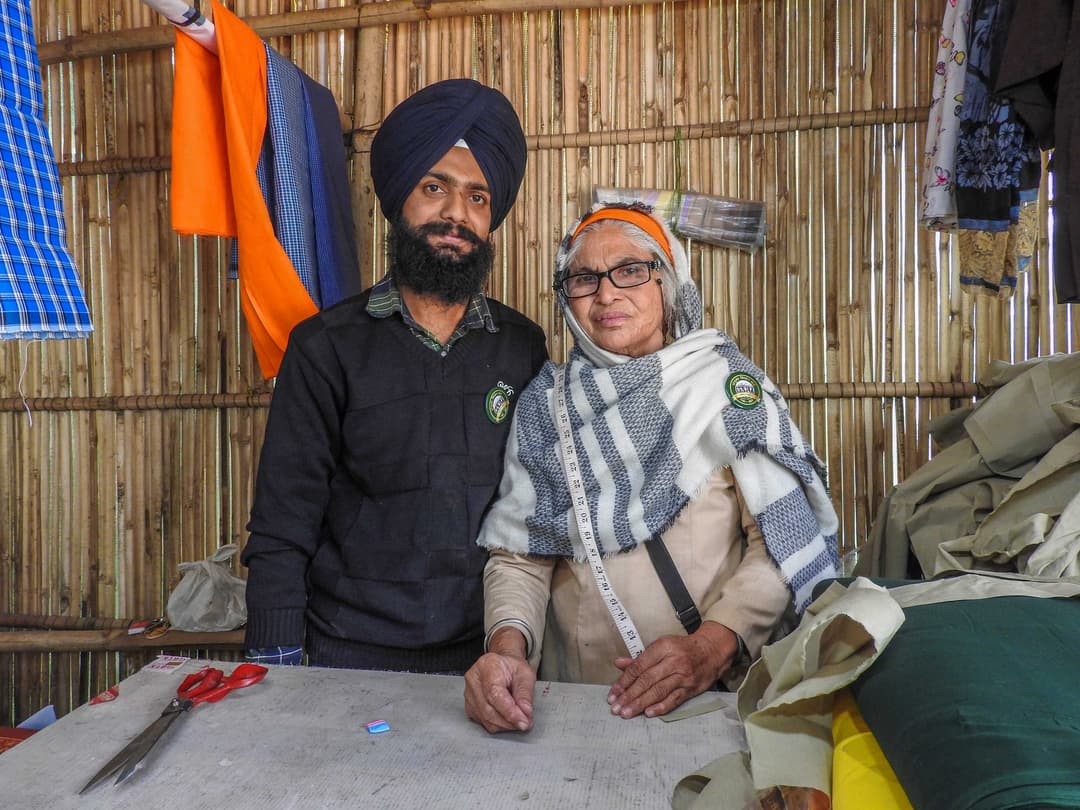
When news of her work as a volunteer at Singhu, on the Delhi-Haryana border, made it to the Punjabi newspaper Ajit, it inspired a reader from Punjab to help Mohini. In July this year, the young man, 22-year-old Harjeet Singh, joined Mohini at her worktable in the shed.
Harjeet owns a tailoring shop in Khanna, a city in Punjab’s Ludhiana district. His father is a farmer who grows rice, wheat and maize on their four-acre farm. “I left my shop in the care of my two karigars [artisan workers] and came to Singhu in July this year to help Mohiniji. There is so much work here; she cannot do it all alone.”
Besides the cot and worktable, two sewing machines and a pedestal fan filled up the space in the shed, leaving little room for movement. On the floor, a portable gas canister stove was used to boil milk. Only one person could step in at a time to talk to Mohini or Harjeet. The ‘customers’ – farmers and others at the protest site – stood in the doorway.