
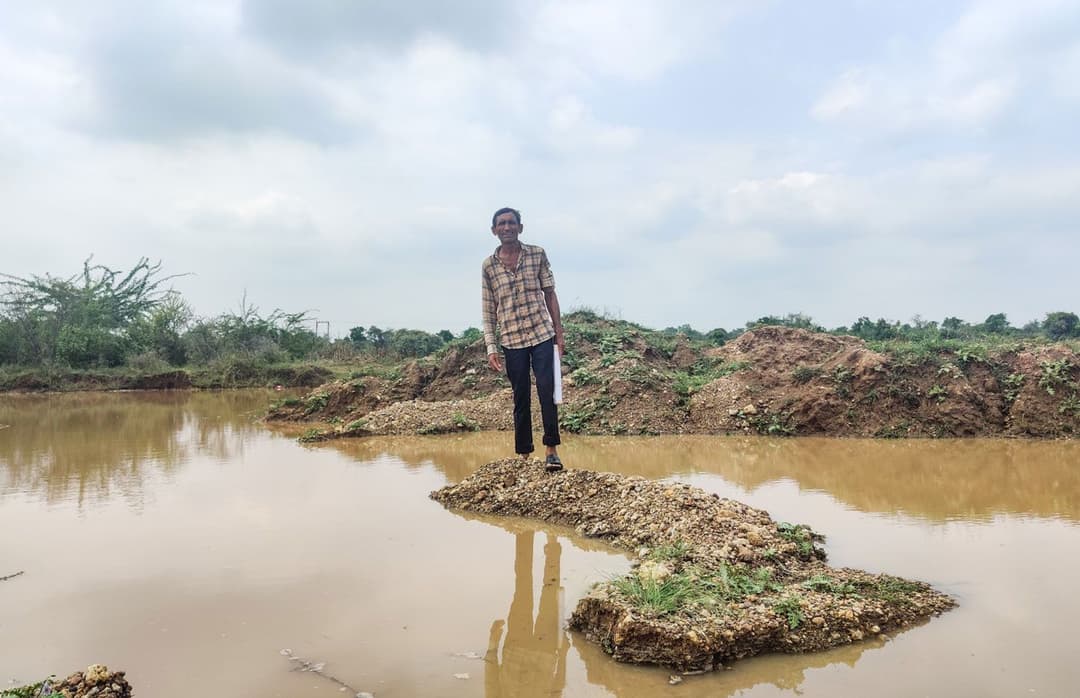
Balabhai Chawda, 57, has five acres of farmland in Gujarat’s Surendranagar district. It is fertile. It is irrigated. He has owned it for 25 years. There is, however, just one problem. He is not allowed near the farmland he owns.
“I have proof of my ownership,” he says, unfolding the land title papers that have now turned brittle and yellow. “But the possession [of the land] is with people from the dominant caste.”
Balabhai, a labourer belonging to the Chamar community, a Scheduled Caste in Gujarat, has turned to everyone he can for help – there aren’t any more doors left to knock on. “I go to the land every day without exception,” he adds. “I look at it from a distance and imagine what my life would have been...”
The farmland, in Bharad village of Dhrangadhra taluka, was allotted to Balabhai in 1997 under Gujarat’s land distribution policy. The ‘surplus land’ acquired under the Gujarat Agricultural Lands Ceiling Act of 1960, which imposed limits on agricultural landholding, was earmarked “to subserve the common good”.
These acquired land areas, known as santhani jamin, along with government-owned wasteland, were set aside for “persons in need of land for agriculture” – including farmers’ cooperatives, landless persons and agricultural labourers, among others – with preference given to members of Scheduled Caste and Scheduled Tribe communities.
The scheme works on paper. In practice, not so much.
After receiving the land title, Balabhai made plans to cultivate cotton, jowar and bajra on his plot. He even thought of building a small house on the farmland so he could live where he worked. He was 32 at the time, with a young family and a future to forward to. “I had three small kids,” he says. “I had been working as a labourer. I thought the days of toiling for someone else were behind me. With my own land, I thought I could give my family a good life.”


