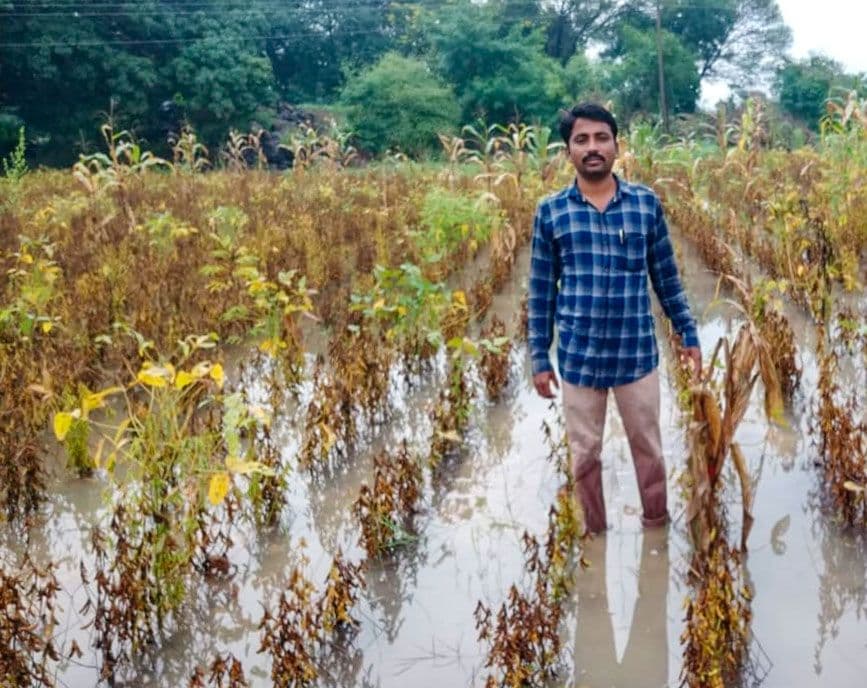
Two weeks of driving rain was enough to destroy four months of hard work in Osmanabad’s farmlands last year. Angry clouds had crumbled and burst into heavy downpour in October – and windstorms uprooted roofs of homes, knocked down animals and washed away miles of crops.
Some of those crops belonged to Sharda and Pandurang Gund, farmers in Mahalingi village in Osmanabad, Maharashtra. “We lost nearly 50 quintals of soybean that we had harvested,” says Sharda, 45. “The water in our land was up to our knees. It destroyed everything.”
According to Indian Meteorological Department’s data, Osmanabad district received 230.4 millimetres of rainfall in October 2020 – a staggering 180 per cent more than district’s average for the month.
Farmers like Pandurang and Sharda suffered the most.
As Pandurang, 50, helplessly watched the rain take away every bit of his crop, soybean was selling at a minimum support price of Rs. 3,880 per quintal in the agricultural market. In other words, he and Sharda lost stock worth Rs. 194,000. “Also, we had invested about Rs. 80,000 on it,” says Sharda. “You have to purchase seeds, fertilisers, pesticides and so on. I am not even counting our back-breaking labour for over four months to cultivate the crop. But the rainfall was sudden, and we couldn’t do anything about it.”