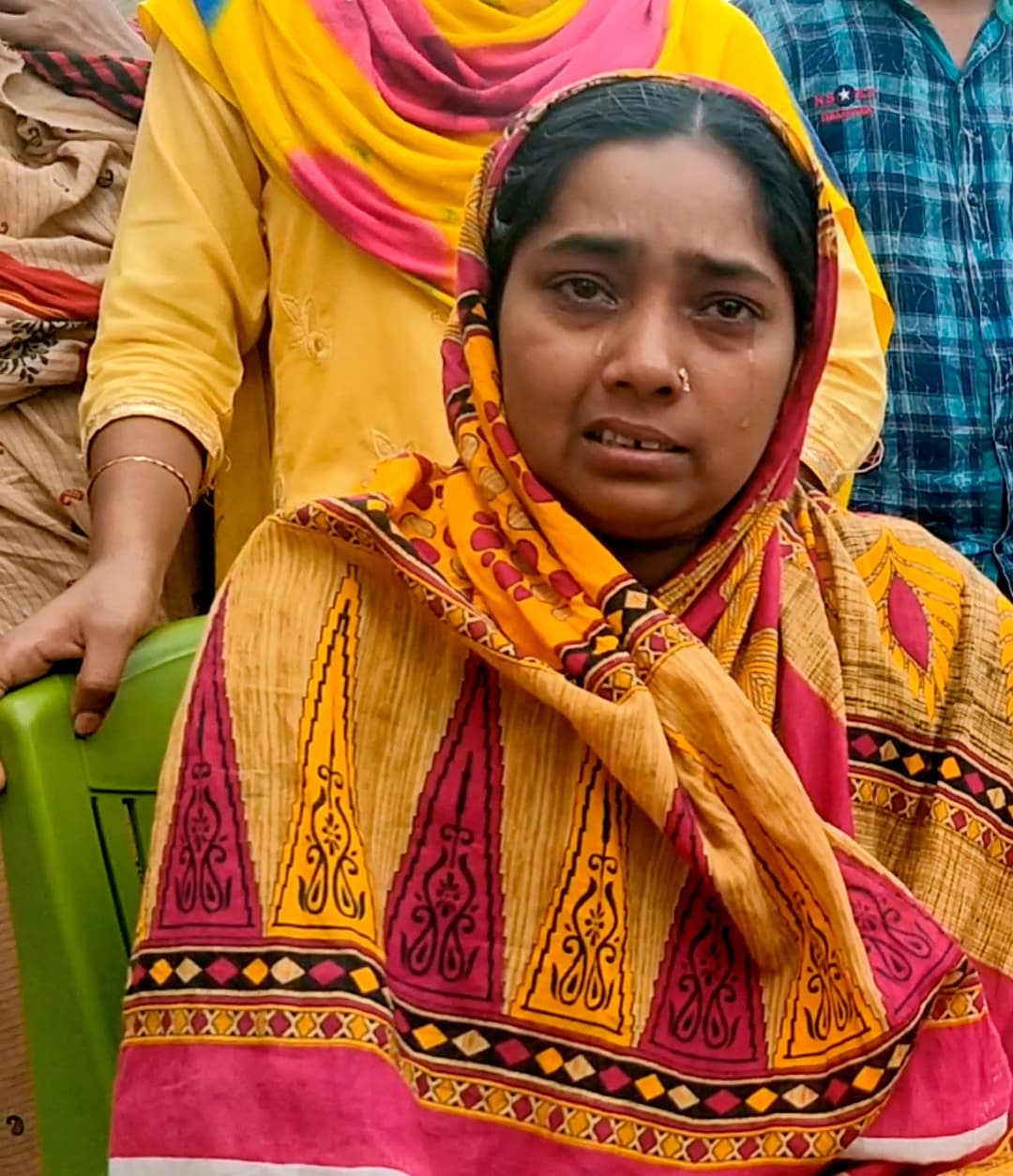


Rehna Bibi didn’t think much when her phone call to her husband, Anas Shaikh, failed to connect at 10.30 a.m.on February 7, 2021. They had spoken less than two hours ago. “His grandmother had died that morning,” says Rehna, who had called him at 9 with the news.
“He could not have made it back for the funeral. So he asked me to do a video call at the time of the burial,” says Rehna, 33, sitting outside her one-room hut in Bhagabanpur village, in West Bengal’s Maldah district. Anas was more than 1,700 kilometres away – in the Garhwal mountains in Uttarakhand. When Rehna rang him the second time, the call wouldn’t go through.
Between Rehna’s two phone calls that morning, disaster had struck in Uttarakhand’s Chamoli district. A portion of the Nanda Devi glacier had broken off and triggered a deluge in Alaknanda, Dhauli Ganga and Rishi Ganga rivers. Massive floods swept away homes on the riverbanks, trapping many, including labourers working at the hydropower plants in the region.
Anas was one of them. But Rehna didn’t know. She tried calling her husband a few more times. She started to worry and soon panic took over. “I kept calling repeatedly,” she says, breaking into tears. “I didn’t know what else to do.”