

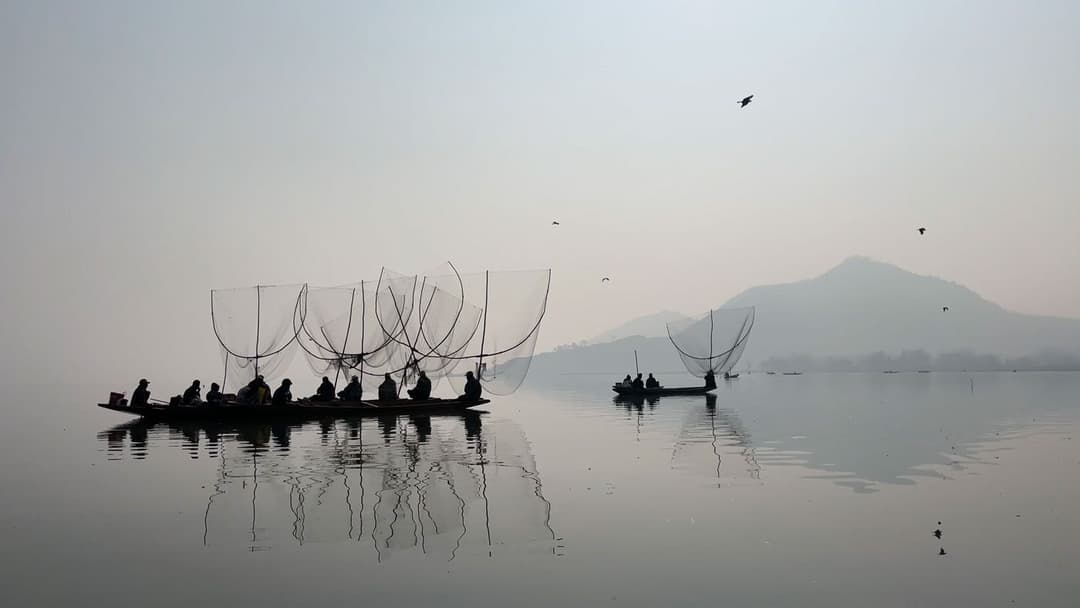
“This is the sixth day I will be going home without a single fish,” says Abdul Raheem Kawa, standing on the banks of Wular Lake. The 65-year-old fisherman lives here with his wife and son in their single-storey home.
Located in the Kani Bathi area of Bandipore district, and fed by river Jhelum and the Madhumati stream, Wular is the only source of livelihood for the people who live around it – roughly 18 villages each with at least 100 households who live on its banks.
“Fishing is the only source of livelihood,” Abdul says. But “there is no water in the lake. We can wade through the water now because, in the corners, it has come down to only four or five feet,” he says, pointing to the edges.
He would know – a third-generation fisherman, Abdul has been fishing in this lake in north Kashmir for 40 years. “My father would take me along with him when I was a child. By watching him, I learnt how to fish,” he says. Abdul’s son has also followed the family occupation.
Every morning, Abdul and his fellow fishermen make their way to Wular and row out into the lake with their zaal – a net they have woven with nylon thread. Throwing the net into the waters, they sometimes play a handmade drum to attract their catch.
Wular is the largest fresh water lake in India, but in the last four years, pollution in the waters of Wular has made it almost impossible to fish all year round. “Earlier, we would catch fish for at least six months in a year. But now we only fish in March and April,” says Abdul.