
“It has been this way since I was born; I’ve worked as a labourer,” says Ratnavva S. Harijan, on a misty morning in August, as she briskly walks from her house towards the farm where she works for daily wages. Willowy and slightly stooped, she paces with a speed that conceals the limp she had developed as a teenager.
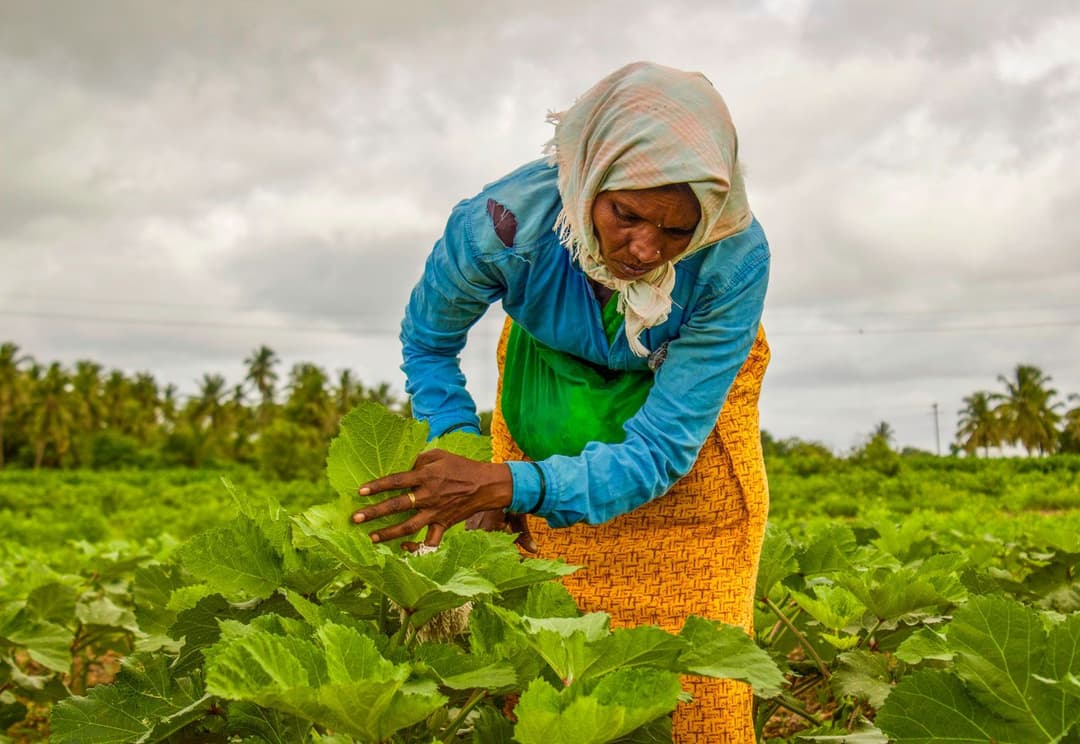
After reaching the farm, she pulls out the work-clothes she has carried with her. First, she slips her arm into a scruffy blue shirt worn over her saree, and then wraps a long, yellow printed-nighty around her waist to safeguard from pollen dust. On top of it, she ties a torn green chiffon-cloth in a manner resembling a pouch, to carry a few gandu hoovu ('male flower') of the okra plant. With a faded white towel around her head, Ratnavva, 45, begins her work holding a bunch of threads in her left hand.
She picks a flower, and gently bends the petals and smears pollen powder from the male cone across each stigma. She marks the pollinated stigma by tying a thread around it. With her back bent, she rhythmically pollinates every flower along the rows of okra plants in the farm. She is skilled in hand-pollination – her occupation since she was a girl.
Ratnavva belongs to the Madiga community, a Dalit caste in Karnataka. She lives in the Madigara keri (Madiga quarter) of Konanatali village, in Ranibennur taluk of Karnataka’s Haveri district.


