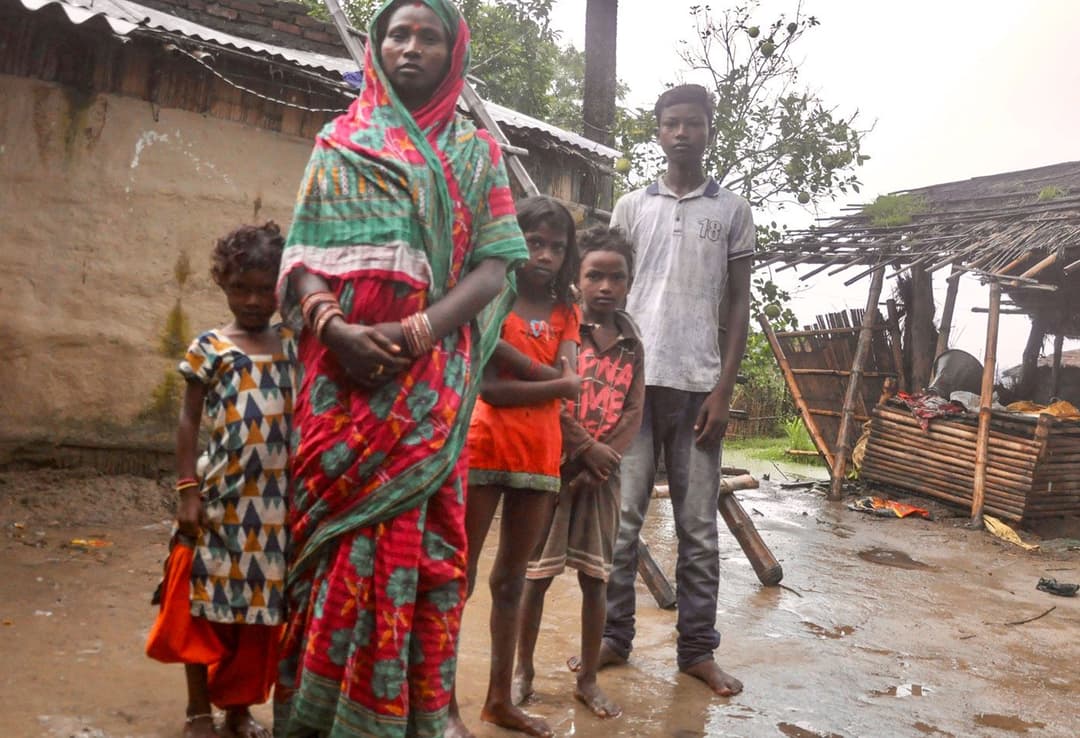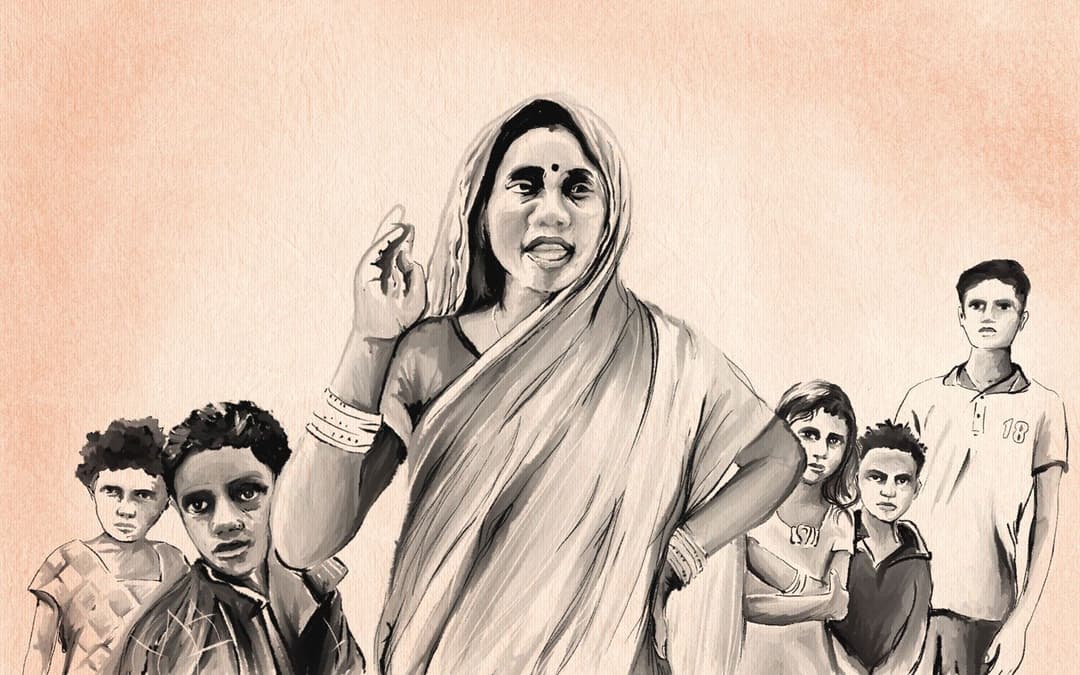
Shanti Manjhi was 36 years old when she became a grandmother for the first time in January this year. That night, she notched up one more first — the wiry woman who has given birth to seven children in a span of two decades, all in the privacy of her home with no doctor or nurse in attendance, finally visited a hospital.
“My daughter was in pain for hours but the baby didn’t come out. We had to call a tempo,” she says, recounting the day when her eldest daughter, Mamta, went into labour at home. By ‘tempo’ she means a three-wheeler passenger vehicle that took nearly an hour to arrive around sunset from Sheohar town, just four kilometres away. Mamta was rushed to the district hospital in Sheohar, where she delivered a baby boy several hours later.
“He charged Rs. 800,” Shanti grumbles, still outraged about the tempo fare. “Nobody in our tola goes to the hospital, so we don’t know if there’s an ambulance.”
Shanti had to return home later that night to make sure her youngest child, four-year-old Kajal, had eaten something before bedtime. “I’ve become a grandmother,” she says, “but I have a mother’s responsibilities too.” Besides Mamta and Kajal, she has three more daughters, and two sons.
The Manjhi family lives in Musahar Tola, a cluster of huts located about a kilometre outside Madhopur Anant village in north Bihar’s Sheohar block and district. The roughly 40 mud and bamboo huts in the tola are home to about 300-400 people. All of them belong to the Musahar caste, designated as a Mahadalit community – among Bihar’s most marginalised. In a partitioned corner of some of the cramped interiors, a few goats or a cow are tethered.