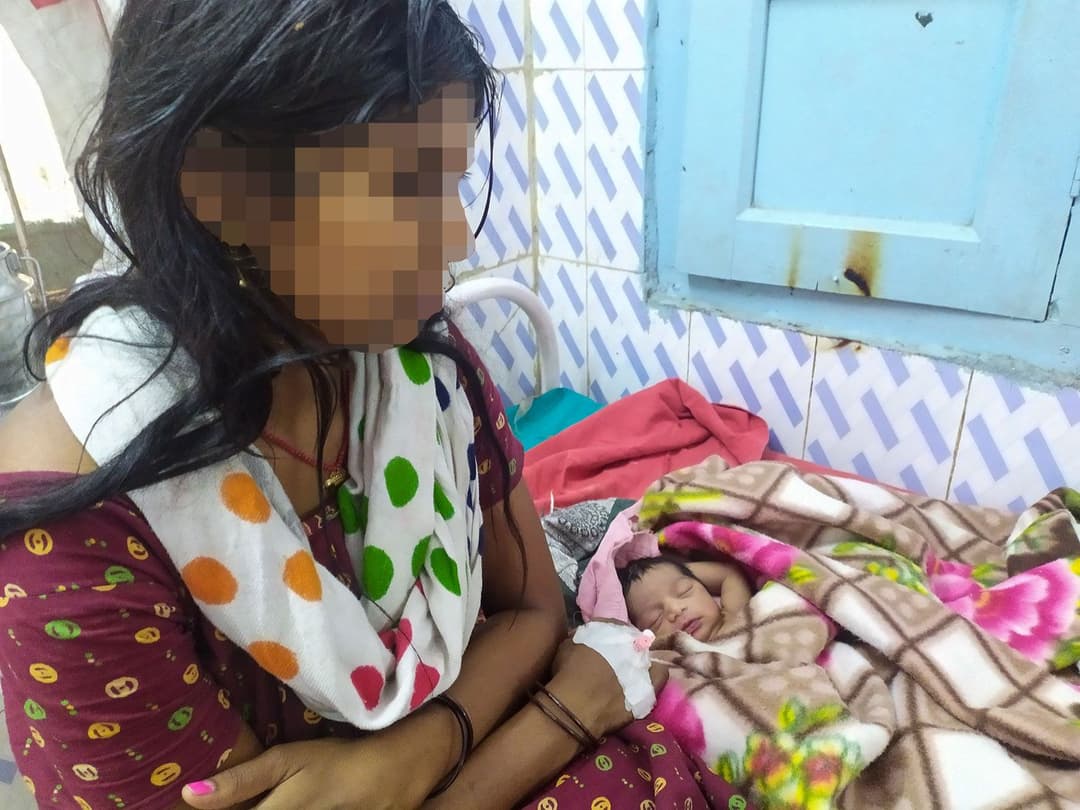


Rani Mahto is torn between happiness over the safe delivery of her now two-day-old baby – and apprehension over going home and telling her husband that it’s a girl. Again.
“He was expecting a son this time,” she says nervously. “I worry about how he will react when I return home and tell him our second child is also a girl,” says the 20-year-old as she breastfeeds the infant in her bed at the Danapur Sub-Divisional Hospital in Bihar’s Patna district.
Rani had her first daughter soon after getting married at the age of 16 in 2017. Her husband Prakash Kumar Mahto was 20 at the time. She lives with Prakash and her mother-in law in a village she prefers not to name – in Phulwari block of the same district. The Mahtos belong to a conservative OBC community.
“In our village, most of the girls get married by the age of 16,” says Rani who is not ignorant of the problems arising from marriage while still an adolescent. “I have a younger sister, too, so my parents were keen to get me married off at the earliest,” she says, as her mother-in-law Ganga Mahto joins her and sits on the bed waiting for the chutti wale paper (discharge certificate).
Rani and her sister are by no means exceptions. Bihar, Uttar Pradesh, West Bengal, Maharashtra and Rajasthan account for 55 per cent of all child and adolescent marriages in the country, says the NGO Child Rights & You (CRY) in an analysis of Census, National Family Health Surveys and other official data.
“Once we get the chutti wale paper,” Rani explains to me, “we will hire an autorickshaw to our village.” She has already spent two days longer than normally necessary in the hospital. Because she has other medical problems demanding attention. “I have khoon ki kami (anaemia),” says Rani.