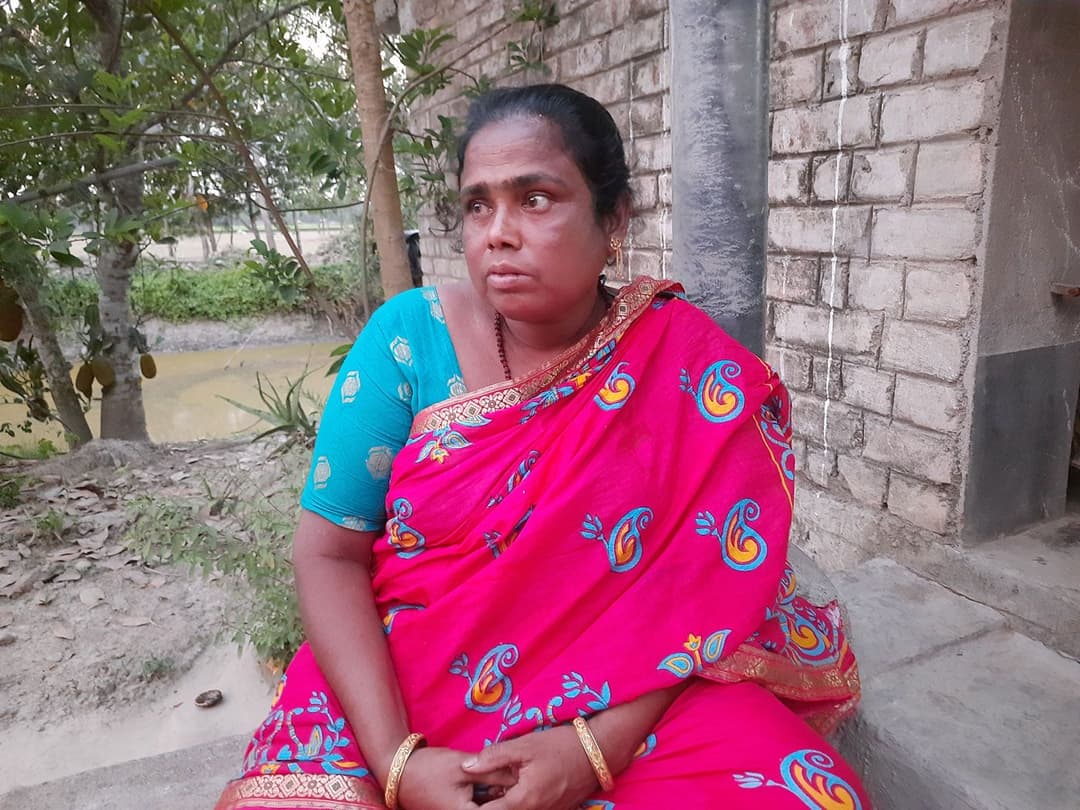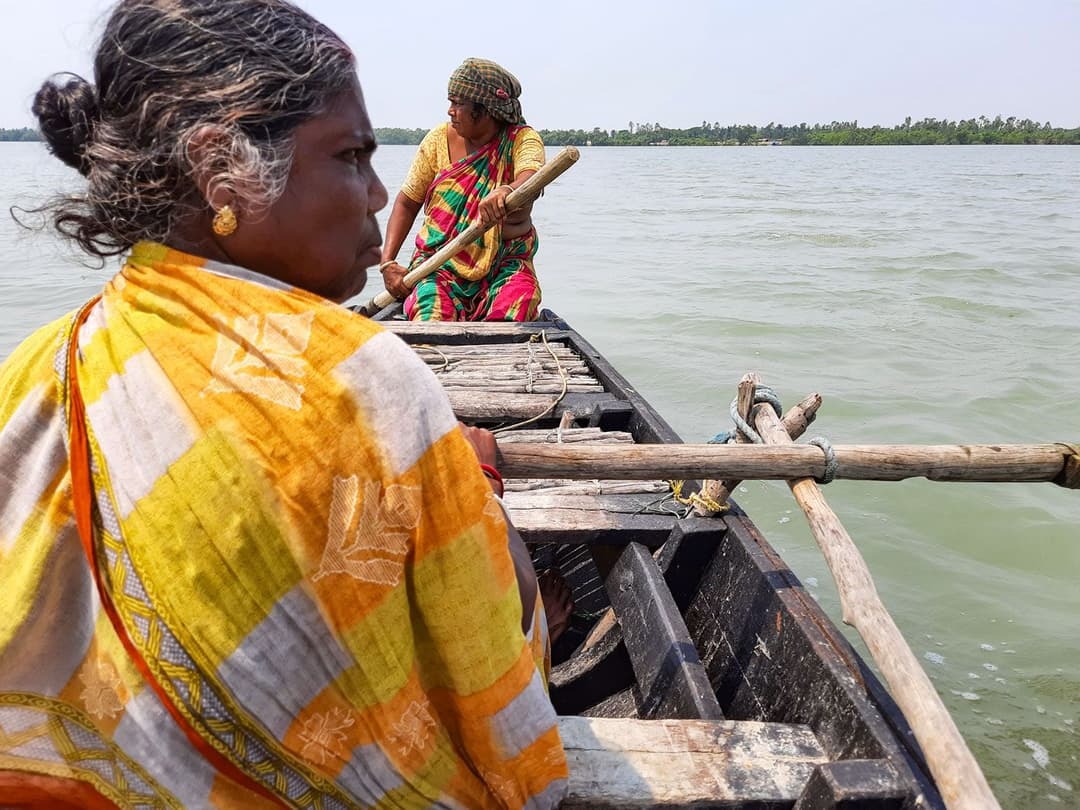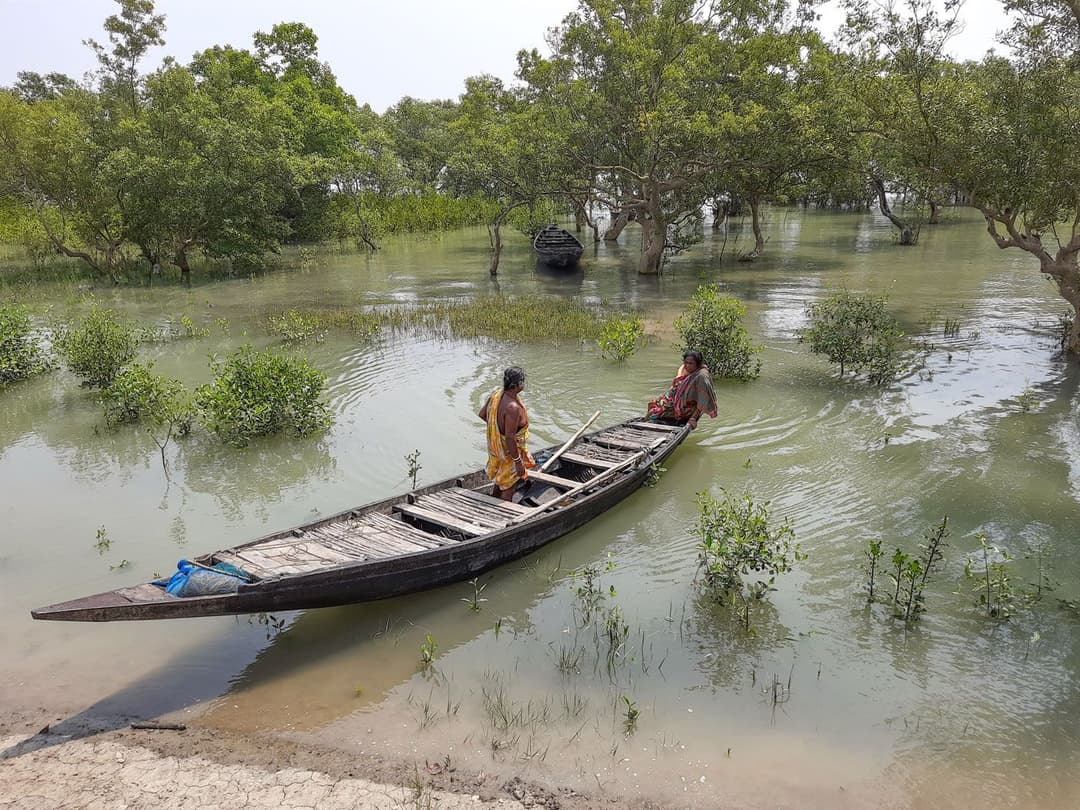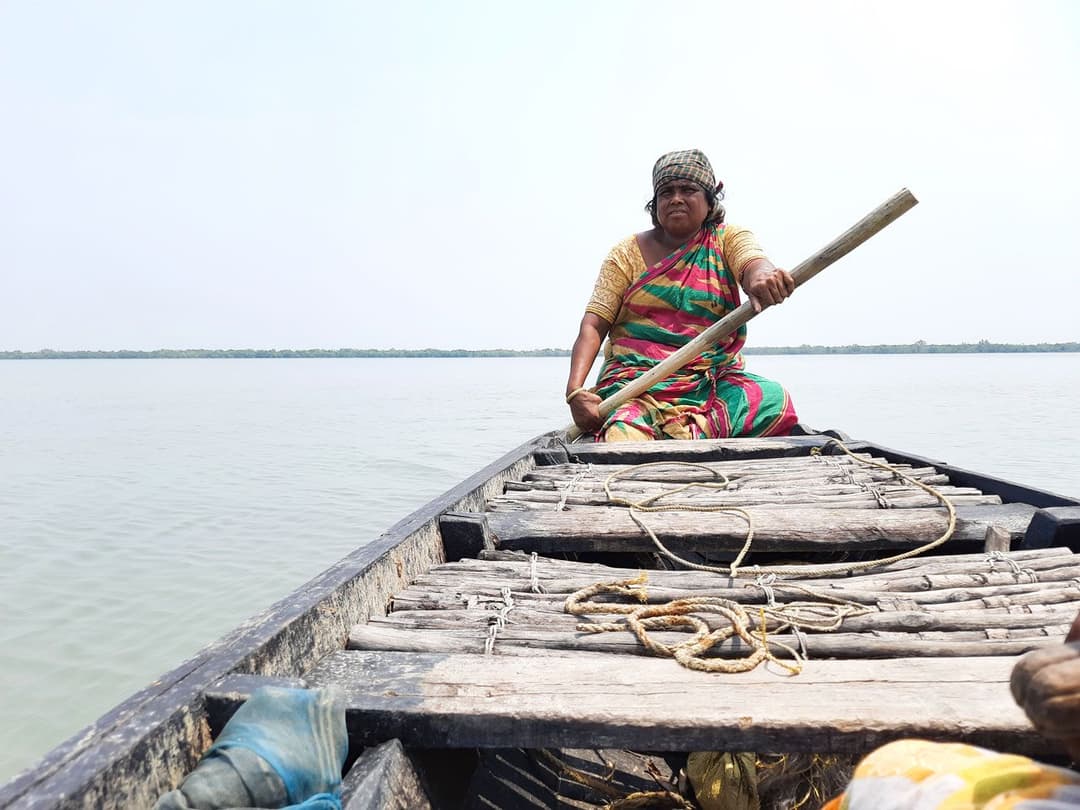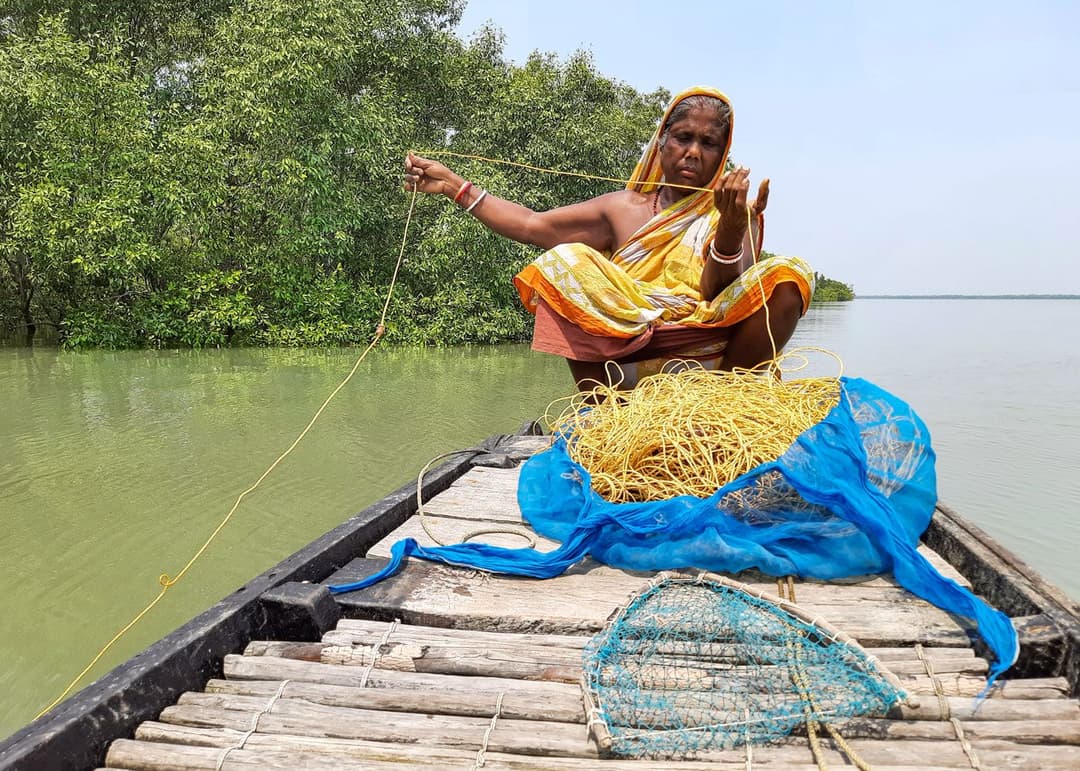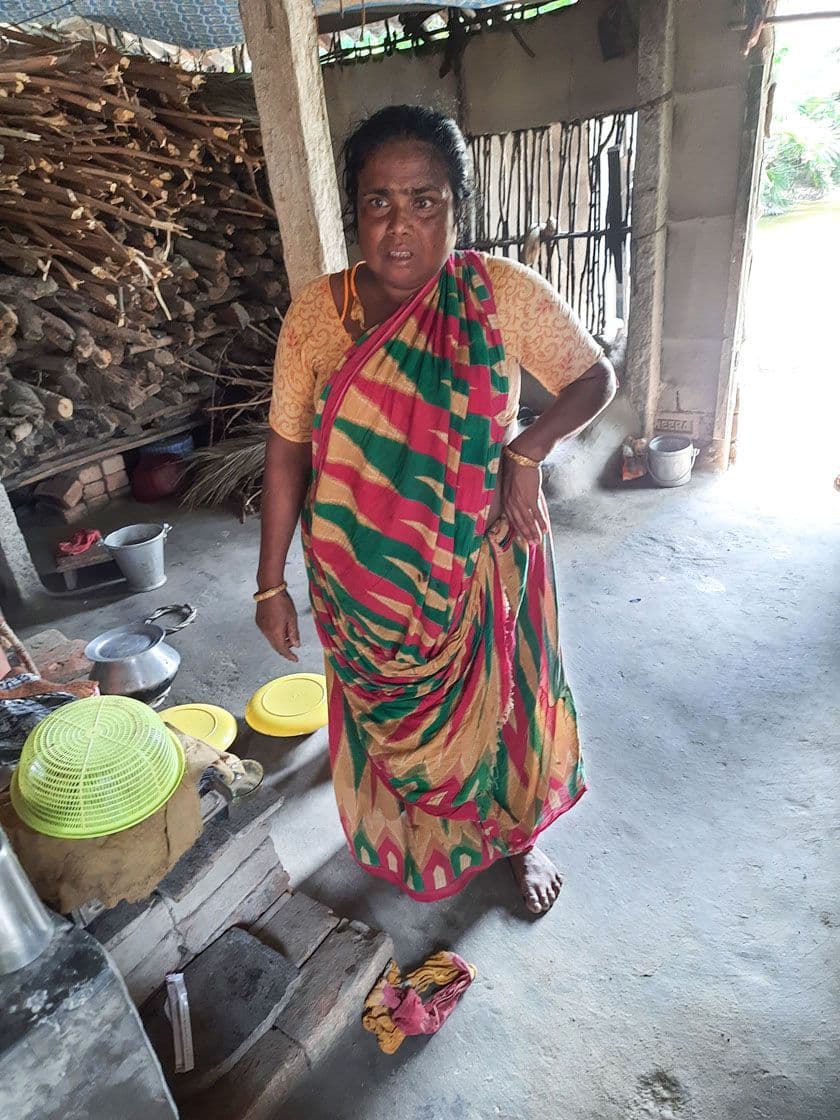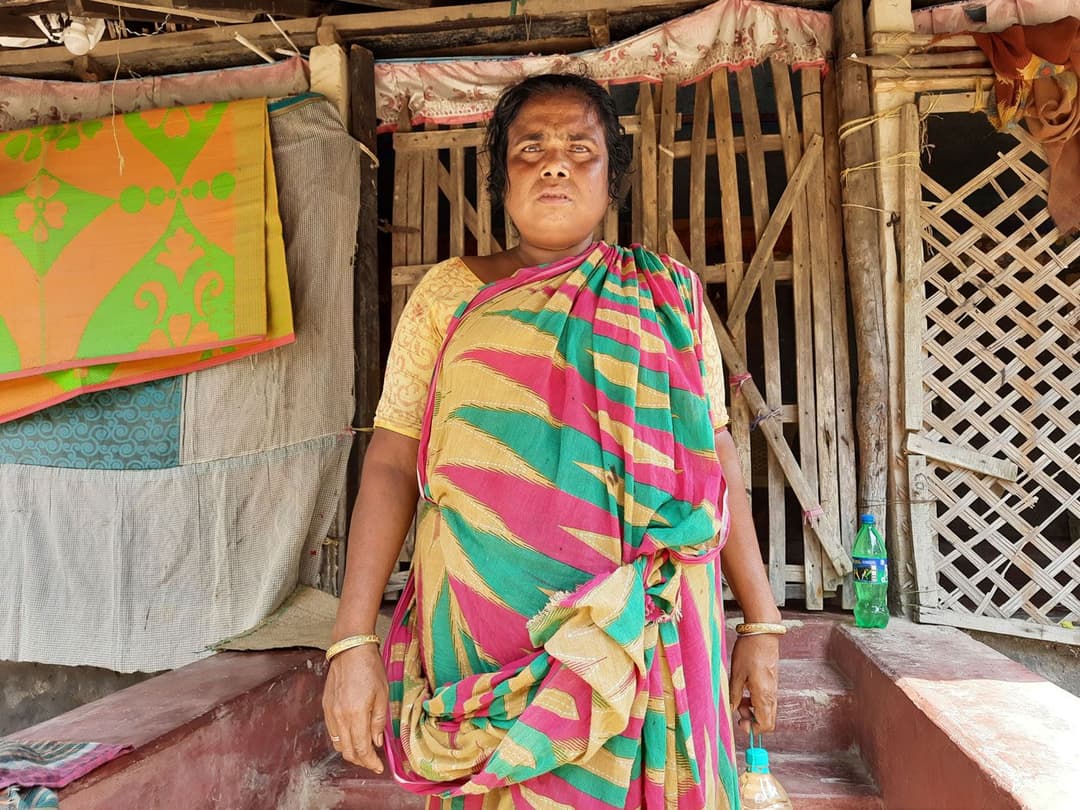

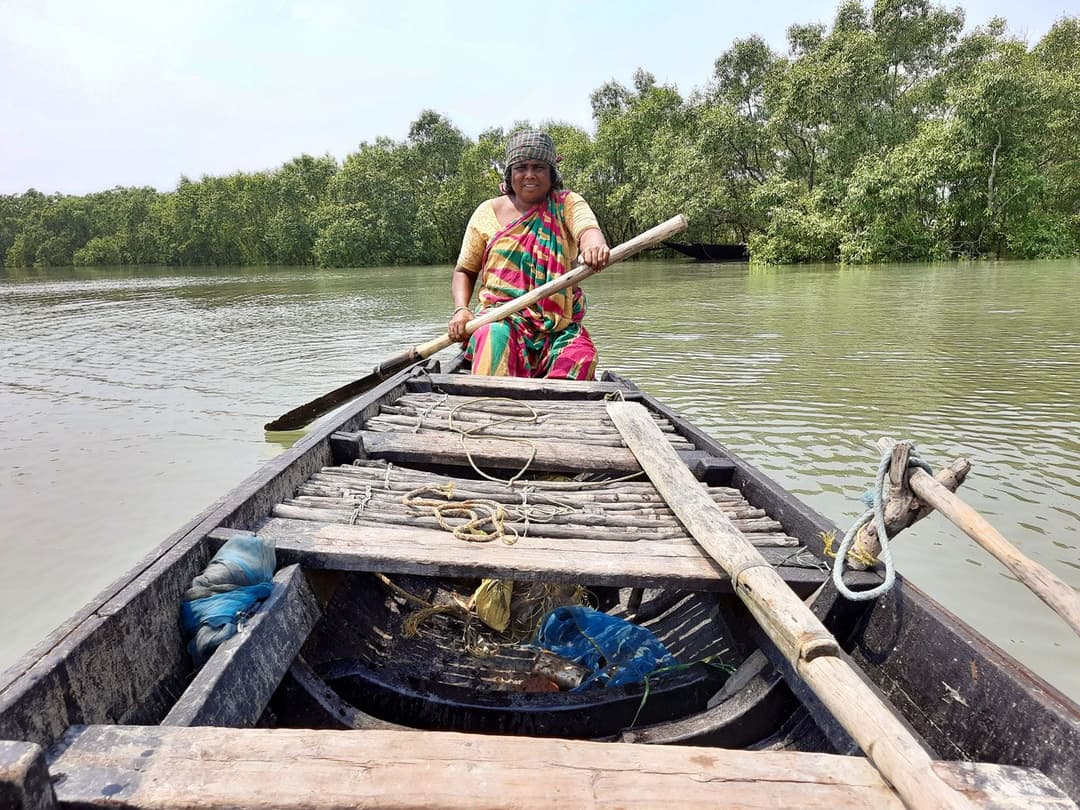
“How do I describe my fear? My heart races in terror. My thoughts are always on when I will escape back to open spaces,” says 41-year-old crab hunter and fisherwoman Parul Haldar, about the cold fear she feels during the days that she searches for crabs to catch in the dense mangrove forests of the Sundarbans. During the crab-hunting season, she rows a boat up and down the rivulets and creeks through the mangrove forest, always in a state of high alert for lurking tigers.
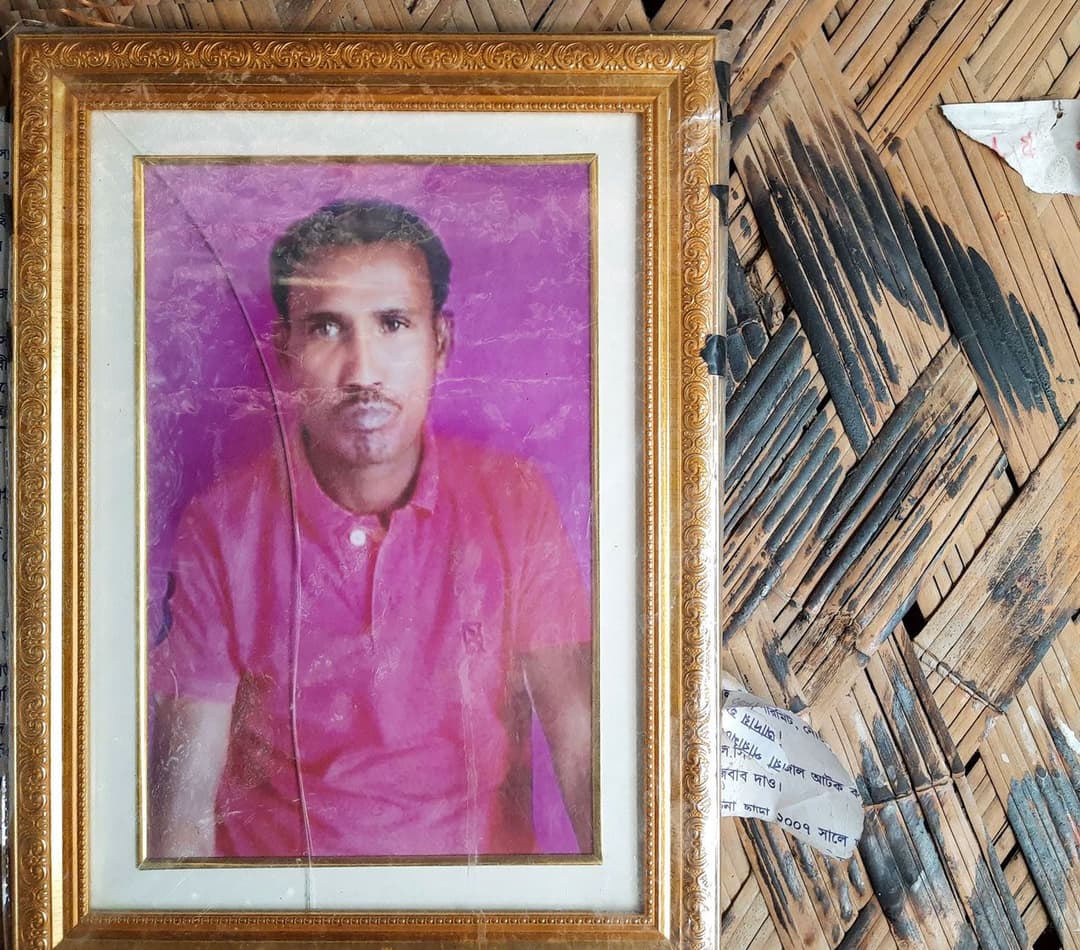
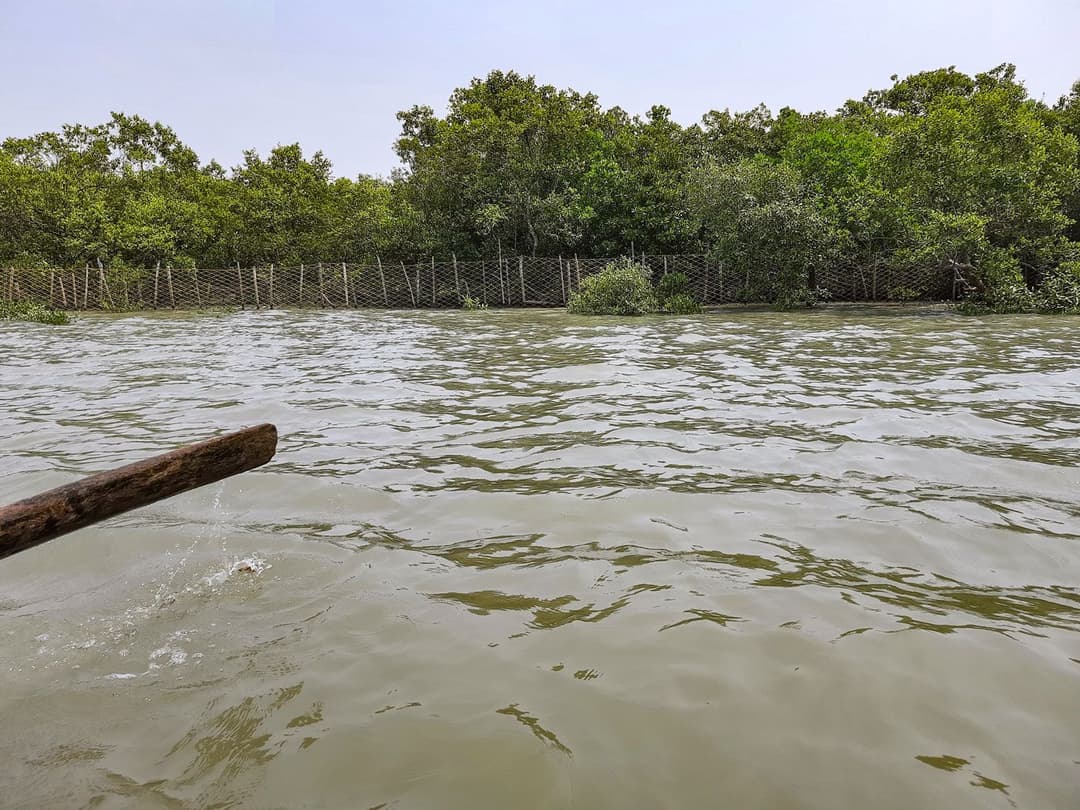
Now directing her wooden boat down the Garal river, Parul, a resident of Luxbagan village, squints in the direction of the criss-cross net fence beyond which lies the Marichjhapi forest. It was in this forest, near her village in the Gosaba block of the South 24 Parganas district, that Parul’s husband, Ishar Ronojit Haldar, was killed by a tiger seven years ago.
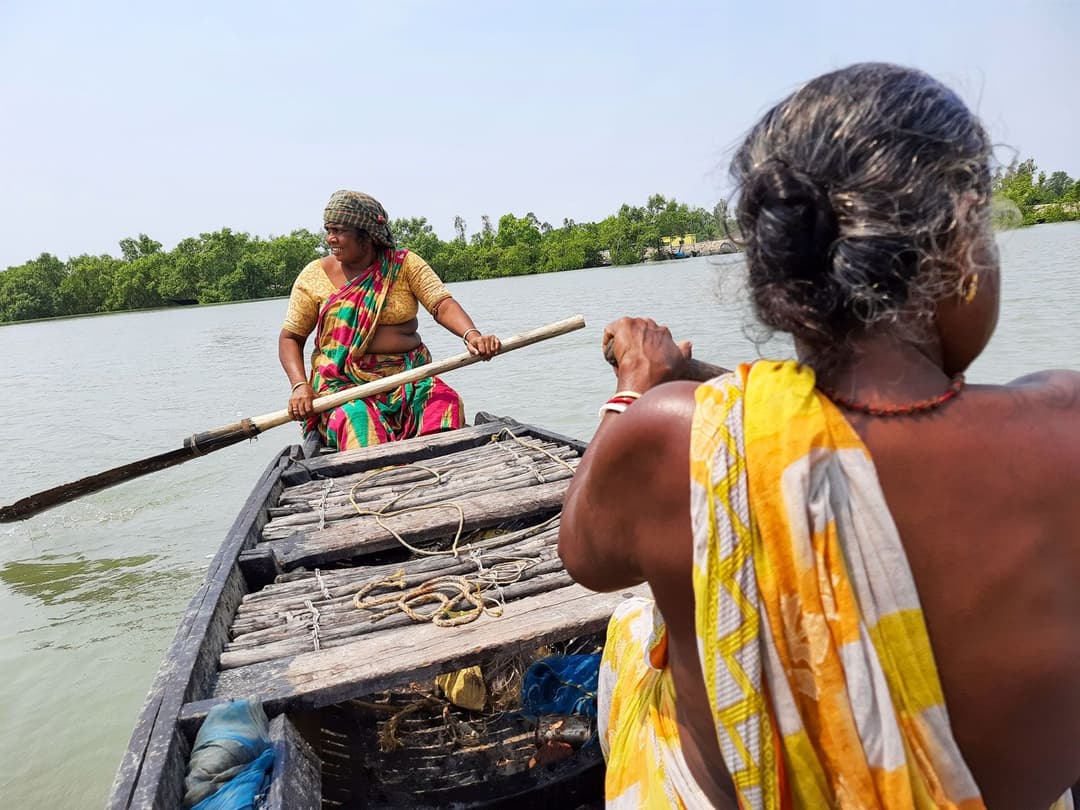
She rests the oars on the edges of the boat in which she and her mother Lokhi Mondal, 56, are out on a scorching summer day. Like her daughter, Lokhi is a fisherwoman too.
Parul was only 13 years old when she married Ishar. Her marital family was poor, but they had never gone into the forest to fish or catch crabs. “I convinced him to come and brought him to the jungle,” she recalls. “Seventeen years later, he died in the jungle.”
Parul lapses into silence at the memory. Ishar was 45 when he died, leaving Parul to raise their four daughters.
Parul and Lokhi pull the heavy oars again, sweating. The women steer the boat a safe distance away from the mangrove forest, now closed for fishing. Fishing activities in the mangrove forest are closed for three months, from April to June, to allow regeneration of fish. When the fishing season is paused, Parul usually sells fish from her pond for a living.