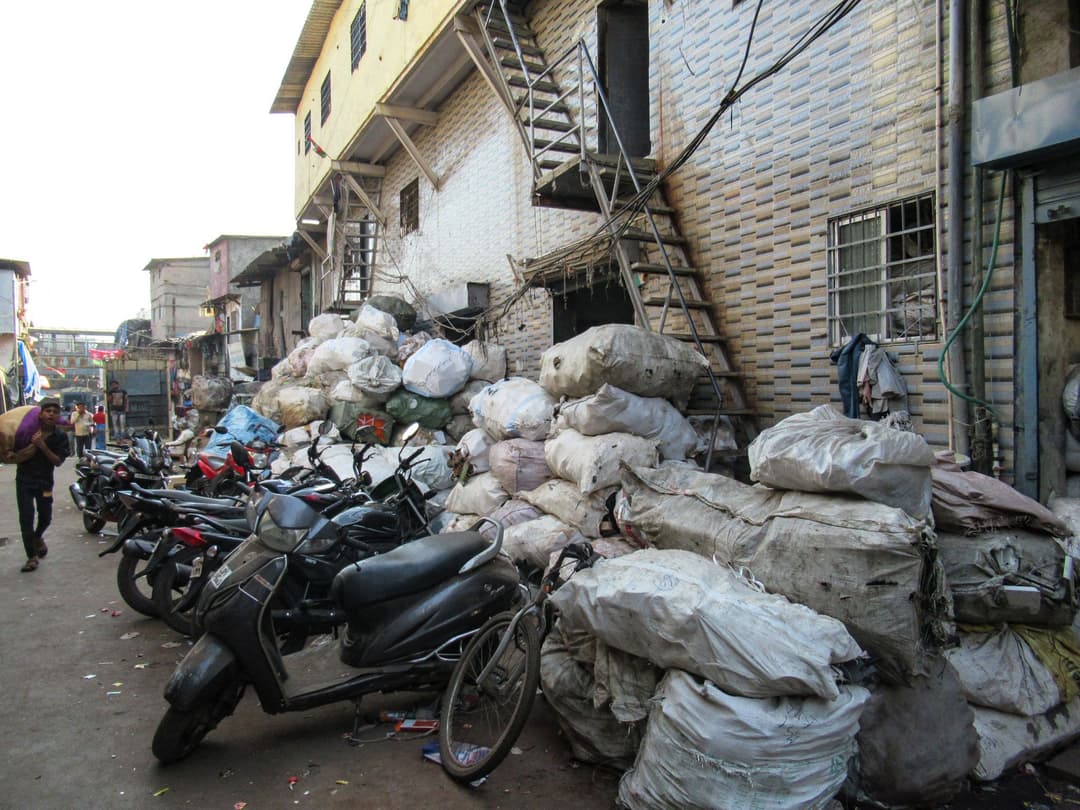

Above all, there is plastic. It is everywhere in almost every conceivable form – lying on the streets, floating in water, stored in sacks, placed in bins, piled on roofs. And when plastic items are burned to extract high-value metal parts at the creek bordering 13th Compound, the acrid smoke thickens the air.
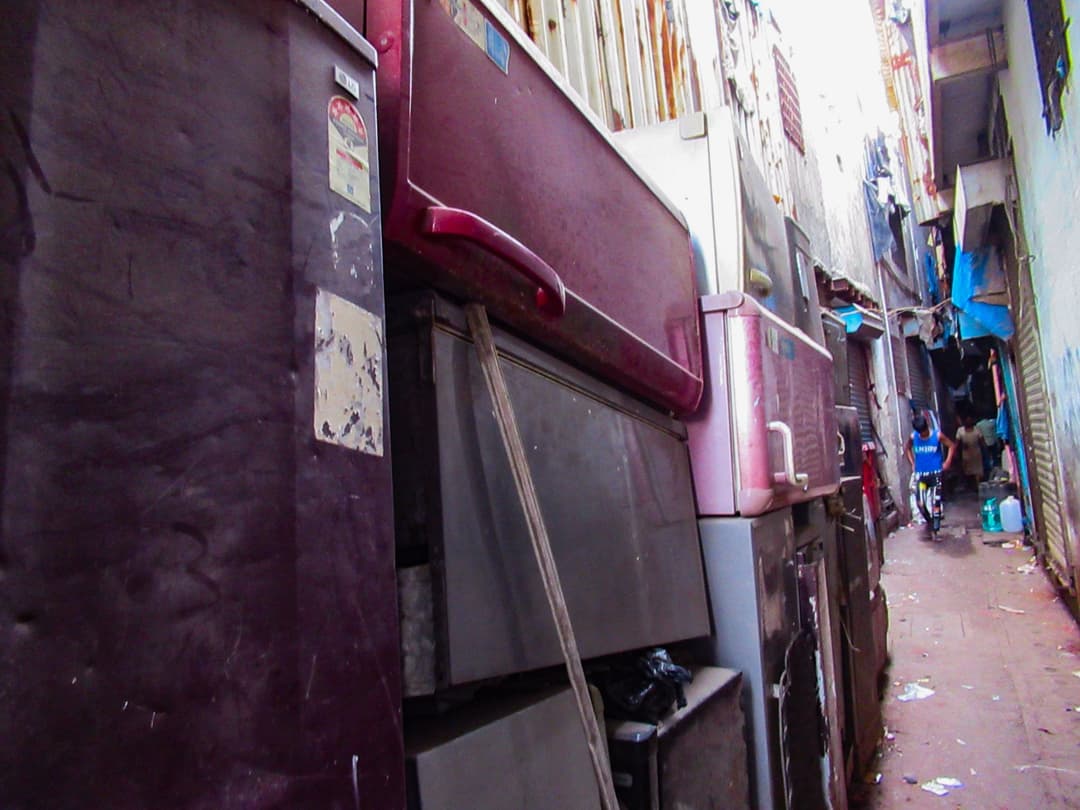
An endless chain of plastic and other waste material arrives regularly at this Compound, the recycling sector in Dharavi, from all parts of Mumbai. A large portion of the more than 10,000 tons of waste generated in the city every day is brought here in trucks and tempos, or on handcarts. Workers – most of them migrant young men from various states – load and unload these items along the impossibly narrow lanes of this sector.
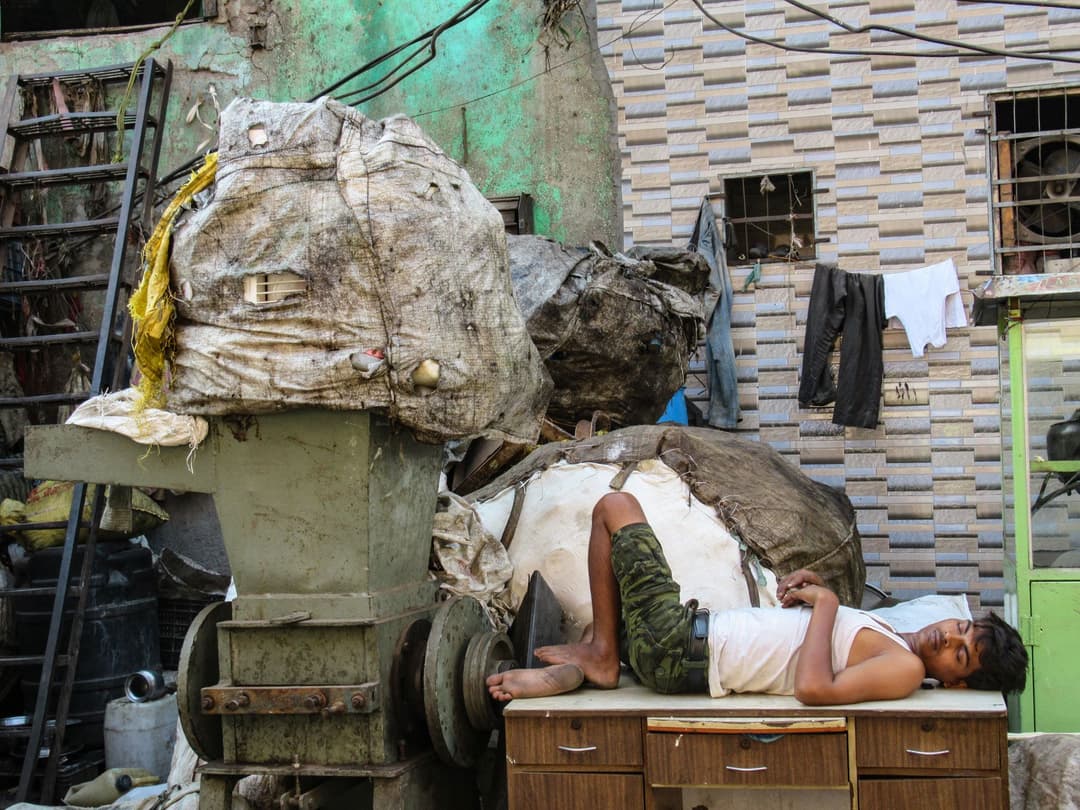
In a crammed patchwork of sheds here, some of them four-tiered, a multi-layered process of recycling unfolds over and over. Each item is put through an assembly line, passing from person to person, process to process, before it is transformed into a ‘new’ raw material or another ready product.
The ecosystem of recycling in Tera Compound has a finely-tuned internal logic: a matrix of buying and selling arrangements is in place, people use work-specific terminology, successive steps of the process are well-established, and each person specialises in one or more tasks: raddiwalas (scrap dealers across the city) collect discarded items, waste-pickers and pheriwalas (itinerant dealers) deposit daily collections at the sheds. Vehicle drivers and helpers unload material at kaantawalas (dealers with weighing scales). Then there are the seths who own the godowns, the supervisors to whom they sub-let – and the workers, both men and women, engaged in a thousand tasks.