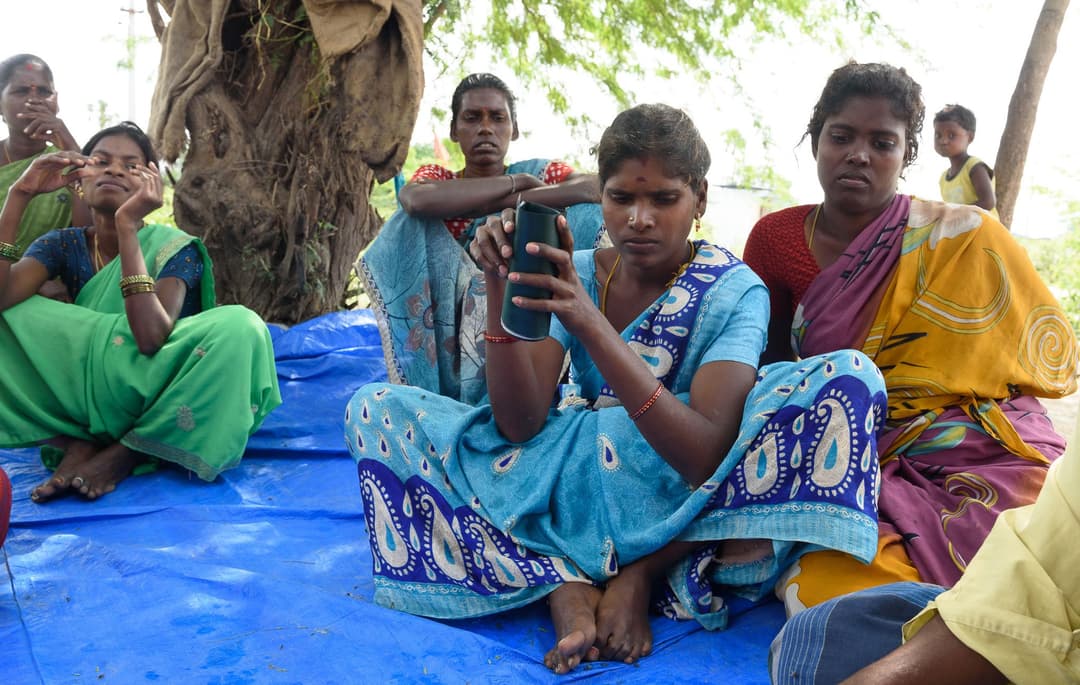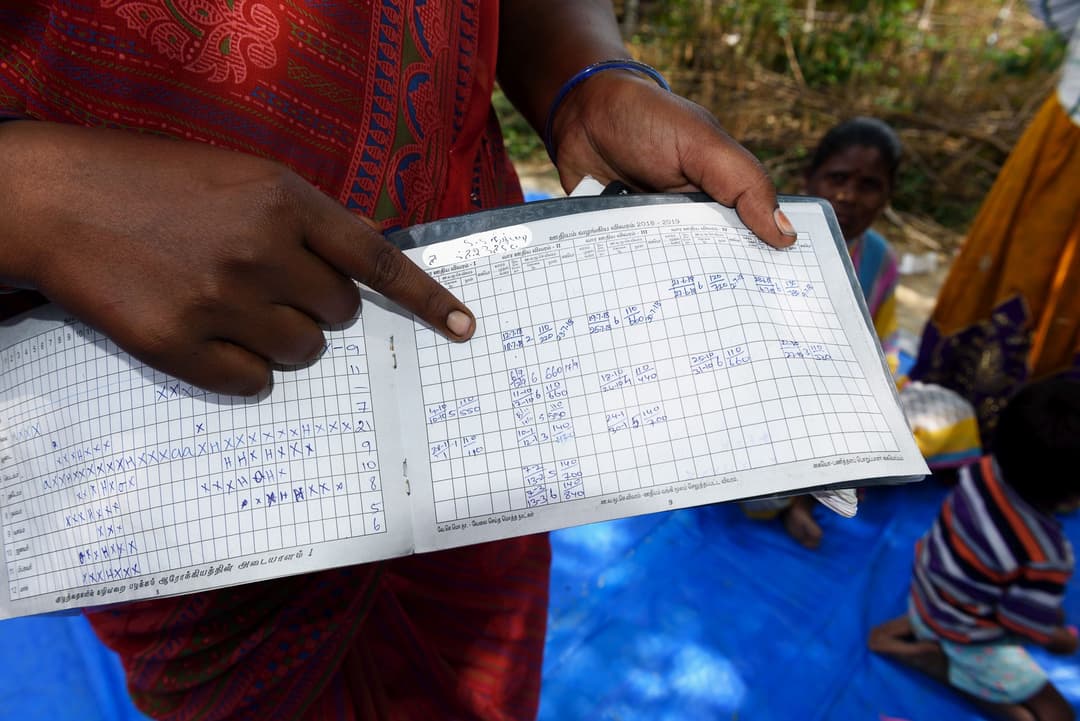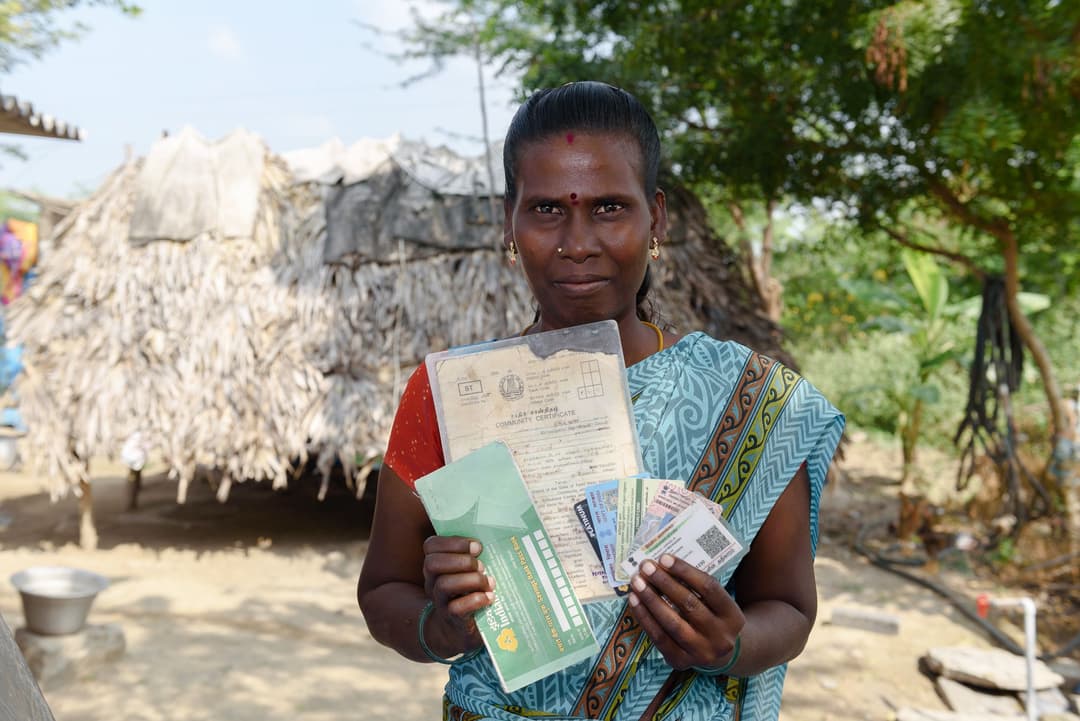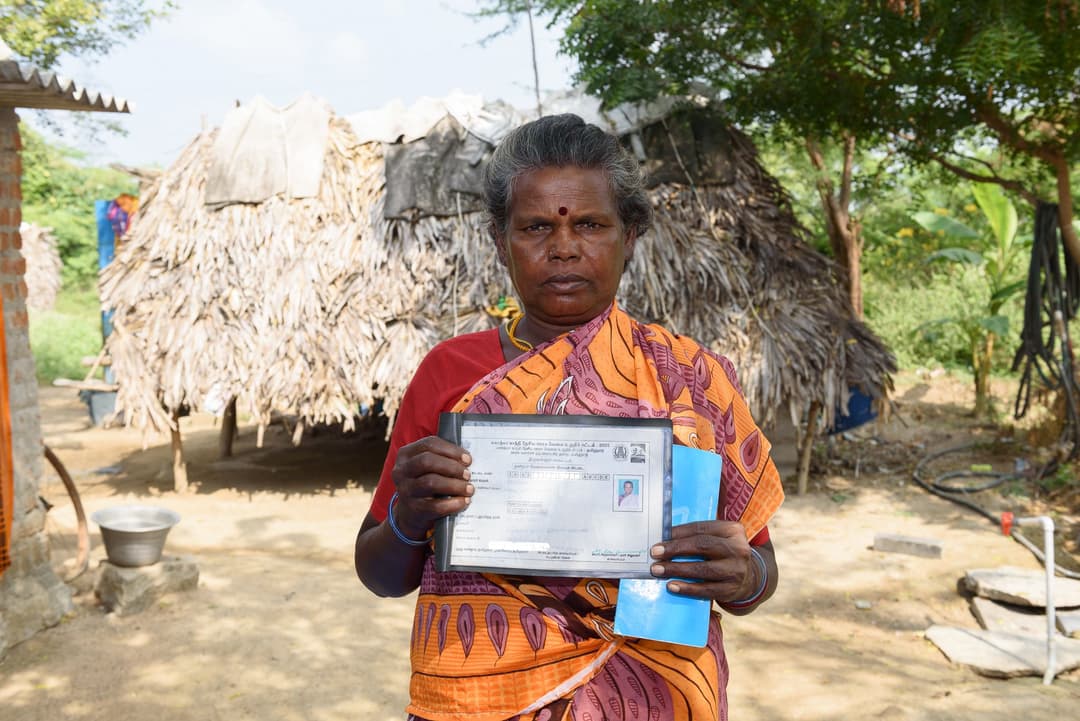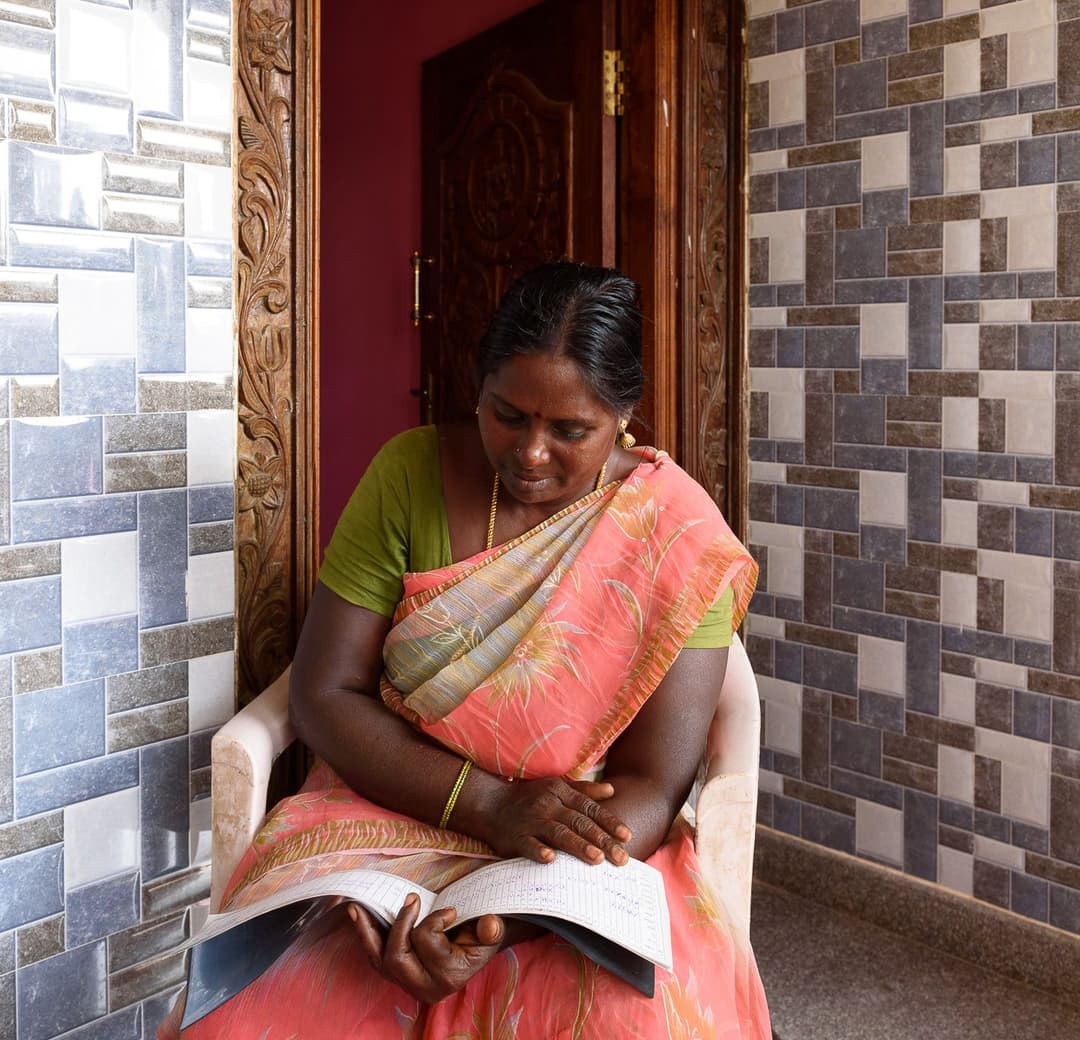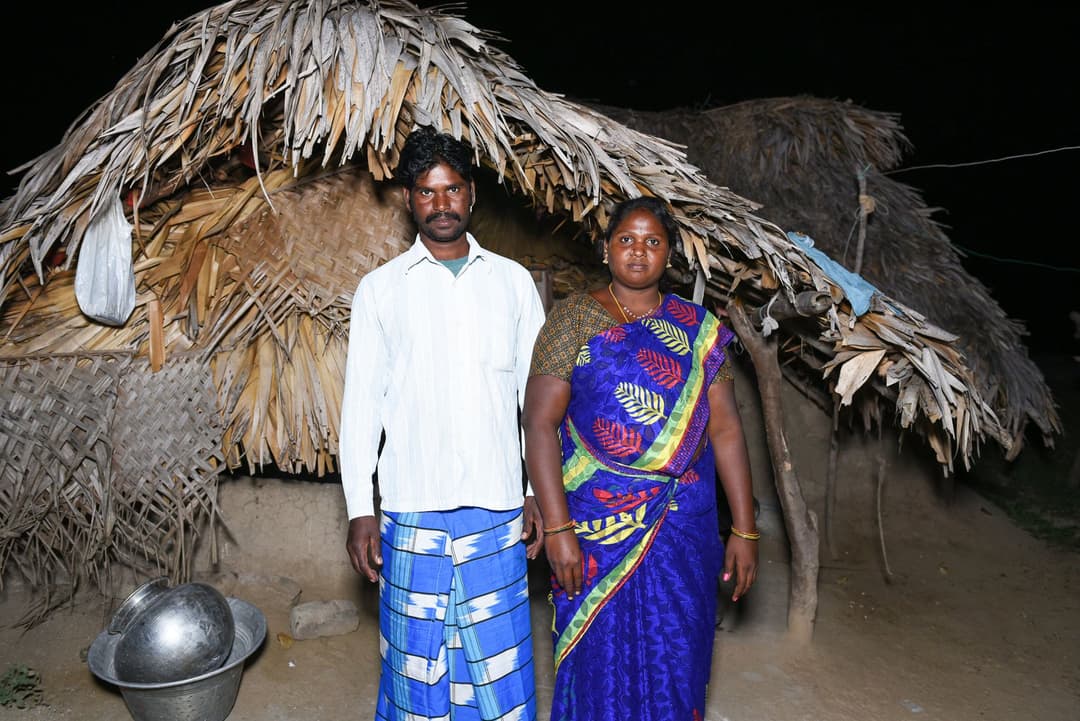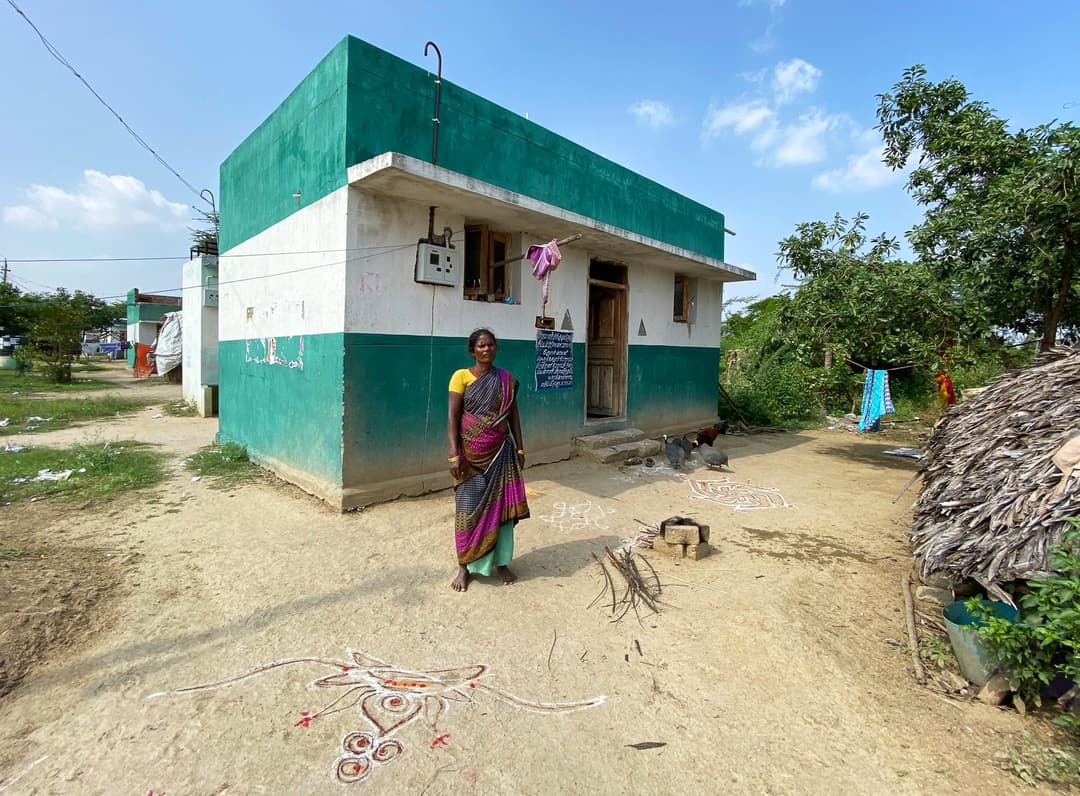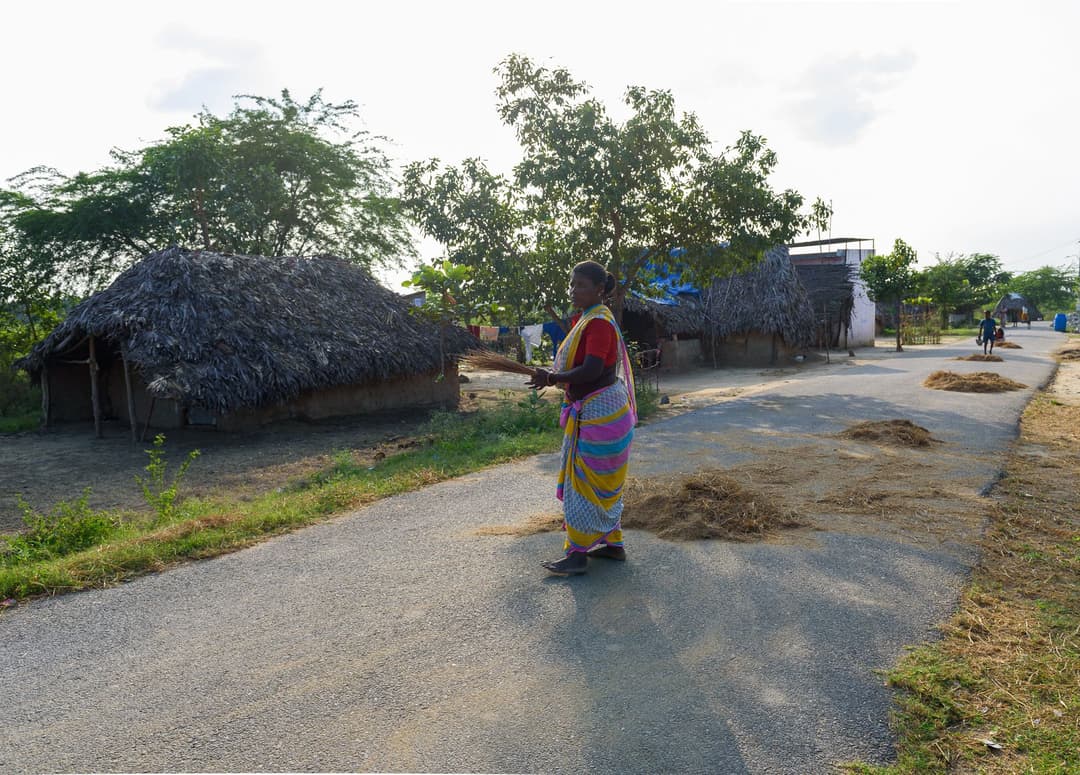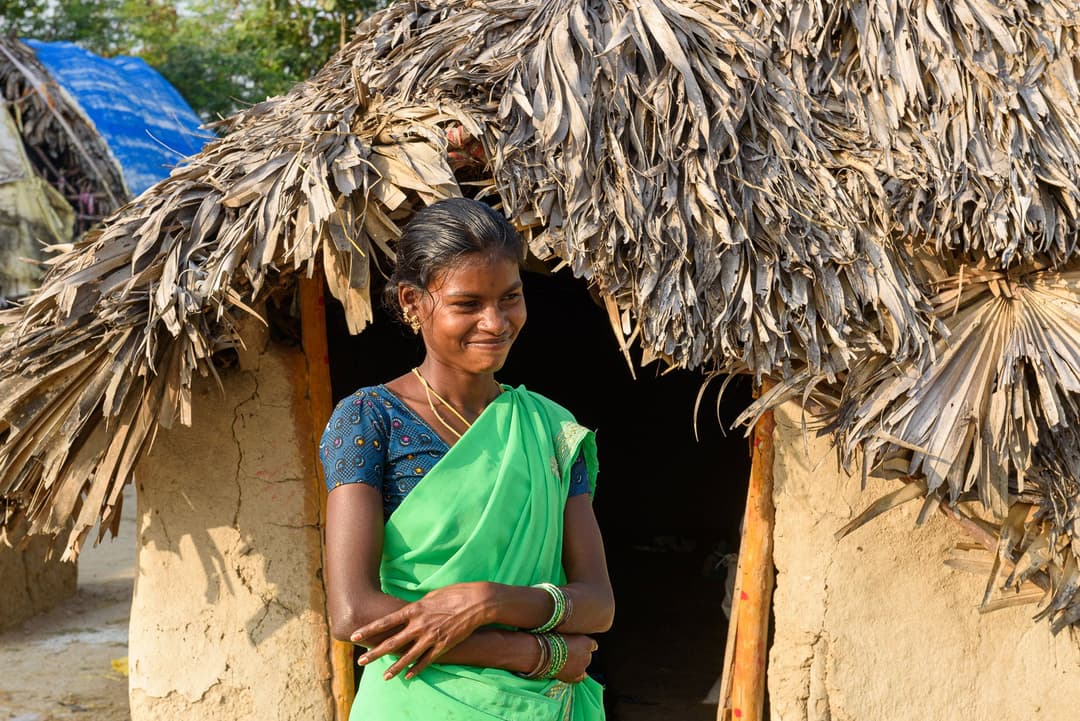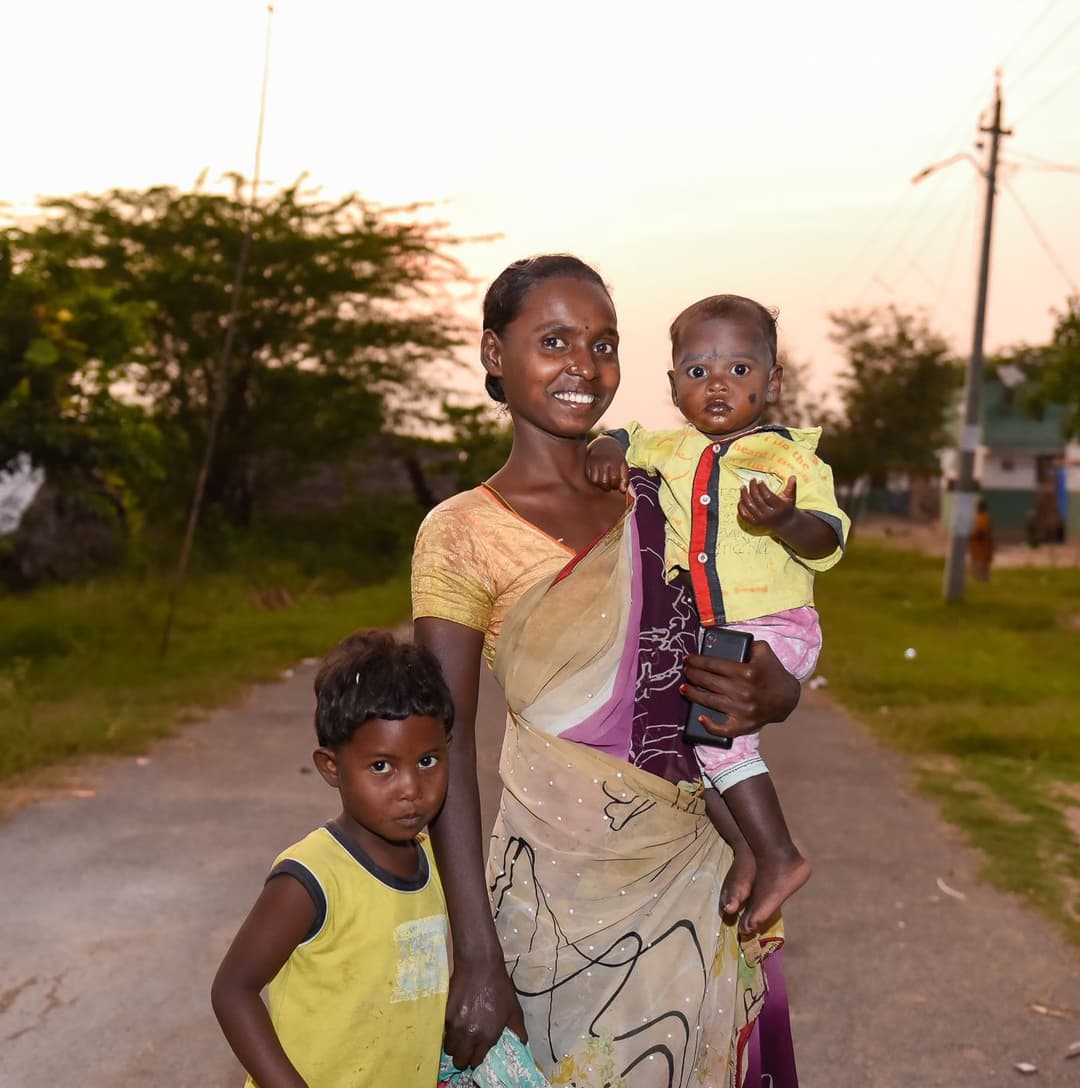

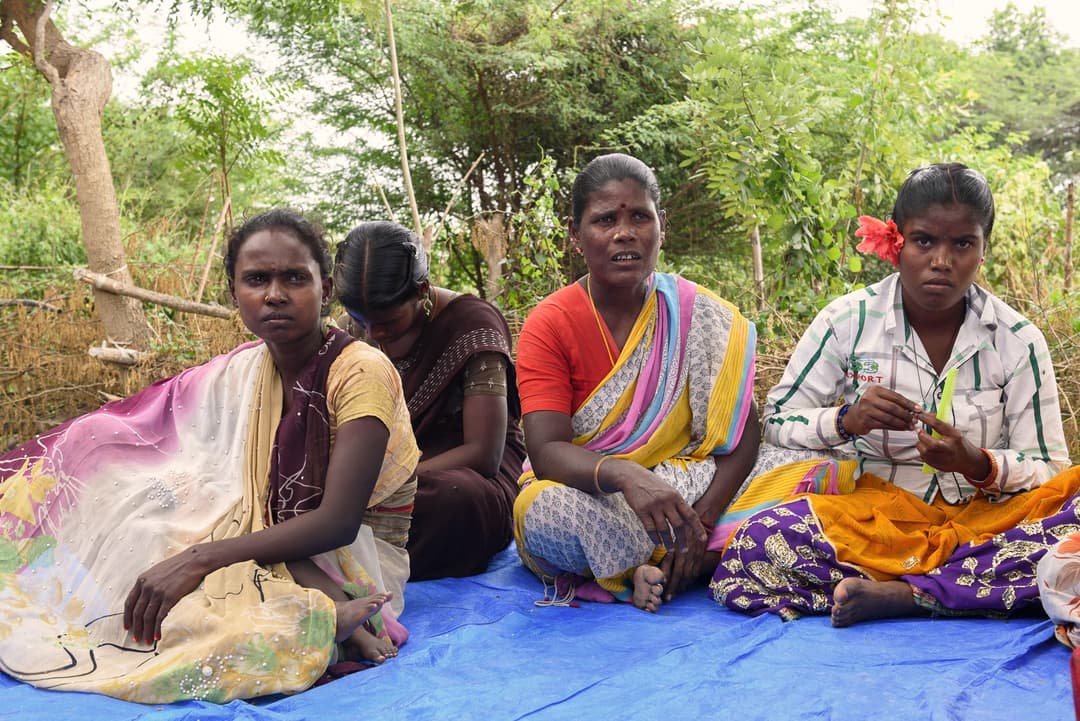
“It is never 100 days. Just 50 days so far this year, that’s all,” said R. Vanaja. She was sitting on the ground in the sparse shade of a velikathan maram tree in Bangalamedu hamlet, along with around 18 women and 2-3 men. They were discussing noor naal velai (hundred days’ work), as they call MGNREGA jobs in Tamil, trying to make sense of their wages, on a December morning in 2019. Vanaja is around 20, and like most adults in this colony of 35 Irula families, works as a daily wage labourer.
The men in this hamlet – part of Cherukkanur panchayat in Tiruttani block of Tamil Nadu's Thiruvallur district – usually find non-NREGA work. They dig canals along farmlands, water mango orchards, labour at construction sites, cut savukku trees used for scaffolding, paper-pulp, firewood, and other purposes. A day’s work usually fetches them Rs. 300.
But all these jobs are seasonal and unpredictable. During the monsoon, on days when they cannot find any work, the Irulas – listed as a Particularly Vulnerable Tribal Group in Tamil Nadu – manage without any income at all, and hunt in nearby forests for small animals to eat, or look for fruits and tubers to add to their meals (see Digging up buried treasures in Bangalamedu and On a different route with rats in Bangalamedu).
And for women, even those dispersed jobs are rarely available. Sometimes, they work with their husbands at nearby brick kilns, starting from January-February till around May-June. But the work is intermittent, and a wife-husband pair at most earns Rs. 6,000 across the season.