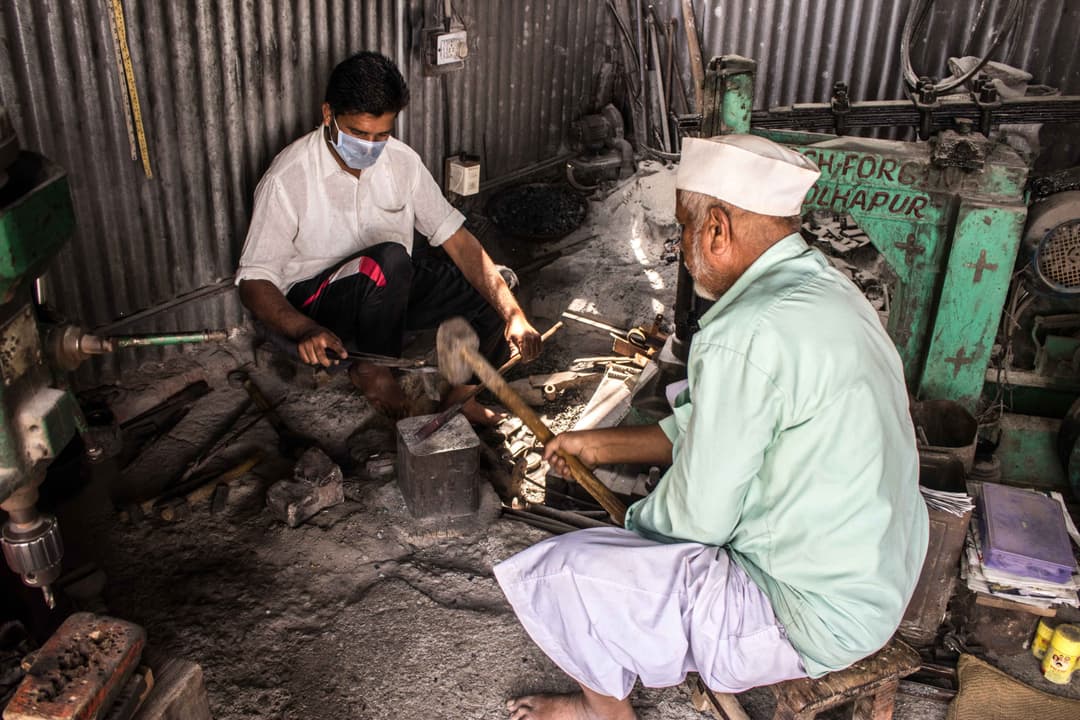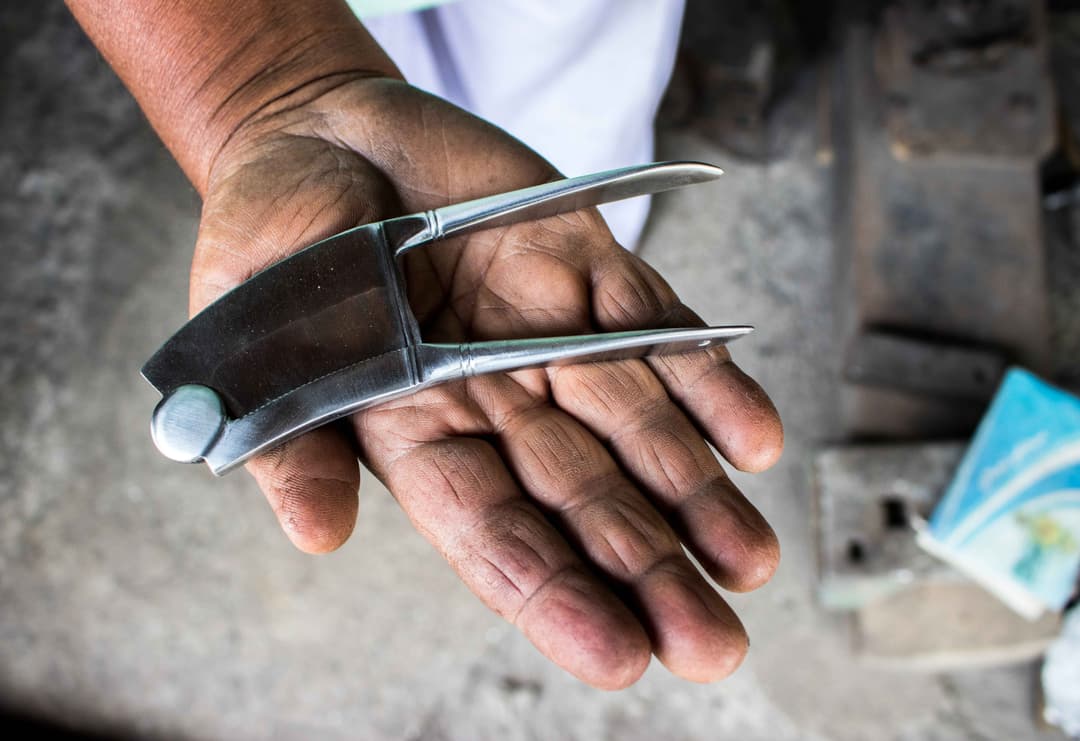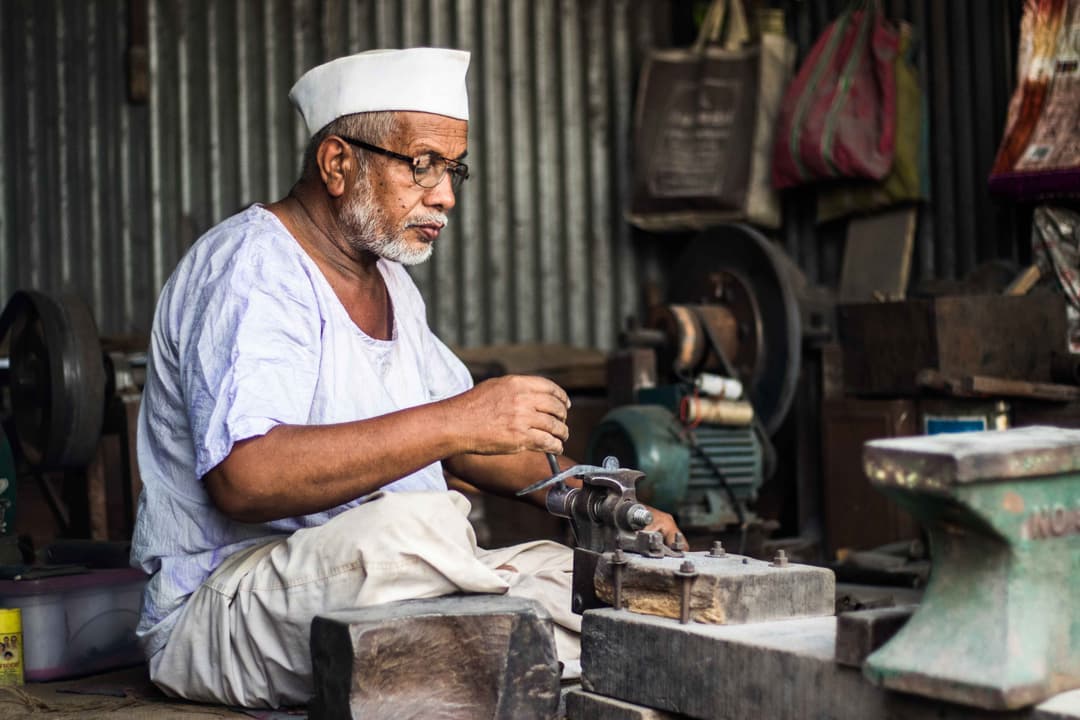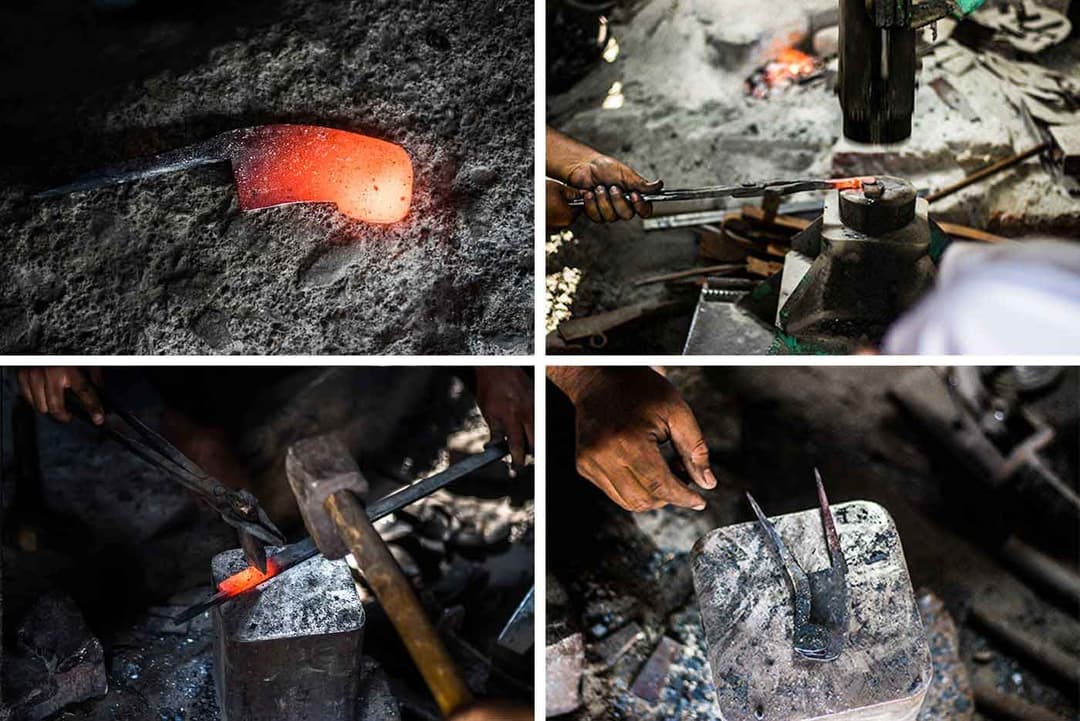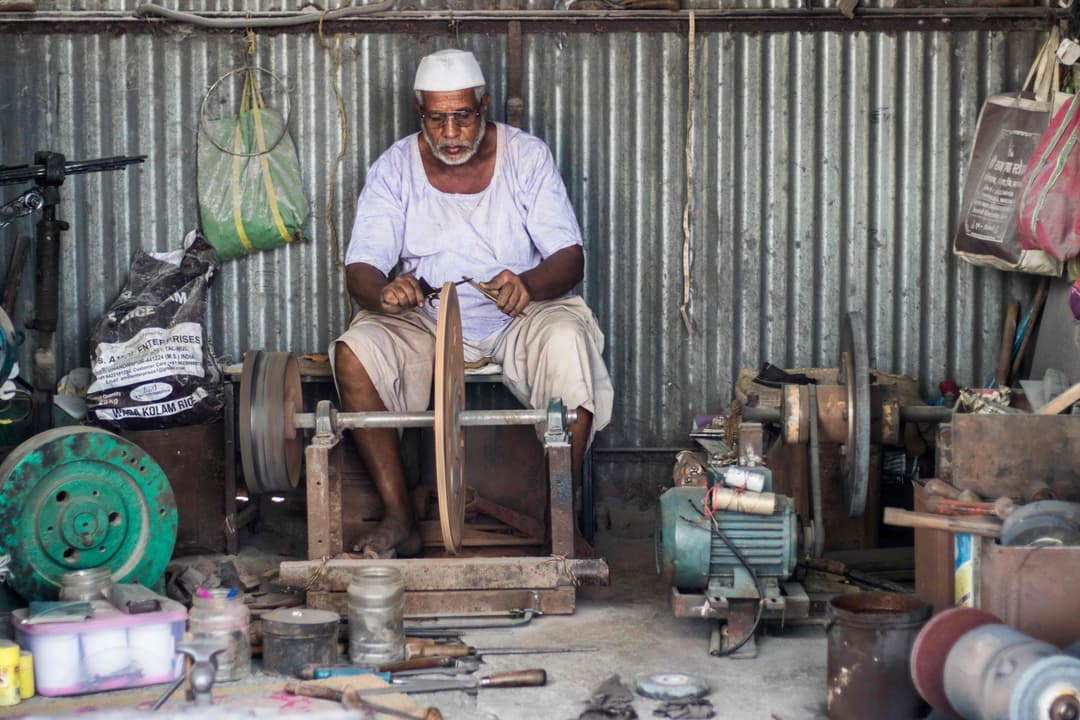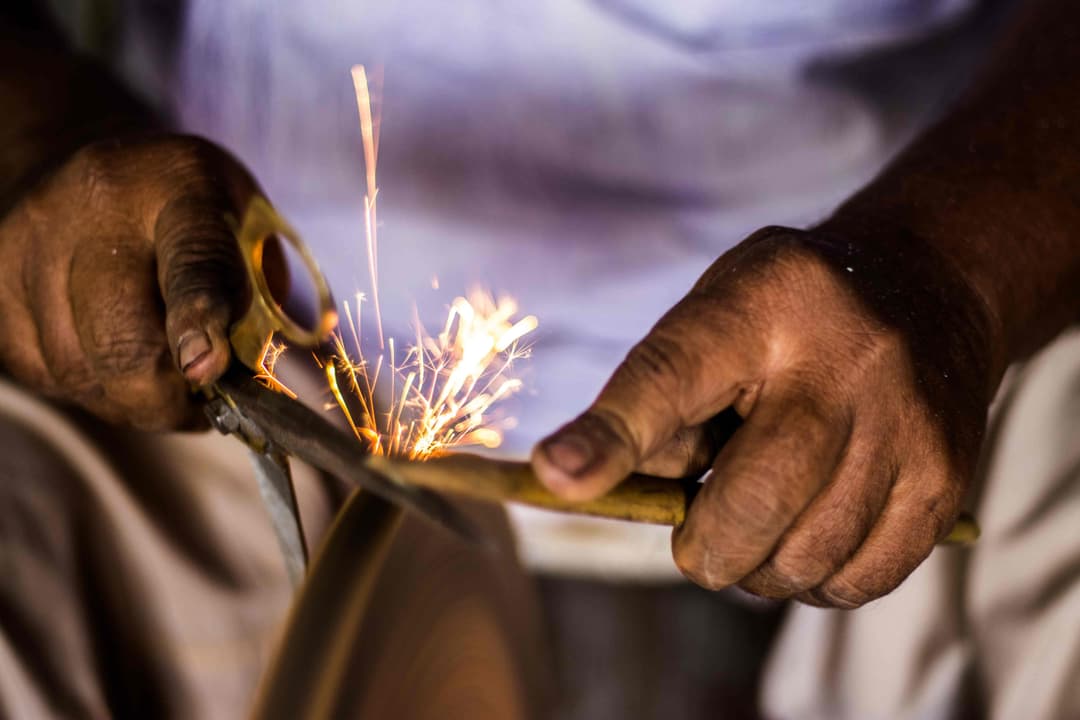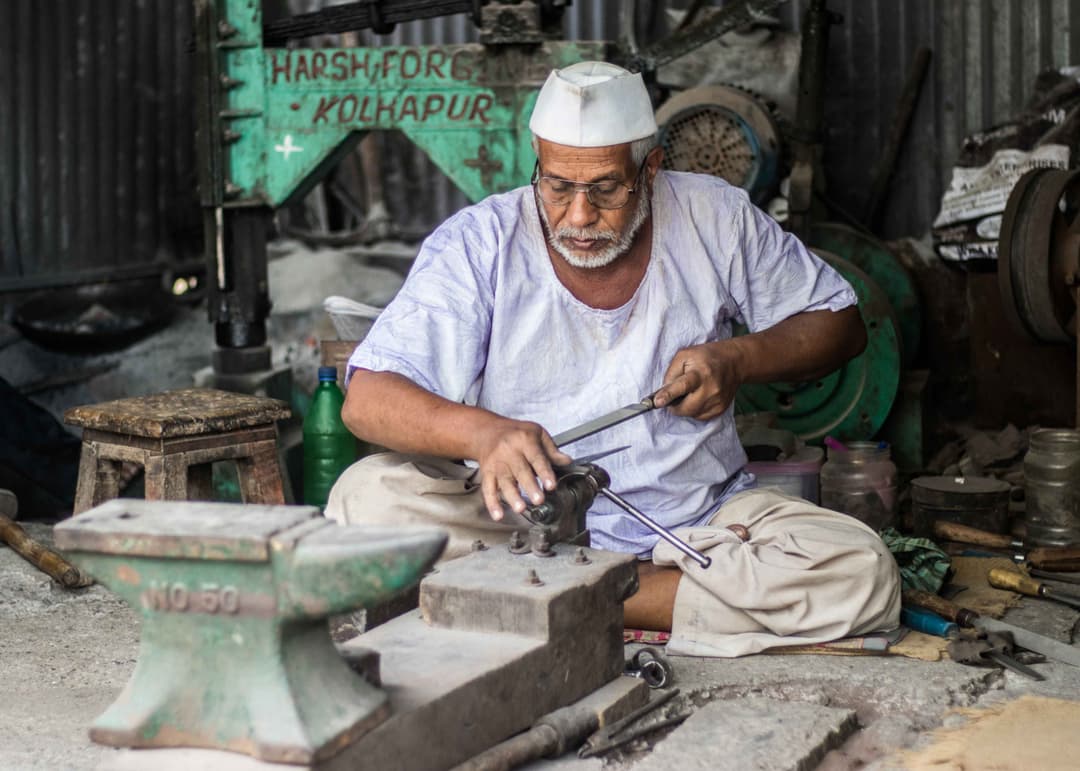
Dilawar Shikalgar smiles as he remembers an incident from the mid-1960s. Someone was hammering at a piece of iron in his workshop, and the swarfs flying off it injured his left forefinger. More than five decades later, the mark of that long-healed wound is still visible, and he says, with a smile, “Look at my palms. They have become metallic now.”
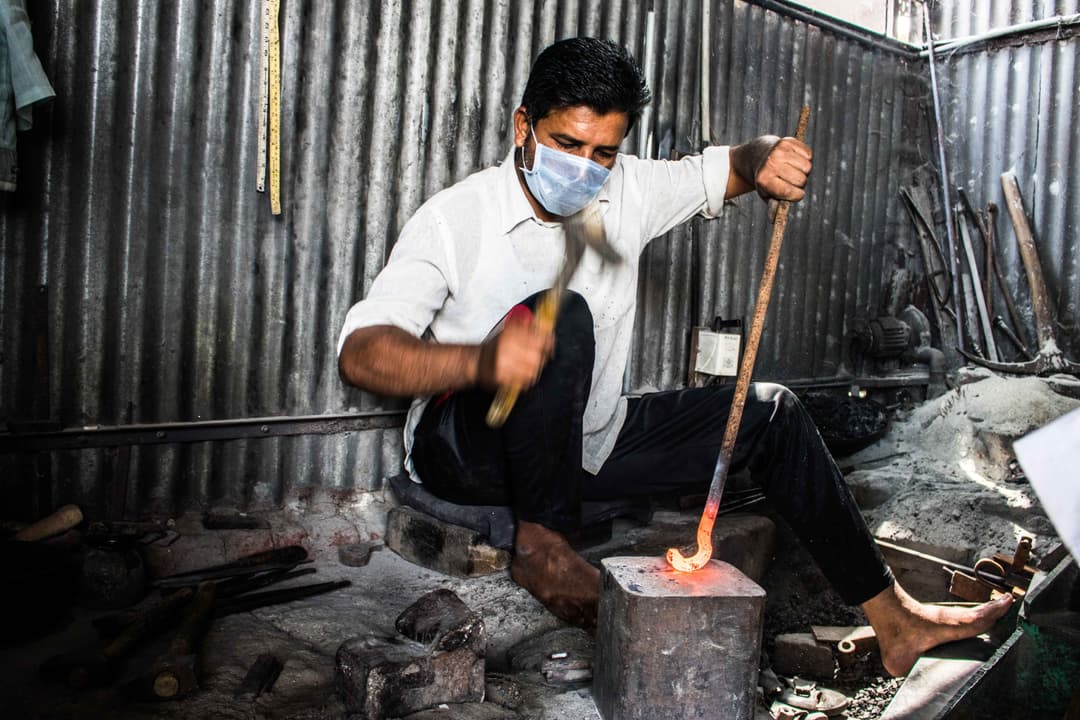
In those five-plus decades, 68-year-old Dilawar has hammered at incandescent iron and carbon steel (an iron-carbon alloy) at least 500 times a day – and in some 55 years has hit his traditional five-kilo ghan (hammer) on metal nearly 8 million times.
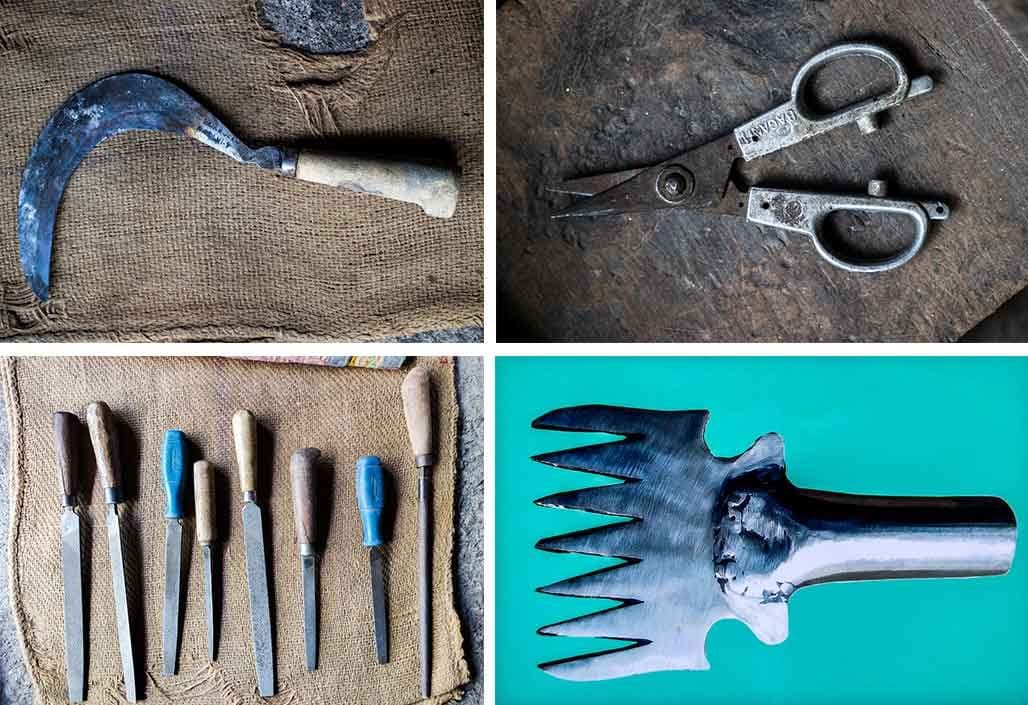
The Shikalgar family of ironsmiths, who live in Bagani village in Walwa taluka of Sangli district, have been doing this for more than a century now – making by hand various tools that are used in houses and fields. But they’re best known for hand-crafting some of the finest nut cutters or adkittas (in Marathi) – distinctive in their design, durability and sharpness.
These nut cutters range in size from four inches to two feet. The smaller adkittas are used to cut supari (areca nut), kaath (catechu), khobra (dried coconut) and sutli (coir string). The bigger cutters are used to dissect gold and silver (for use by goldsmiths and jewellers) and big areca nuts, which are sold in the market in smaller pieces.
The nut cutters made by the Shikalgar family have for long been so reputed that people from close and far have travelled to Bagani to buy them. They’ve come from Akluj, Kolhapur, Osmanabad, Sangole, and Sangli in Maharashtra, and Athni, Bijapur, Raybag in Karnataka, among other places.