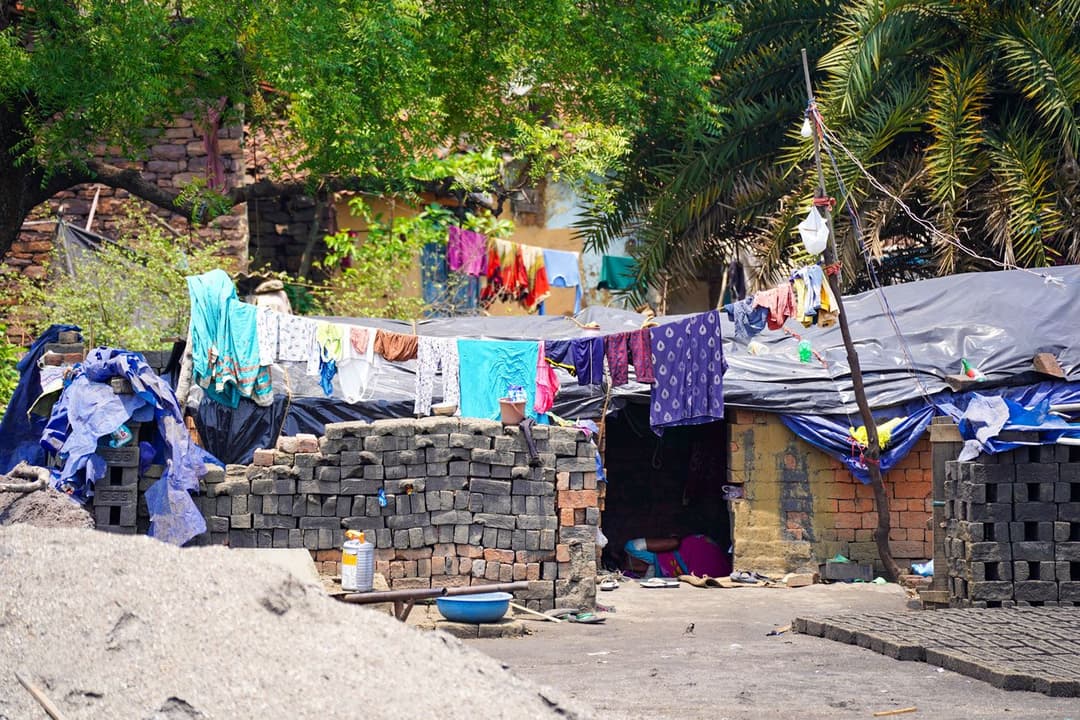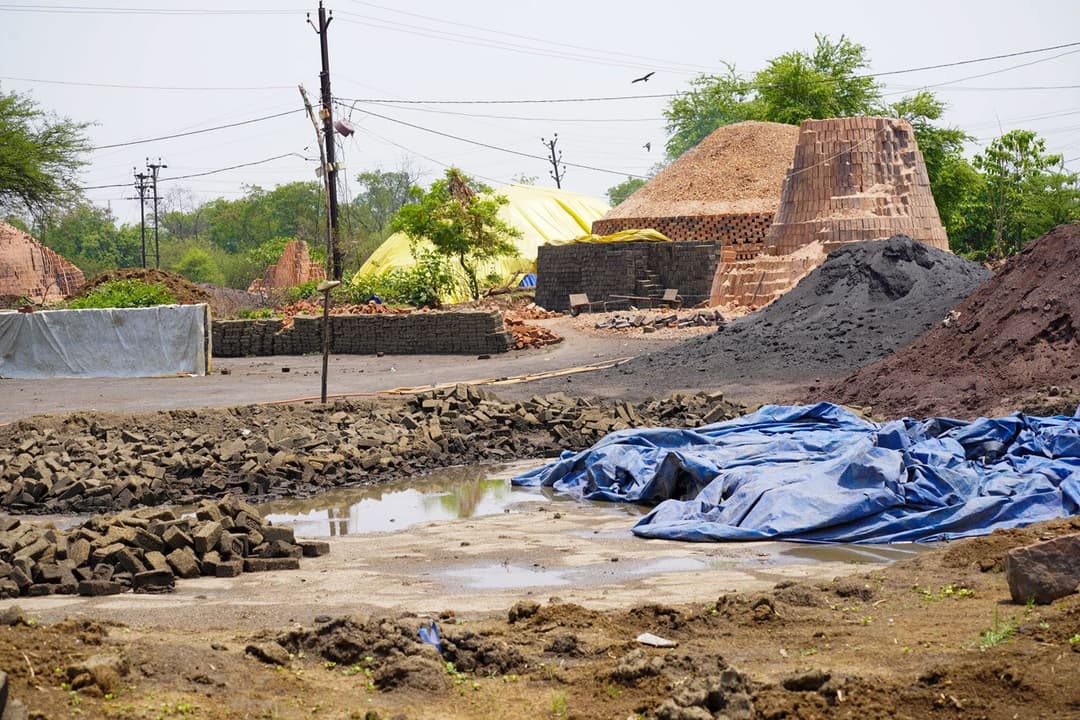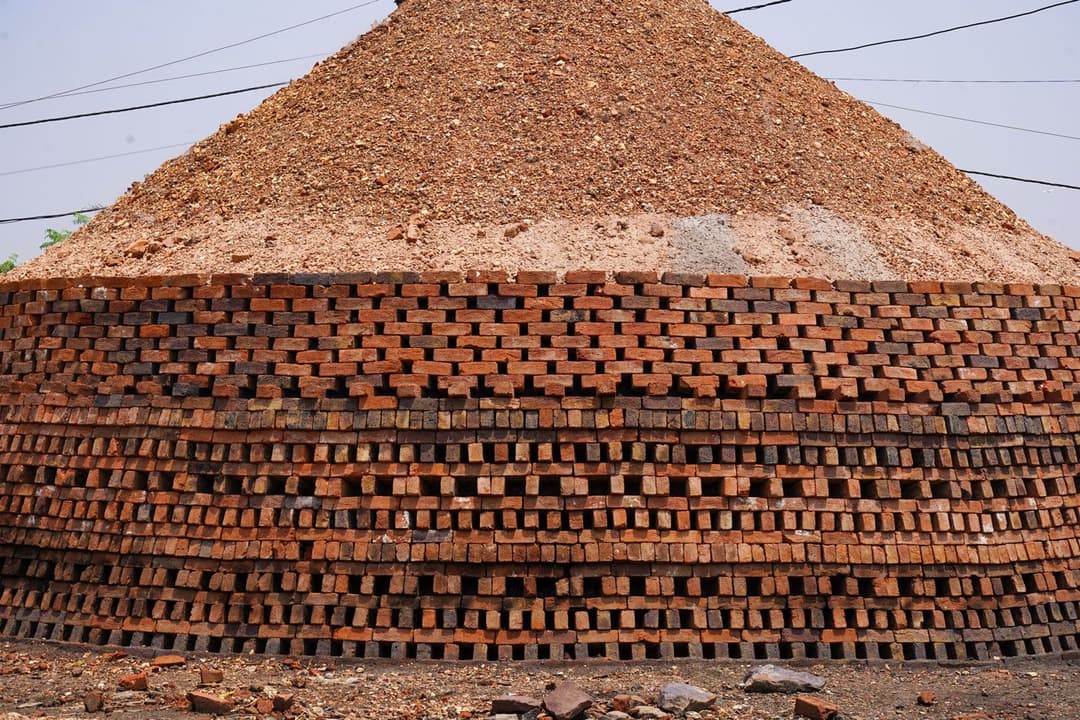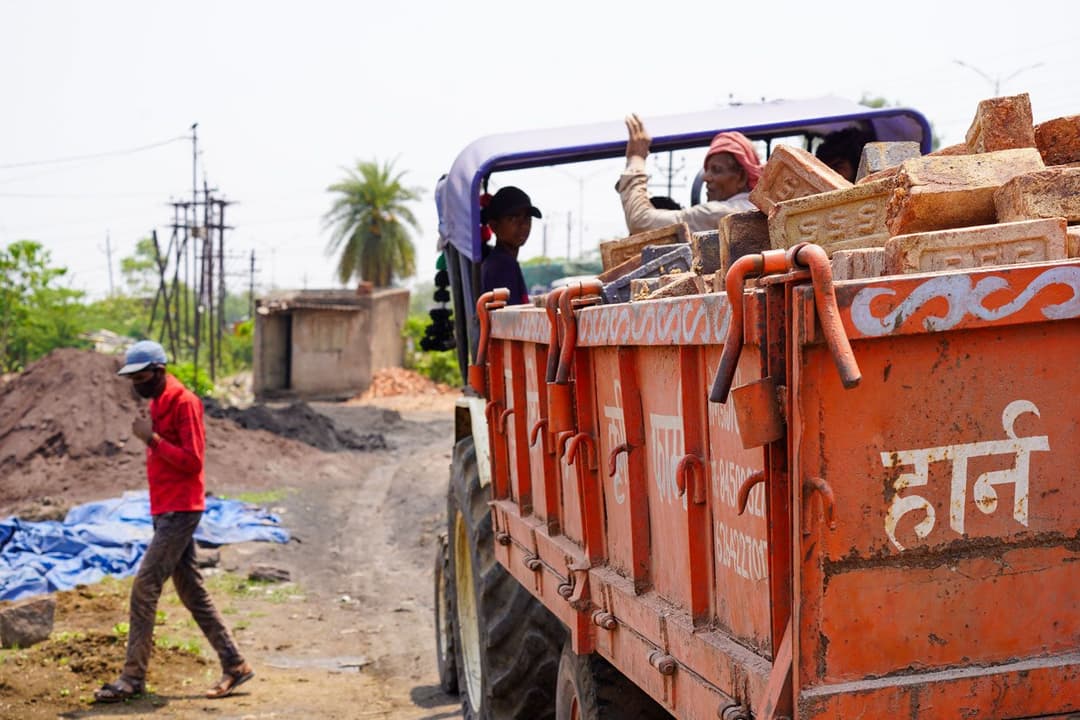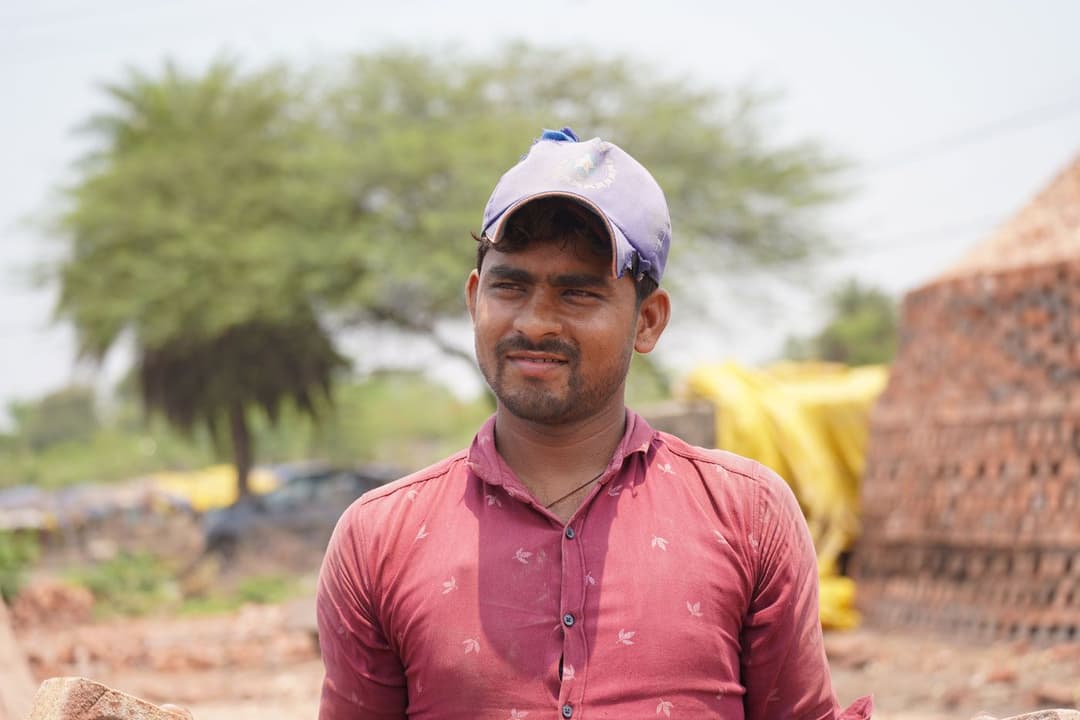

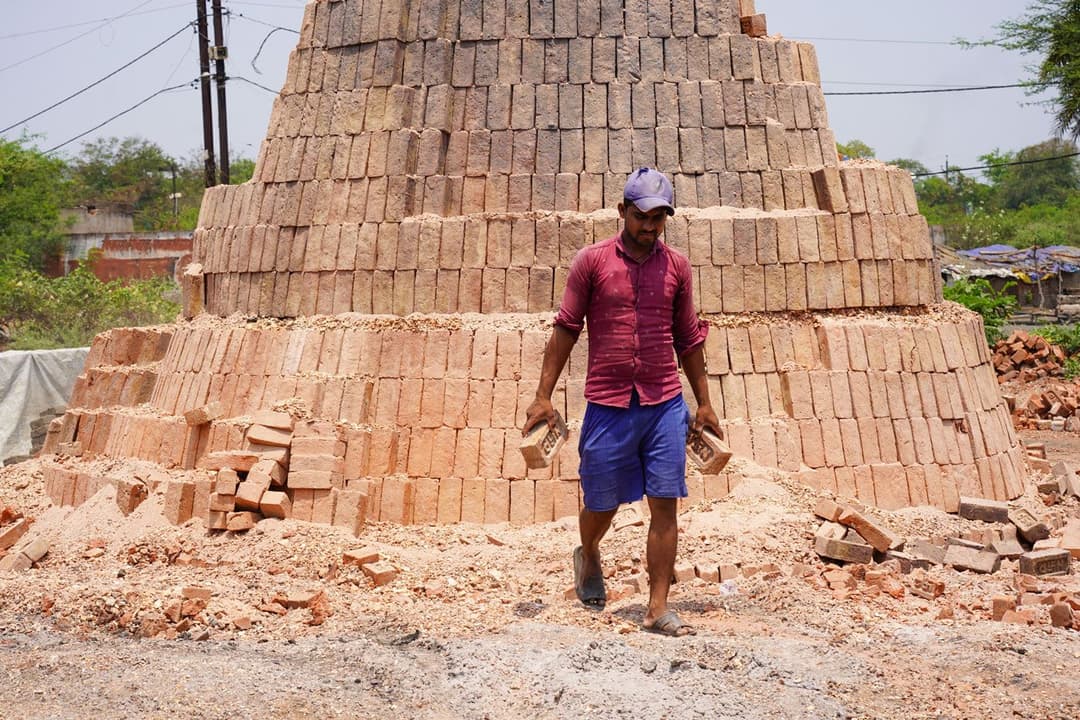
It is lunch hour at the brick kilns of Raipur. The workers are either having a quick meal or resting inside their temporary dwellings.
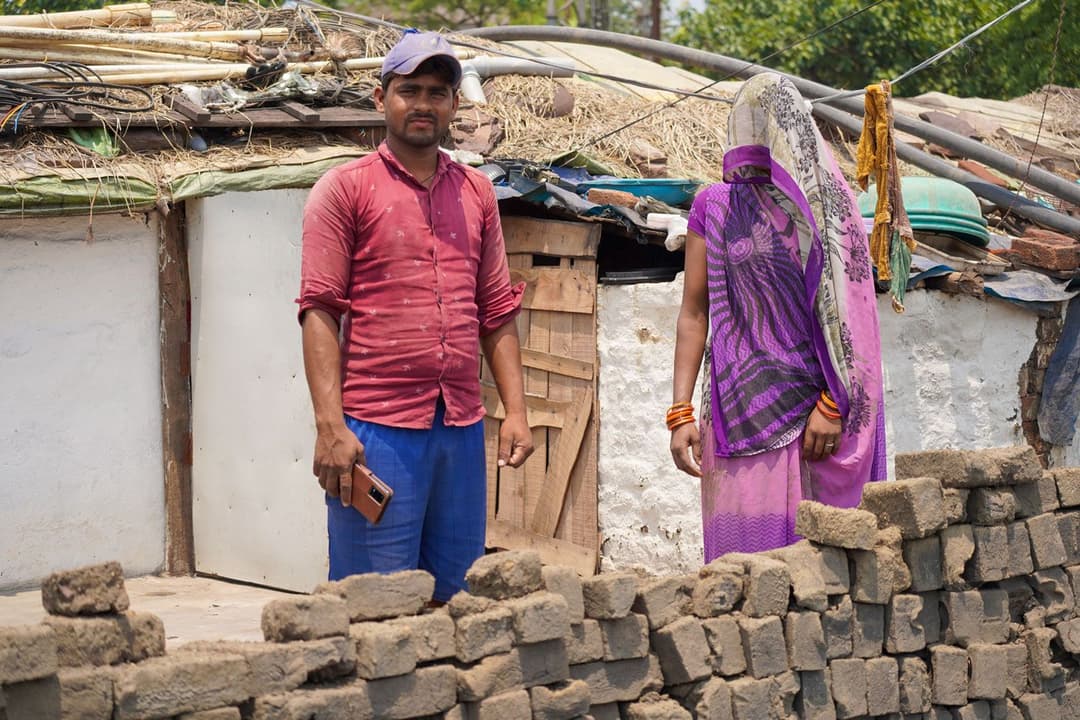
“We are from Satna [Madhya Pradesh],” a woman says, coming out of her mud hut. Most of the workers here are migrants from the neighbouring state; they arrive here in the capital city of Chhattisgarh every year after the harvest season is over in November-December and stay on for six months till May or June. The brick-kiln industry of India employs an estimated 10-23 million workers (Slavery in India’s Brick Kilns, 2017).
This year, by the time they return home, there will be a new government at the centre. But it is uncertain if the migrant workers here will have a role in electing their leaders.
“We will be informed when it is time to vote,” the woman, who wished to remain anonymous, tells PARI.
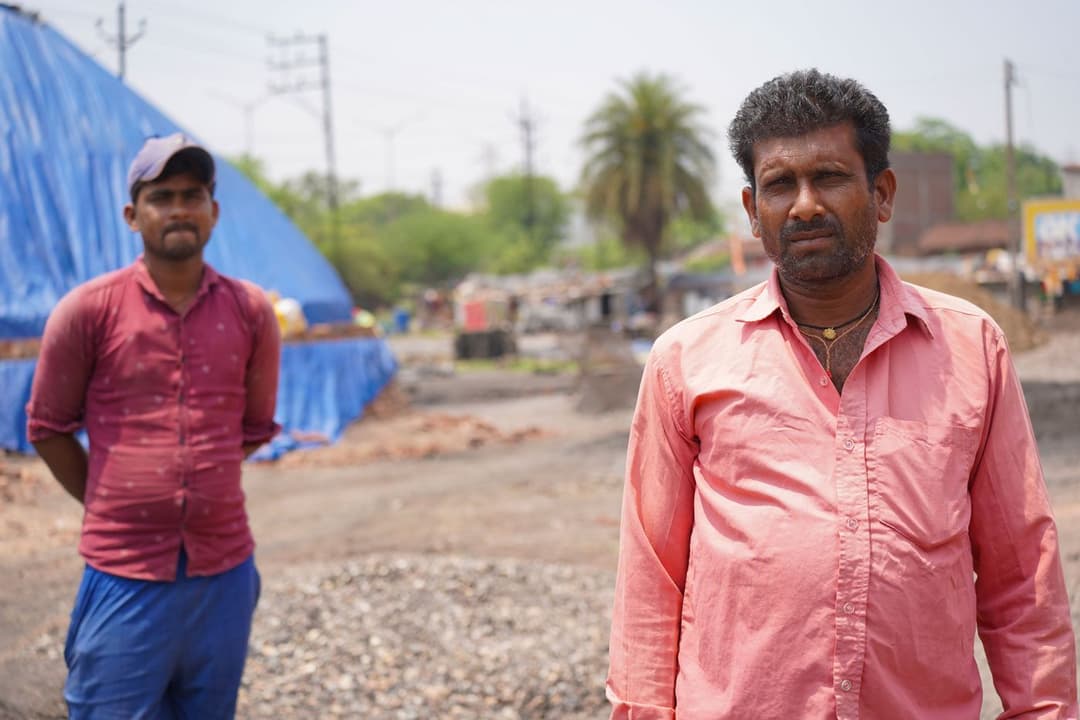
The information will probably be provided by Sanjay Prajapati, their labour contractor. Standing a little distance away from the huts, he tells us, “We have no information about the vote in Satna. If we do, we’ll inform them.” Sanjay and many of the workers here belong to the Prajapati community (listed as Other Backward Classes in MP).