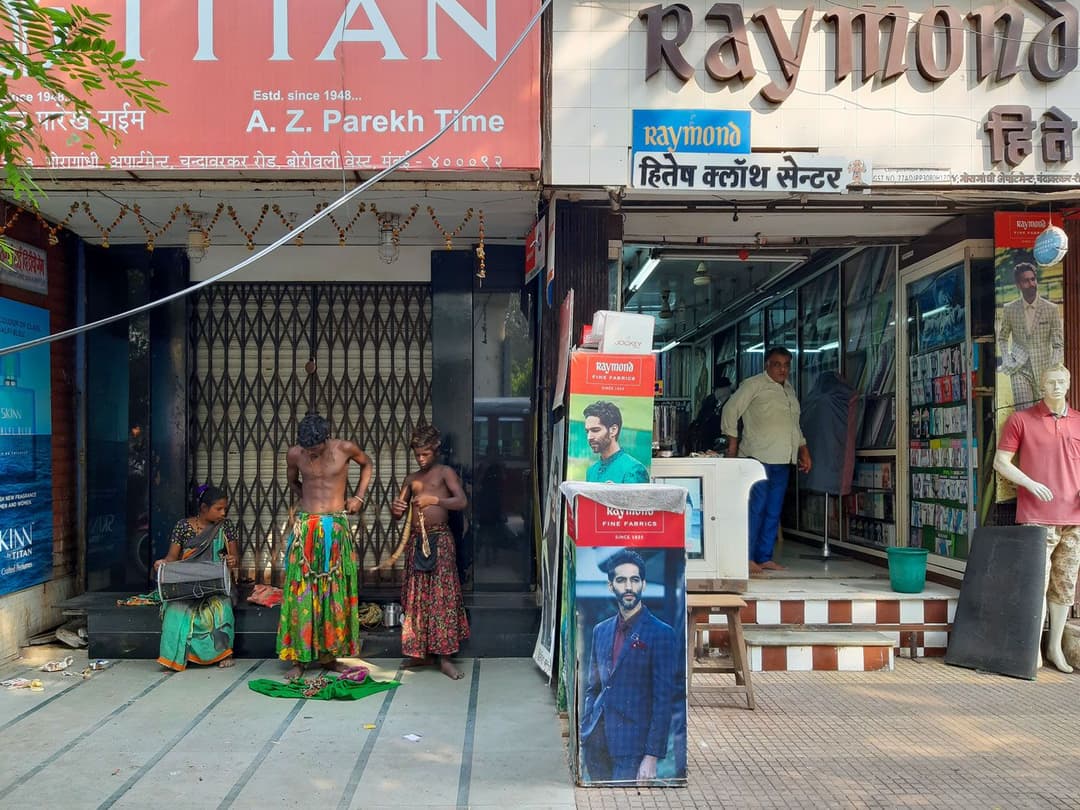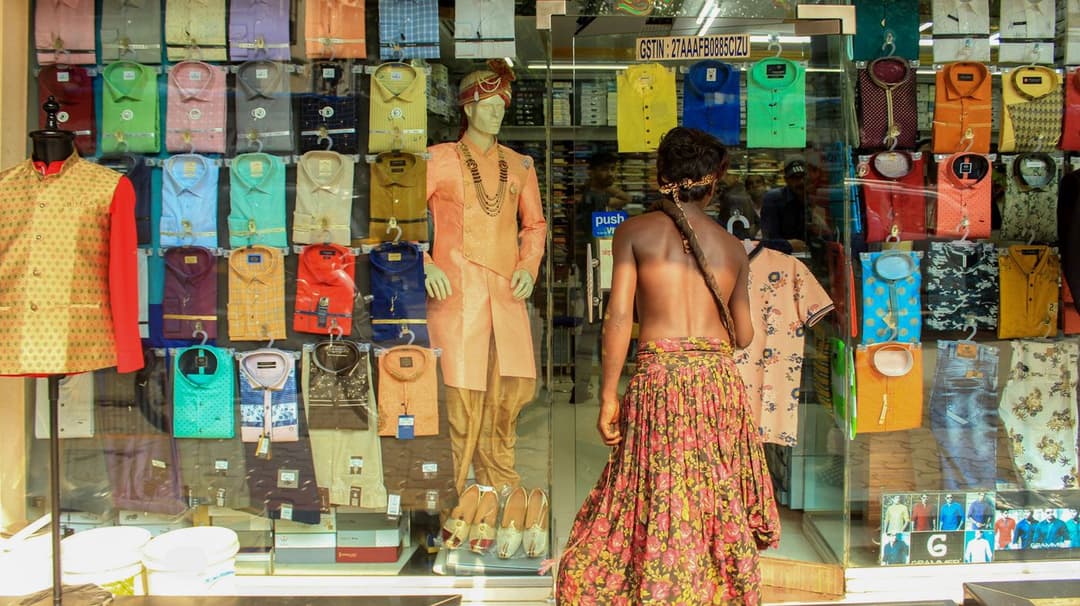

At 9:00 in the morning, when commuters jostle to reach Borivali station in suburban north Mumbai and shops start lifting their shutters, it’s time for 24-year-old Lakshman Katappa to begin his work day too.
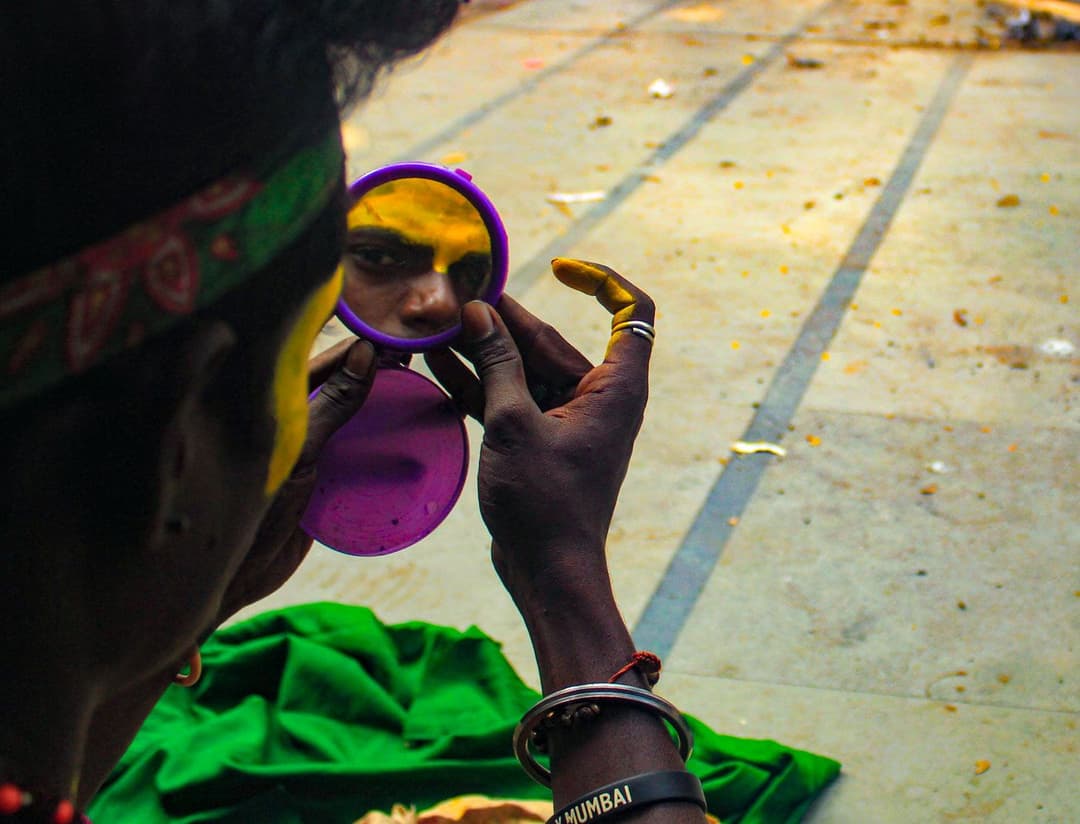
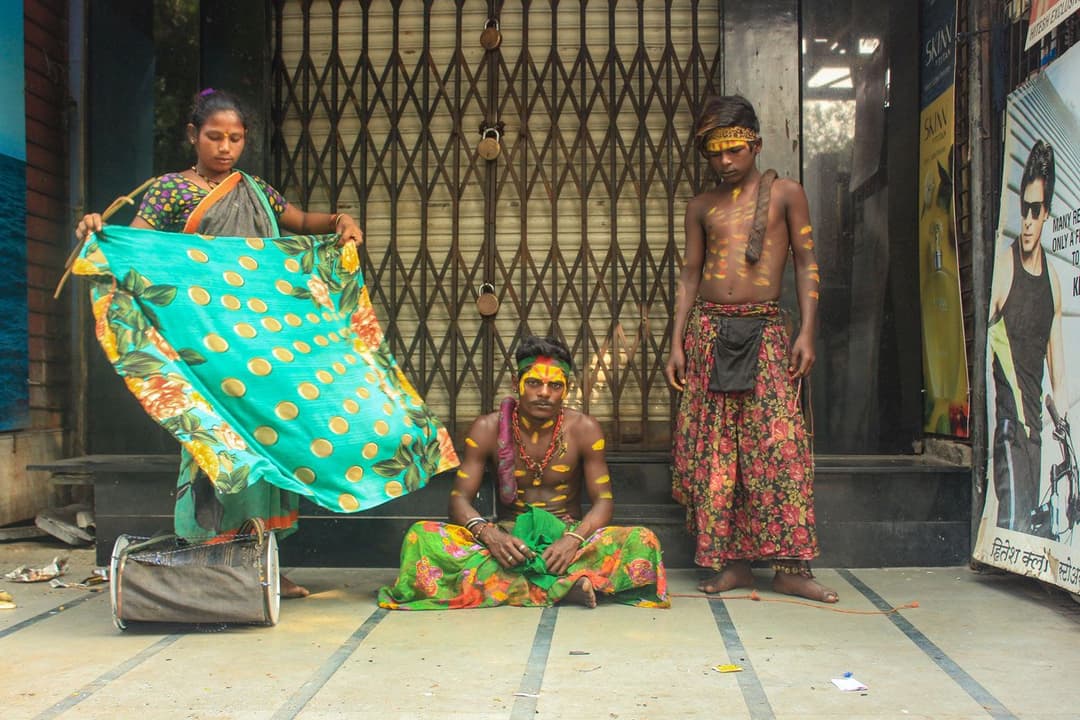
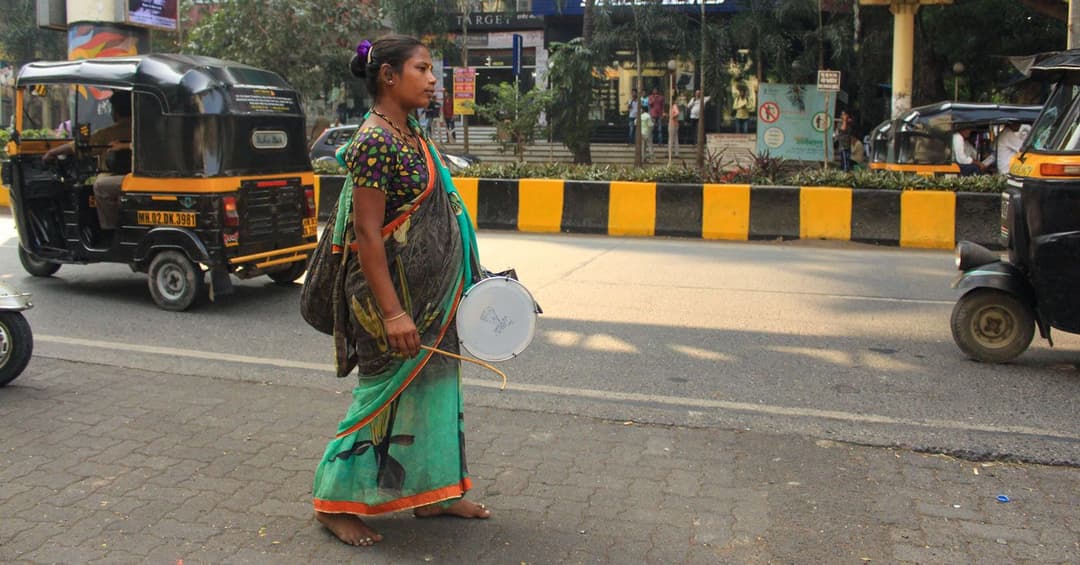
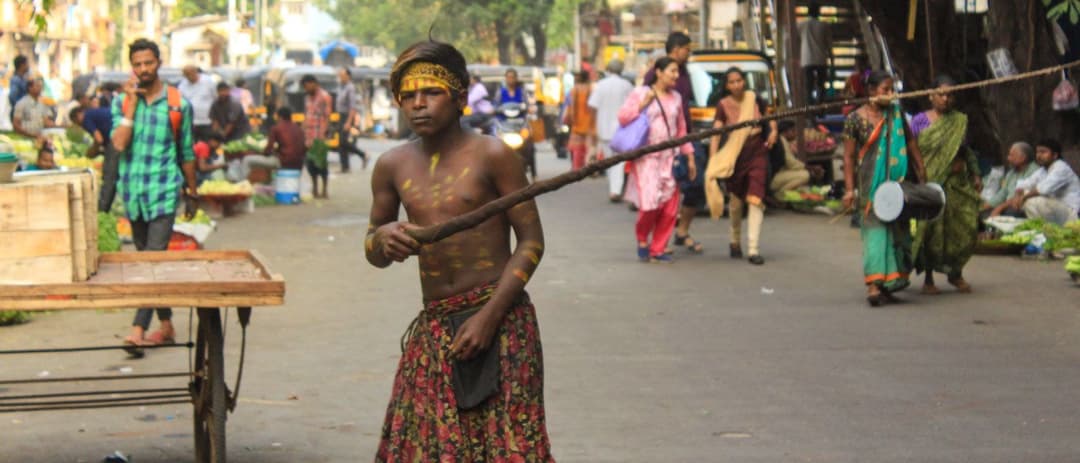
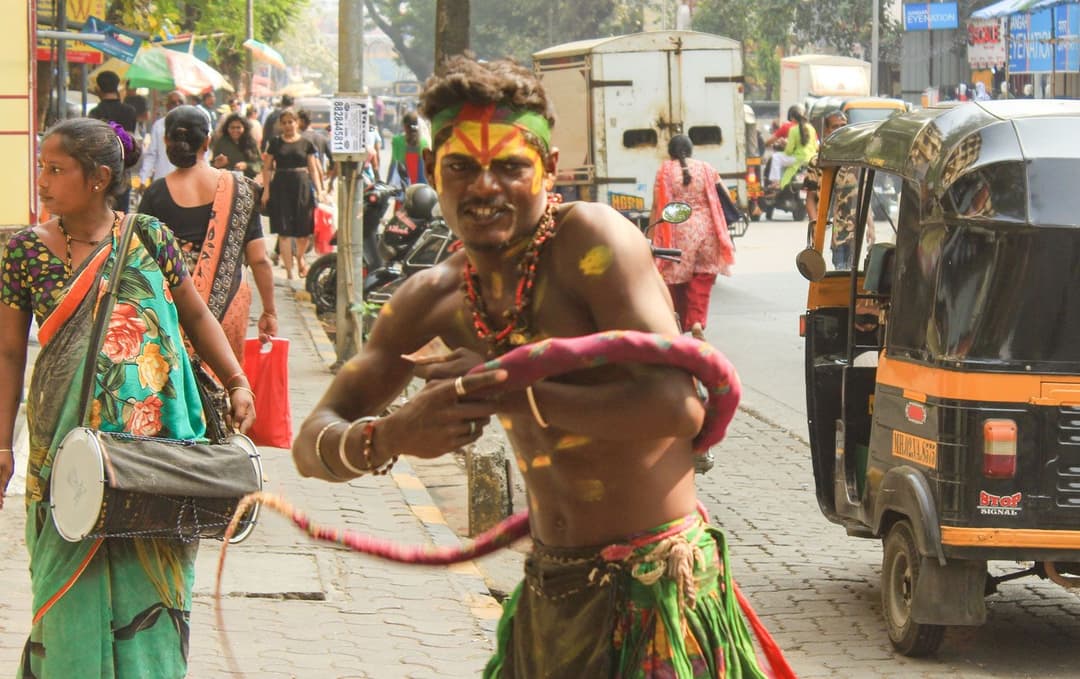
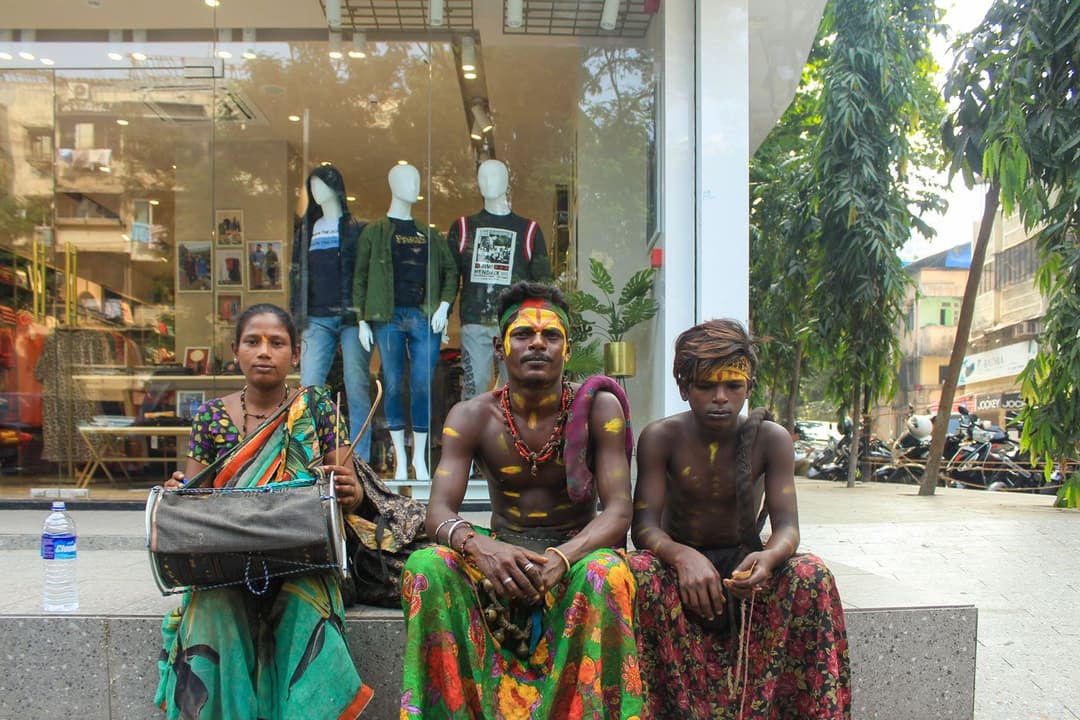
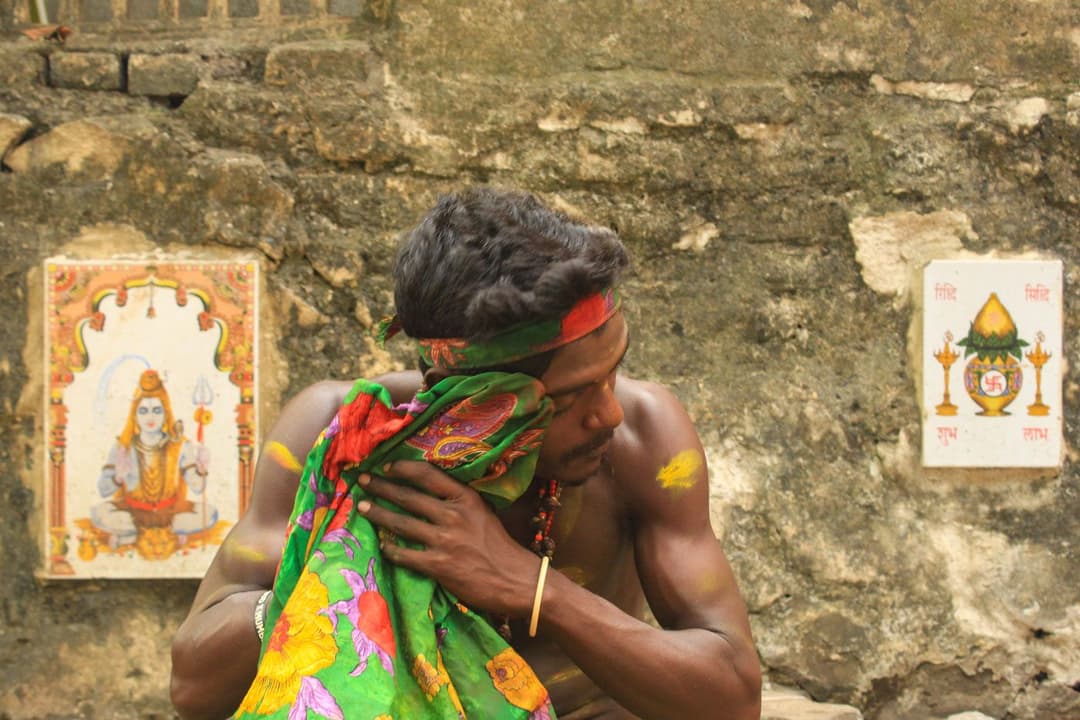
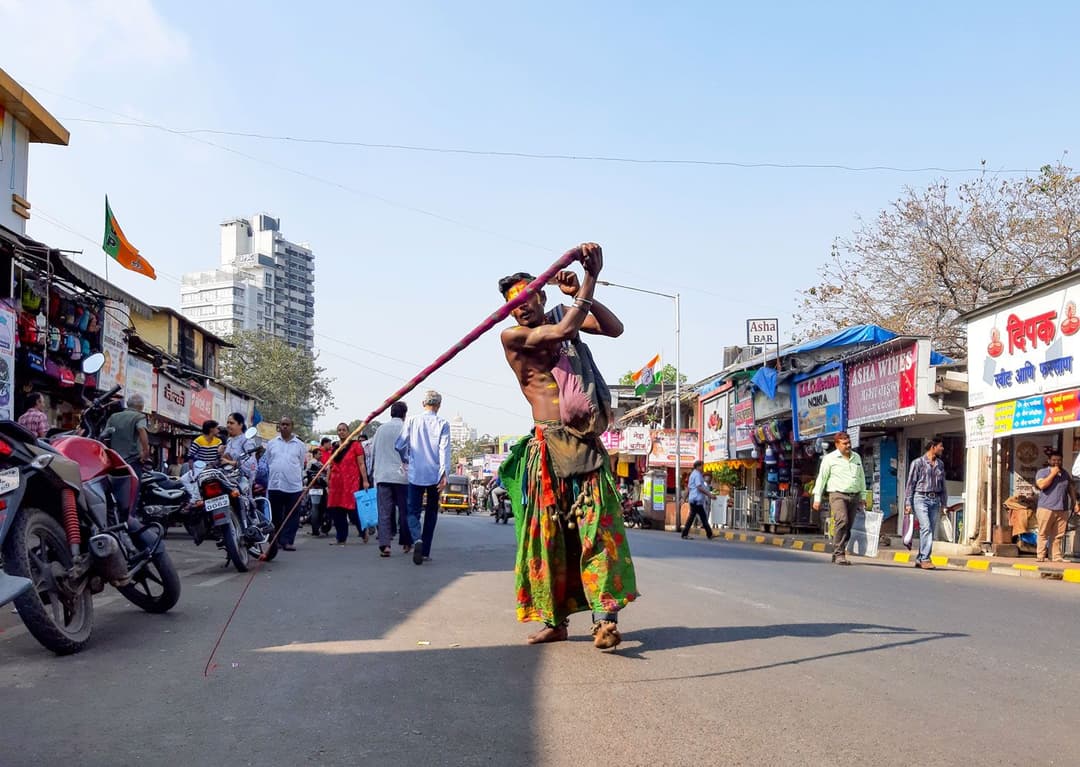
Carrying a black cotton bag on his shoulder, walking barefoot along with his wife Rekha and his younger brother, 13-year-old Elappa, he stops in front of a closed shop. He opens the bag, and out comes a long green ghagra, a head band, a small box containing bandar (yellow oxide powder) and red kumkum, beaded neck ornaments, a small mirror, a chabuk (whip), and ghungroos for the ankles.
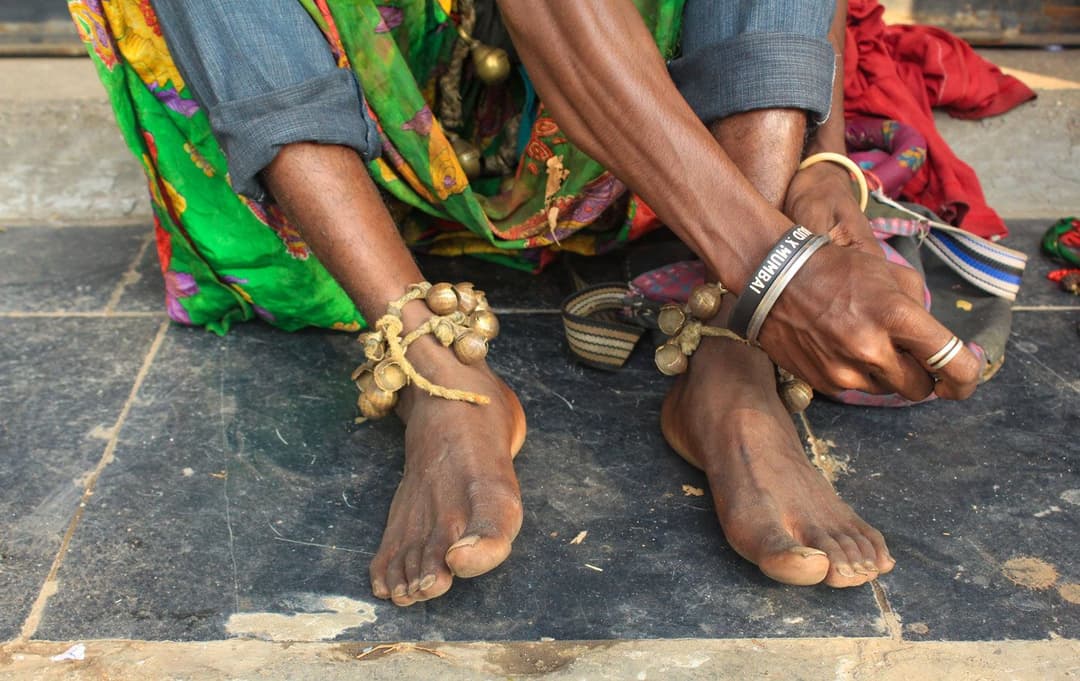
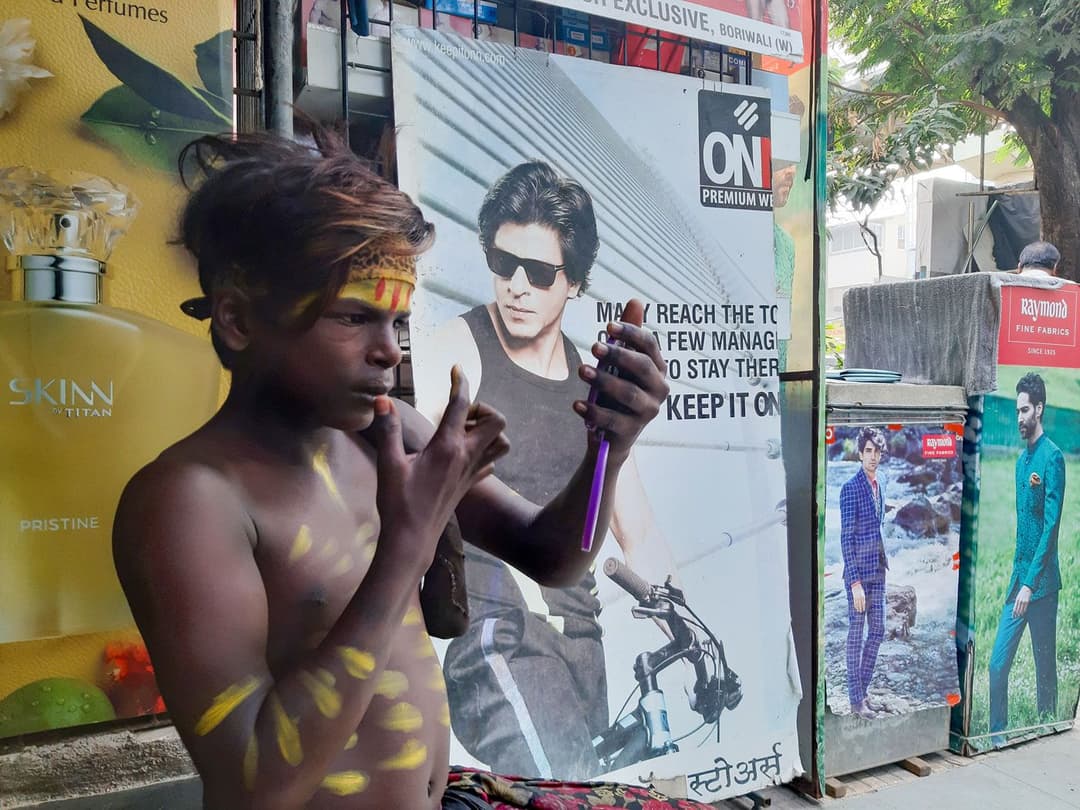
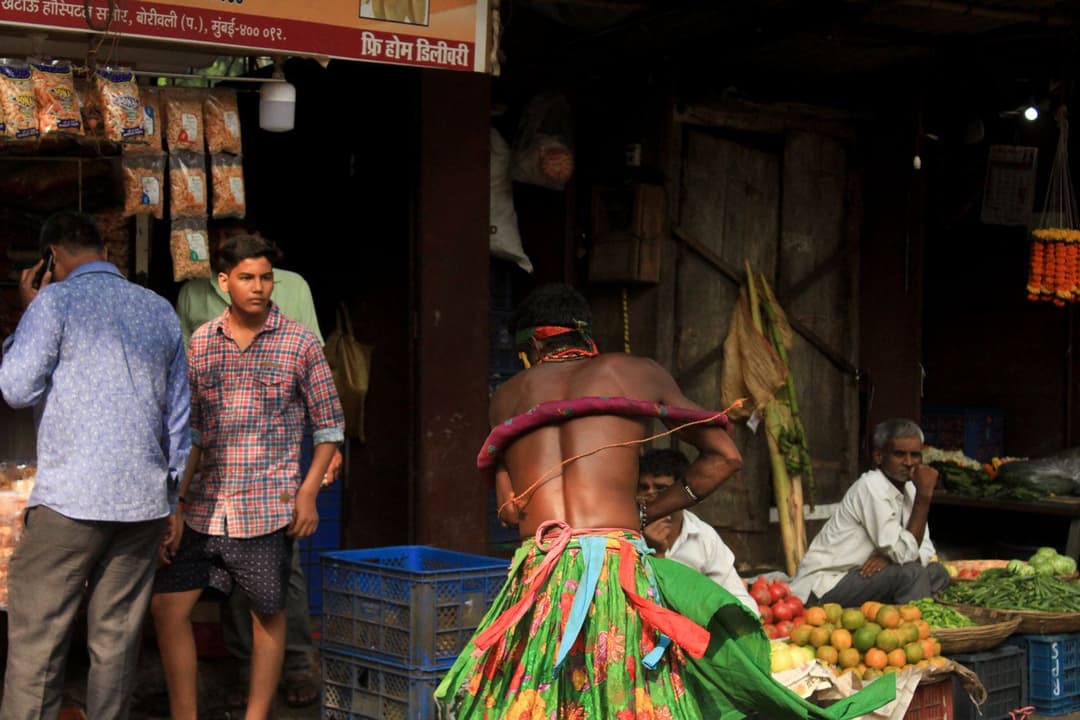
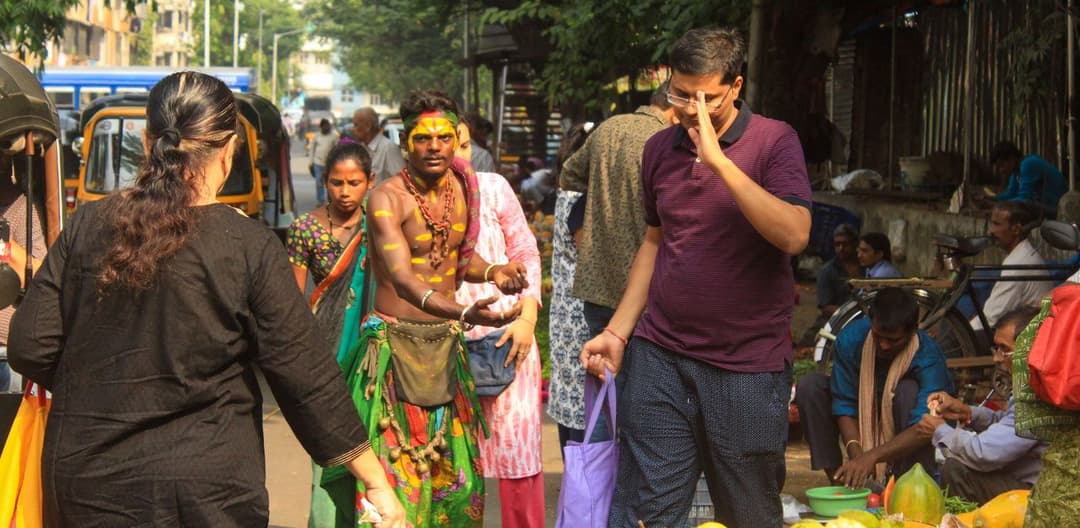
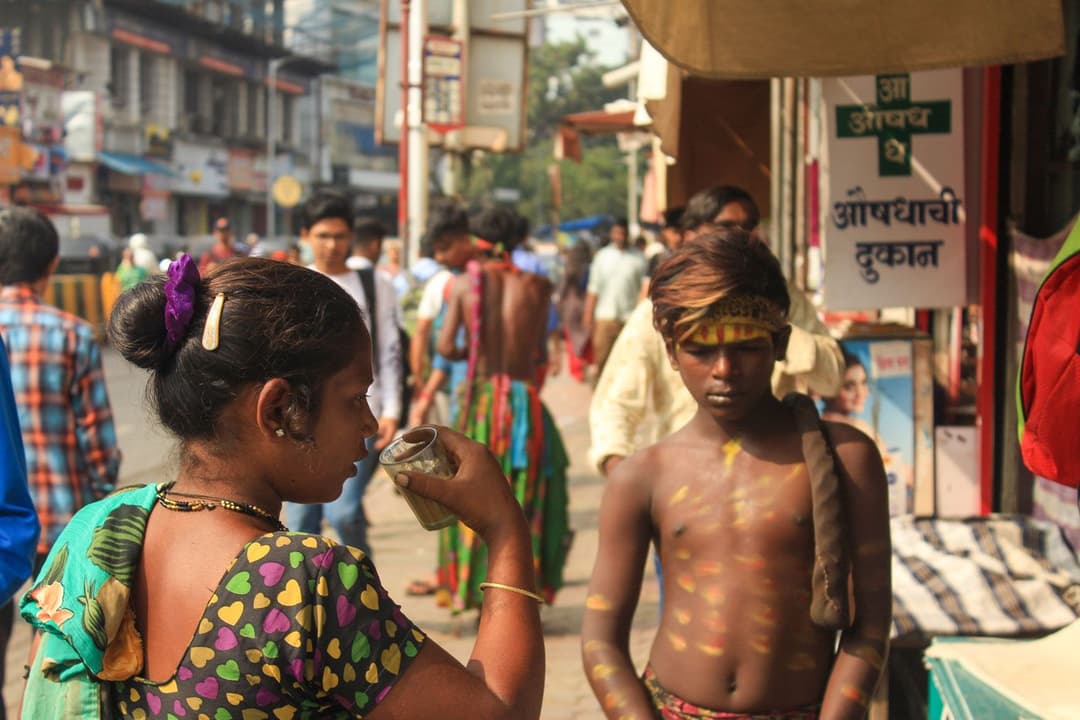
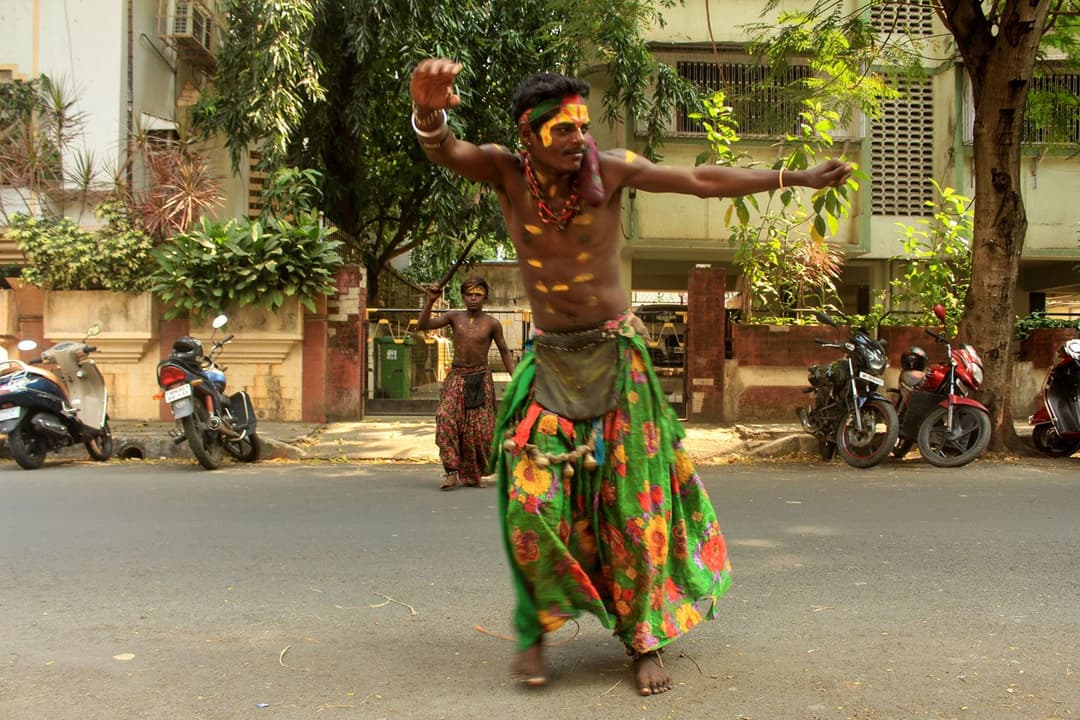
Standing in front of the closed shop, Lakshman wears the skirt on top of his pants and removes his t-shirt. He then starts painting his bare chest and face with the yellow and red paste, and dons the ornaments. Elappa does the same. They add a waist band of big bells to their skirt and fasten the ghungroos on their ankles. Rekha sits beside them, holding a dholak.
The performance begins. It’s a time before the lockdown unfolded in March 2020.