

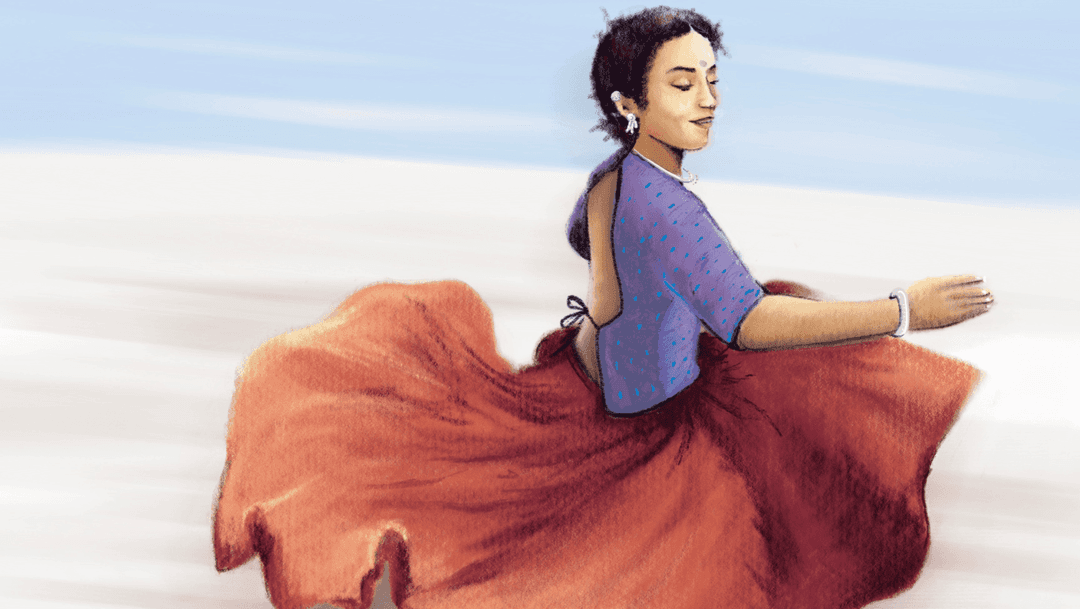
Set to the tune of a popular garba this is a song of freedom, defiance, and assertiveness. It resonates with the true voice of rural women who are no longer ready to accept the inherited structures and dictates of a culture without question.
Written in Gujarati, one of the many languages spoken in Kutch, this song was co-authored by village women, participating in one of the workshops organized by Kutch Mahila Vikas Sangathan (KMVS) to raise awareness about women’s rights.
It is difficult to ascertain the exact year when the song was first composed or who the writers were. But what one hears, without a doubt, is the strong voice of a woman demanding equal rights over the property.
While we may not know the actual context in which the song was produced, we do have records of discussions and workshops organized across Gujarat, especially in Kutch, around the idea of landownership and livelihood issues of women around the year 2003. Campaigns to raise awareness of women’s rights then focused on the sharp discrepancy between the contribution of women to agricultural production and their lack of entitlement for the land. We are not sure if these were the discussions that led to the creation of this song.
The song, however, has travelled across the region and beyond since then. And in the course of its journey, as often happens with a folk song, lines are added, altered, adjusted by the singers to appeal to their immediate audiences. The version here is presented by Nanduba Jadeja from Nakhatra taluka.
It is one of 341 songs recorded by Soorvani, a community-run radio started by the in 2008. A collection that has come to PARI through KMVS, these songs capture the immense cultural, linguistic and musical diversity of the region. The collection helps preserve the musical tradition of Kutch, which is in decline, its sounds fading across the desert sands.
