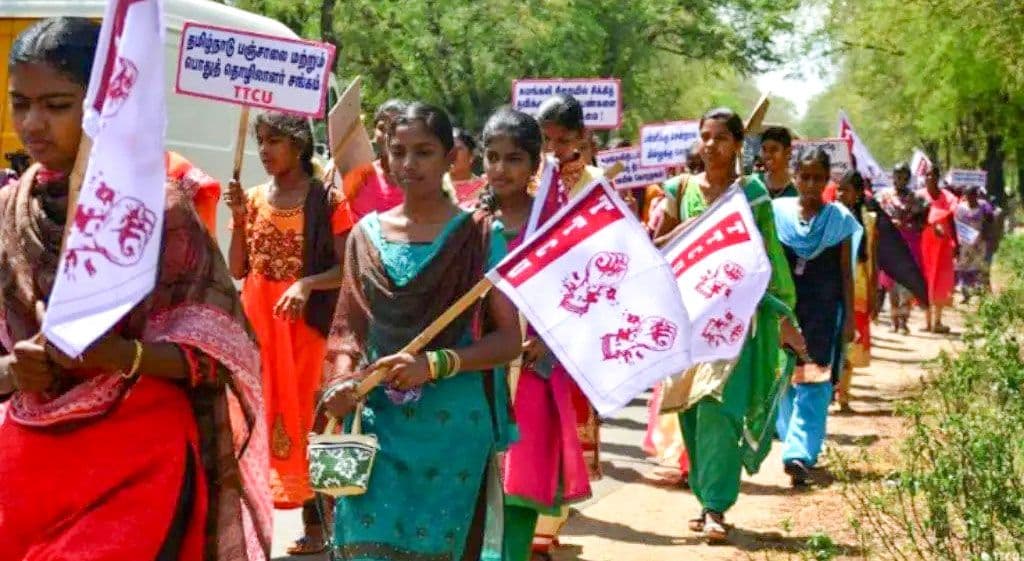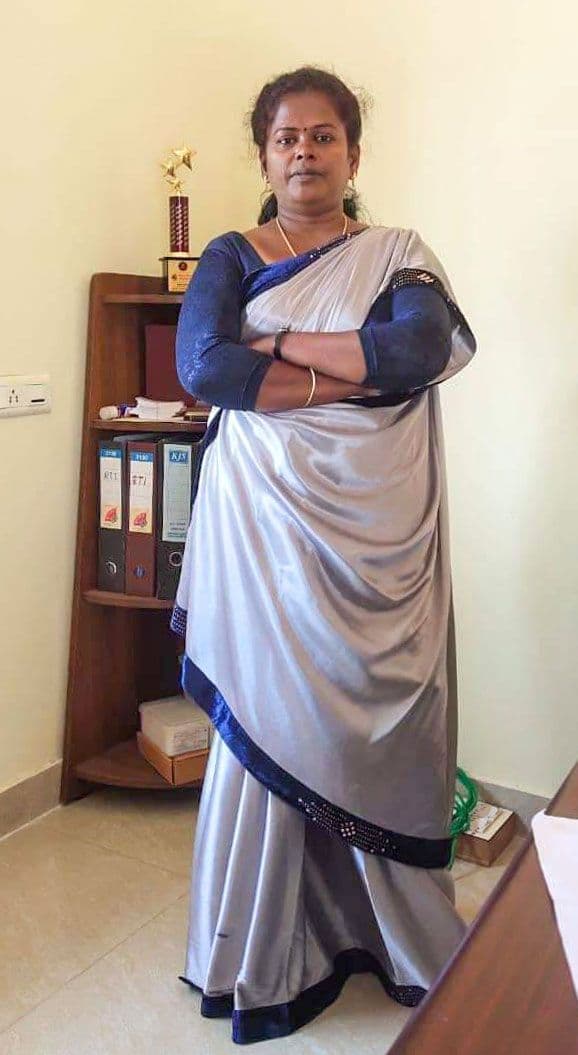


The Friday morning of April 1, 2022 was like any other for Rama. She had woken up around 4:30, walked to the village well nearby to fetch water, washed clothes, cleaned the house, and had kanji with her mother later. She then left for work, at Natchi Apparel in Vedasandur taluk of Dindigul district, 25 kilometres from her village. But by afternoon that day, the 27-year-old and her fellow women workers had created history – after struggling for more than year to end sexual harassment in their garment factory.
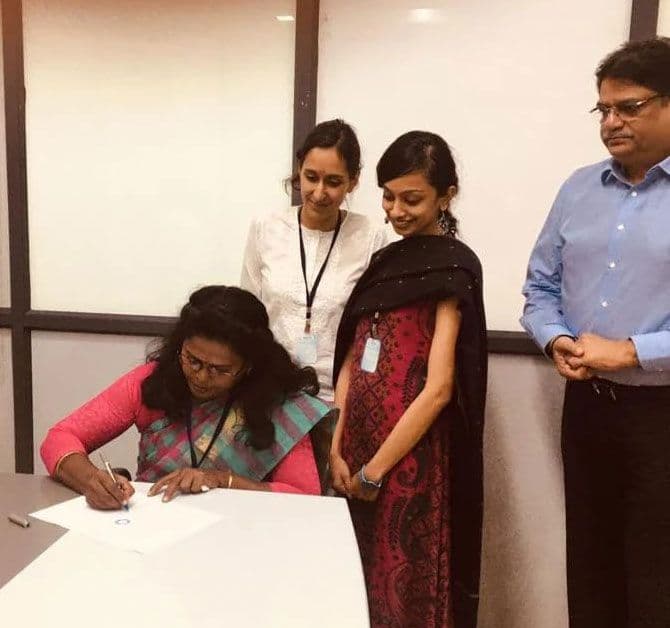
“To be honest, I feel like we have done the impossible,” says Rama, about the Dindigul Agreement – signed that day by Eastman Exports Global Clothing (the Tiruppur-based parent company of Natchi Apparel) and the Tamil Nadu Textile and Common Labour Union (TTCU) – to end gender-based violence and harassment at the factories operated by Eastman Exports in Dindigul district, Tamil Nadu.
As part of this landmark agreement, an ‘enforceable brand agreement’, or EBA, was signed by the multinational fashion brand, H&M, to support and enforce the TTCU-Eastman Exports agreement. Eastman Exports’ Natchi Apparel produces clothes for the Sweden-headquartered clothing company. The agreement signed by H&M is the second such industry contract worldwide, tackling gender-based violence in the fashion industry.
Rama, who is a member of TTCU, a Dalit women-led trade union of textile workers, has been an employee of Natchi Apparel since four years. “I never thought the management and the brand [H&M] would sign an agreement with a Dalit women’s trade union,” she says. “They have taken the right step now, after having committed some really wrong actions.” H&M’s agreement with the union is the first ever EBA to be signed in India. It is a legally binding contract under which H&M is obligated to impose penalties on Eastman Exports if the supplier violates its commitments to TTCU.
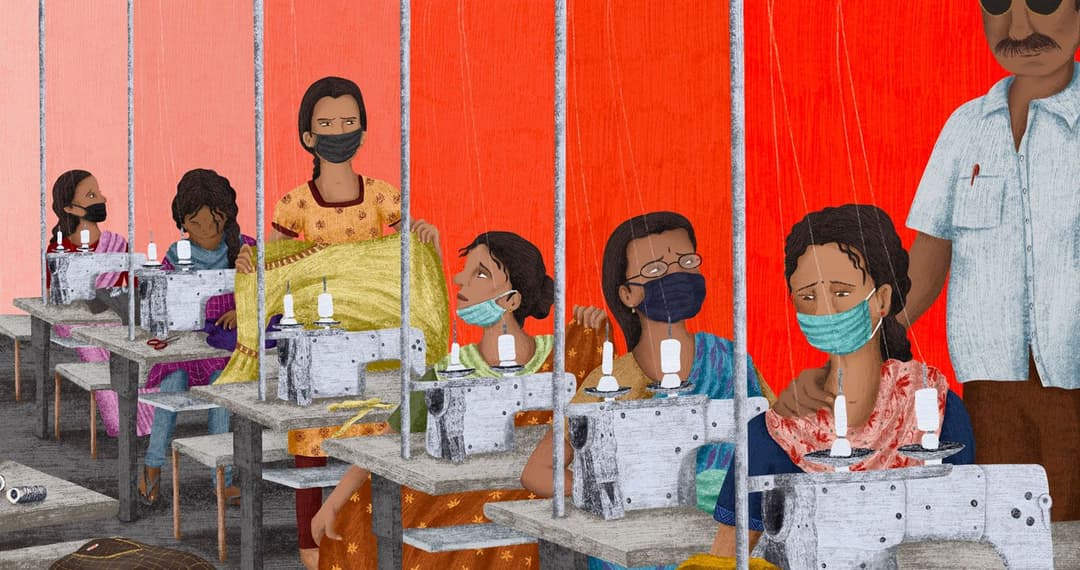
But Eastman agreed to come to the table more than a year after the rape and murder of Jeyasre Kathiravel, a 20-year-old Dalit garment worker of Natchi Apparel. Jeyasre had suffered months of sexual harassment by her supervisor at the factory, who belongs to a dominant caste, before she was murdered in January 2021. The supervisor has been charged with the crime.
Jeyasre’s murder sparked outrage against the garment factory and its parent company, Eastman Exports, one of India’s largest clothing manufacturers and exporters, supplying to multinational clothing companies such as H&M, Gap and PVH. As part of the campaign to get justice for Jeyasre, a global coalition of unions, labour groups and women’s organisations had demanded that the fashion brands take “action on Eastman Exports’ escalating coercive actions against Ms. Katharivel’s family”.