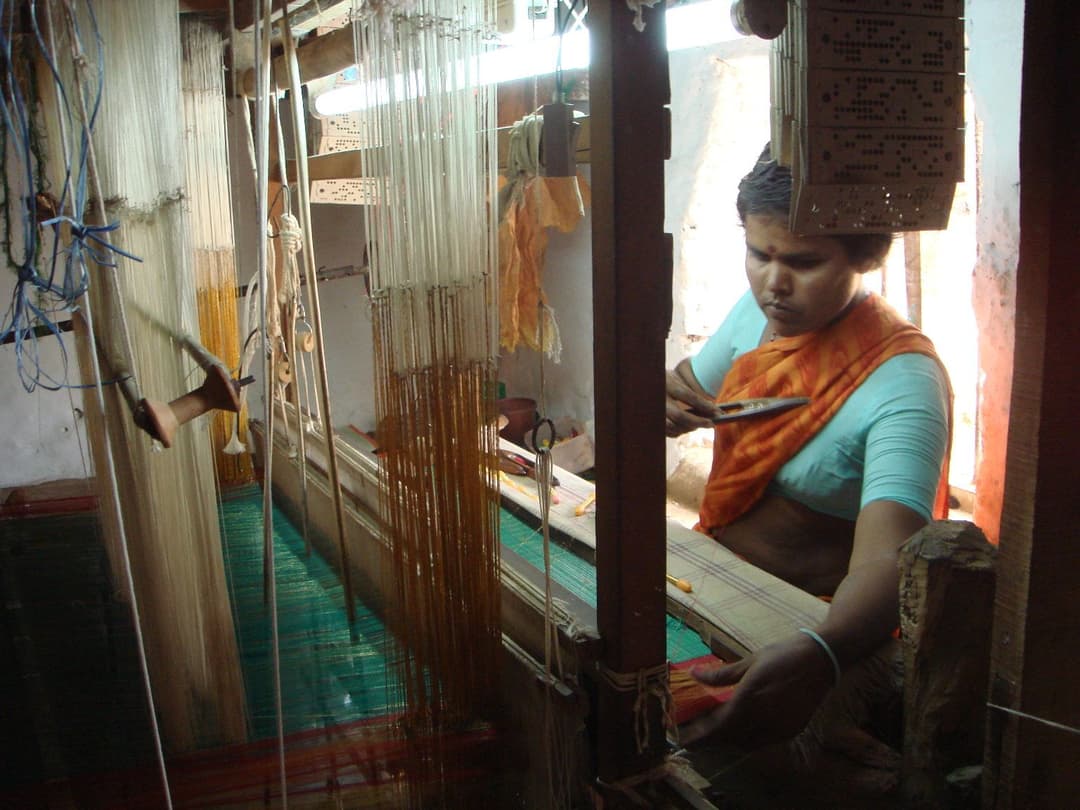
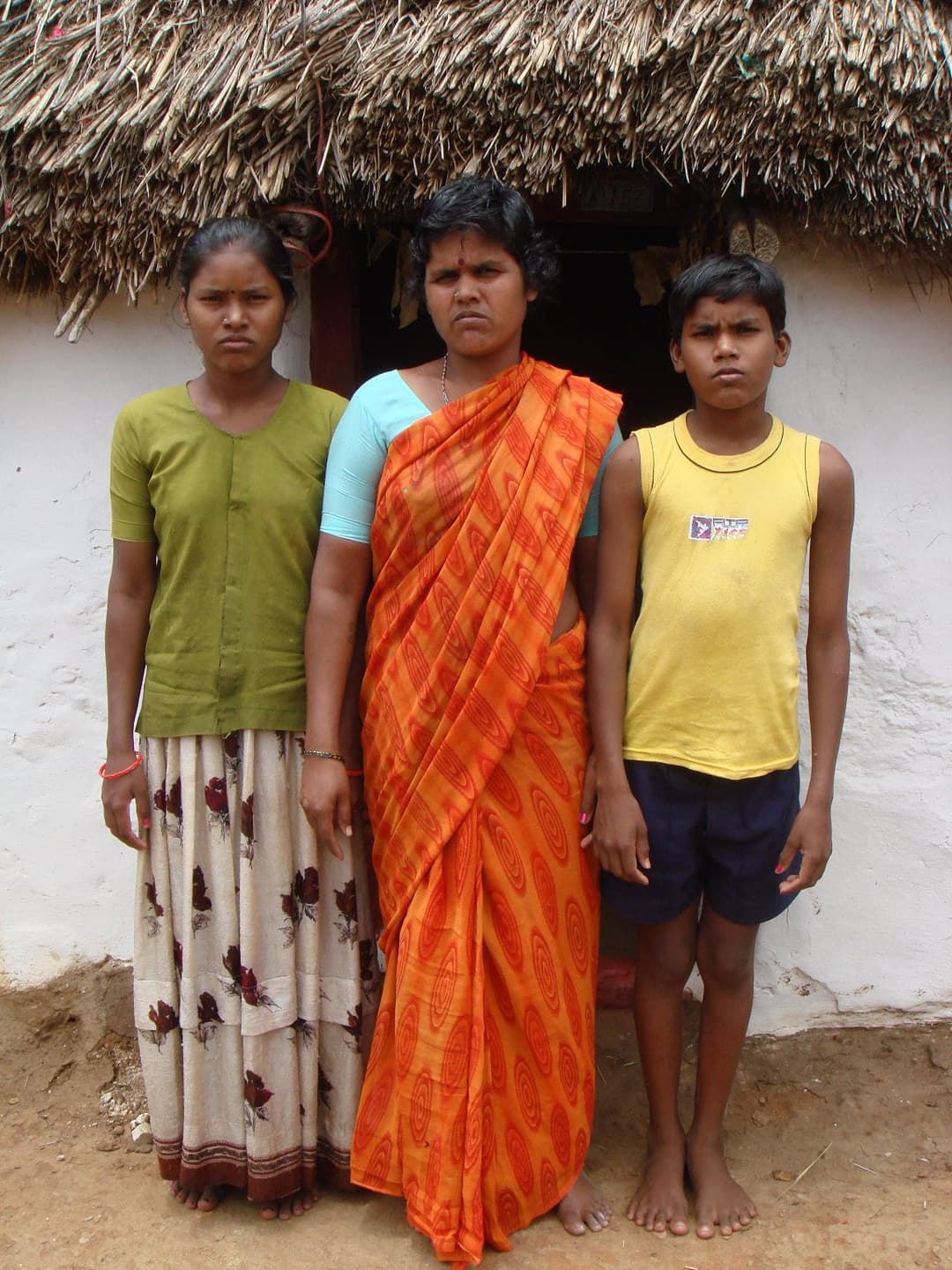
“That’s why, when the current does come, we have to work no matter what time it is,” Krishnamma explains. And she has to do it while helping the young ones on the other loom. That’s besides doing the washing, cleaning and cooking. Sometimes she gets other work but her labour fetches no more than Rs. 25 a day. “Some weaving, I learned as a girl,” she says. Meanwhile, her legs are swollen with standing so many hours at the loom and also trying to make the work lighter and easier for the children. Both have dropped out from school. Pulanna, at 14, from a school four kilometres away. And Amita, 15, who misses school deeply but won’t admit it because of loyalty to her mother.
Krishnamma is one of more than 100,000 women who have lost their husbands to farm suicides across the country in the past 14 years. Anantapur was one of the worst-hit districts in the flood of farmers’ suicides. Her husband Nethi Sreenivasulu hanged himself in 2005 after all the four borewells he set up on his three-and-a-half acres at a cost of Rs. 60,000, failed. “The creditors have come and asked me to pay up,” says Krishnamma. “I could not. Where’s the money?” There’s none from the government, for sure. “No, I never got any compensation after his death,” she says. Krishnamma has no faith in agriculture. “We have lost too much, too many years.” She’s too busy for regret or recrimination, anyway. There’s a family to be fed and she will do that at any cost to herself.
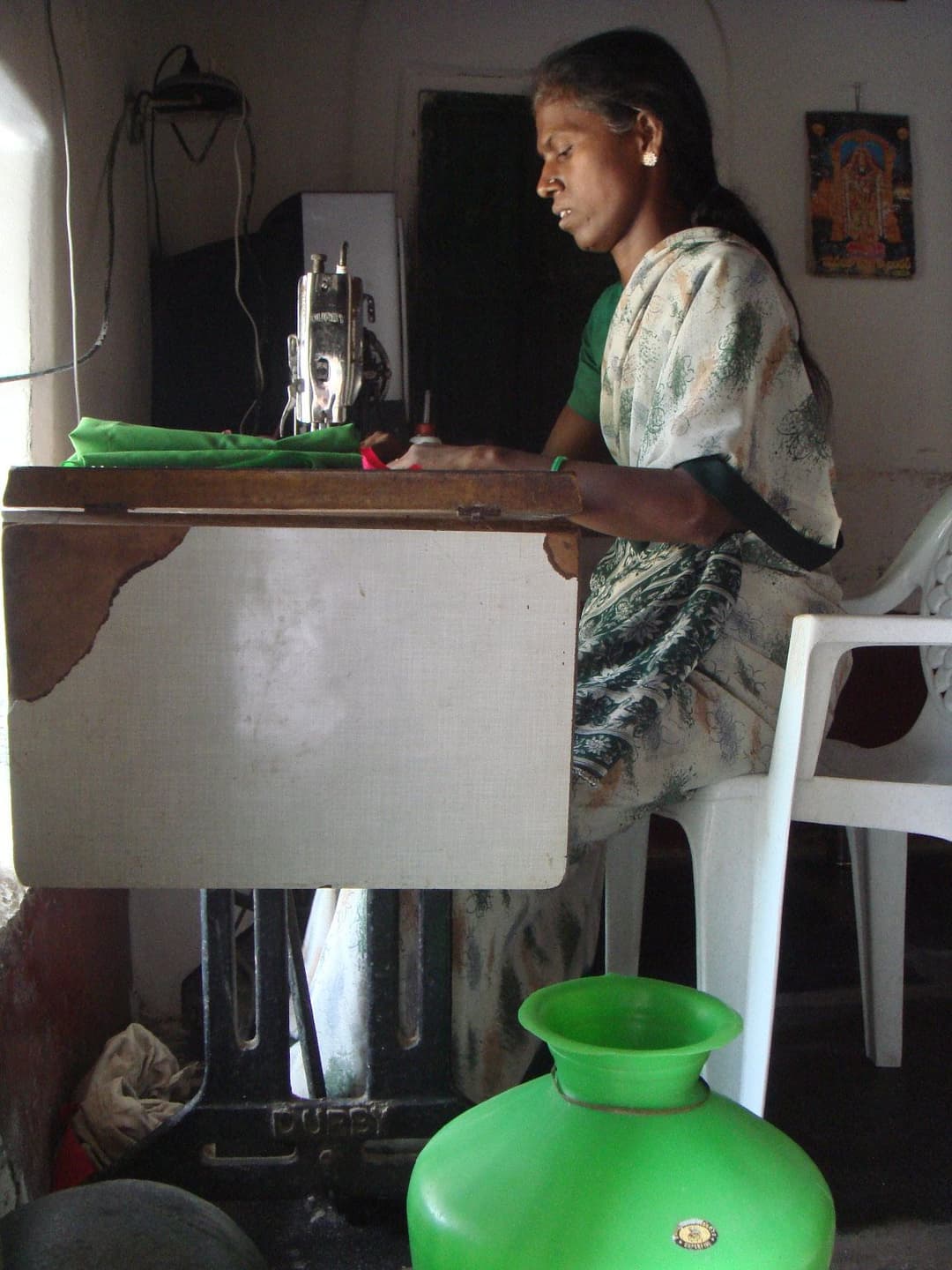
In Chinna Musturu village, Parvati Mallappa has begun setting up her tailoring school. This extraordinary woman counselled her husband against suicide in 2003. She pointed out to him that the whole village was in the same state of debt and despair and urged him not to give in to creditor pressure. Duggala Mallappa killed himself anyway. Parvati decided not to go back to her mother’s village in Bellary, Karnataka. She stayed on, determined to educate her three daughters Bindu, Vidy, and Divya who are just four, seven, and nine years old now. Parvati herself is one of the most educated women in her village, having passed Class 10.