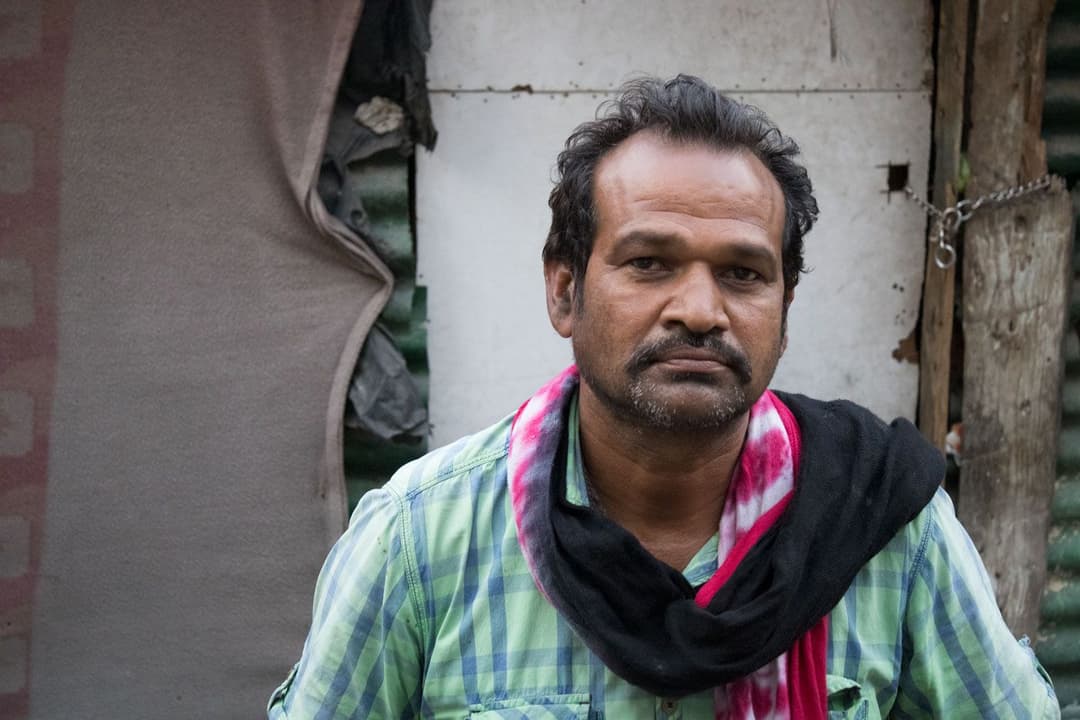

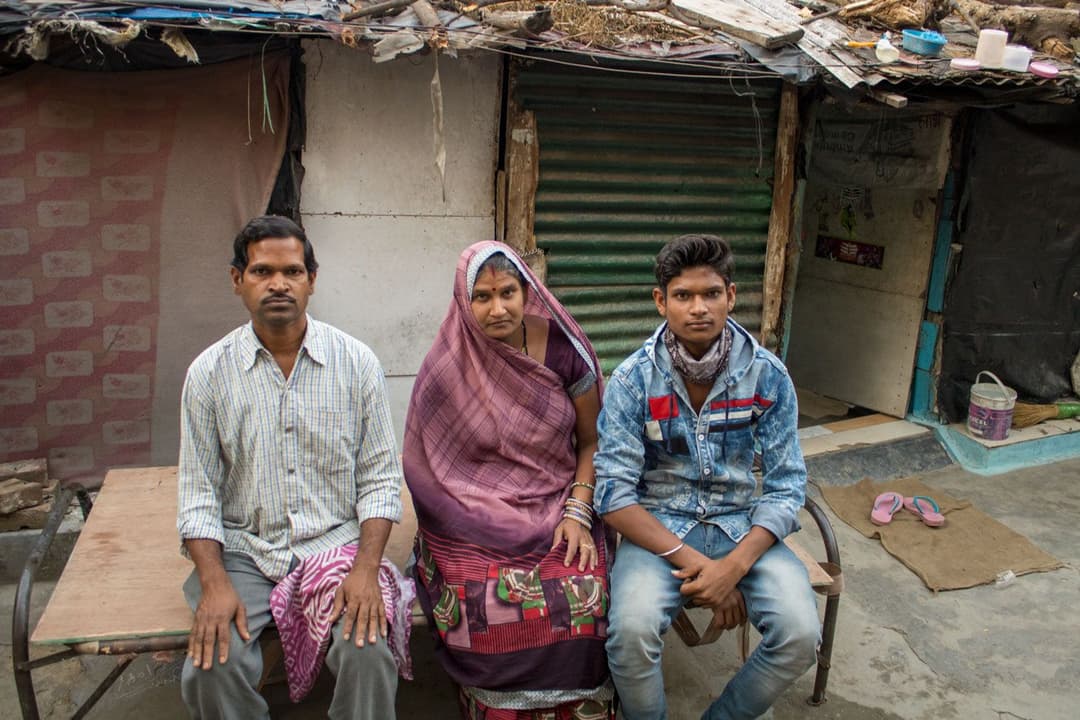
Narmadabai was grinding tomatoes on a silbatta, sitting on the floor at dusk in her jhuggi. Her husband Mohan Lal cut them into tiny pieces, and placed them on a piece of cloth.
“We churn these into chutney. The houses nearby give us rice sometimes. If not, we gulp the chutney down to keep our stomachs from growling,” Narmadabai had said, when I met the family towards the end of April. She was referring to the residents of nearby buildings, who occasionally gave rations to the labourers living in three shanties in a back lane of Durga Nagar, in the west of Jammu city.
When the Covid-19 lockdown began on March 25, procuring food had become difficult for Narmadabai Chandra and Mohan Lal Chandra – more so after they had been mostly without work during the winter months till February, and were using up their sparse savings.
Narmadabai, 48, is a daily wage labourer at construction sites in Jammu, and earns Rs. 400 a day for around 20-25 days a month. Mohan Lal, 52, is a mason, and earns Rs. 600 a day. “Just when work started to pick up by February, the lockdown was imposed,” said Mohan Lal. “We went from a handful to nothing.”
In the room next door live Mohan Lal’s younger brother, Ashwini Kumar Chandra, who is in his early 40s, and his wife Rajkumari, 40. Ashwini too works as a mason and earns Rs 600 a day, while Rajkumari works at construction sites and on nearby farms and gardens, for around Rs. 400 a day.
Both families came to Jammu from Barbhata village in Nawagarh taluka of Chhattisgarh’s Janjgir-Champa district. Narmadbai and Mohan Lal came in 2002 – pushed out by drought. “The drought swallowed everything,” Mohan Lal told me, “Cattle, livelihoods and everyone’s basic survival. We lost so much, we had to leave.”