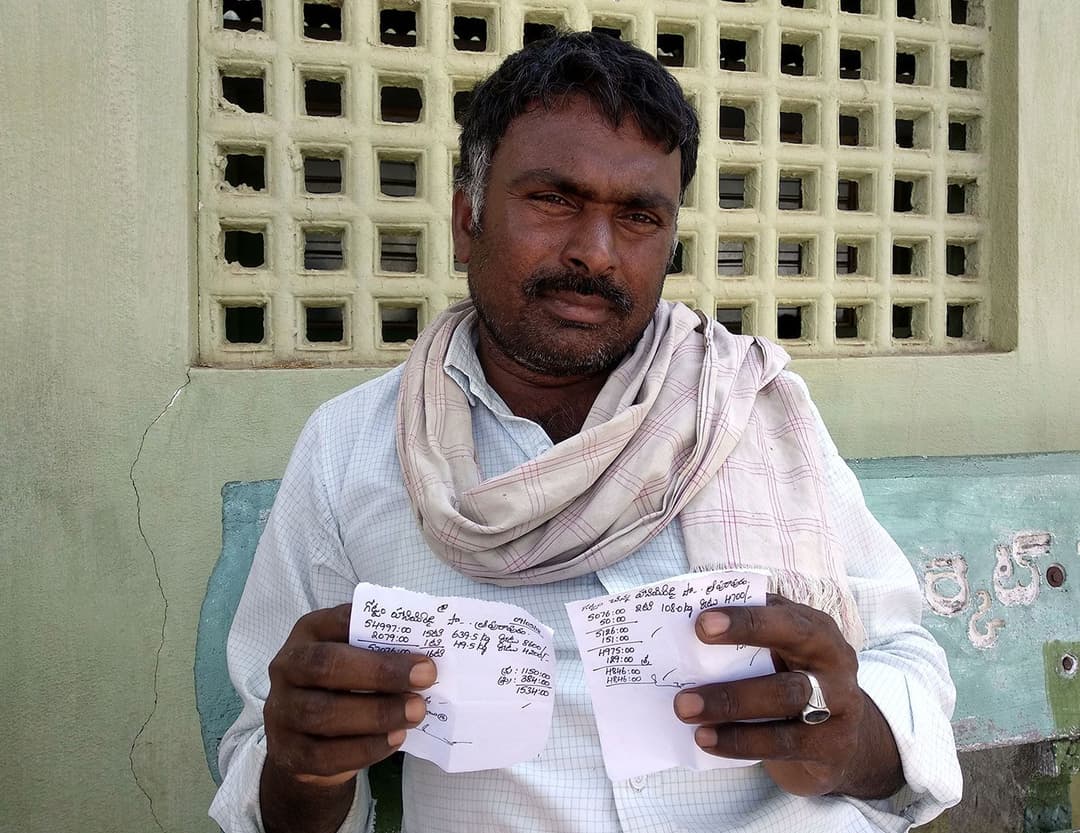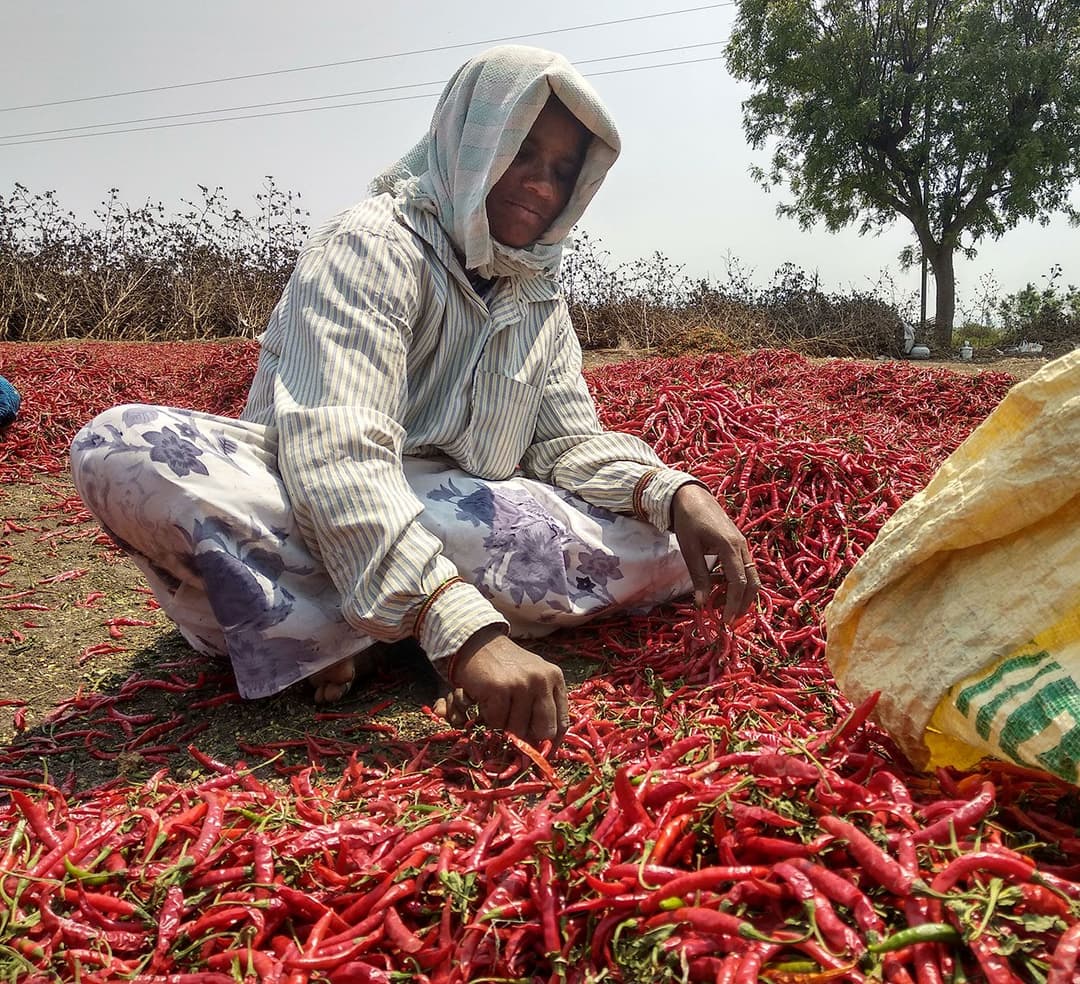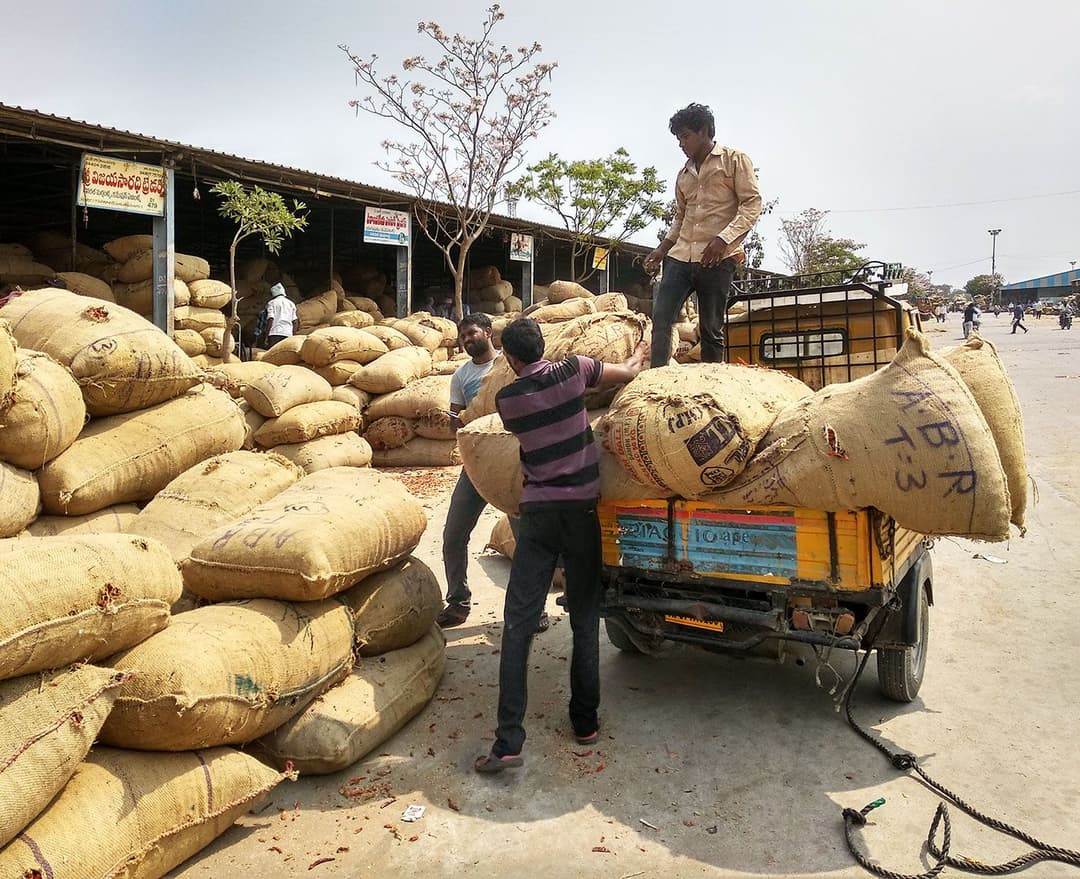

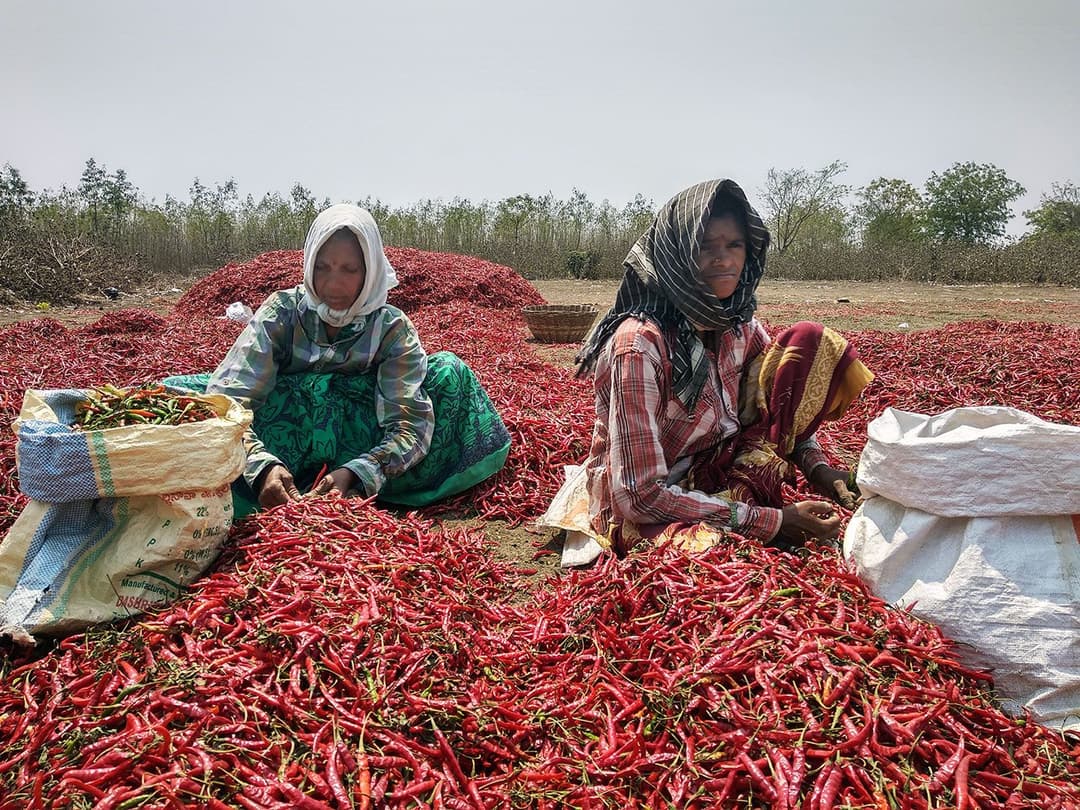
On a hot summer day in May this year, Gottam Hanimi Reddy travelled 105 kilometres in a truck from Tripurapuram village in Nuzendla mandal to Guntur, hoping to sell the eight quintals of mirchi he had cultivated on his five-acre farm. This was the last harvest; he had come to the market thrice in April, when he sold the chillis at prices ranging from Rs. 6,000 to Rs. 8,000 per quintal, depending on the variety – Mirchi LCA334 or Guntur Sannam.
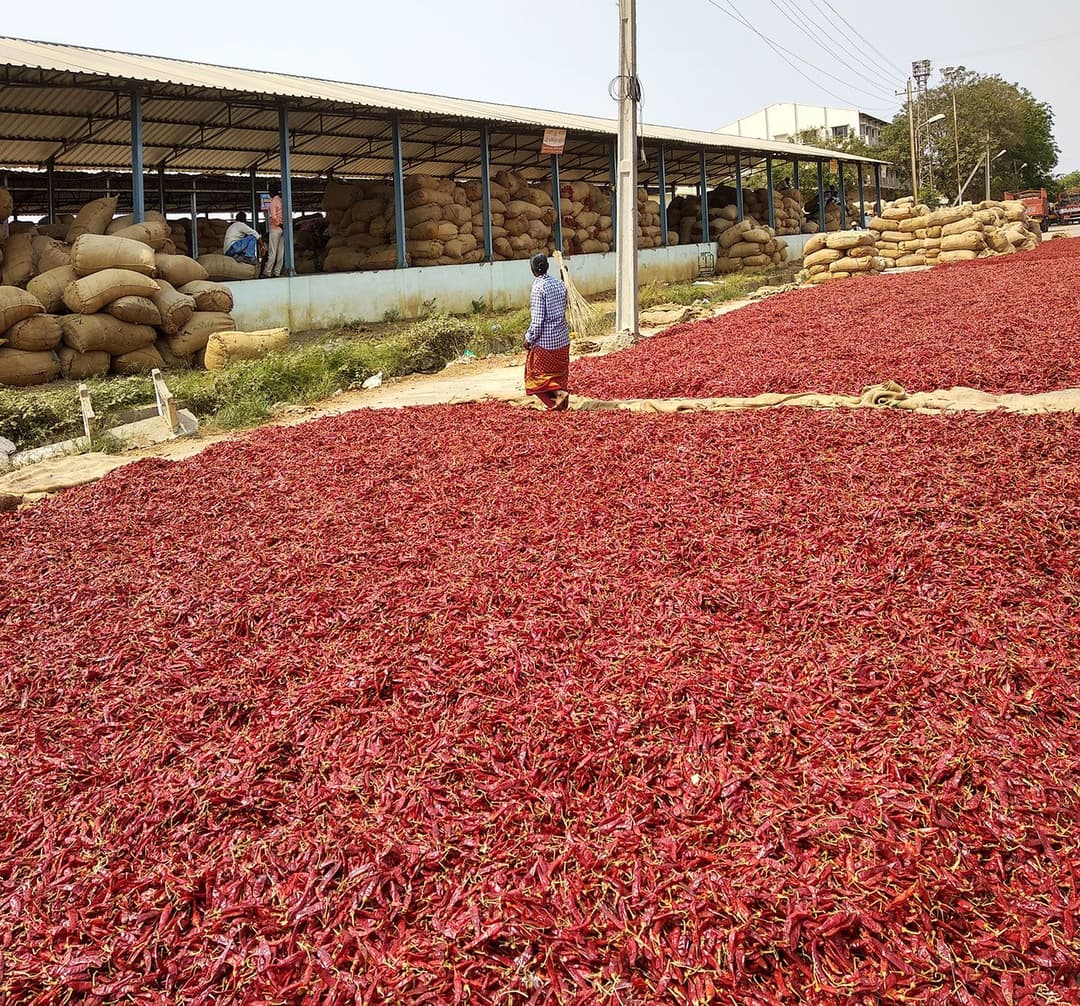
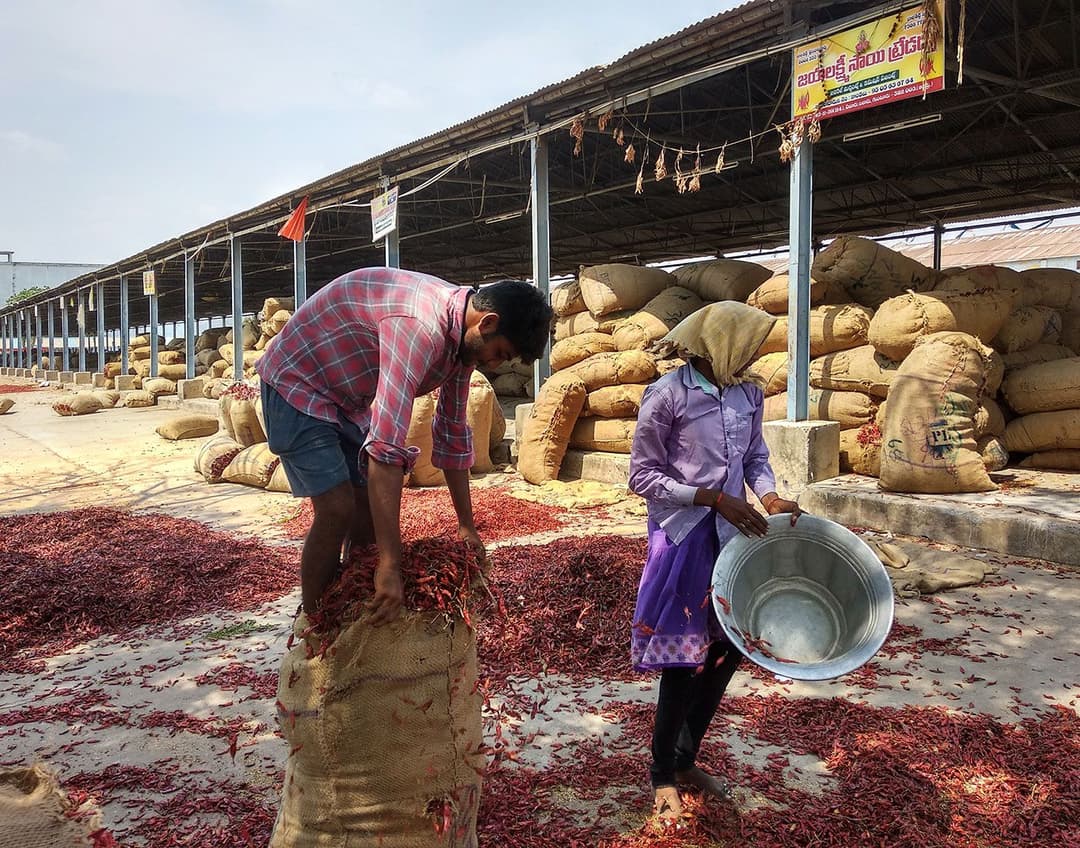
Now he was at the NTR Agricultural Market Committee Yard in Andhra Pradesh’s Guntur town again, waiting for three days, hoping to sell off the load if the prices increased. Sitting outside the farmers’ mess at the mandi (market) on a day when mirchi sales for the 2017-18 agricultural season were closing, he said, “Today, the prices have fallen further and the commission agents are only giving 4,200 rupees per quintal. All of them form a cartel and decide the price at their whims and fancies.”
Pushed to a corner, Reddy had to decide if he should take the load back home and keep it in cold storage or sell it at the low price. “I can’t afford the AC [air conditioning] costs and moreover, a quintal – two tikkis [bags] of 50 kilos each – costs 1,000 rupees for transport one way,” explained Reddy, about his choice to sell at the poor price. He paused, then said in a low voice, “The links of the brokers with the AC people [cold storage suppliers] is well known. It’s a win-win for both.”
Reddy had spent around Rs. 2 lakhs per acre as investment on seeds, fertilisers, pesticides and labourers’ wages – and there was his and his wife’s labour too. This had yielded 20 quintals per acre in the 2017-18 mirchi season from October to March. Around 100 quintals in total, at a cost of roughly Rs. 10 lakhs. In previous years, this was somewhat profitable – with prices at a high of Rs. 12,000-15,000 per quintal in 2015-16 (reportedly due to increased demand in the international market), and at least Rs. 10,000 in some other years, allowing cultivators to break even.