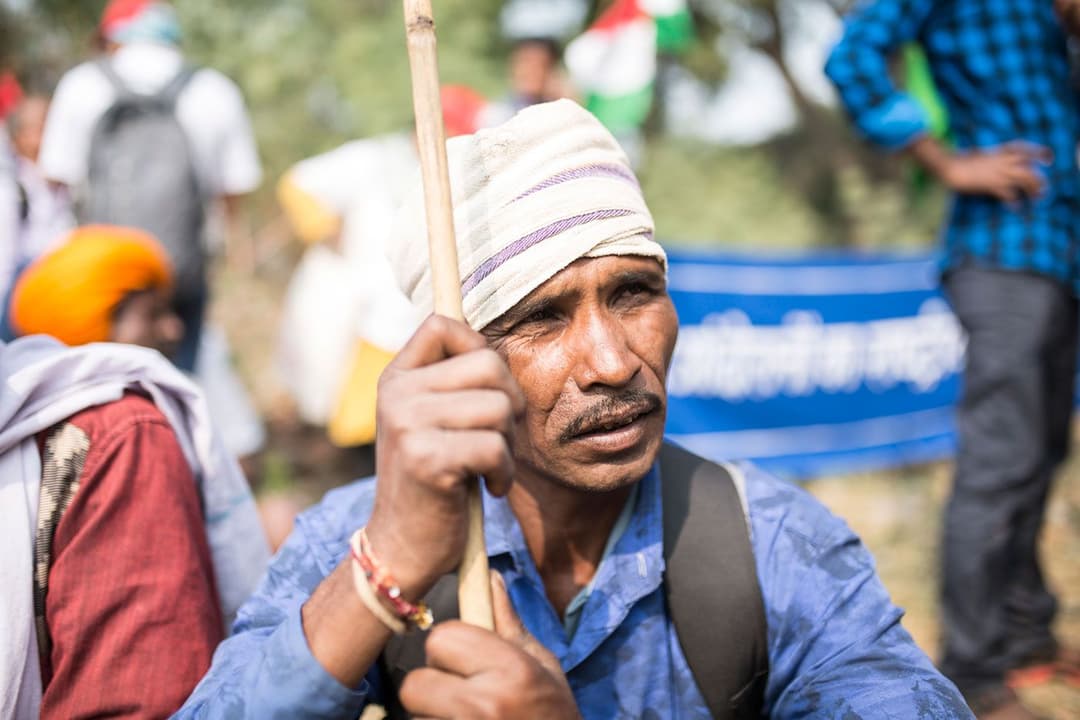

Ramesh Ukar, 58, woke up early on the morning of November 28. He had two things on his mind. “I had to vote,” he said. “And I had to reach Delhi the next day.”
Ukar lives in Manasya village in Petlawad taluka of Madhya Pradesh’s Jhabua district. The nearest railway station is Indore – approximately 150 kilometres away. The train from Indore takes over 14 hours to reach Delhi. “I packed my clothes the night before, asked my wife to prepare food for the journey in the morning,” he said, holding a stick, sitting in the campus of Gurudwara Shri Bala Sahibji in Delhi on November 29. “I voted and left home at noon. Managed to reach Indore by bus in the evening, from where I took an overnight train.”
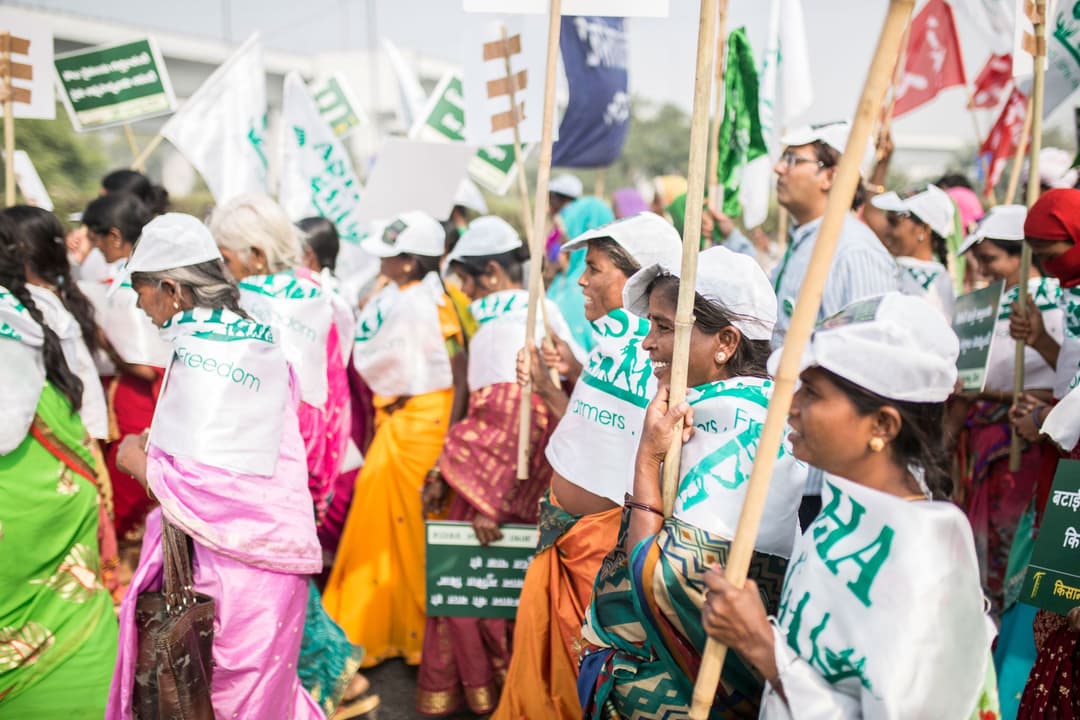
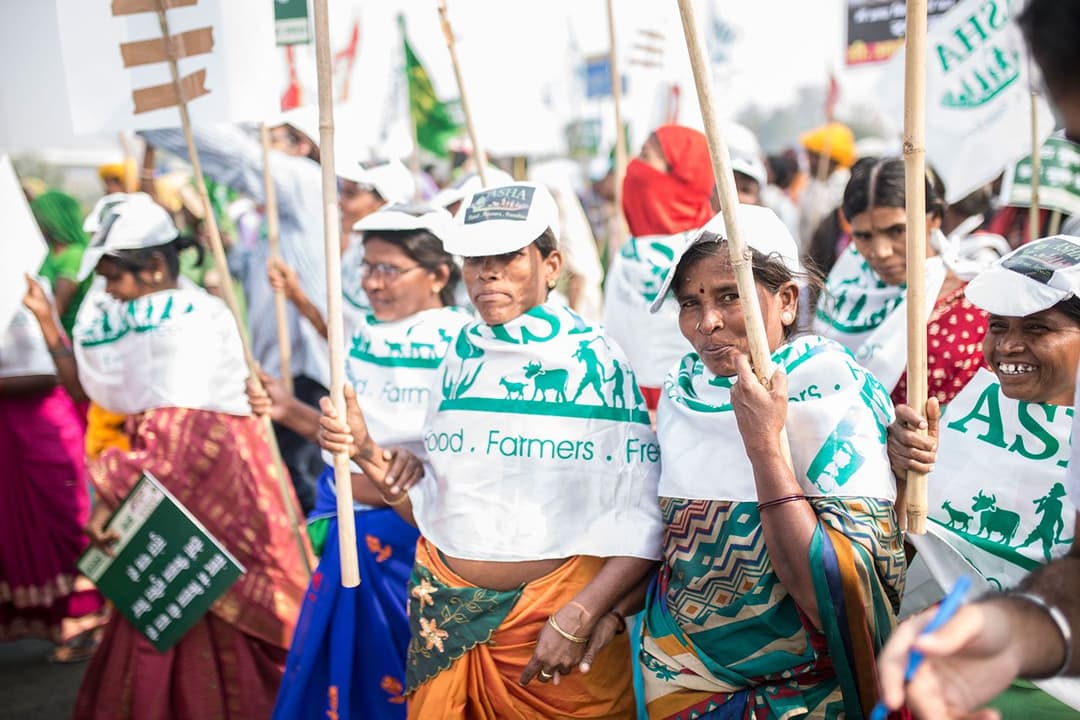
The polls in Madhya Pradesh for the assembly elections were held on November 28, and on November 29 the All India Kisan Sangharsh Coordination Committee, an umbrella organisation of 150-200 farm groups and unions, brought around 50,000 farmers from across the country to the capital. They came to participate in a two-day protest march, demanding a 21-day session focusing on the country’s agrarian crisis. The crisis has driven more than 300,000 farmers to suicide across India between 1995 and 2015.