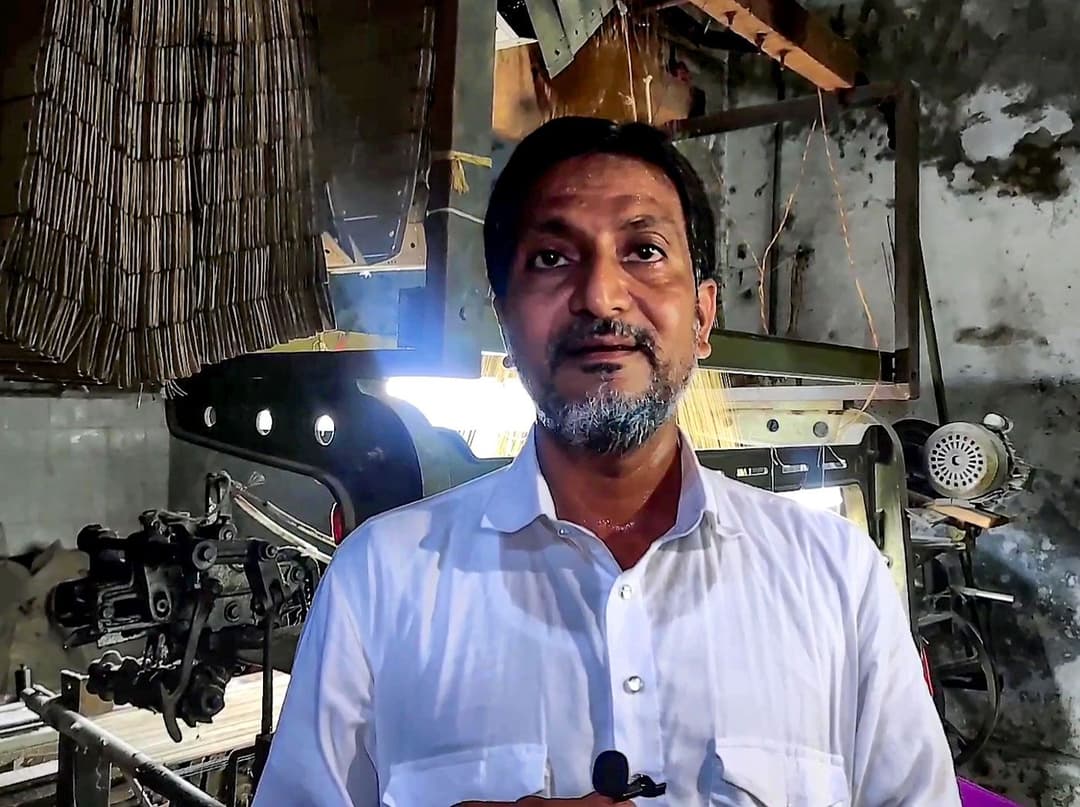
In the narrow lanes of Bazardiha, amid the clacking sounds of powerlooms, Wasim Akram is busy at work. He has been weaving since the age of 14 in the same two-storey brick-cement house – generations old, as is the tradition in his family of weaving Banarasi sarees.
His dada-pardada (grandfather and great grandfather), he says, worked on handlooms, but his own generation learnt weaving mostly on powerloom. “By the year 2000, the powerlooms came here,” says 32-year-old Wasim. “I never went to school and started working on the looms.”
In the Bazardiha locality of Varanasi, over 1,000 families (the weavers estimate) live and work as a community of weavers – helping each other with securing rations, loans and orders from bulk buyers, and ensuring that everyone gets work.
But with the lockdown that began in March 2020, the looms became silent. The bunkars – as the weavers, loom owners and others in the weaving trade are locally called – were left with no work. Saree orders were cancelled and the workshops were shut. “All my savings were used in the first 2 to 4 months of lockdown,” says Wasim. “I went to the [state-run] Weavers Service Centre and asked if there was any government scheme for us [for that period], but there was none.”