

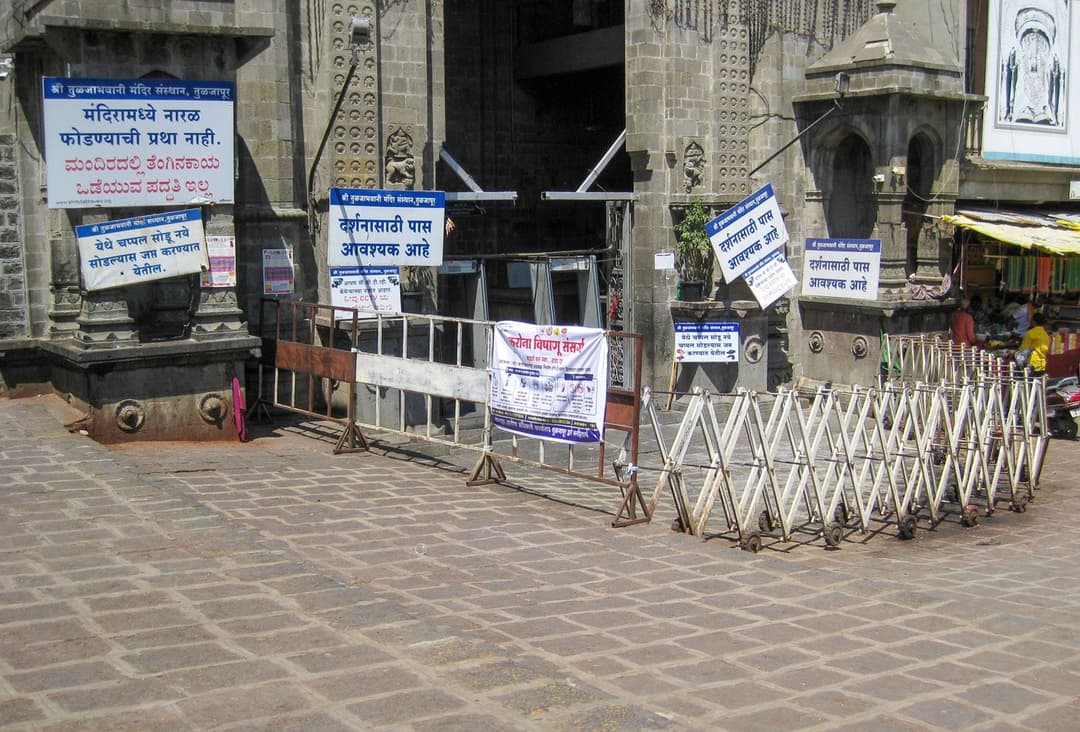
“Not during the plague [of 1994], not during the chikungunya outbreak [of 2006], not even during the earthquake [of 1993] was this temple closed. It is first time in history that we are witnessing this,” says Sanjay Pende, clearly troubled. He is among the main priests at the temple of goddess Tulja Bhavani in Tuljapur town in south Maharashtra.
The temple shut its doors to devotees on Tuesday, March 17, as part of the state’s lockdown to prevent the spread of Covid-19. It’s left people here in disbelief. “What kind of disease is this? Devotees from outside the state are coming here, but they have to make do with darshan from outside the temple. That too after fighting with the police,” says 38-year-old Pende. Part of his concern arises from losing out on his earnings from the daily 10-15 special pujas he conducts. Pende estimates there are over 5,000 priests in Tuljapur who depend on earnings generated by temple-related activities.
The economy of this town of 34,000 people (Census 2011) in Osmanabad district of the Marathwada region revolves around the temple atop a hill, believed to date back to the 12th century. Goddess Tulja Bhavani is regarded as a family deity by many in Maharashtra and other states, and this is one of the main temples dedicated to goddesses along a pilgrimage route in the state.


