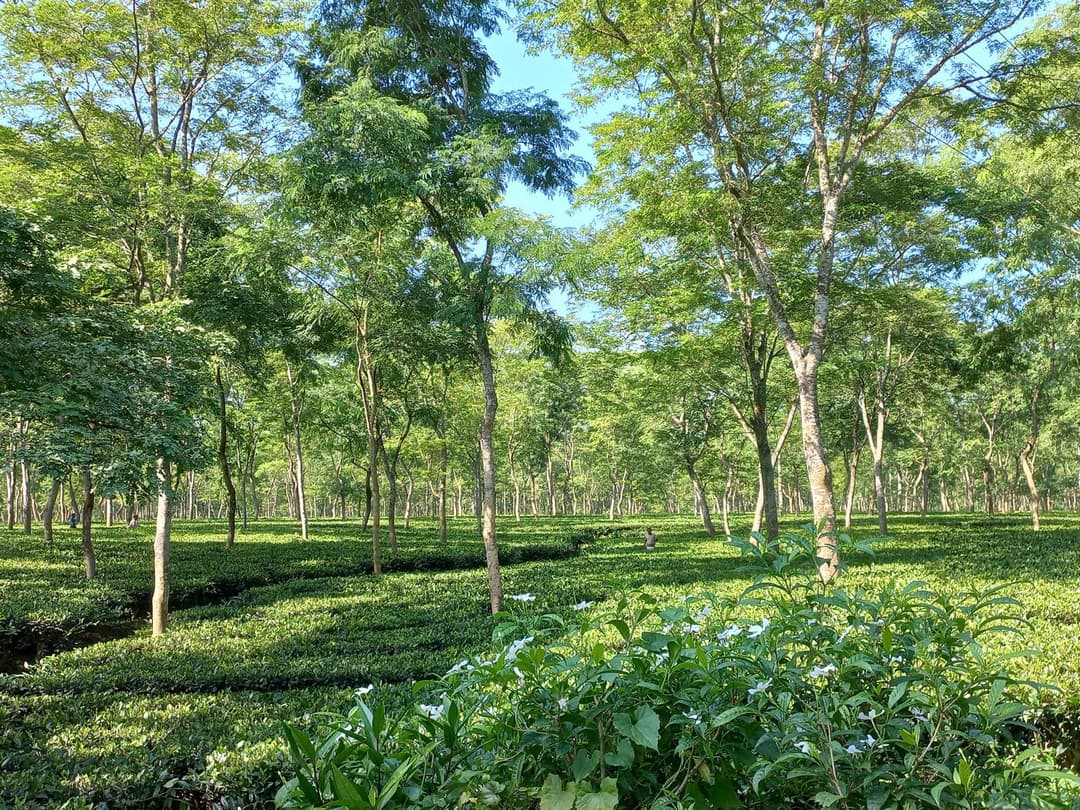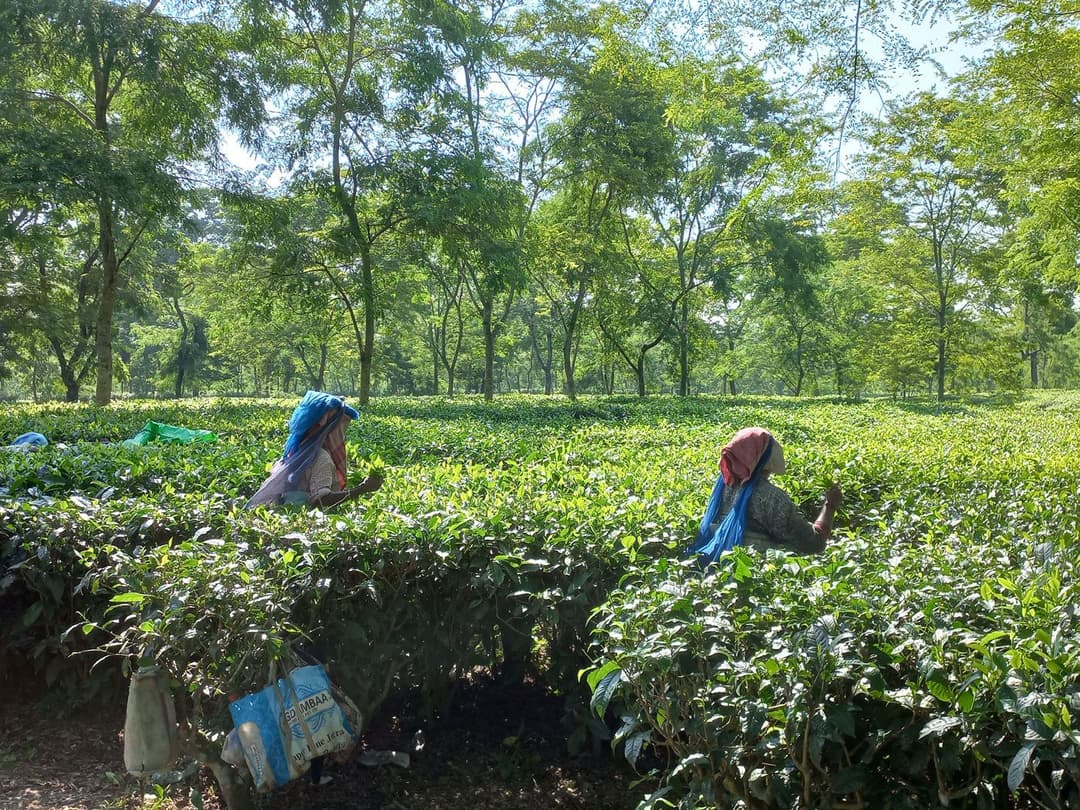

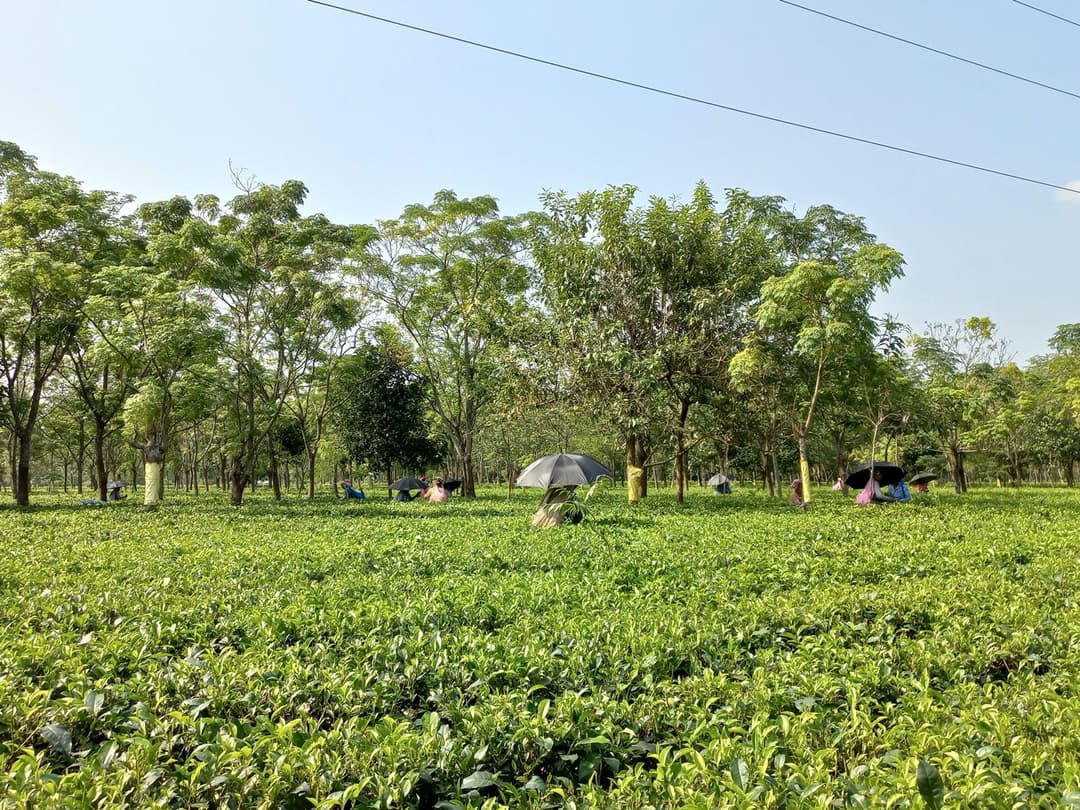
“During emergencies, I relieve myself right here,” Diya Toppo (name changed) says, indicating a very small gap between the densely planted, thorny tea bushes. “I was stung by a bee just this morning; you could also get bitten by snakes here,” she adds worriedly.
Regular working conditions for daily wage labourers is hard, but if you are a woman working in a tea garden, even taking a toilet break could be fraught with unknown dangers.
The 53-year-old worker recalls, “When I was young, I would sometimes think of cycling back to the quarters to use the toilet in case of emergencies.” But that trip would reduce the time she spent plucking: “I need to meet the daily target [of leaves]. I can't risk [losing wages].”
Her co-worker, Sunita Kisku (name changed) agrees: “There are only two options – either control [the urge to urinate] for the entire day or do it here [in the open]. But that is very dangerous given the amount of insects and leeches here.”
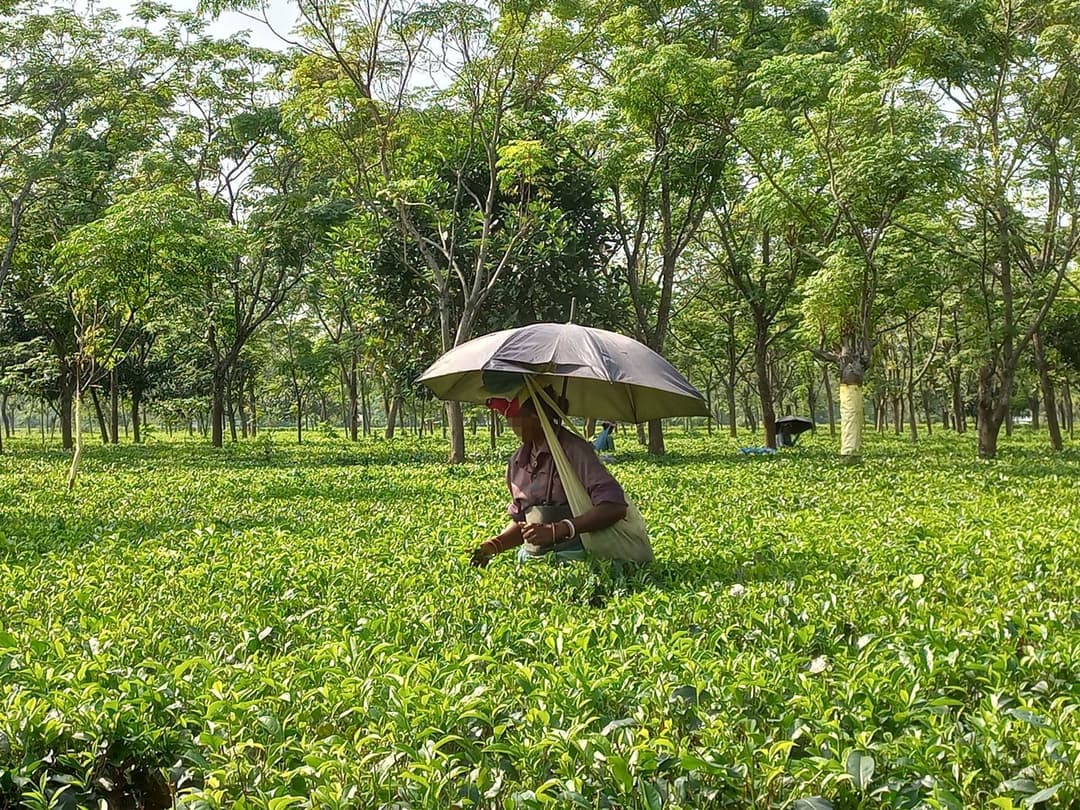
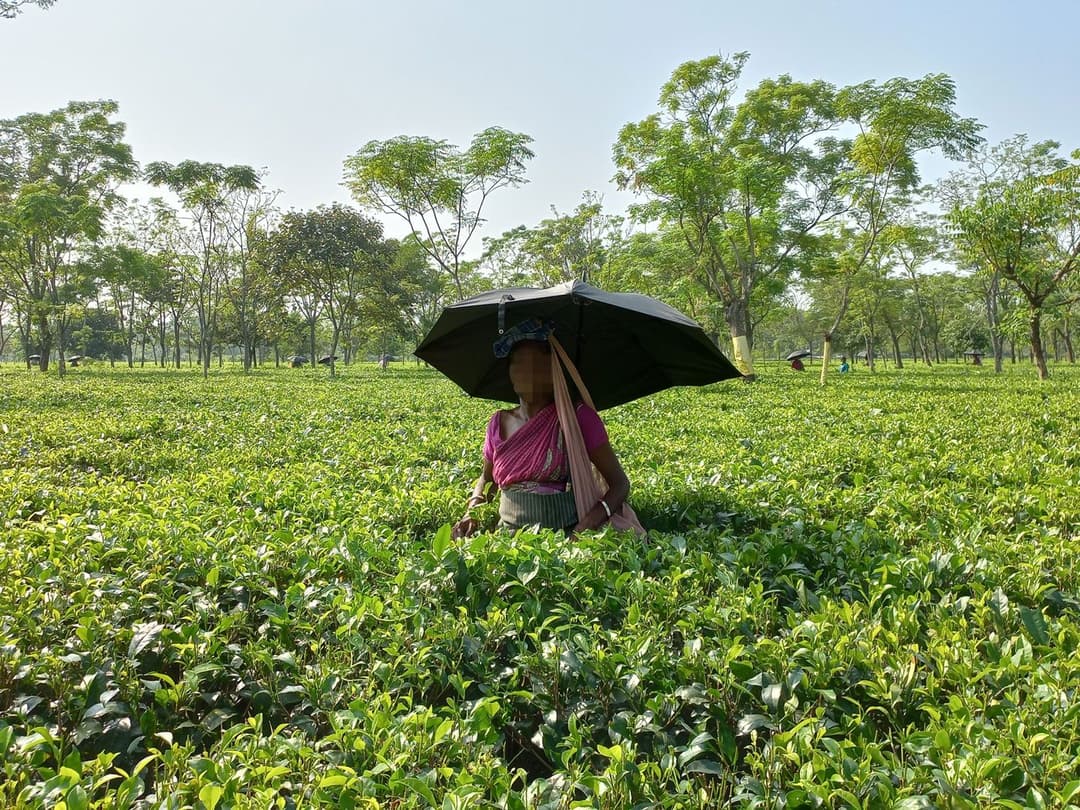
Some tea companies do provide an umbrella, a chappal (sandal), a tripol (tarpaulin) and a jhuri (bag). “The tripol protects our clothes from getting wet from the water in the plants. Other things [equipment like boots] we have to buy ourselves,” says Diya.
“We are expected to work 10 hours at a stretch,” says the 26-year-old Sunita. If she were to walk back home to access a toilet – two kilometres from the garden where she works – she would lose out on a few hours worth of wages. That is not something the mother of two says she can afford.