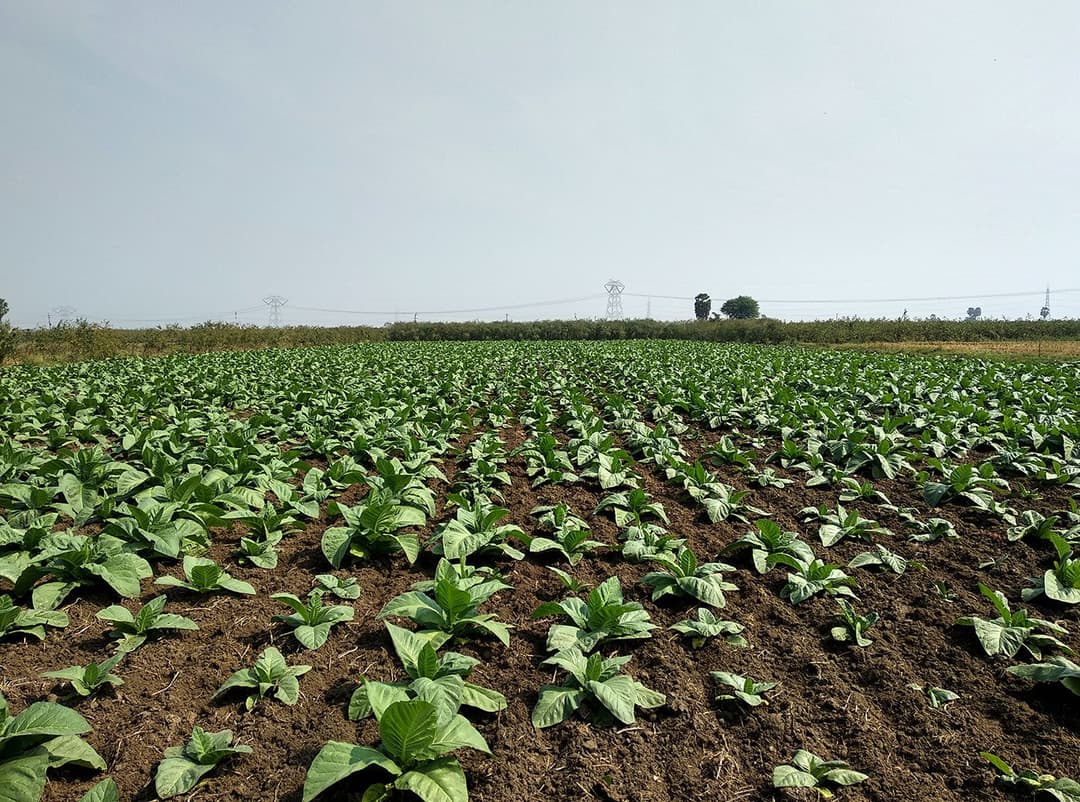
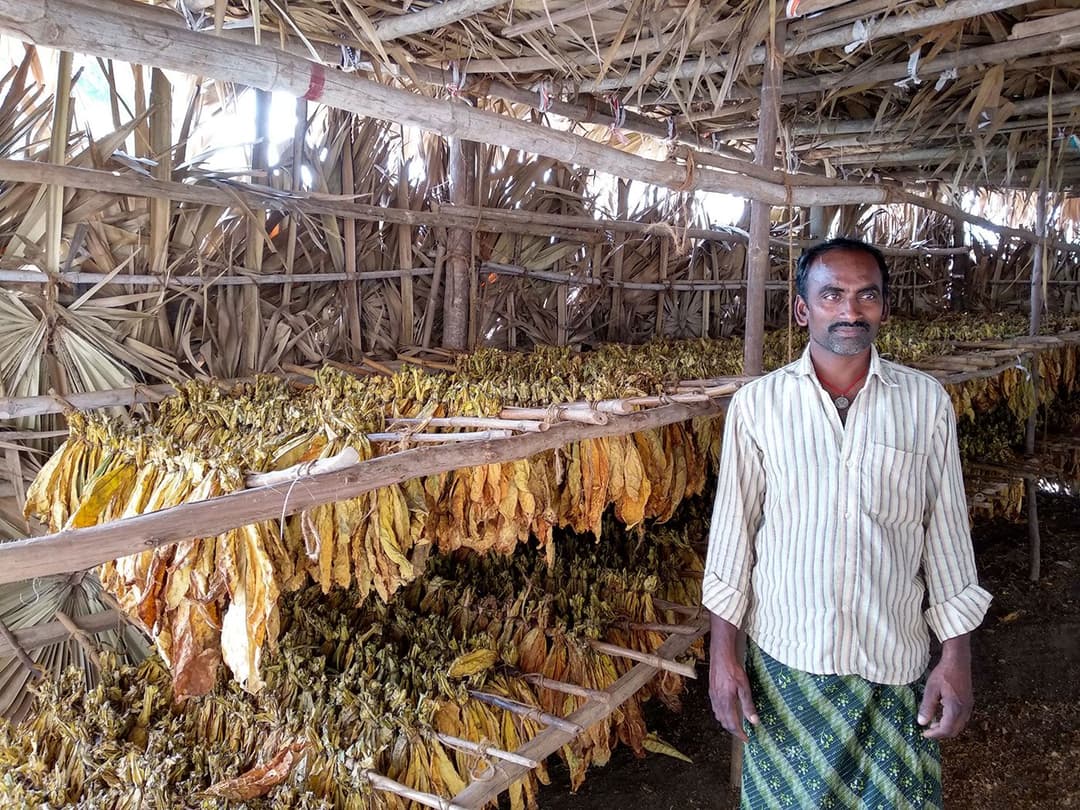
The closure of barns and the shrinking of land under tobacco is also linked to the Framework Convention of Tobacco Control (FCTC) of the World Health Organisation, which aims to reduce tobacco consumption. In 2016, the signatories to the FCTC, including India, agreed to reduce the production of tobacco in a phased manner. So the Tobacco Board has stopped giving licences to new barns – and applications by farmers too are falling because of the decreasing profitability of tobacco.
Srinivasa Rao, 40, a tenant farmer in T. Agraharam, who grows tobacco on nine acres of leased land for an annual fee of Rs. 30,000 per acre, accumulated a Rs. 1.5 lakh debt in just the last agricultural season. “I built a barn at a cost of Rs. 6 lakhs in 2012 and sold it for Rs. 3 lakhs last year,” he says. “No one is even ready to buy barns now. We demand the government give us a compensation of 10 lakhs per barn and we will move out of tobacco cultivation in minutes. In 2010, around 33 muthas – groups of workers – came from outside the village to work in the barns here. This year, hardly 10 muthas are here.”
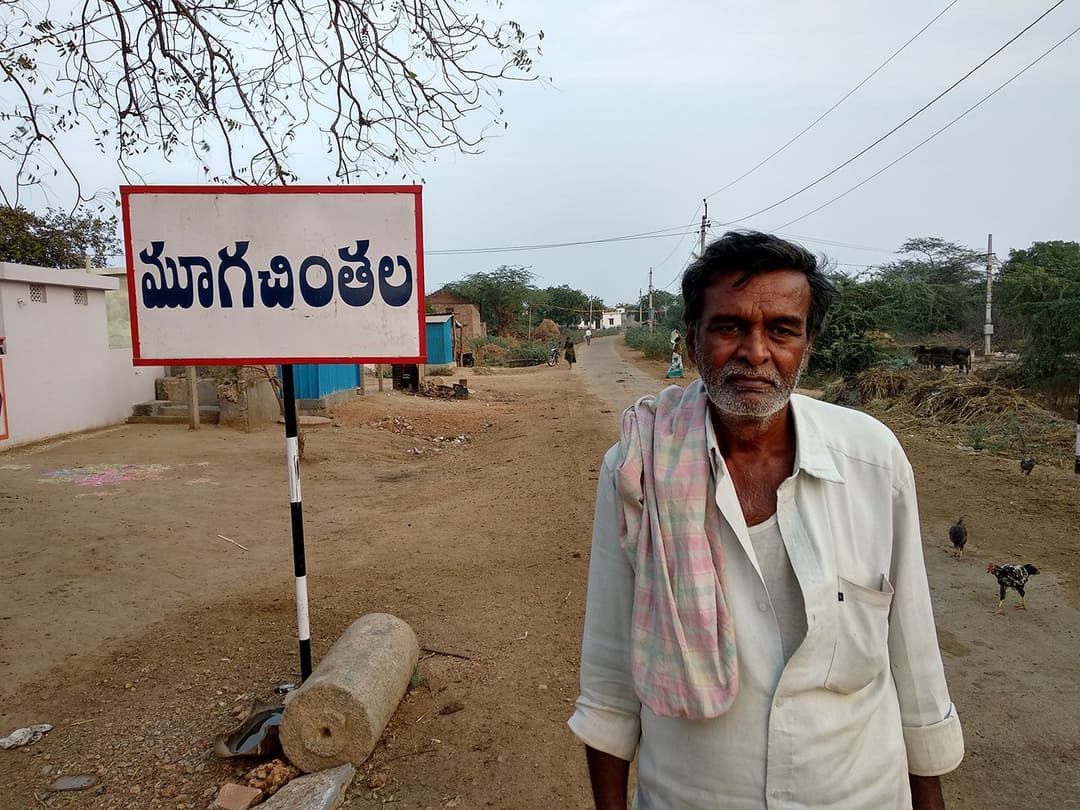
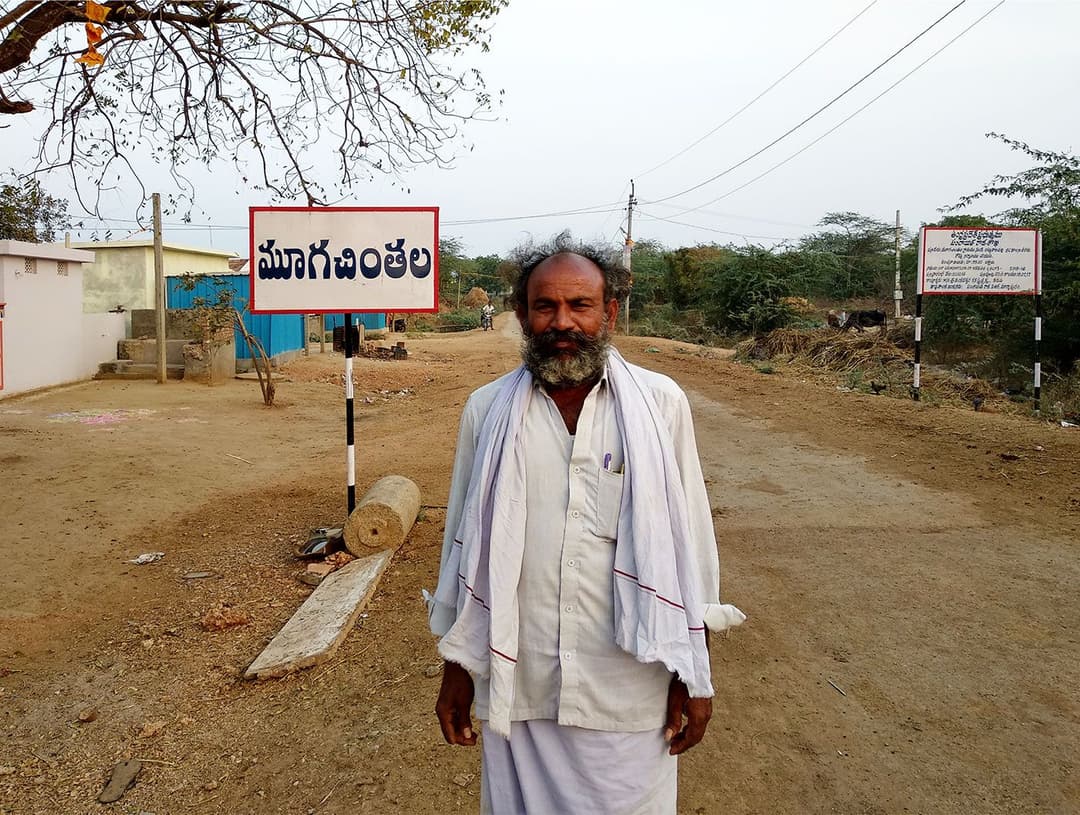
All this is forcing Prakasam’s tobacco farmers to look for alternatives, for profitable crops which will grow with a minimal amount of water. When I visit Muga Chinthala village, Subba Rao is showing a Youtube video about the lacquer crop on his smartphone to other farmers. “We should try this crop in our village,” he says; they nod, asking him to tell them more. “This is a cash crop which is grown in Srikakulam district and parts of Odisha and doesn’t need much of water,” he explains.
Meanwhile, posters featuring farmers saying ‘Protect our livelihood’ have come up on autorickshaws and bus stops in Delhi. They carry the name and logo of the Akhil Bharatiya Paan Vikreta Sangathan, a national body of tobacco sellers. When I ask the farmers about this campaign, they respond with abuses for the tobacco companies. Then Subba Rao adds, “If only the farmers had united and fought for irrigation facilities or against the cigarette companies, we could have been better off.”
Another version of this article, co-authored, was originally published in ‘The Hindu Businessline' on February 2, 2018.