

What would Vishal do today, if he were alive? Perhaps the teenager would fly kites, or play with his friends. Maybe he’d work with his father on the family’s two-acre field or pick up an odd job for a daily wage as he occasionally did. He wanted new clothes, his parents remember. That’s all he had asked for.
But Vishal Khule died last November, just 10 days after Diwali, by consuming a bottle of weedicide that his father had bought a few days earlier to spray on their crops. He was wearing a wrinkled white shirt and blue pants that day, the police report says. Vishal was not yet 16 years old.
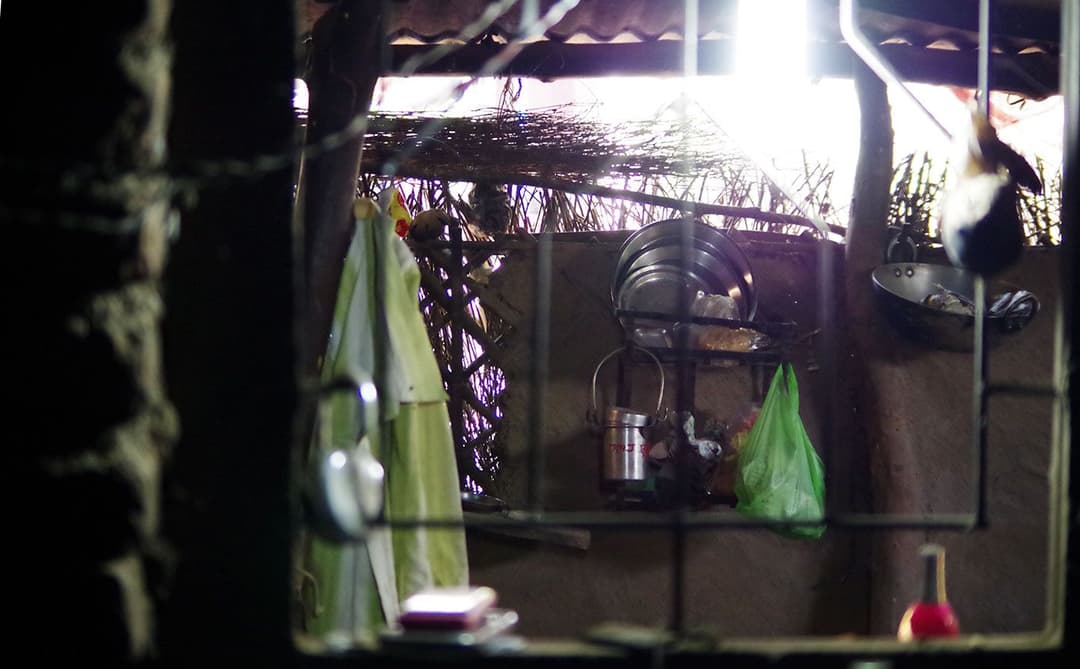
“He collapsed here,” said his father, Vishwanath Khule, pointing to a spot beneath the window of the two-room shanty where the family lives. “His mother was in the adjoining kitchen, making chapatis . I was out there,” he added, gesturing toward the front yard. When her son collapsed with a thump, Sheela Khule rushed out to find Vishal lying on the floor, “a white fluid oozing out of his mouth.” The can of weedicide lay by his side, empty. Vishal died before reaching the hospital.
“This is the darkest period of our life,” Vishwanath said.
Dadham, with a population of 1,500, is among the poorest villages in this region. It is about 25 kilometres from Akola, a major city in western Vidarbha, Maharashtra’s cotton- and soybean-growing belt, which has been in the news since the mid-1990s for a continuing spell of farmers’ suicides. The region is reeling under successive years of drought and an agrarian crisis that has only gone from bad to worse.
While the unabated spell of farmers’ suicides in rural Vidarbha and Marathwada, Maharashtra’s eastern and central regions, has been reported on and acknowledged by the government, a related tragedy has gone all but unnoticed: suicides by the young children of debt-ridden farmers. (Farmers’ children have taken their own lives in the past, but newspaper reports indicate that the incidence has spiked in the past two years.)
While there is no specific data on suicides by children (under 18; or by youth under 20), in India as a result of agrarian distress, several studies and reports – from the 2005 door-to-door study commissioned by the Maharashtra government to subsequent studies on farm distress and suicides by the Tata Institute of Social Sciences and the Indira Gandhi Institute of Development Research – have pointed to the impact of debt and distress on children in peasant households. Many adolescent children of farmers inherit their parents’ debts and are forced to take on adult responsibilities, dropping out of school, tilling the fields, succumbing to depression, and for girls, being married off early so the family has one less mouth to feed.