
“I don’t have much patience for studying,” Partha Pratim Baruah tells me as we stroll down the road in Garamur, a small town in Majuli, on a pleasant afternoon in November. “I know I will never be able to get a job by studying,” he adds. The 16-year-old is one of the young gayan-bayans from the district’s Garamur Saru Satra.
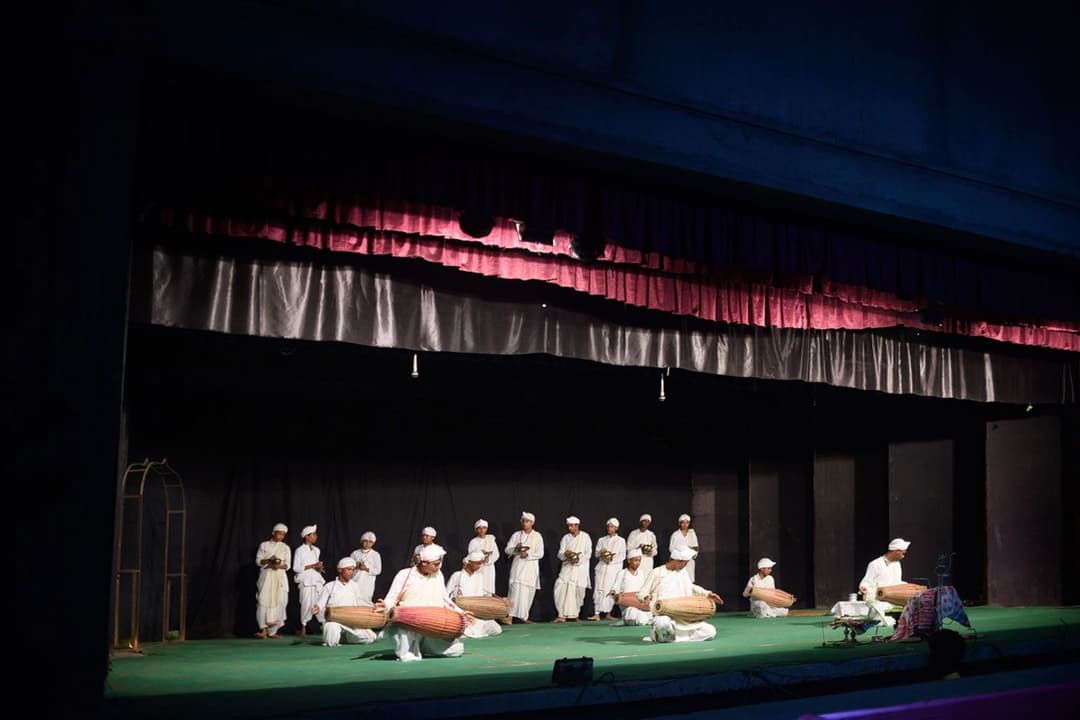
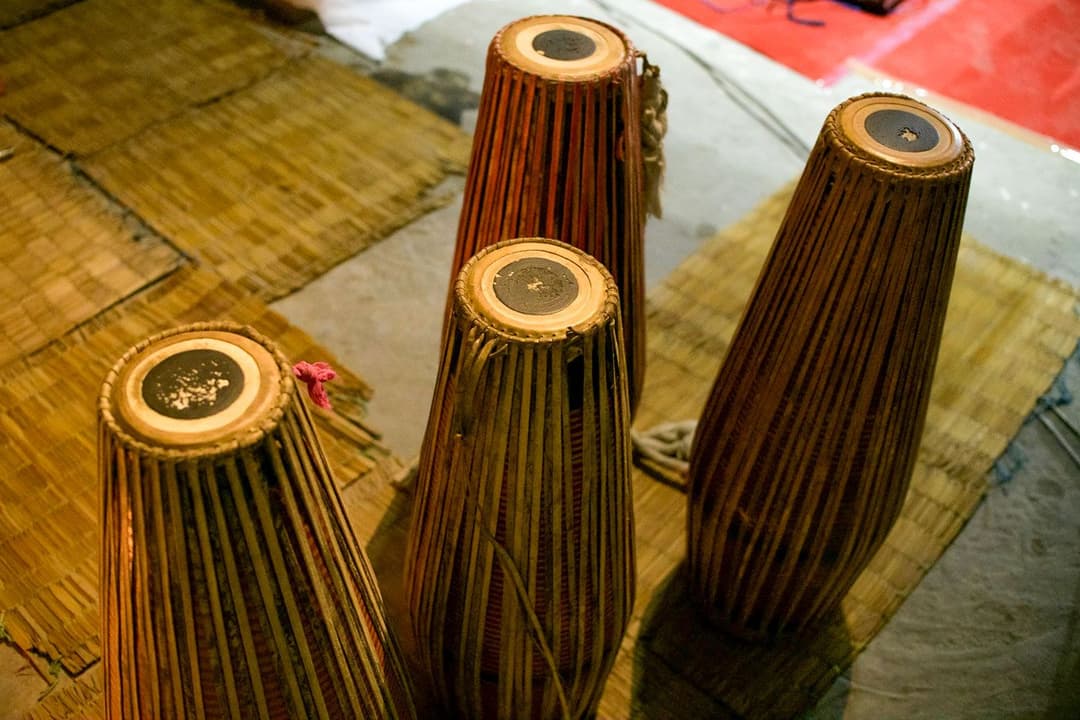
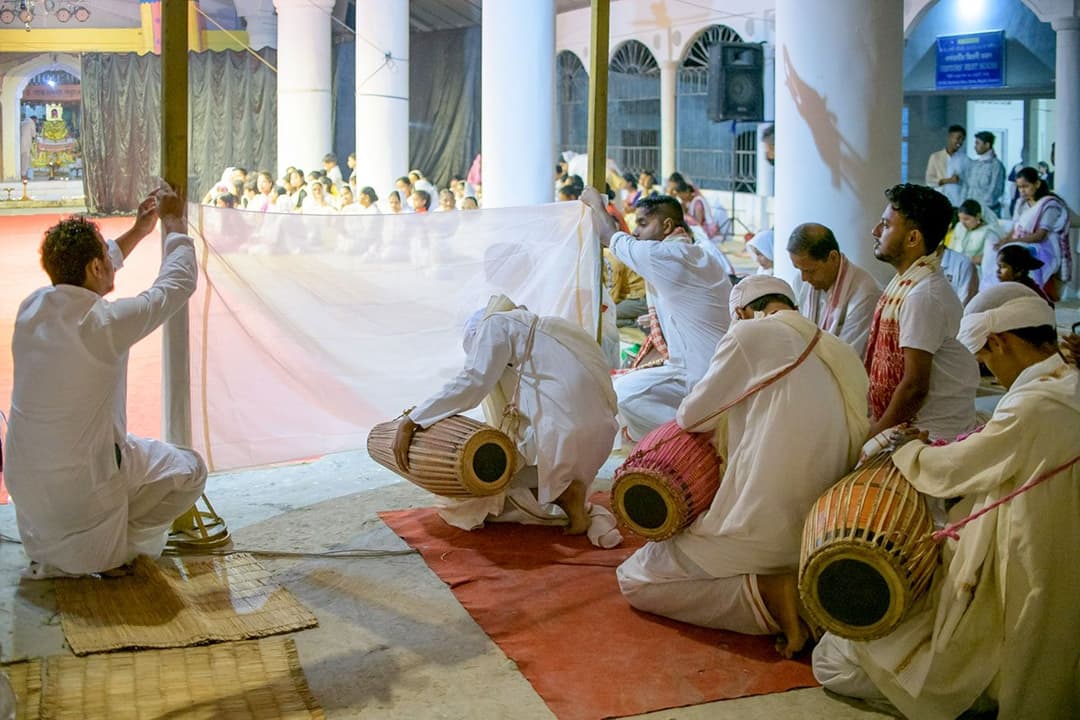
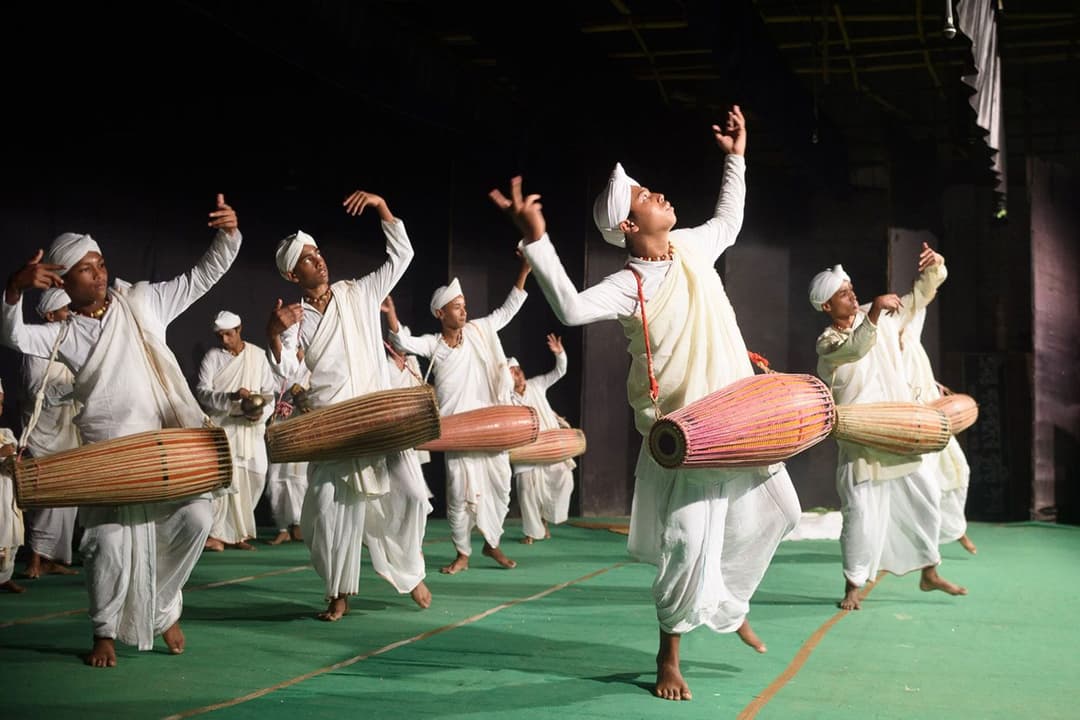
An important aspect of sattriya culture, Gayan-Bayan is a religious folk performance primarily practiced in the satras (Vaishnavite monasteries) of Assam. The singers performing are called gayans who also play the taal (cymbals) whereas the instrument players, who play khol drums and the flute, are termed bayan. In Majuli, being a gayan or bayan is not a profession but a tradition people take pride in and consider part of their identity.
“If I cannot secure a job after school, if it is not in my fate, then what will I do?” asks Partha in a matter-of-fact tone. He wants to pursue music professionally after his Class 12 exam. His older sister is already a music teacher in a village in Uttar Pradesh.
“My parents have also supported the idea [of enrolling in a music school in Guwahati],” he says. “That support is main. Without it, how will I be able to pursue music?” His father, the owner of a small business selling rice and firewood, has agreed to the idea but his mother is not quite happy about it. She doesn’t like the idea of Partha going far from home for his studies.
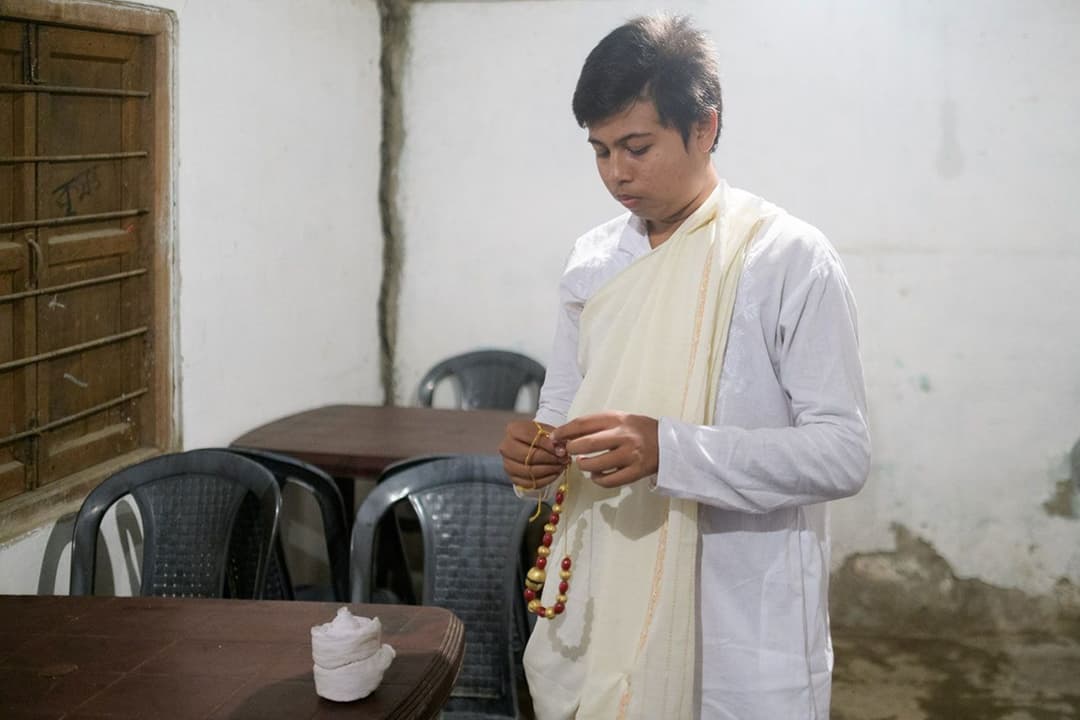
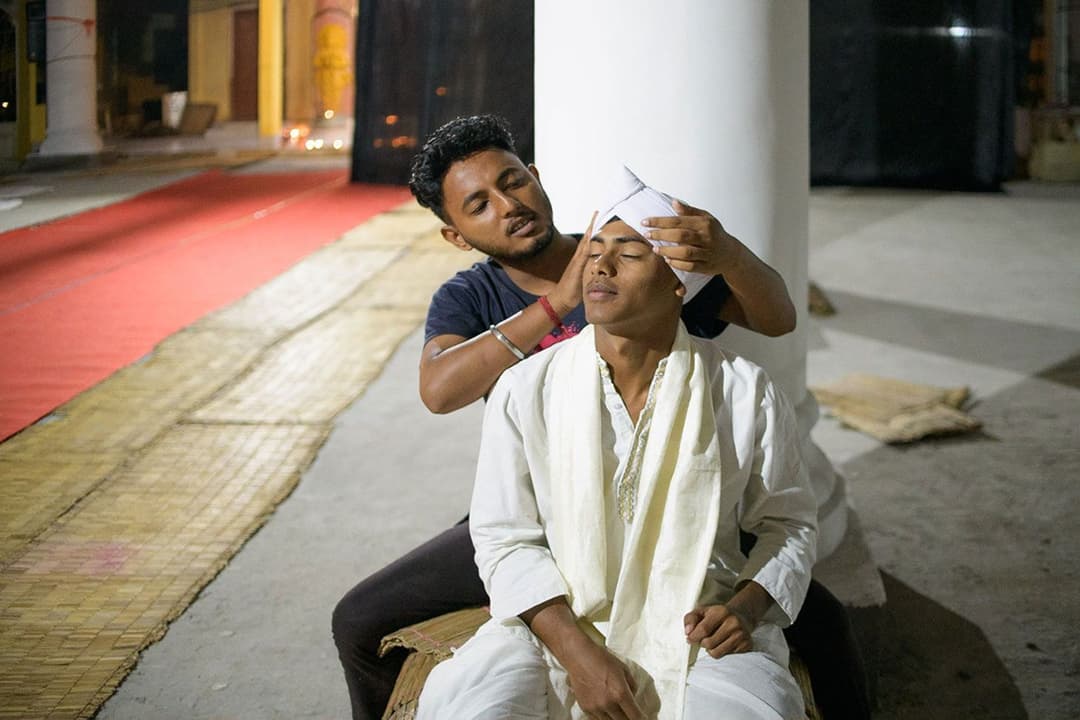
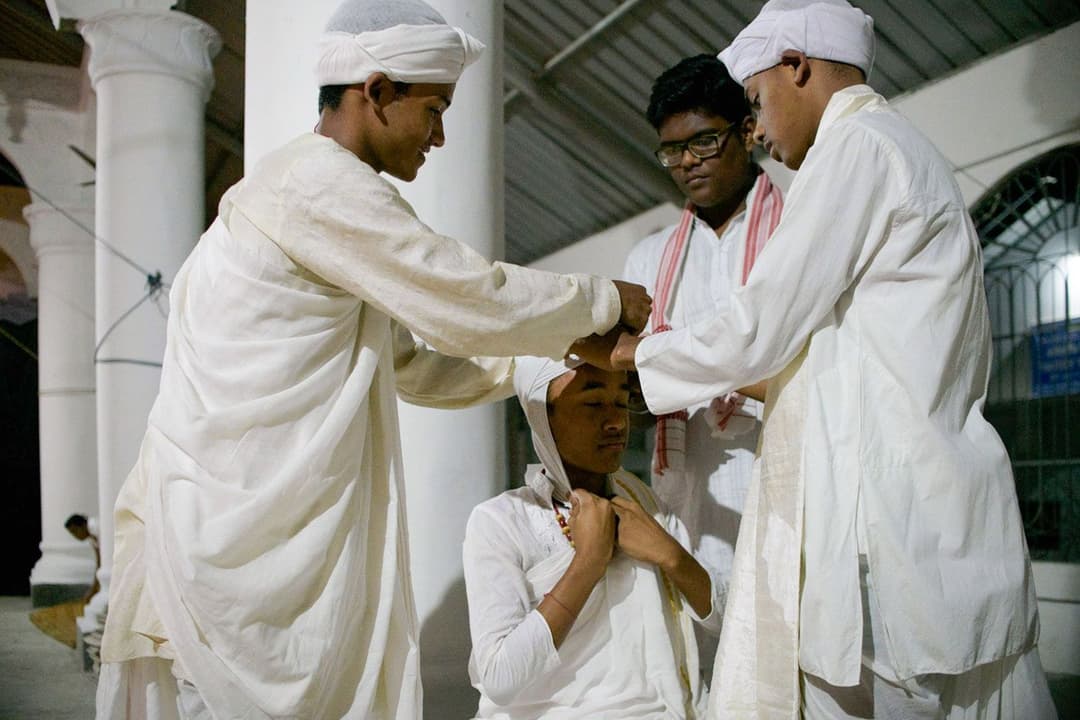
When it’s performance time, the artiste Partha dresses in pristine white kurtas, dhotis and headgear called paag, and ties a cloth called seleng across the body. The performers also wear a string of motamoni beads and a tilak of sandalwood paste adorns their foreheads.
Partha is just one of the many young artists I’m interviewing during the run-up to one of their performances. Backstage, they appear confident as they help one another in tying the paag and fixing the seleng using pins.