As a child, Rajitha would peep in through the windows and watch her father and grandfather train young boys, wondering why she could not join them. The puppets, in particular, caught the young girl’s eyes, and her ears were fond of the peculiar rhythm of the verses.
“My grandfather noticed my fascination with puppetry,” says the 33-year-old Rajitha, “and offered to teach me the verses.”
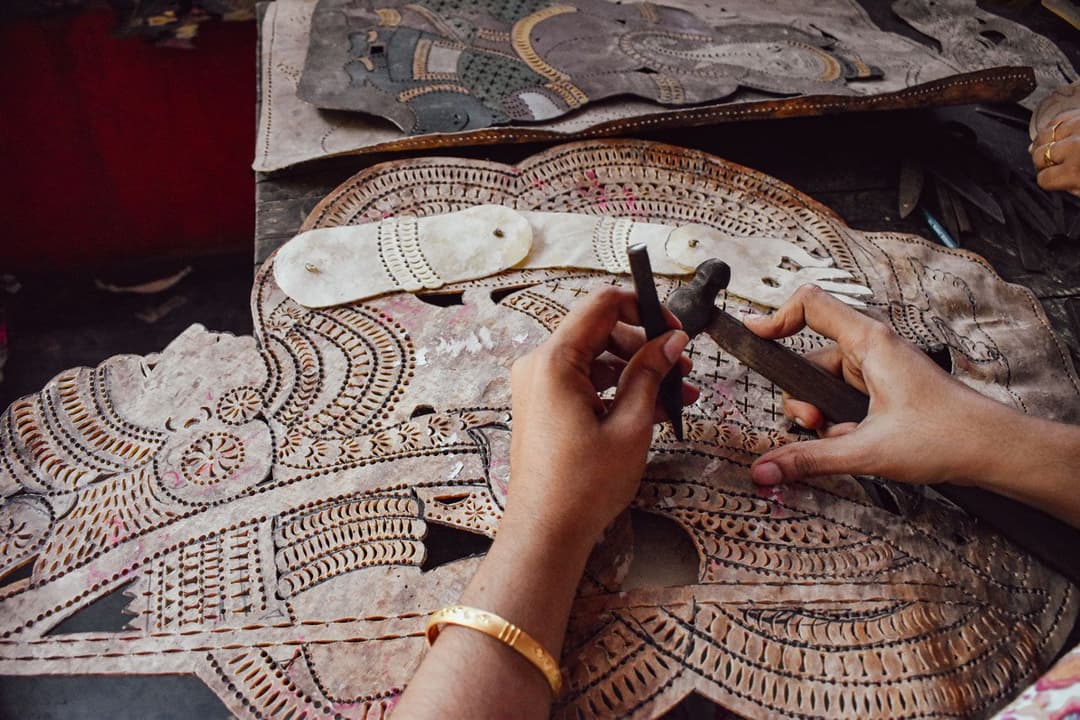
Rajitha Pulavar is sitting on a wooden bench in her family’s studio in Shornaur, carving facial features on a tholpavakoothu puppet. On a desk in front of her are various iron instruments such as awls, chisels and hammers.
It is noon and there is a lull in the studio. The only sound comes from the fan whirring next to Rajitha in the shed where the puppets are made. Outside, on an open terrace, sheets of leather have been left to cure in the heat before they can be carved into puppets.
“These are puppets for the shows we have on modern themes,” says Rajitha, pointing to the one she is working on. Tholpavakoothu puppetry is a traditional art form from India’s Malabar coast originally performed in temple premises during the annual festival of goddess Bhadrakali.