“The names we Rabaris have for stars are different from those you have,” observes Mashrubhai. “Tumhara Dhruv Tara, hamara Parodiya [Your polestar is our Parodiya].”
We are at his dera, a temporary settlement in Denoda village of Wardha district. It is 60 kilometres from Nagpur, and 1,300 km from Kachchh, the land he calls home.
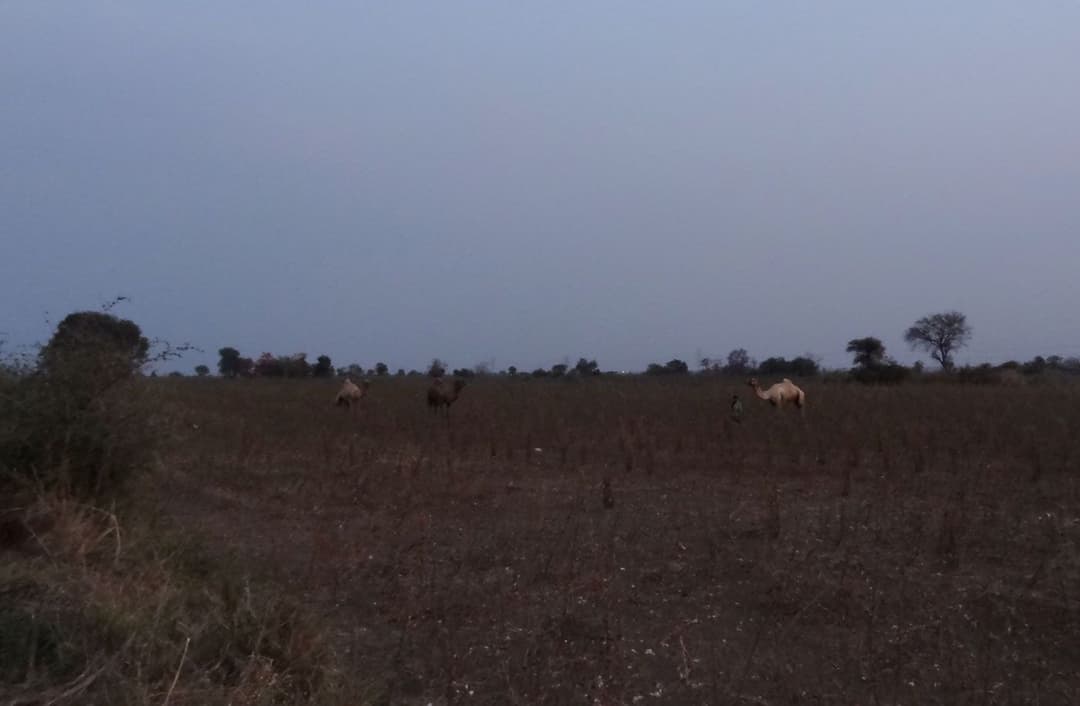
Dusk is falling on this Rabari dera. It’s early March, a season of transition from winter to summer when the orange hues stay a little longer in the evening sky. The fiery blooms of the flame of the forest, palash or kesudo (Beautea Monosperma), adorn the earth in shades of saffron. Holi, the festival of colours, is around the corner.
Mashru mama, as he is fondly known among his folks, and I are looking up at the clear evening sky of this Vidarbha region. We are seated on his cot in the middle of a cotton field, talking about everything under the sun: stars, constellations, changing climate and ecology, myriad moods of his people and animals, the life of a nomad – rugged, tough, always on the move, legends and folk-stories that he knows, and more.
The stars hold a special significance among Rabaris as they rely on them to guide their routes, especially at night. “The seven-star constellation, Saptarshi is Haran [deer] for us,” he explains. “The seven stars fade away in the wee hours of the day, but while it is still dark, they announce the arrival of a new dawn, new challenges, and many possibilities,” he says philosophically.