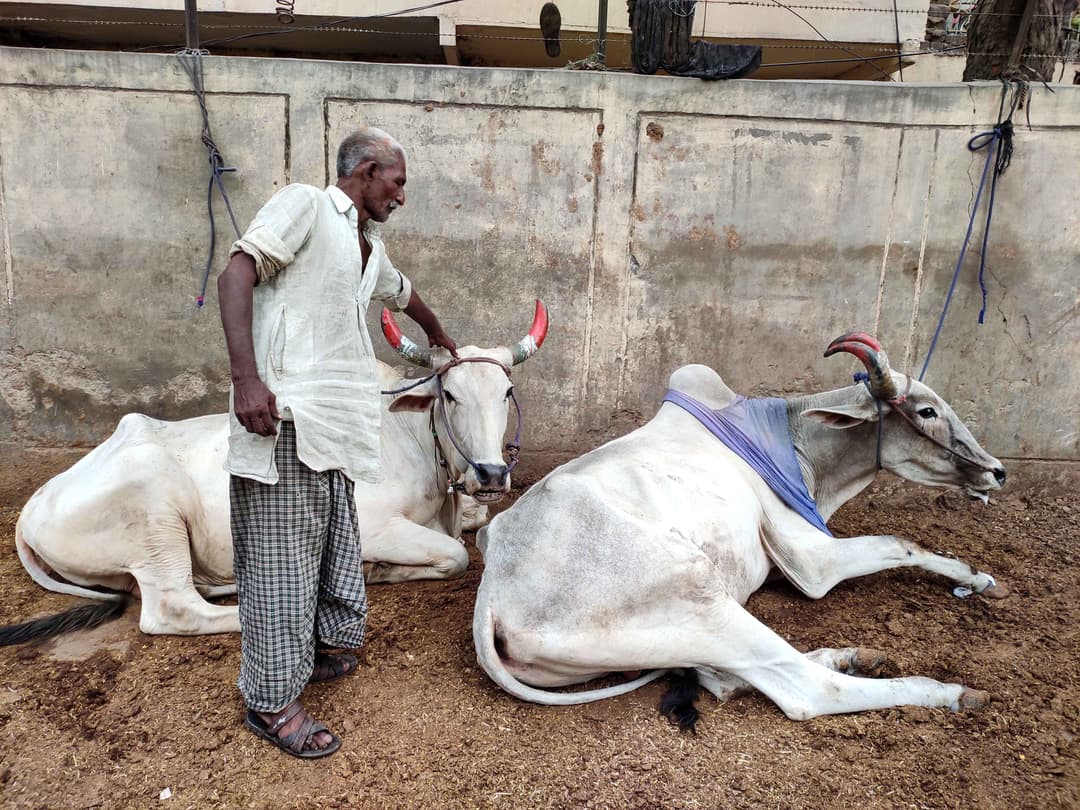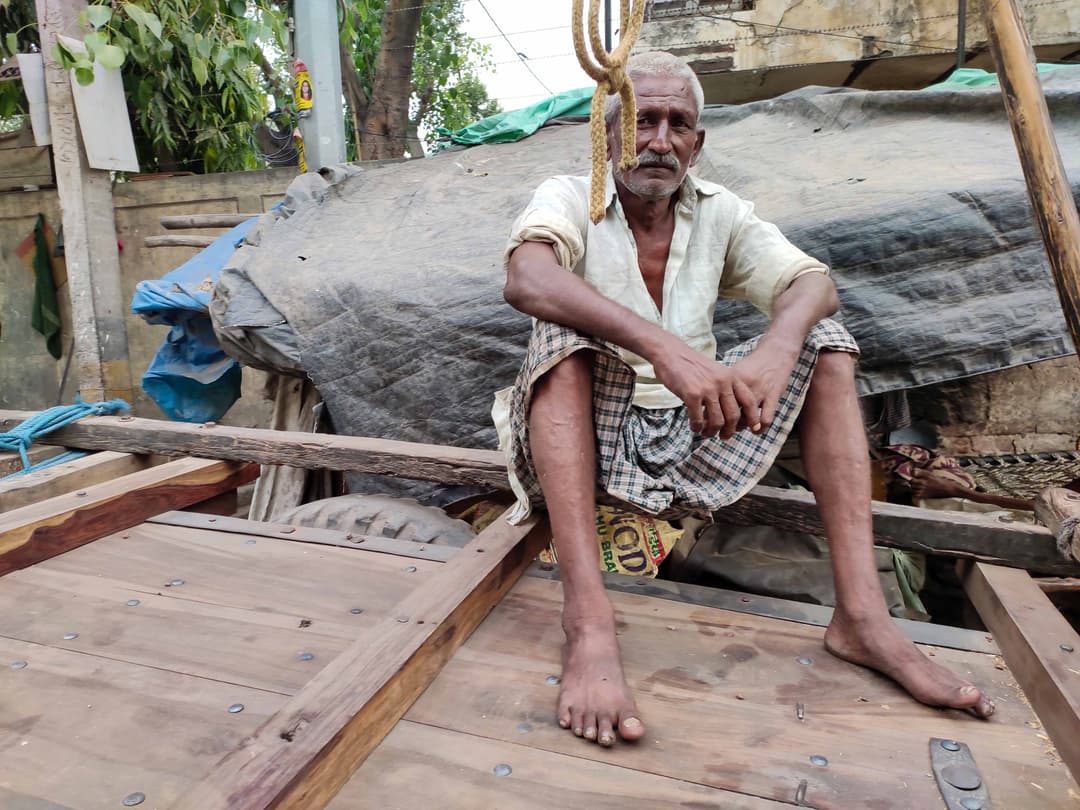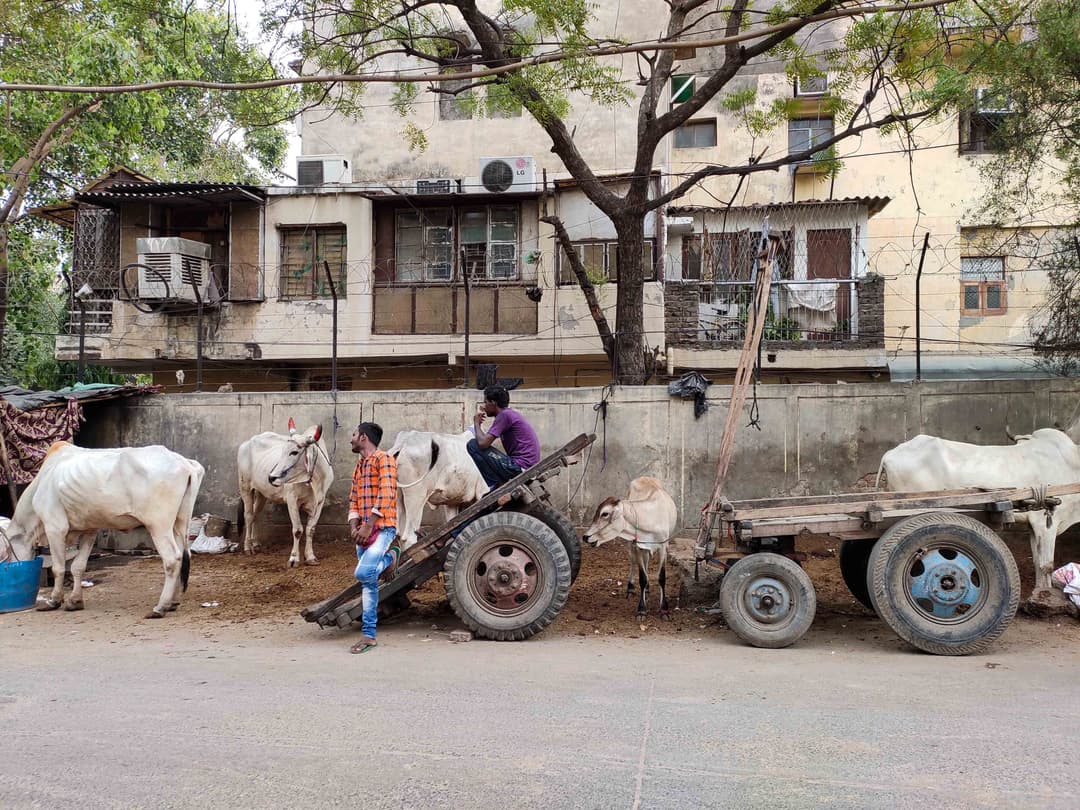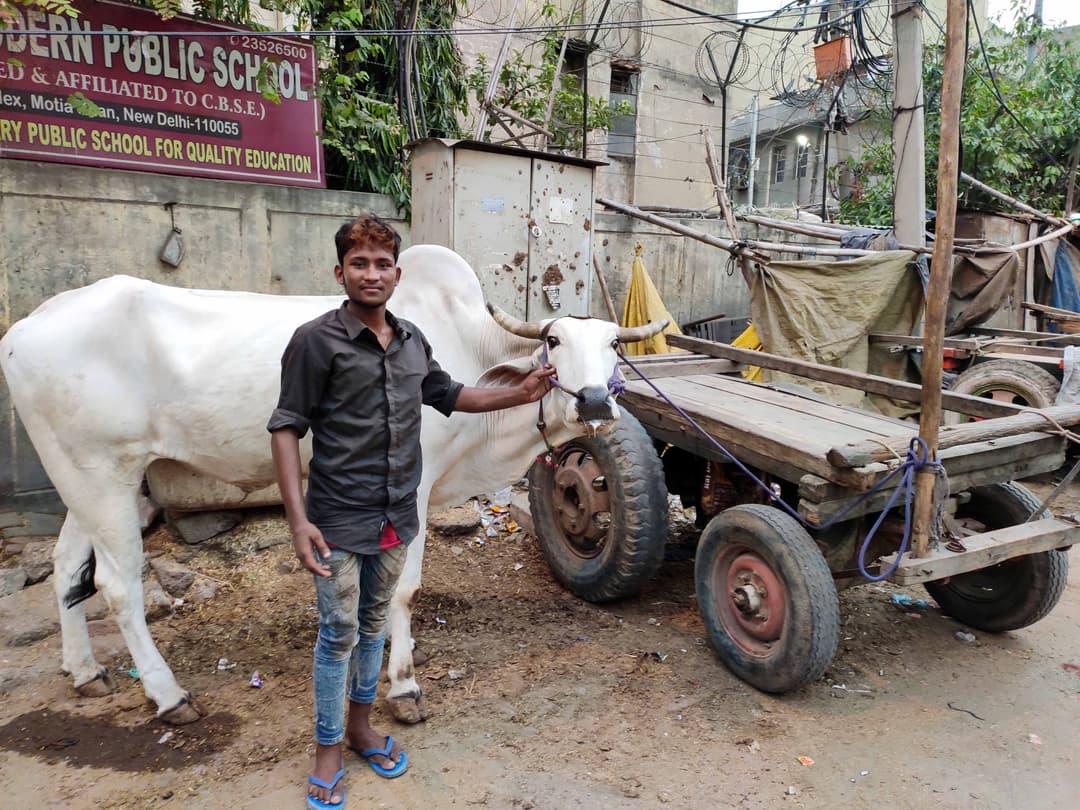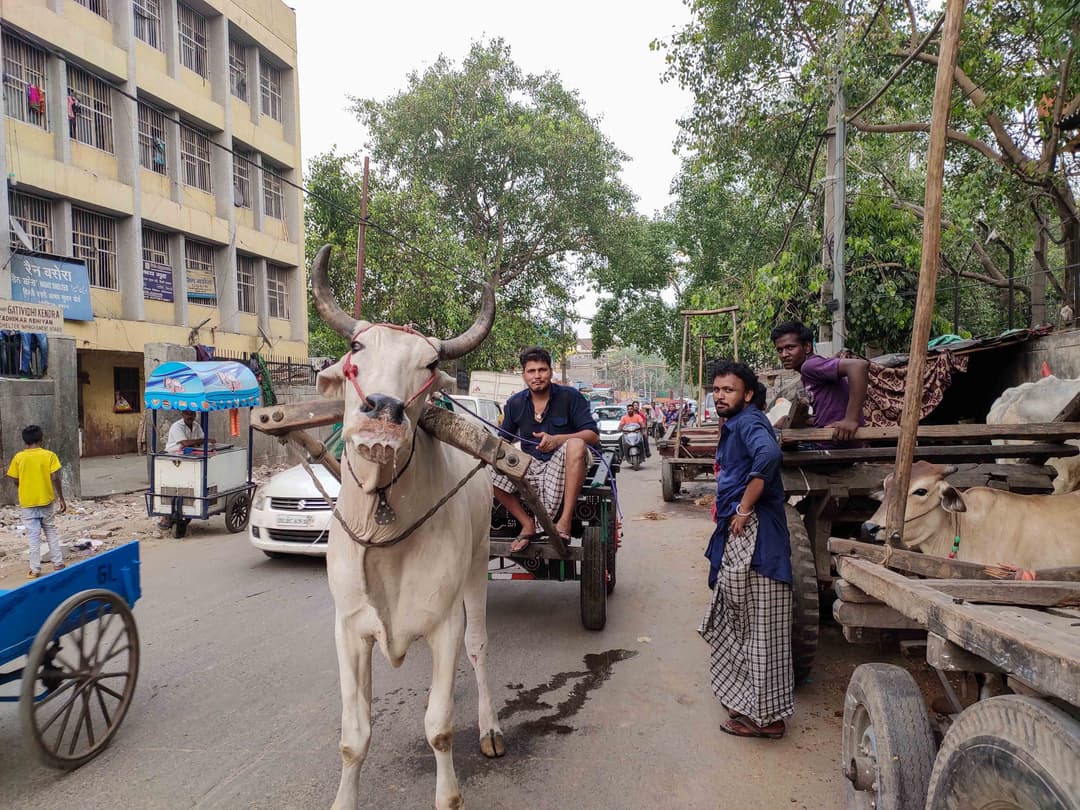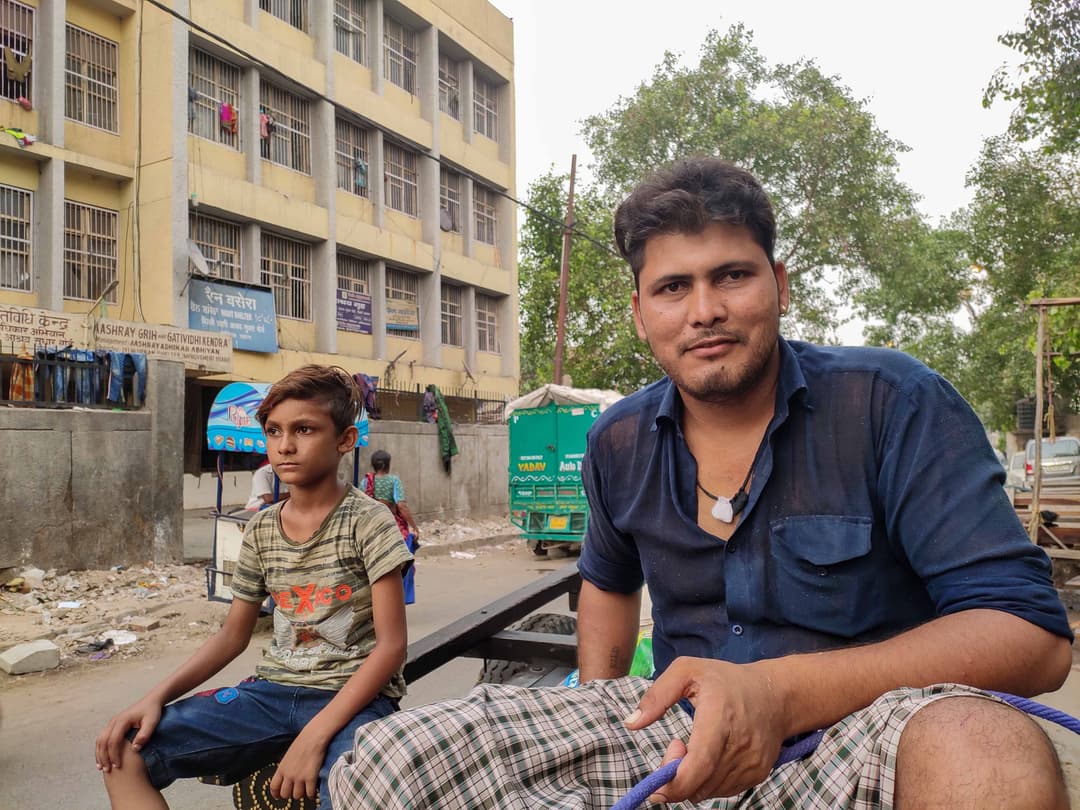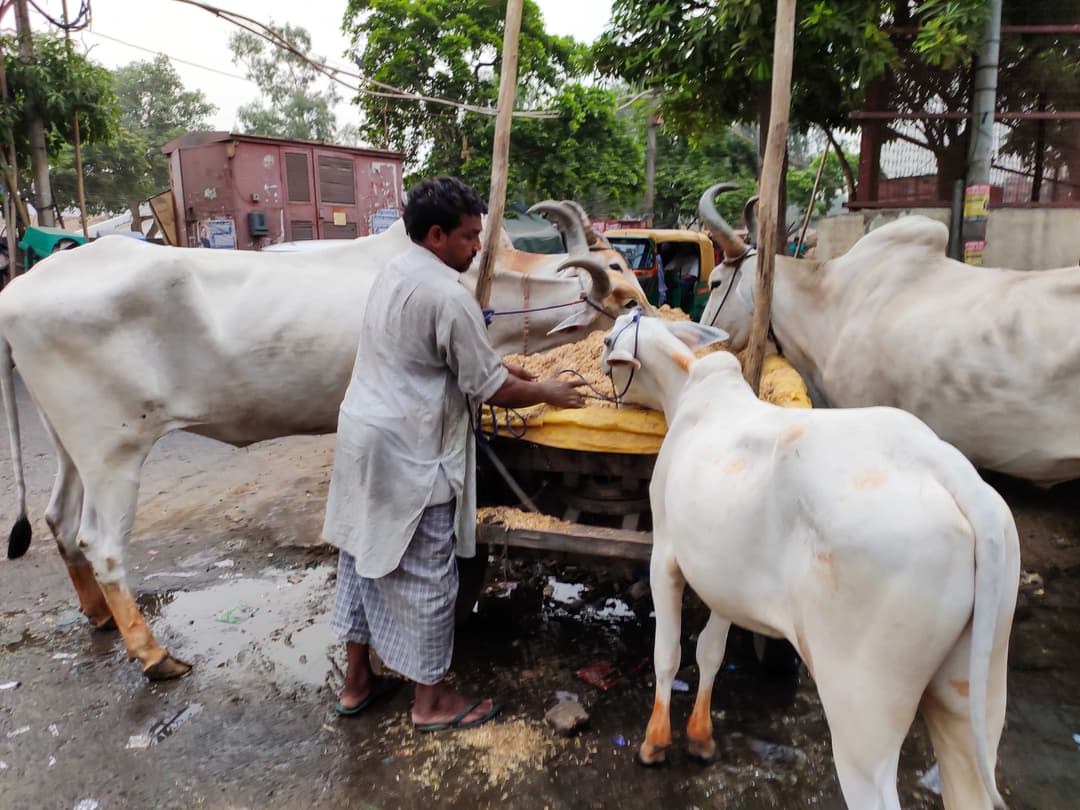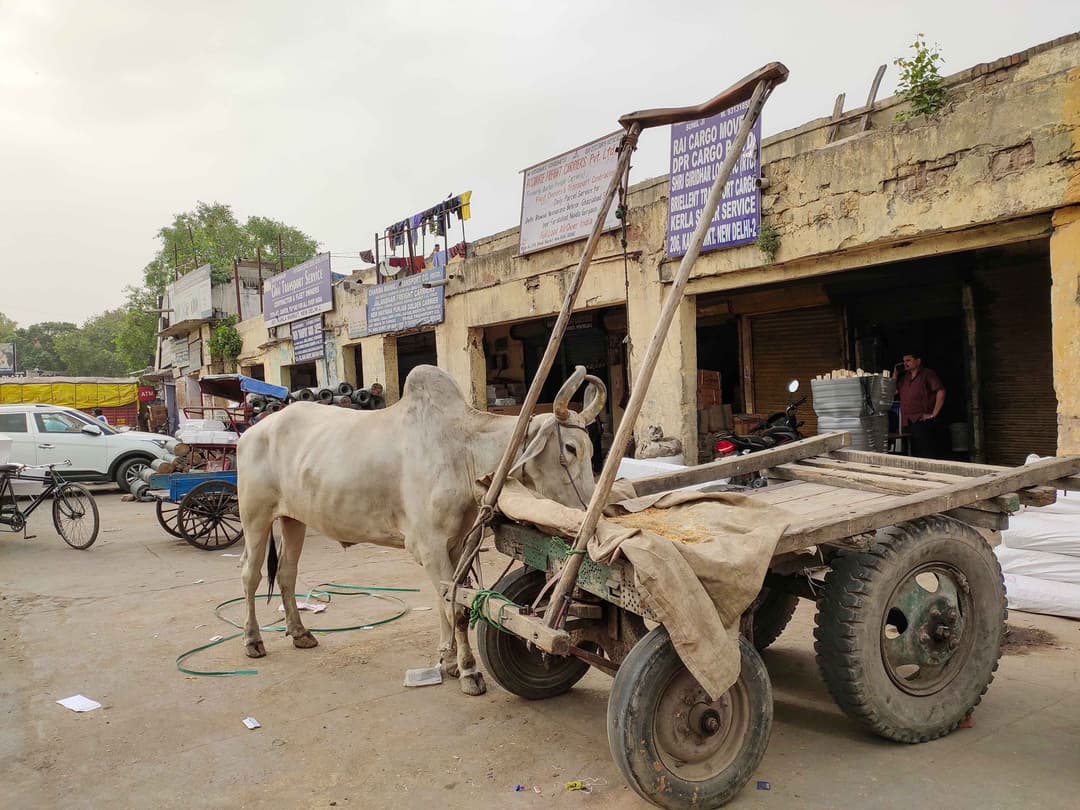

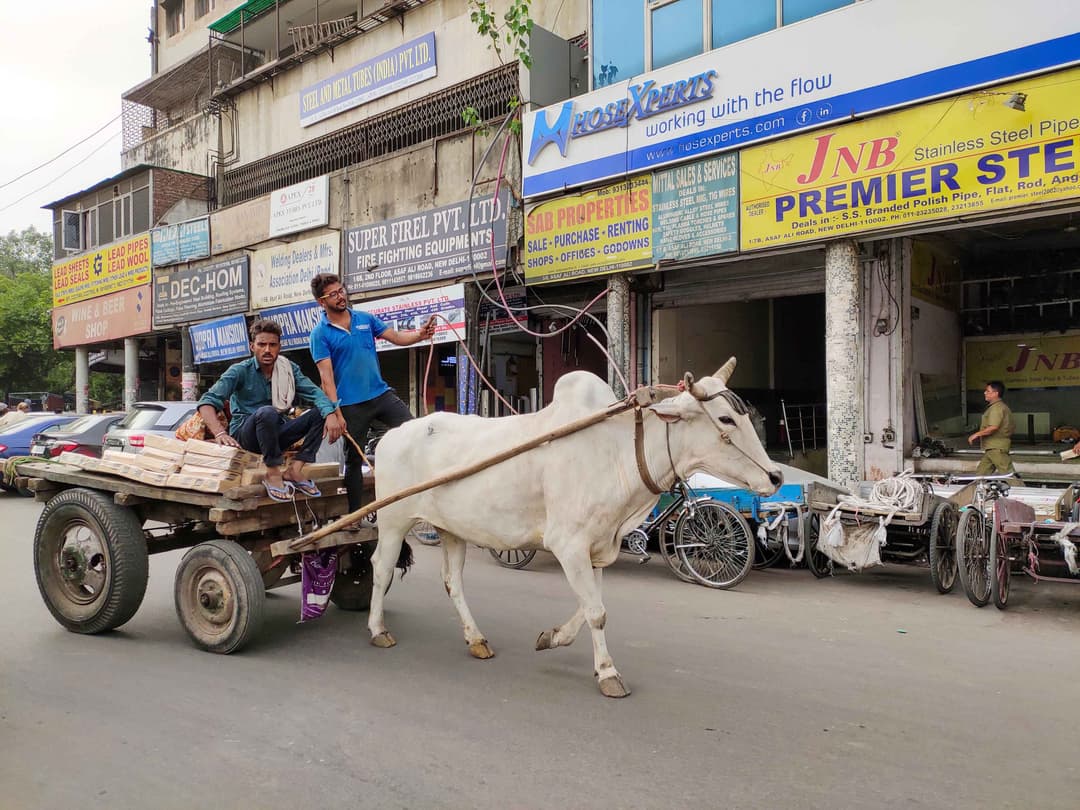
It’s past noon when Vikash Yadav and Laxman Singh arrive at Kamla Market, riding on their bullock carts. Almost every day, at that bustling transport hub close to New Delhi railway station, they deliver various goods, usually ferried from Pratap Nagar in north-central Delhi, not far from the Sabzi Mandi railway station.
In both areas, around six kilometres apart, transporters who bring cargo on trains and trucks hire the bailgadis for ferrying the goods across shorter distances – items such as cycle parts from Ludhiana, shoes from Agra, wheat from Punjab and Madhya Pradesh, motor parts from south India.
Loading and unloading is included in the service provided by the bullock cart drivers. "A tempo charges Rs. 1,000 for each trip. A bullock cart is cheaper, or else no one would ask for it. We make two trips daily and earn around Rs. 800-900 a day,” says 23-year-old Vikash.
The transporters also hire the bailgadis to distribute consignments from their godowns to shops in nearby markets. And many shopkeepers engage the bailgadis to send their merchandise to other parts of the city.
Though Delhi Traffic Police rules restrict the movement of bullock carts only to some areas and within regulated hours, Laxman, 27, says there are no other stringent rules. “We don't have to ask for permits and we don't pay any challan [ticketed fine] to the traffic police. That's why we use it.”