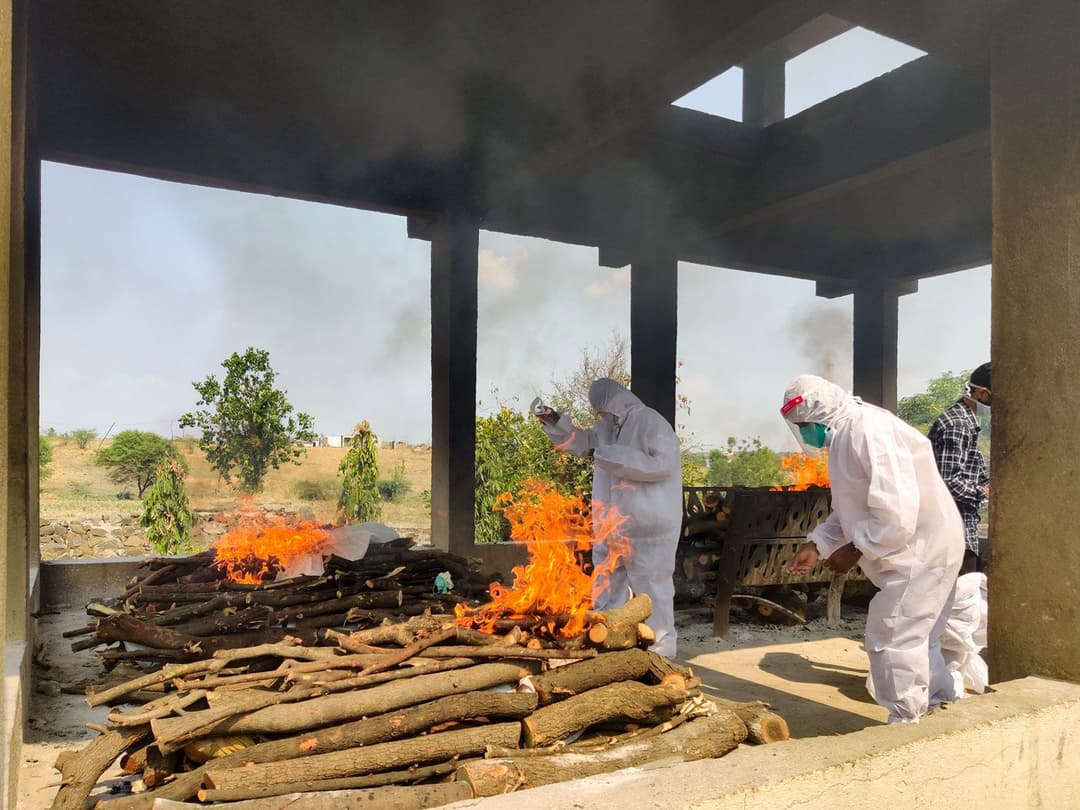


The request wasn’t unusual for Sandipan Walve. “Please drape this over the body before setting the pyre on fire,” the relatives of the dead woman told him, and handed over a glittering green saree. He did as he was told.
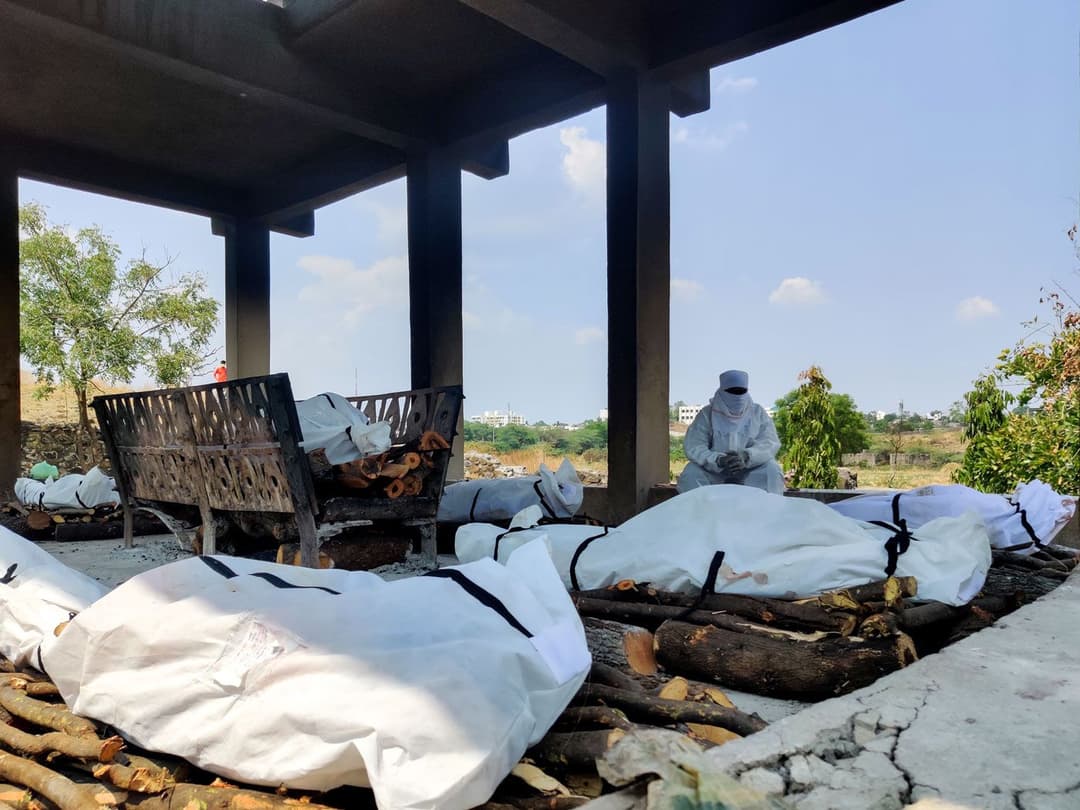
Amidst the 15 dead bodies lined up at the crematorium in Maharashtra’s Osmanabad town, Walve located the one he was asked to attend to. Wearing his PPE kit, he placed the saree over the white airtight body-bag as meticulously as he could with gloves on. “Her relatives were scared of getting infected by the virus,” he said.
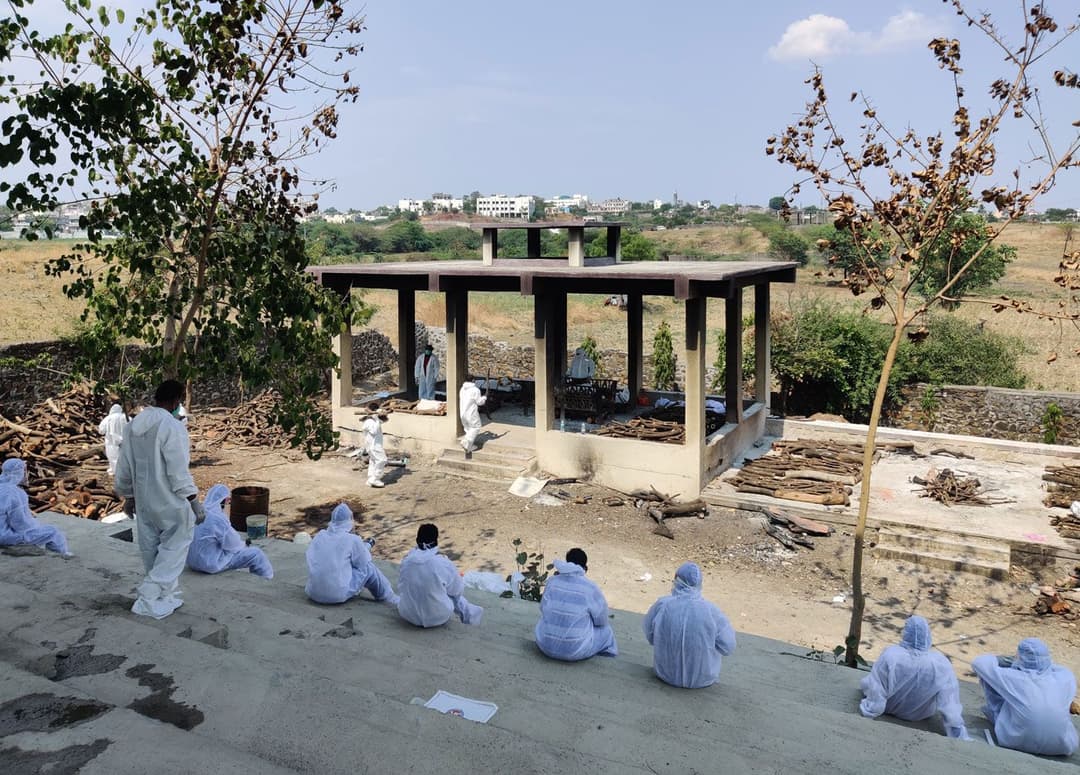
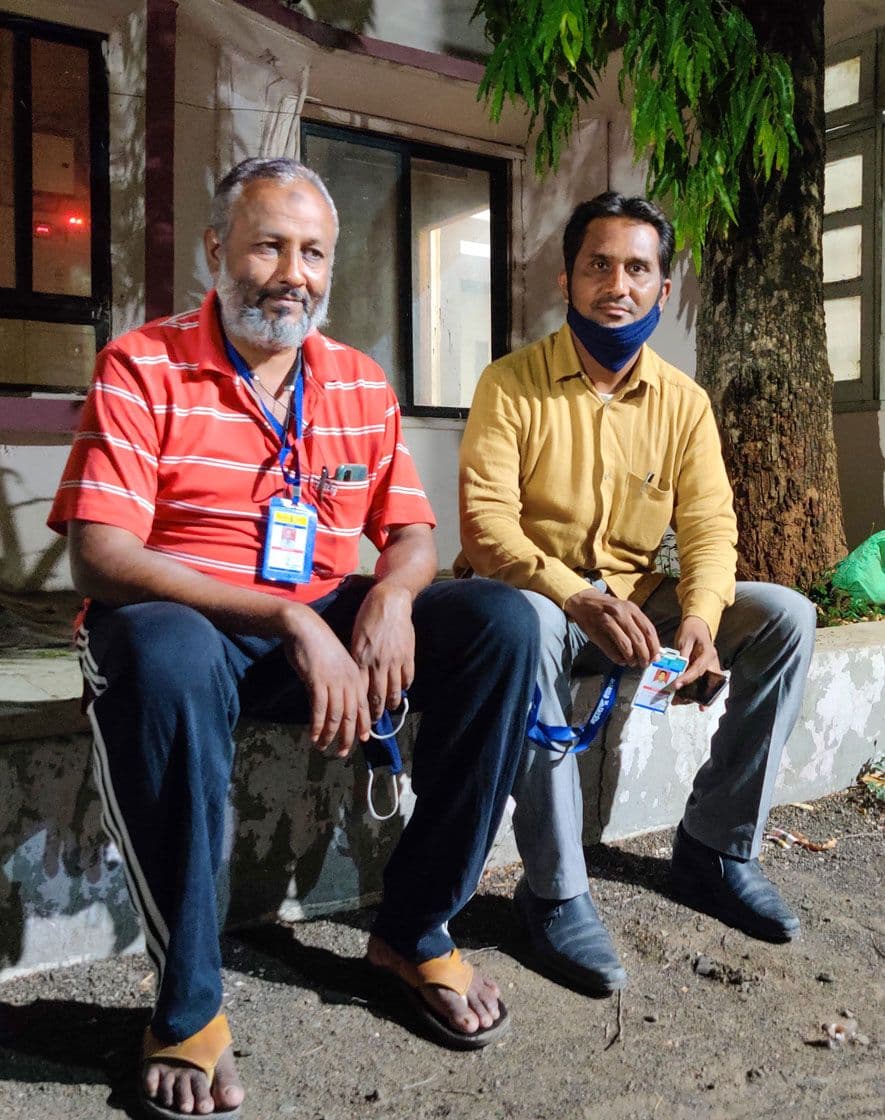
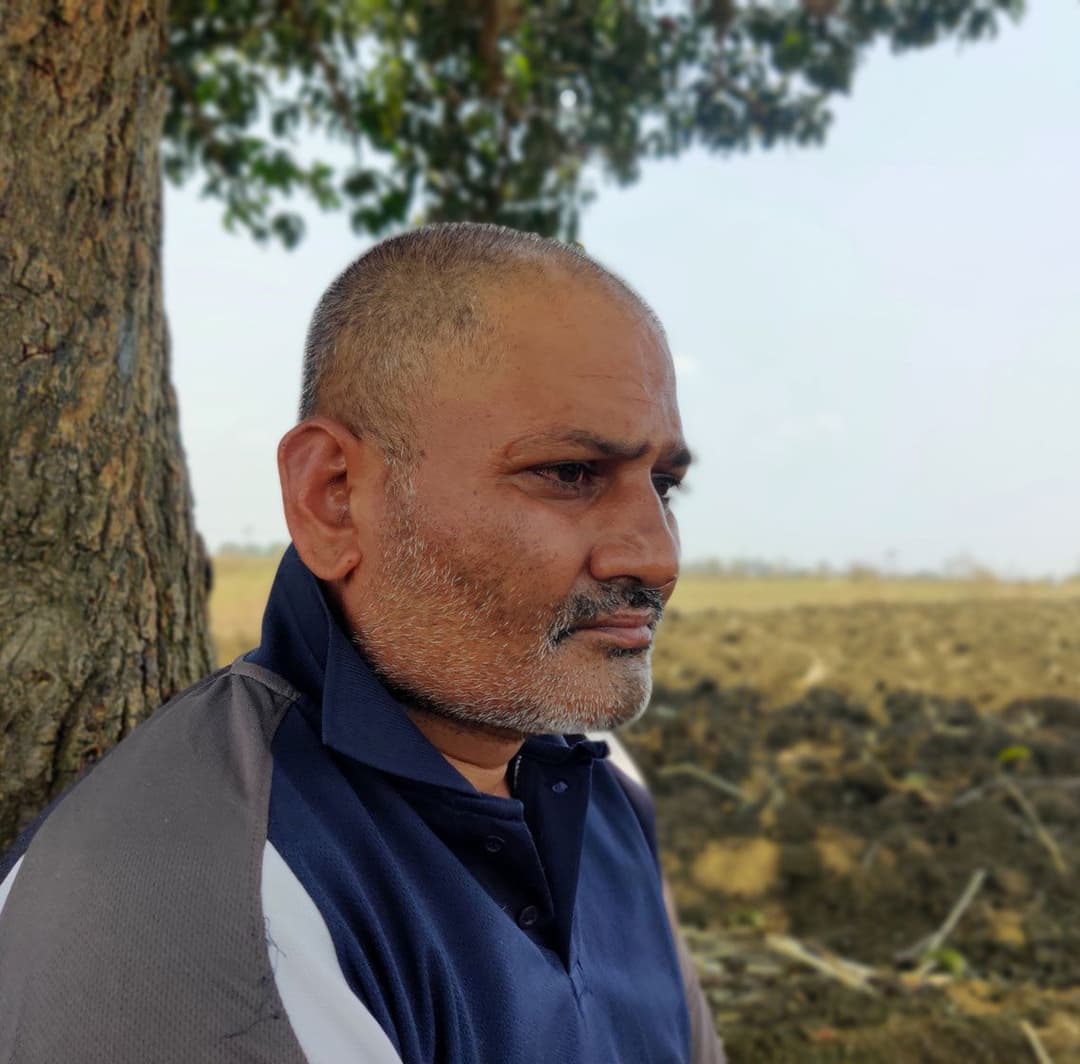
A worker with the municipal council of Osmanabad, 45-year-old Walve has been disposing of the bodies of Covid-19 patients since the pandemic began in India in March 2020. He has carried out more than 100 funerals since then. The second wave has penetrated rural regions more severely than the first one, and since the start of April this year, he says, about 15-20 bodies are brought to the crematorium every day. This puts pressure on Walve and his co-workers, and sparks serious panic among people.
“The fear of the virus is forcing some to skip the funerals of their family members,” says Walve. “So they ask us to conduct the basic rituals for the deceased person before we light the fire. These are tough times. To see the dead burn without their family around is heart-breaking. But there’s consolation in reminding yourself that the dead aren’t aware of the funerals they get.”