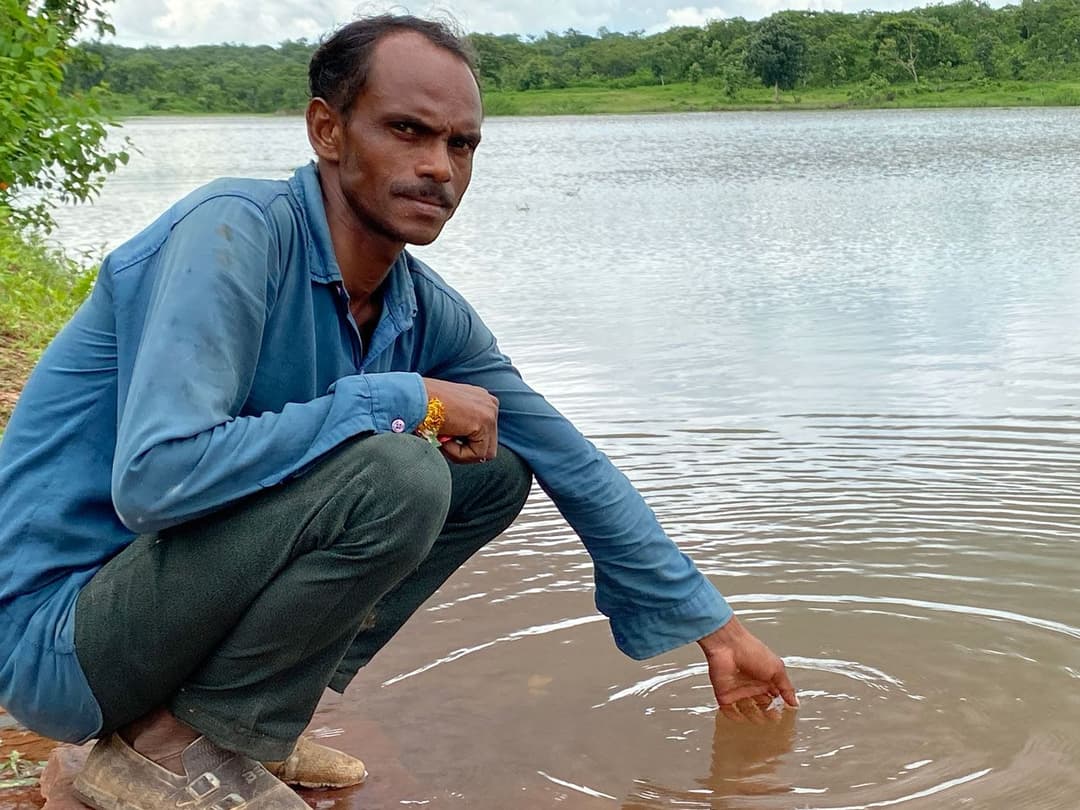

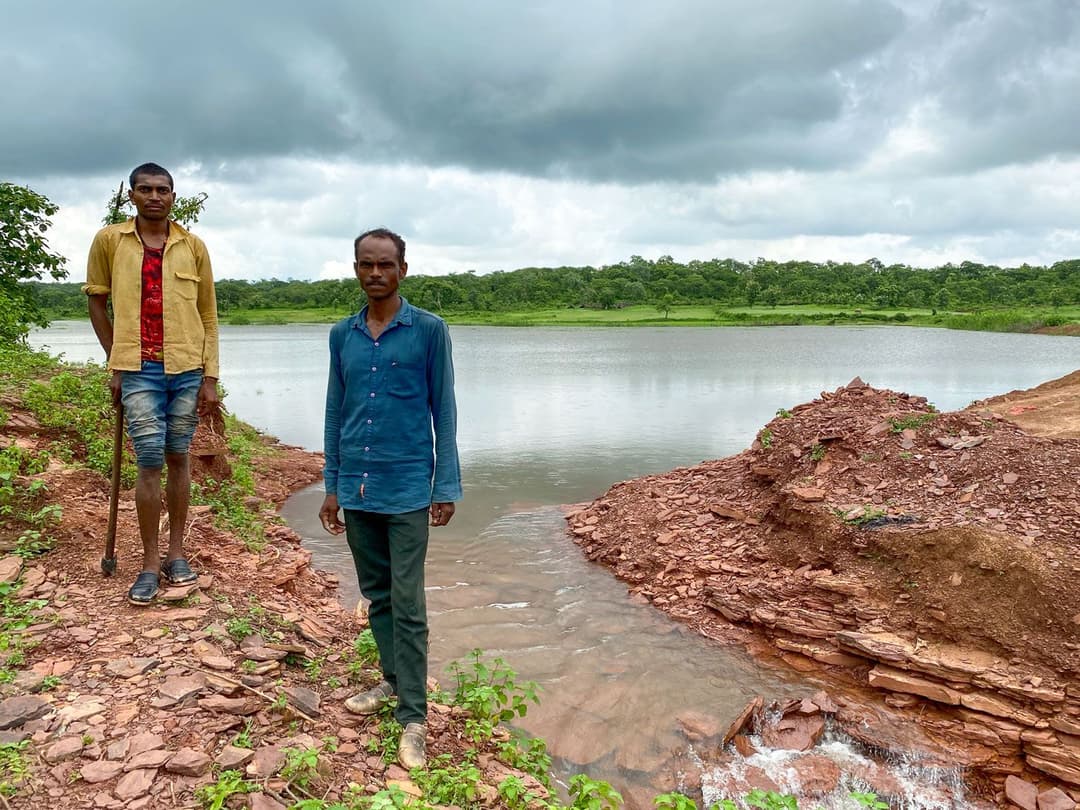
It’s been raining in Panna district through August and the Kaithabaro dam is filled to capacity. It’s a run-off from the hills located in the nearby Panna Tiger Reserve (PTR).
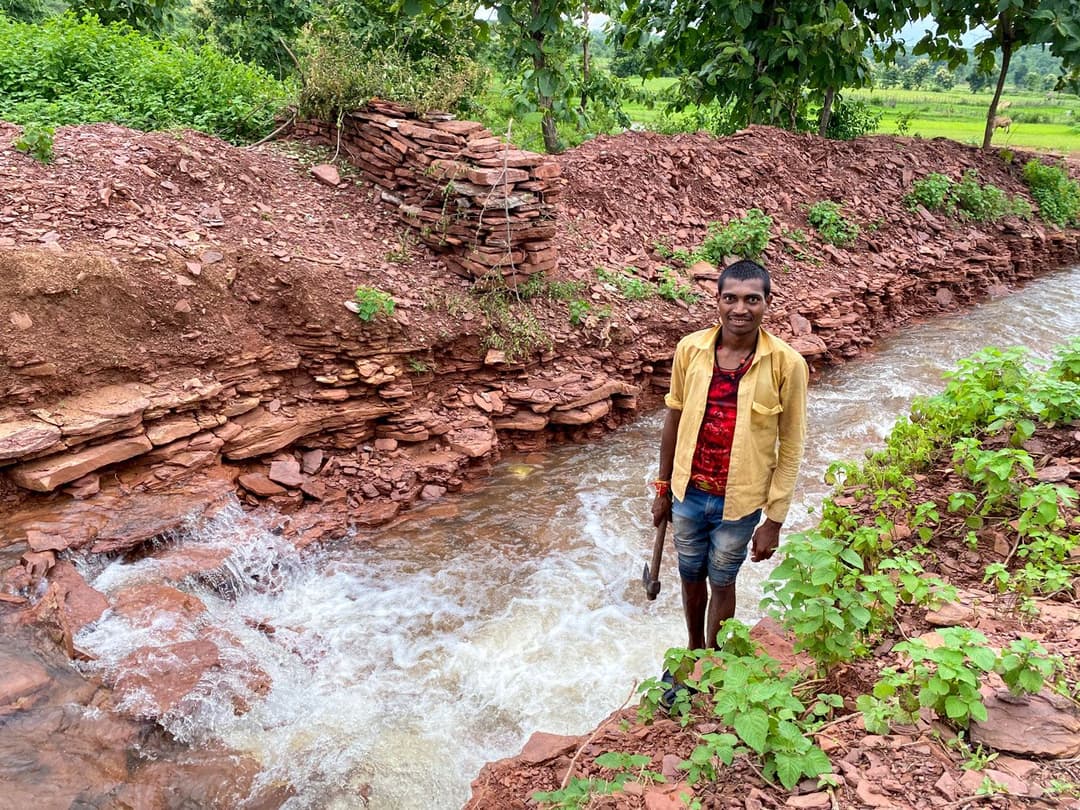
Suren Adivasi arrives at the dam armed with a hammer. He looks carefully at the swiftly flowing waters, checking that no new stones or debris are blocking the flow. He uses the hammer to move a couple of stones around to better direct the gushing waters.
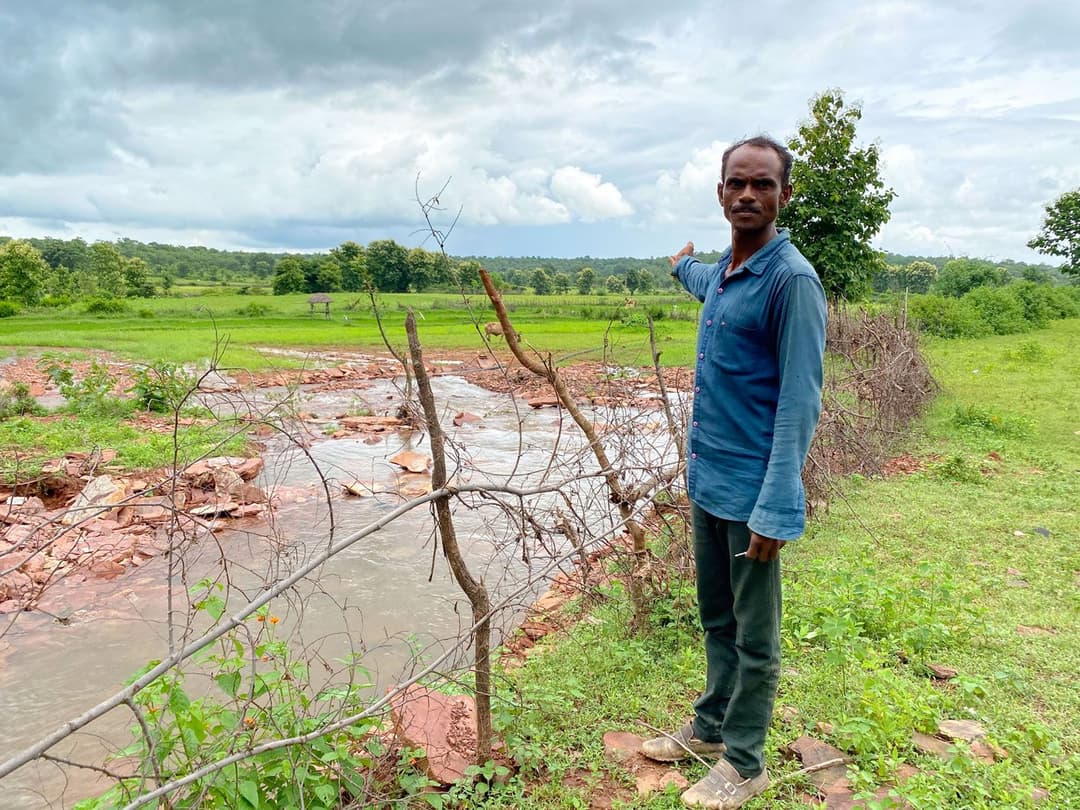
“I have come to see if the water is flowing well,” he tells PARI. “Yes, it’s flowing,” nods the small farmer from Bilpura village, relieved that his paddy crop just a few metres downstream, will not dry out.
His eyes sweep across the small dam and he says, “it’s a great blessing. Rice can grow, also wheat. Before this I couldn’t irrigate and farm the one acre of land I have up here.”
It’s a blessing the people of Bilpura gave themselves when they helped build the dam.
A village of roughly a thousand people, Bilpura has mostly Gond Adivasi (Scheduled Tribe) farmers, each with a few head of cattle. The Census of 2011 records the village as having only a handpump and a well. The state has built ponds in and around the district, lined with stones, but locals say there have no catchment and, "paani rukta nahin hai [the water doesn't stay]."