

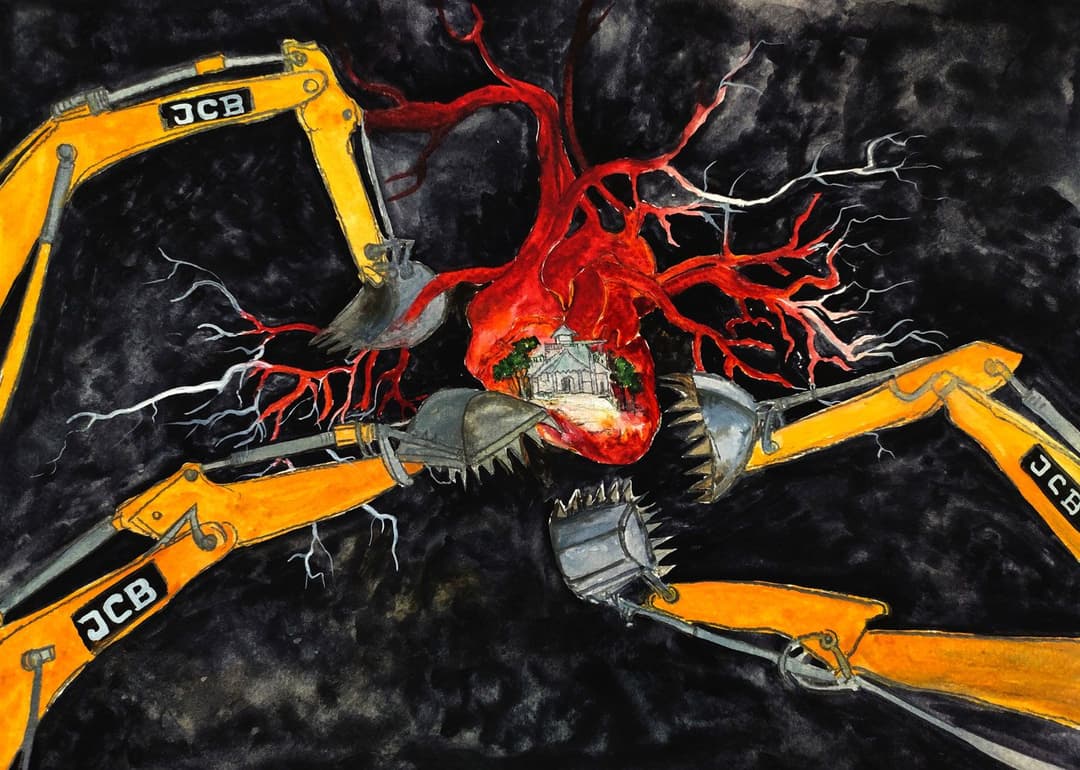
A torn piece of paper flies across the jagged wall in the wind, the words ‘illegal’ and ‘encroachment’ barely visible on its pale yellow surface, the ‘eviction’ it warned of smeared with mud. A country's history cannot be contained within its walls. It floats beyond tenuous borders and into the ether – across emblems of oppression, bravery, and revolution.
She stares at the heaps of stones and bricks on the street. That’s all that is left of the shop that turned into her home at night. For 16 years, she would sip chai here in the evenings and sell chappals to many during the day. Her modest throne on the footpath lies amid the shreds of asbestos roof, slabs of cement and bent steel rods – like a ravaged tombstone.
There once lived another begum here. Begum Hazrat Mahal, the Queen of Awadh. She valiantly fought to free her home from British rule and was forced to seek refuge in Nepal. This anti-colonial freedom fighter, one of India’s first, remains long forgotten. Her legacy tainted and erased but for a forlorn cold stone in Kathmandu, on the other side of the border.
There are countless such graves, skeletal remains of resistance buried deep within the Indian subcontinent. But there are no bulldozers to remove the mud of ignorance and hatred, no machines to excavate these forgotten fists of resistance. No bulldozers that can smash colonial history and replace it with the voices of the oppressed. No bulldozer to stand in the way of injustice. Not yet.