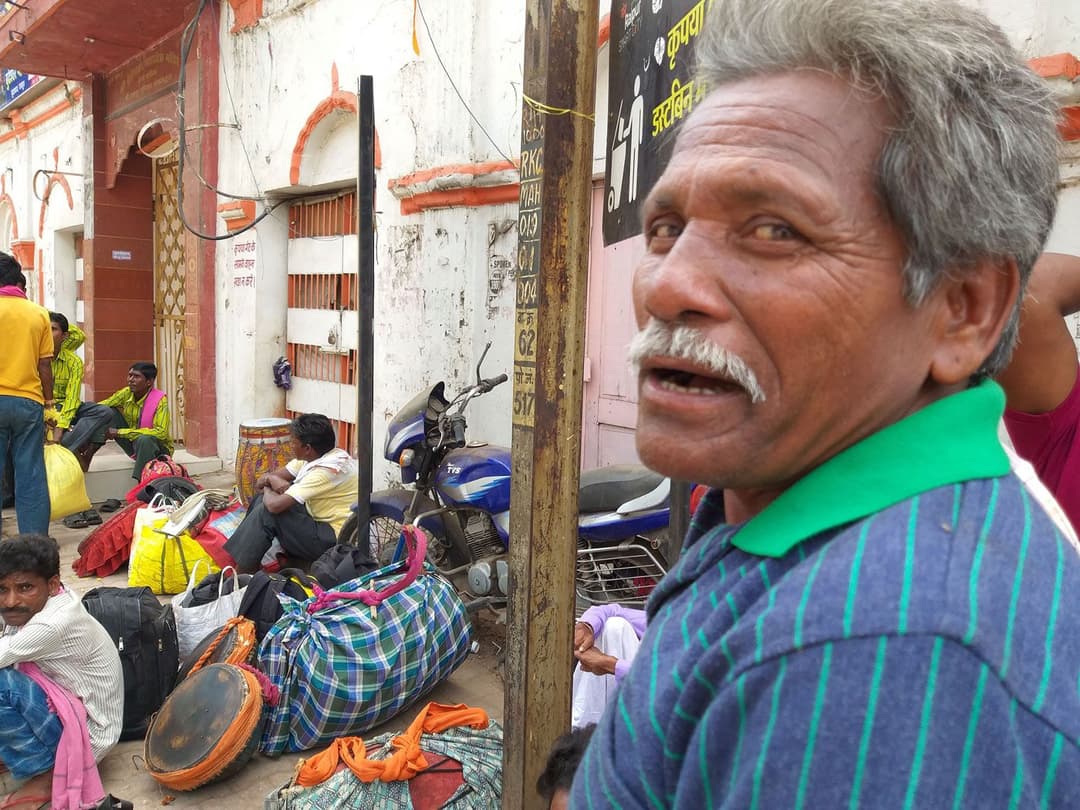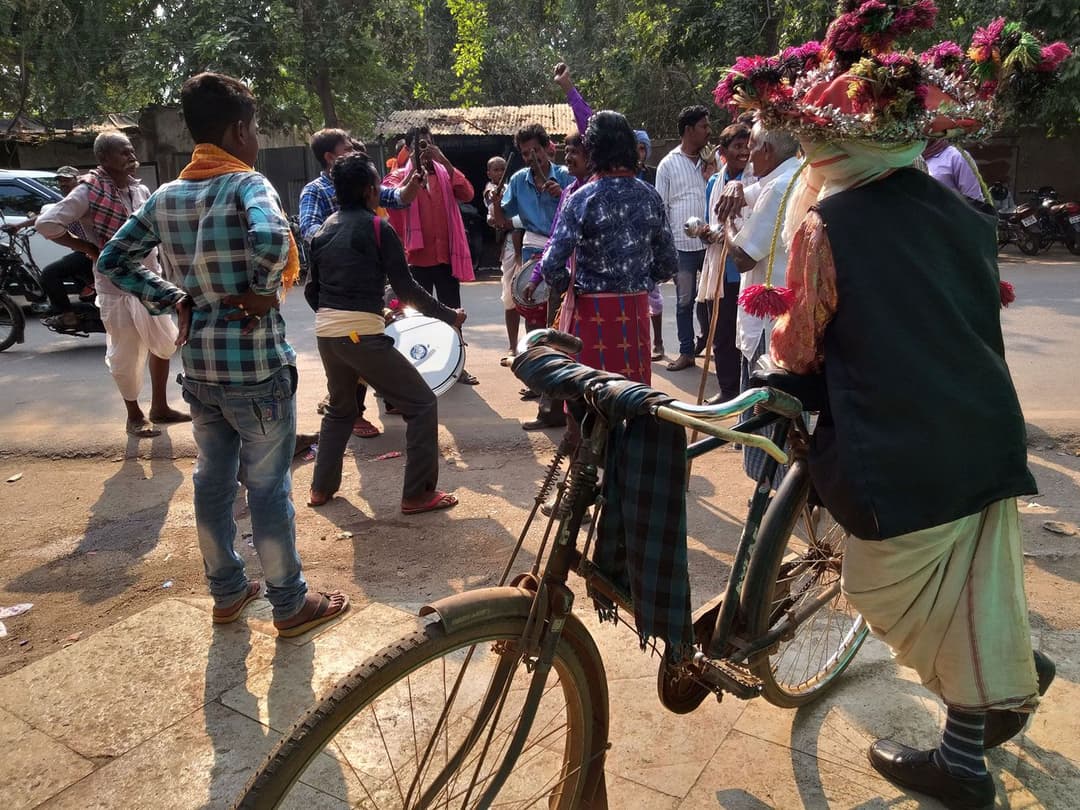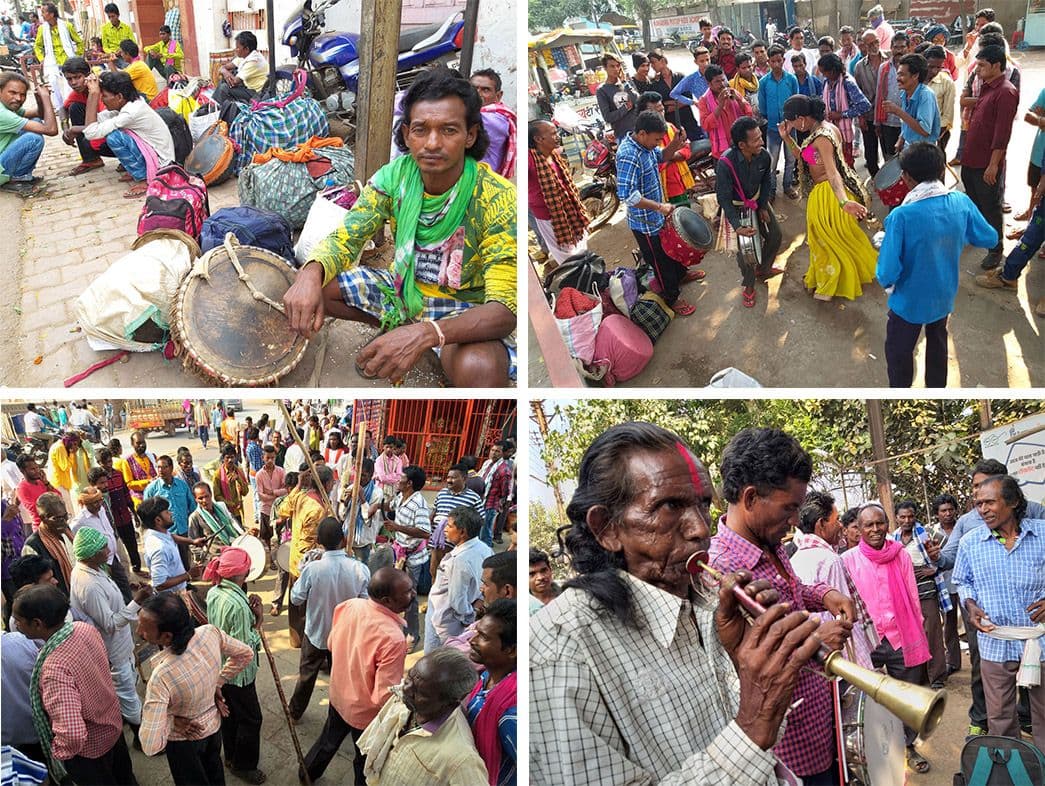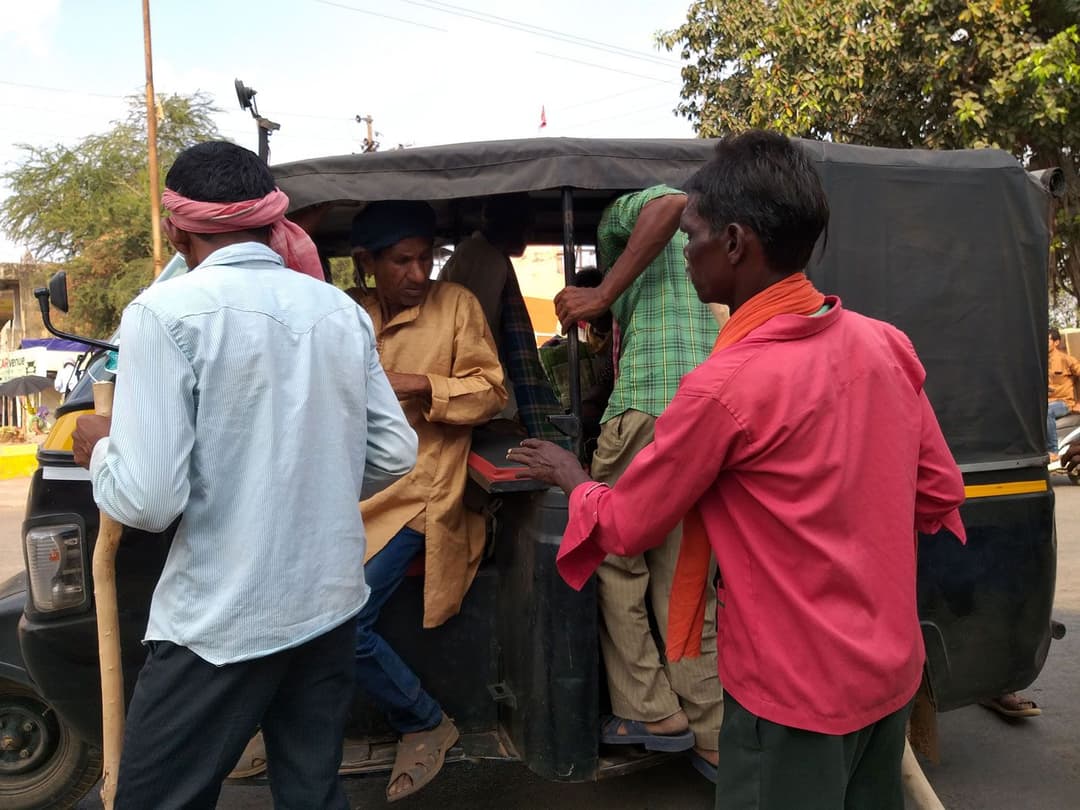

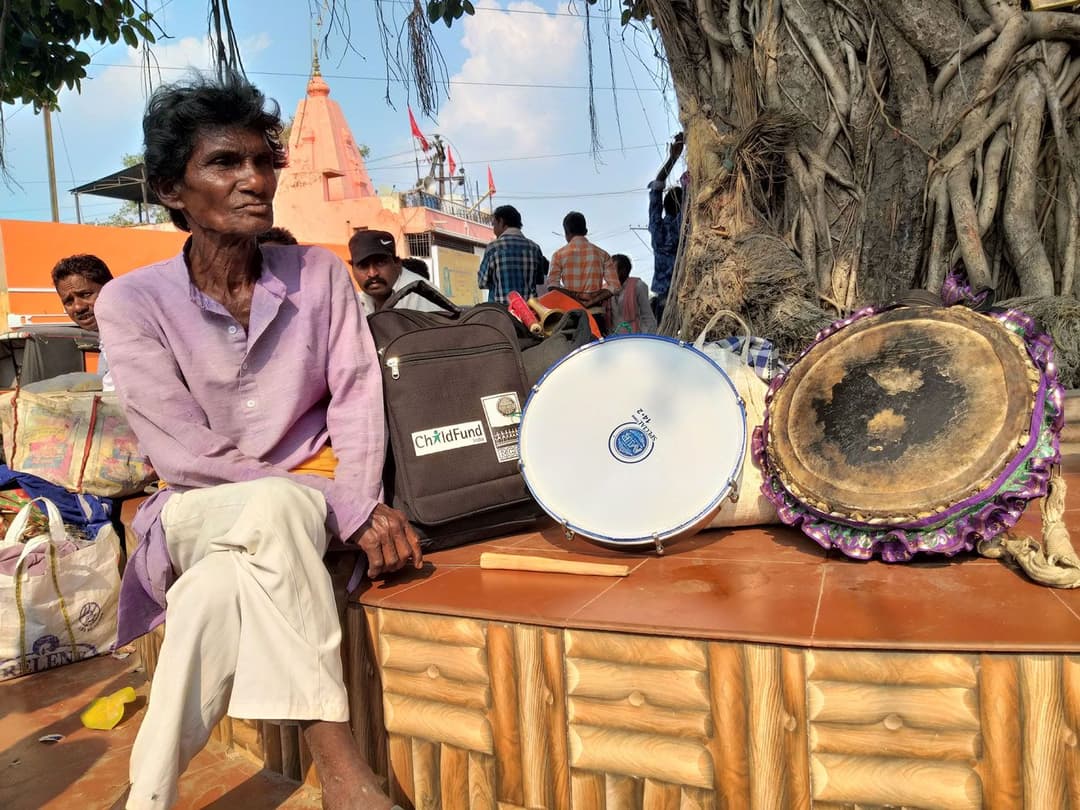
It was the morning before Diwali in early November, 2018. Around 30-40 troupes of musicians from western Odisha had gathered at the Budha Talaab square in Raipur. From their attire and instruments, I could tell that they must be from Balangir, Kalahandi or Nuapada districts. They were all from the Ganda community, a Scheduled Caste.
Their performances – locally called gana-baja – are a popular folk music form in Odisha. The troupes have different beats or genres for different occasions like marriages, pujas and other celebrations. Around 5-10 musicians – traditionally, only men – make a troupe, each carrying traditional instruments like the dhap, dhol, jhanj, mahuri, nishan and tasha.
I asked the musicians in the Kosli (or Sambalpuri) language of western Odisha who they were waiting for. Hearing me speak, Benudhar Chhura from Kandakhal village in Titlagarh tehsil of Balangir (or Bolangir) district, who has been coming here for nearly 30 years, replied, “We are waiting for the Raut-nacha parties. They will hire us for their dance.”