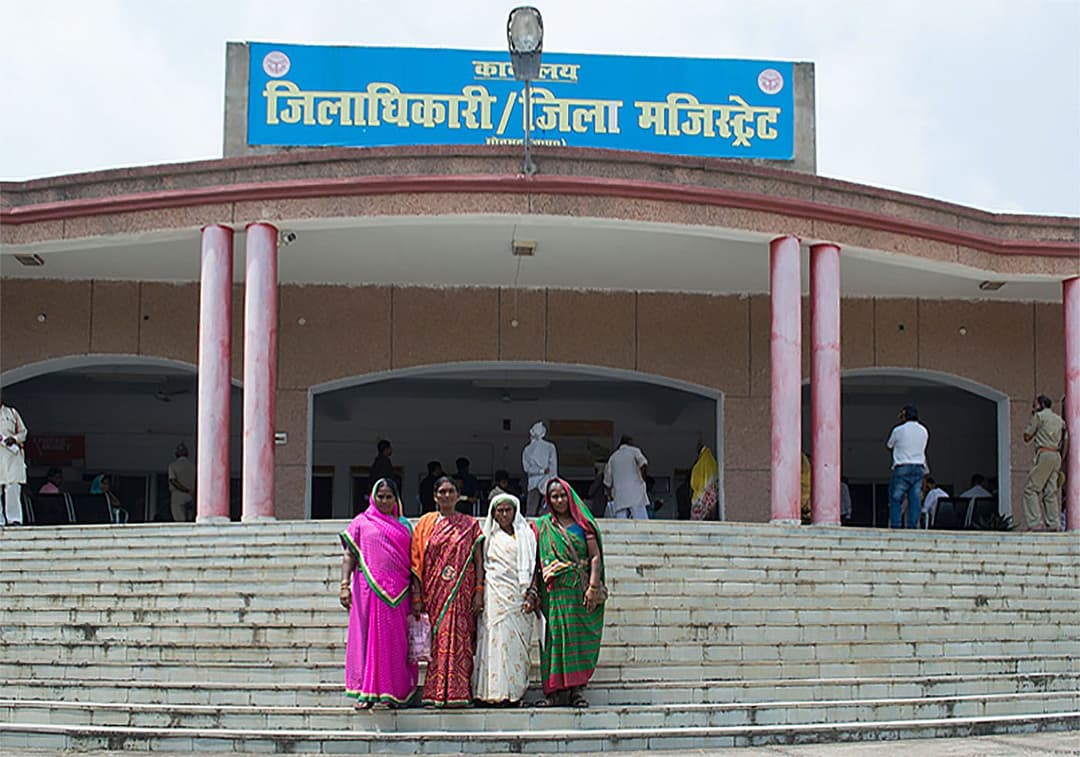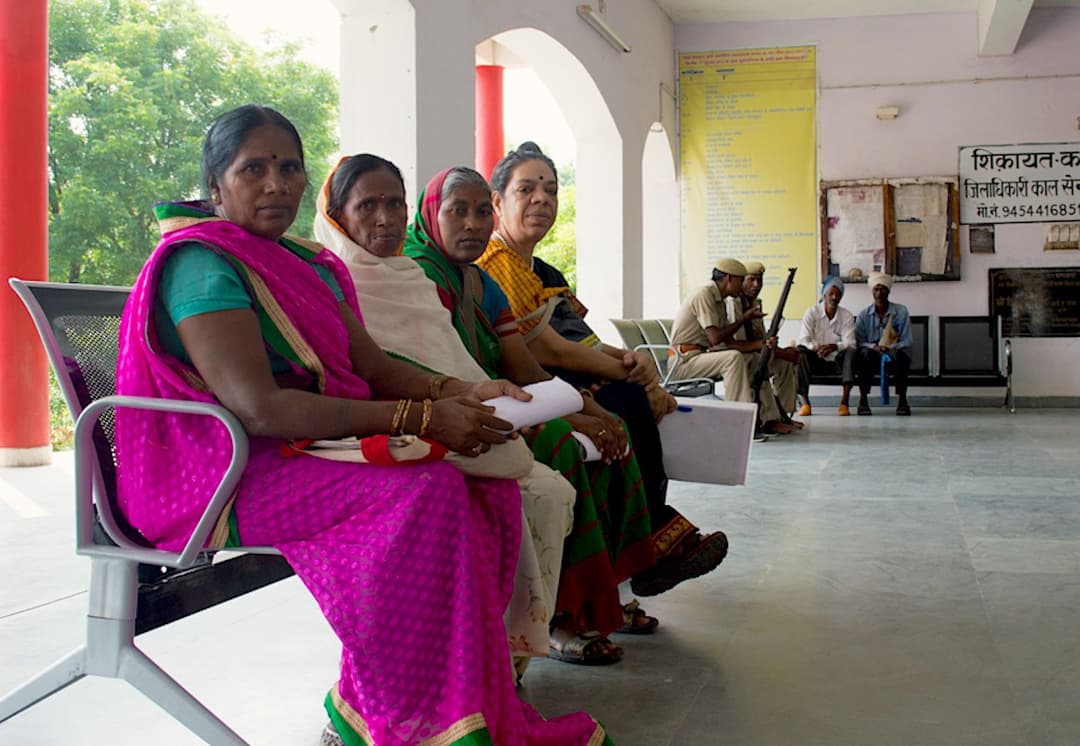

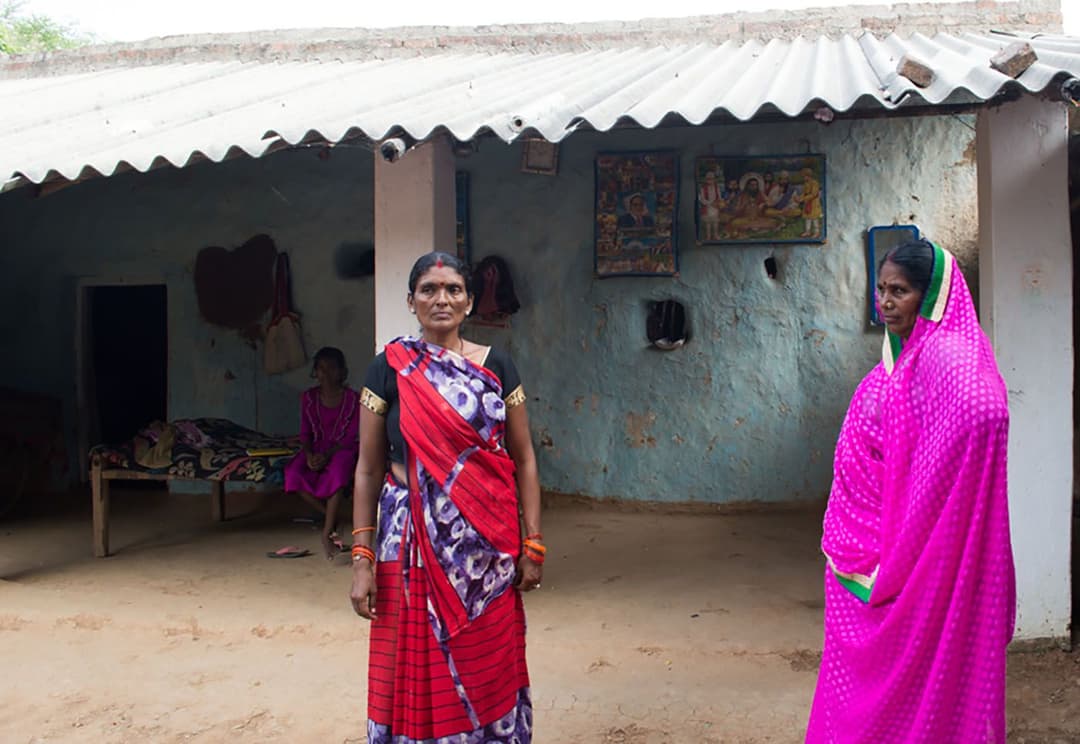
It’s around 10 a.m. on a Thursday in September 2017. Lalti Devi Paswan and Shoba Bharti are waiting on a plastic bench outside the district magistrate’s office in Robertsganj town of Sonbhadra district in Uttar Pradesh. The women are calm. They have done this many times.
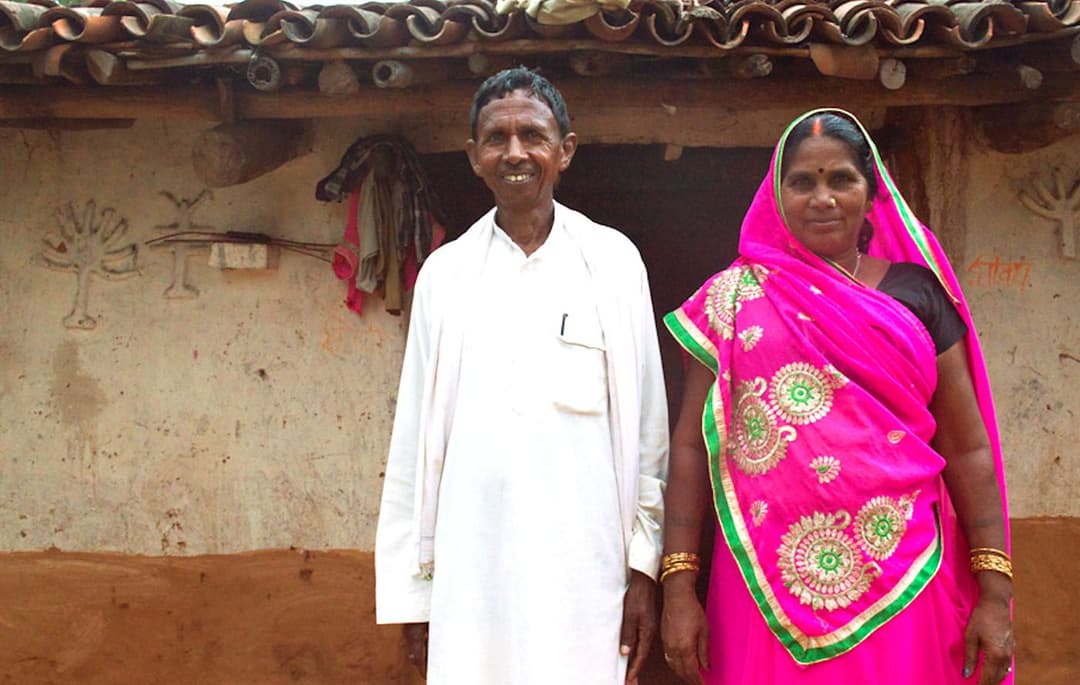
Lalti Devi and her husband Shyamlal have over 20 criminal cases registered against them. She has come to tell the DM that some people in the village are spreading rumours about her – to undermine her credibility and the work of her union – calling her a dayan, a witch, making her life even more difficult. “It is important to see the DM. They have to hear our voices and see us so that we can use the kanoon [law] to change things,” Lalti, who is in her 60s, says.
“I am waiting for justice,” says Shoba, who is in her 50s. “I have come to file my application for compensation. The local government has to give this support [to women who have been raped], but the DM hasn’t moved my file forward.” Shoba and her husband have also been accused by the Forest Department of illegally cutting down trees, and their names are included in other group cases, often for acts they say they had no part in.
Both women, who are from Dalit communities, patiently wait for an hour to go into DM Pramod Upadhyay’s office. With them are Roma Malik, general secretary of the All India Union of Forest Working People (AIUFWP), and others from the union’s office in Robertsganj. Malik has been working in Sonbhadra district for 18 years. “There are several cases of police brutality that we want to discuss with the administration,” she says.